When Nigeria removed its petrol subsidy in May 2023, many Nigerians braced for years of expensive, unpredictable fuel. What few anticipated was that a private refinery in Lekki, Lagos would become the most powerful force shaping pump prices across the country within just three years.
The Dangote Petroleum Refinery has done more than just produce fuel. It has fundamentally restructured the competitive dynamics of Nigeria’s downstream petroleum market, forcing the Nigerian National Petroleum Company Limited to repeatedly cut prices, displacing fuel imports that once cost Nigeria billions of dollars in foreign exchange, and giving ordinary consumers a form of market leverage they never previously had.
How Dangote Refinery Controls Fuel Prices in Nigeria Better Than NNPC
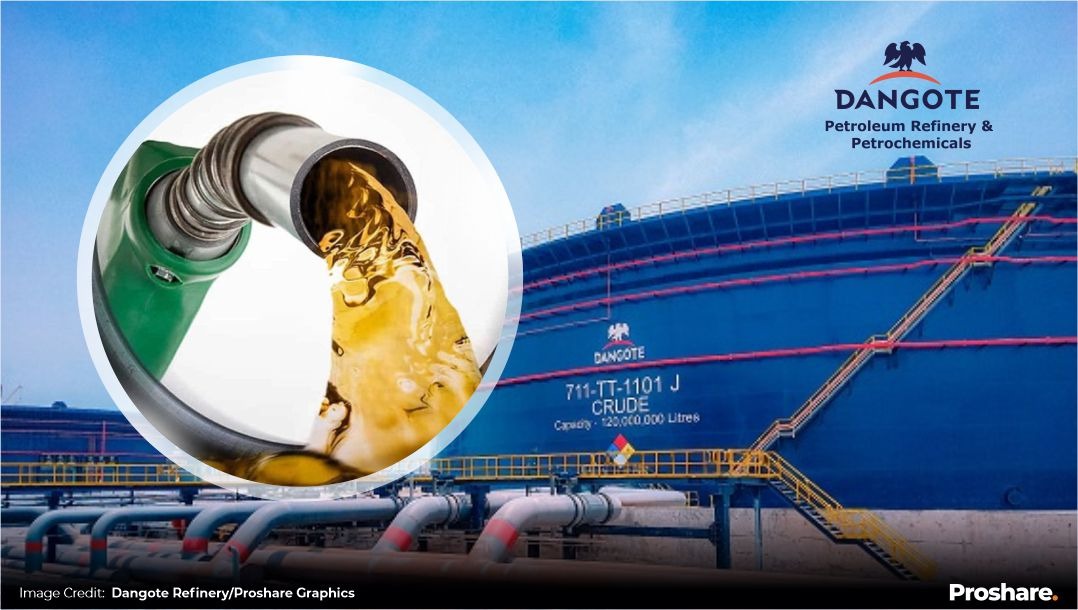
Since commencing petrol production in September 2024, the Dangote Refinery has made more than 20 price adjustments in a single year, each one triggering rapid responses from NNPC and other marketers. Understanding how Dangote Refinery controls fuel prices in Nigeria requires looking at the structural advantages, policy frameworks, and market realities that give the refinery its unmatched leverage in a sector that NNPC once dominated without challenge.
What the End of Fuel Subsidy Actually Meant for the Market
Before President Bola Tinubu declared the fuel subsidy gone in his inauguration speech in May 2023, the NNPC operated as a price-setter by default. The corporation imported refined petrol, distributed it at below-market rates, and claimed reimbursements from the government. Prices at the pump were fixed by decree, not competition.
After subsidy removal, pump prices surged from around N195 per litre to above N600, and eventually to over N1,030 per litre in Lagos by October 2024. The shock was severe. Inflation exceeded 30 percent through much of 2024, transportation fares rose sharply, and the cost of nearly every consumer good climbed alongside fuel.
But subsidy removal also created something new: a genuinely open downstream market. Private marketers could now buy and sell fuel without a government-imposed price ceiling. That open market is exactly the environment the Dangote Refinery was built to dominate.
Scale Is the Refinery’s Most Important Weapon
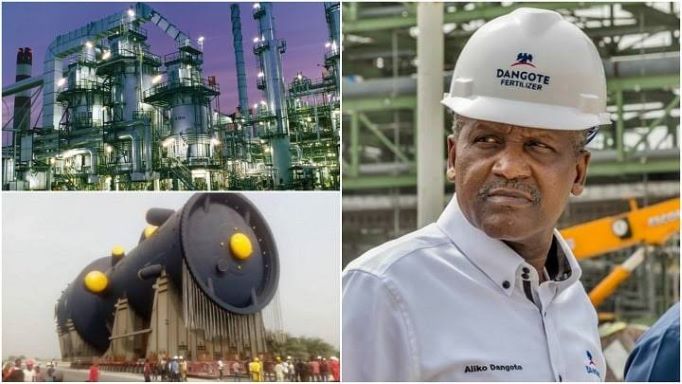
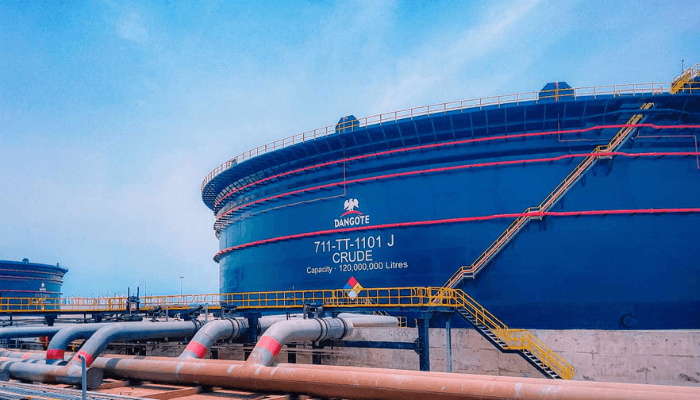
The Dangote Petroleum Refinery, sited in the Ibeju-Lekki Free Trade Zone in Lagos, was officially commissioned in May 2023 and began processing crude into diesel and aviation fuel in January 2024. Petrol production started in September 2024. The facility is designed to process 650,000 barrels of crude oil per day, making it the largest single-train refinery in the world, with an investment exceeding $19 billion. By February 2026, it had reached that full nameplate capacity, and in recent months has briefly exceeded it, processing 661,000 barrels per day.
That scale produces a decisive cost advantage. The refinery loads over 45 million litres of petrol and 25 million litres of diesel daily, volumes that exceed Nigeria’s total domestic fuel consumption. No importer, no NNPC depot, and no coalition of smaller marketers can match that output. For fuel distributors buying directly from the refinery, the pricing is set by one entity. When Dangote moves, the market moves.
For context, the combined installed capacity of the government-owned Warri, Kaduna, and Port Harcourt refineries stands at around 295,000 barrels per day. In practice, they have been largely inactive or operating far below capacity for years. Dangote’s operational dominance is not just larger in theory but overwhelmingly so in practice.
How the Dangote-NNPC Price War Actually Works
The mechanics of Dangote’s price influence are straightforward. The refinery sets a gantry price, also called the ex-depot price, at which it sells petrol to depot operators and fuel marketers. That wholesale price, plus transport costs and retailer margins, determines what Nigerians pay at the pump.
Throughout 2024 and 2025, every time Dangote reduced its gantry price, NNPC was compelled to follow, often within days. In March 2025, when Dangote cut prices, NNPC adjusted its Lagos retail outlets from N945 per litre to N860 per litre to stay competitive. In August 2025, when Dangote moved to N820 per litre at the depot, NNPC reduced to N865 per litre in Lagos and N890 per litre in Abuja within two days. By December 2025, Dangote had cut its gantry price from N828 to N699 per litre, one of 20 price adjustments the refinery made through the year. NNPC dropped its Lagos retail price to N840 per litre and its Abuja price to N835 per litre in response. Stations supplied by Dangote, including MRS, began selling at N739 per litre.
Financial analyst Kalu Aja explained the dynamic plainly: fuel prices in Nigeria are falling because of new supply from the Dangote Refinery. The competition created by multiple suppliers prevents any single entity from holding prices artificially high for long.
The Naira-for-Crude Policy and Its Mixed Results
One of the most significant structural factors behind the refinery’s pricing role is the naira-for-crude arrangement, which President Tinubu directed NNPC to implement. Under this policy, domestic refineries pay for crude oil in naira rather than US dollars, reducing their foreign exchange exposure and, in theory, insulating domestic petrol prices from sudden naira depreciation.
The arrangement matters because fuel imports previously consumed an estimated 40 percent of Nigeria’s foreign exchange demand. By refining locally and paying for crude in naira, the refinery reduces that forex drain, eases pressure on the naira, and helps keep pump prices from tracking every movement in the dollar-to-naira exchange rate.
In practice, however, the arrangement has faced serious problems. NNPC was contractually obligated to supply 350,000 barrels per day to the refinery under the deal but has consistently fallen short. At best, actual deliveries reached 120,000 barrels per day, and supply halted entirely by February 2025. A Punch investigation found that the refinery experienced a shortfall of approximately 79.53 million barrels between October 2025 and mid-March 2026. To make up the gap, the refinery sources crude from international markets in Angola, Libya, and the United States, paying dollar-denominated prices plus a premium of $3 to $6 per barrel charged by international trading intermediaries.
The practical result is that despite the naira-for-crude policy, Dangote still purchases a substantial share of its feedstock at global benchmark prices. The refinery has been transparent about this: crude costs, whether naira-denominated or dollar-denominated, are priced at international market rates plus that trading premium, with foreign exchange payments made at the prevailing market rate.
When Global Oil Prices Override Dangote’s Influence
The refinery’s price-setting power has limits, and those limits became painfully visible in early 2026. The escalation of the US-Iran war in the Middle East disrupted oil supply through the Strait of Hormuz, through which roughly 20 percent of the world’s petroleum passes. Brent crude, the global benchmark, surged above $100 per barrel from $66 per barrel in late February 2026.
In response, Dangote raised its petrol gantry price from around N774 per litre to N1,275 per litre. Filling stations in Lagos sold petrol at between N1,315 and N1,350 per litre. NNPC followed with its own price increases. A senior Dangote Group management official acknowledged that the refinery had, during earlier months, been effectively subsidising its petrol prices to the domestic market, selling below what global crude costs would justify.
This episode illustrates an important structural reality: the Dangote Refinery is not a price controller in the way the old government subsidy regime was. It does not hold prices artificially below cost. Its influence is competitive, not regulatory. When global oil prices rise sharply, Nigerian consumers feel it, refinery or not. The difference is that the refinery introduces a competitive floor that prevents NNPC or importers from pricing above market without losing customers.
How the Refinery Is Reducing Nigeria’s Import Bill
One of the clearest signals of the refinery’s impact is the collapse of Nigeria’s petrol import volumes. Official data from the Nigerian Midstream and Downstream Petroleum Regulatory Authority shows that local refinery supply rose to 3.18 billion litres in the first quarter of 2026, while imports fell to 965.52 million litres. Imported petrol accounted for just 23.3 percent of total supply in Q1 2026, compared to more than half of supply volumes during the same period in 2025.
Before the refinery’s petrol production began, Nigeria spent an estimated $10 billion annually importing 250,000 barrels per day equivalent of refined fuel, most of it from European refineries. That spending, almost entirely in US dollars, was one of the principal sources of pressure on the naira. Every litre refined locally is a litre not imported, which means less dollar demand, less pressure on the exchange rate, and, over time, a more stable operating environment for businesses that depend on imported inputs.
The refinery has also significantly increased its exports, shipping petrol and other products to Ghana, Cameroon, Togo, Tanzania, and other international markets. In March 2026, it exported approximately 434 million litres of Premium Motor Spirit alone, operating at an average capacity utilisation of 93.62 percent. These export revenues, denominated in US dollars, strengthen the group’s balance sheet and give it flexibility to manage crude costs that are still partially tied to global dollar-denominated prices.
Is Dangote Creating a New Monopoly?
The refinery’s market dominance has generated legitimate questions about concentration. The Petroleum and Natural Gas Senior Staff Association of Nigeria and independent industry voices have noted that when a single private company controls the majority of domestic fuel supply, it gains the ability to set prices by its own commercial logic, not competition. Retailers associated with PETROAN have pointed out that distributors simply align to whatever Dangote does, with little independent price-setting capacity.
Dangote Group has firmly rejected the monopoly characterisation, pointing to NNPC, independent importers, and modular refineries as competing supply sources. The federal government has also taken steps to prevent full market capture, including introducing a 15-percent import tariff on petrol and diesel in late 2025, which the refinery’s management described as a measure to protect domestic refining from unfair foreign competition.
However, the tariff itself highlights a tension: if the policy environment favours the domestic refiner through trade protection, the practical effect may be to reduce import competition rather than increase it. Financial analyst Kalu Aja has argued that the current lower prices exist precisely because multiple supply sources, Dangote plus importers plus NNPC trading, are all competing. If the competitive structure changes, prices would likely change with it.
What This Means for Nigerians at the Pump
For most Nigerians, the practical question is simple: does the refinery make fuel cheaper and more available? The answer through 2024 and 2025 was largely yes, with significant caveats. Fuel queues, which plagued filling stations through much of 2022 and 2023, have largely cleared in Lagos and major southern cities, driven by more consistent supply from the refinery. Prices declined substantially from the N1,030 per litre peak in October 2024 to a low of around N699 per litre at Dangote partner stations in December 2025.
But the relief is not guaranteed or permanent. The Middle East oil shock in early 2026 reversed those gains sharply, and prices exceeded N1,300 per litre before moderating. The refinery acknowledged openly that its earlier lower prices reflected a decision to absorb some of the cost rather than pass it fully to consumers, a practice it eventually could not maintain when crude crossed $100 per barrel.
For northern Nigeria and inland states further from Lekki, transport costs and supply chain depth mean prices typically run N30 to N100 per litre higher than in Lagos, and the refinery’s direct impact is less immediate. Marketers buying from coastal depots add their own logistics costs before the product reaches filling stations in Kano, Sokoto, or Borno.
Conclusion
The Dangote Petroleum Refinery has changed the structure of Nigeria’s fuel market in ways that no government policy announcement had managed to achieve in decades. By producing at scale, competing directly against NNPC’s retail pricing, and progressively displacing expensive imports, it has created a new competitive dynamic where market forces, rather than ministerial directives, are the primary driver of petrol prices.
Its influence, however, is not unconditional. Global crude prices, the naira exchange rate, crude supply reliability, and the competitive landscape of importers all constrain the refinery’s ability to sustain low prices. The refinery’s relationship with NNPC remains complicated, with persistent crude supply shortfalls undercutting the naira-for-crude policy that both entities are supposed to benefit from.
What the refinery has clearly demonstrated is that Nigeria’s fuel market was never an unsolvable problem. It was a structural one. Sufficient domestic refining capacity, working in an open market, can change prices in ways that decades of subsidy spending and NNPC management could not. Whether that change is sustained and extended to all Nigerians depends on crude supply policy, exchange rate stability, and whether the competition that currently limits Dangote’s pricing power is preserved rather than gradually eroded.