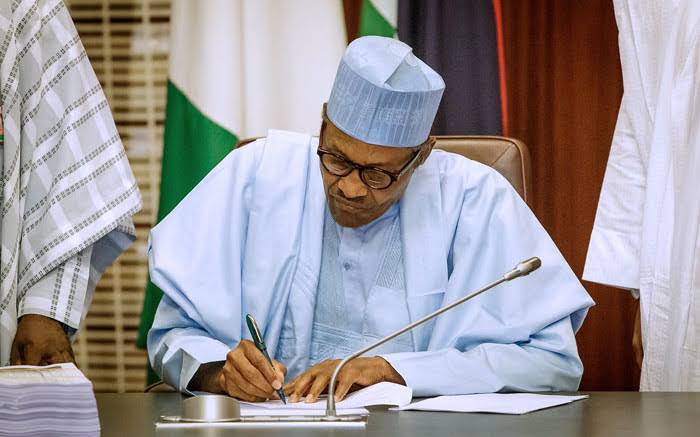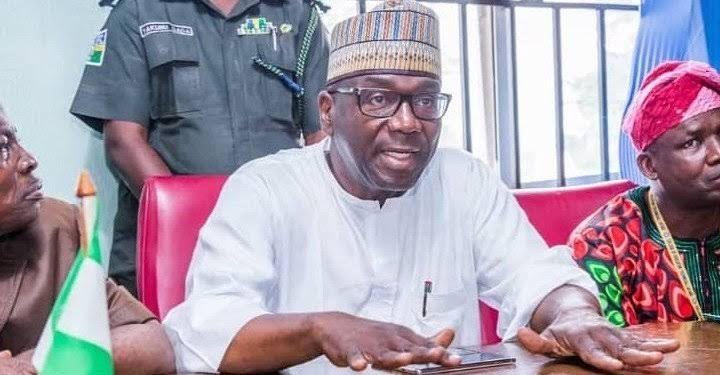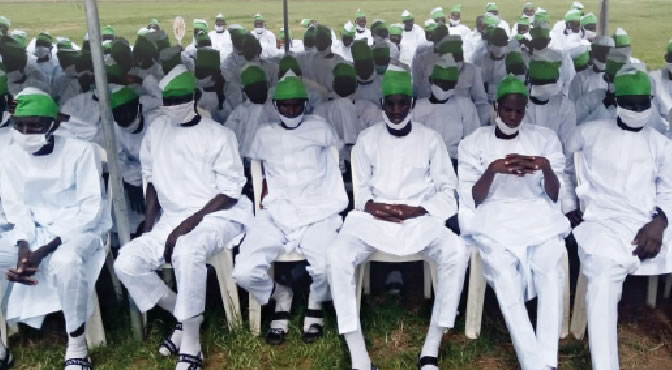
After years of a practice that many dispassionate and right-thinking everyday Nigerians find not only scandalous and contentious but also sacrilegious and abhorrent, the issue of rehabilitation and reintegration of Boko terrorists is now getting the pushback and opposition from people who actually have the political means, clout and leverage to put an end to it.
For years, the majority of the citizenry has wondered and questioned why those responsible for protecting the lives and properties of Nigerians have chosen not to address the insecurity that perennially ravages the nation with the seriousness and urgency the matter deserves. But then, for many, it is not so much about the inability of the government to find a lasting solution to this scourge that often leaves many forlorn and despondent but how the government treats those who have been indicted in the heart-wrenching atrocities and heinous crimes that characterise this perennial insecurity.
Many Nigerians have found it jarringly inexplicable and inconceivable that the government thinks it is prudent and logical to have those who have killed their fellow citizens, including soldiers and committed barbaric crimes to be worthy of forgiveness and reintegration into society.
Though insecurity, particularly terrorism of any kind in Nigeria, predates APC, the challenge has grown into a devastating and brutal hydra-headed menace under the party largely because those in charge wanted it that way. Before the coming to power of the party in 2015, rehabilitation and reintegration of terrorists who pillaged, plundered, and committed unspeakable atrocities was unheard of and not part of our national discourse. However, what many would have sworn was impossible has become the norm following the party’s coming to power. Even more worrisome is how this disturbing policy has become part and parcel of the military doctrine.
After years of a practice that many dispassionate and right-thinking everyday Nigerians find not only scandalous and contentious but also sacrilegious and abhorrent, the issue of rehabilitation and reintegration of Boko terrorists is now getting the pushback and opposition from people who actually have the political means, clout and leverage to put an end to it.
On Wednesday, the House of Representatives urged the federal government to scrap the rehabilitation of repentant terrorists, marking a newfound opposition to a policy that has run for a decade. The resolution followed a motion by Ademorin Kuye, representing Shomolu federal constituency in Lagos, during Wednesday’s plenary.
According to Kuye, Nigerians have paid N2.23 trillion in ransom between January 2021 and June 2025. He cited figures from the National Bureau of Statistics and independent security researchers. He stated that investigations by the National Counter Terrorism Centre, under the Office of the National Security Adviser, found that POS operators and other financial channels are being used to move ransom money and hide the trail. He also pointed to bureau de change operators, cryptocurrency platforms, livestock trading and trade-based schemes as avenues criminals use to launder proceeds.
He warned that the troubling practice continues to weaken Nigeria’s financial intelligence system, erodes public trust, and raises the risk of international sanctions — including keeping Nigeria on the Financial Action Task Force grey list.
From Ransom To Rehabilitation
What started as a motion about money laundering segued into something bigger once debate opened. Bamidele Salam, chairman of the House Committee on Public Accounts, pushed back, arguing the government has no moral ground to criminalise ransom payments when it has failed to protect citizens in the first place. Yusuf Gagdi, chairman of the Committee on Navy, disagreed with Salam.
He argued that paying ransom only rewards and emboldens kidnappers and bandits, comparing it to giving a student a prize for passing an exam — an incentive to repeat the behaviour. Gagdi then went further, moving an amendment to end the rehabilitation and reintegration of arrested terrorists, kidnappers and bandits altogether.
He was frank and assertive in his remarks. He asserted that anyone who kills deserves to be killed, he said, except in situations like accidents where the law already provides clarity. For those who invade homes, kidnap and torture victims — including traditional rulers — he argued there should be no mercy. Gagdi also raised a security concern: that some rehabilitated former insurgents may be leaking information back to criminal networks, contributing to attacks on troops during operations. Speaker Tajudeen Abbas put the amendment to a voice vote, and it passed unanimously.
Beyond the back-and-forth, debate and bickering among lawmakers over terrorists’ reintegration and other sundry issues surrounding the controversial practices, it will take more than motions and resolutions at the national assembly to put an end to the disturbing practice. The real power to abolish what many consider an aberration rests with the executive arm of government, which the current crop of federal lawmakers, for all their huffing and puffing, for all their song and dance, do not have the temerity to stand up against and demand an end to the destructive programme that started ten years ago.
The House of Representatives’ resolution to end the rehabilitation and reintegration programme for terrorists is the first in a series of steps and actions needed to end the practice. The lawmakers will however need to do more for this well-intentioned and laudable motion to materialise. To achieve this they must shed that toga of pliant and amenable disposition that makes it come across as nothing more than a rubber-stamp entity and appendage of the executive.
The lawmakers, many of whom, have also been at the receiving end of the heinous crime of the terrorists may be will and ready to cut of the oxygen that feeds the terrorists, but they will need to show more character, conviction doggedness and determination to do so because a ruling party and an executive arm of government that make rehabilitation of hardened terrorists as key aspect of its security strategy and national policy are not one you kowtow or deploy should logic and reason when engaging them.