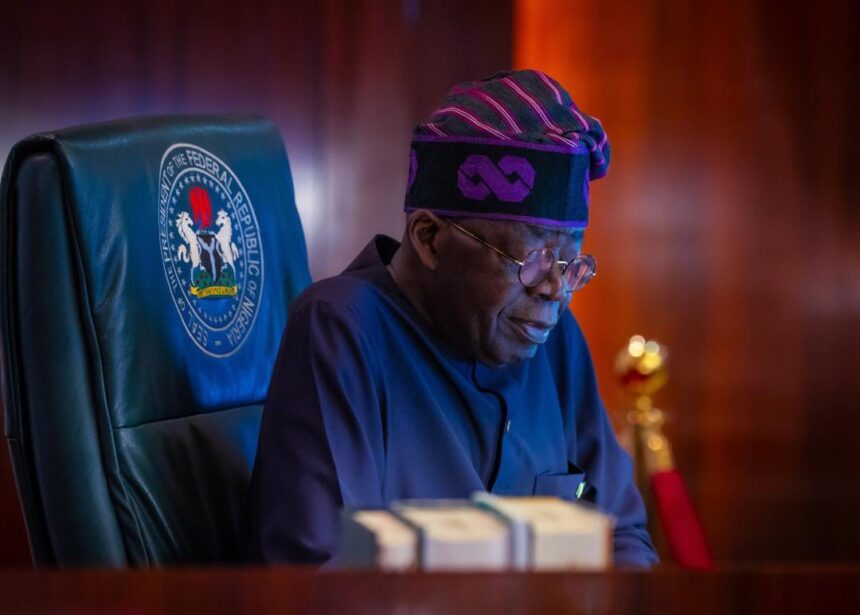
Coups, particularly in today’s fast-moving world, are extremely difficult to execute. It requires a lot of meticulous and thorough planning and massive logistics, which will include the clandestine movement of huge high-tech military hardware, sophisticated weapons and trusted, efficient conspirators; and when you throw in the socio-political complexities of Nigeria, the possibility of one succeeding in today’s Nigeria is exceedingly slim.
On Thursday, President Bola Tinubu approved the addition of new divisions to the Nigerian Army, taking the total number of divisions to twelve from eight. The expansion of the army divisions will also come with the recruitment of 28,000 personnel and “acquisition of critical military platforms and equipment, improvements in troop welfare, and ongoing support for operational readiness and force modernisation.”
The four new divisions will have their headquarters in Makurdi, Ilorin, Jalingo and Benin City. The 9 Division in Ilorin will now serve Kwara and Niger States. The 10 Division in Jalingo will serve the states of Taraba and Adamawa. The 5 Division Headquarters in Makurdi will serve Benue, Nasarawa and Kogi States while 83 Division Headquarters in Benin City will cater to the security needs of Edo, Delta and Bayelsa States.
Under former presidents Olusegun Obasanjo and Umar Yar’Adua, Nigeria had six Army Divisions; Goodluck Jonathan and late Muhammadu Buhari added one each, taking the number to eight.
List of the eight Army divisions before the approved expansion to twelve
1. 1 Division Headquarters – Kaduna (Kaduna, Kano, Katsina and Jigawa States)
2. 2 Division Headquarters – Ibadan (Oyo, Osun, Ekiti and Ondo States)
3. 3 Division Headquarters – Jos (Plateau, Bauchi and Gombe States)
4. 6 Division Headquarters – Port Harcourt (Rivers, Akwa Ibom and Cross River States)
5. 7 Division Headquarters – Maiduguri (Borno and Yobe States)
6. 8 Division Headquarters – Sokoto (Sokoto, Kebbi and Zamfara States)
7. 81 Division Headquarters – Lagos (Lagos and Ogun States)
8. 82 Division Headquarters – Enugu (Enugu, Anambra, Abia, Ebonyi and Imo States)
According to the presidency, “the implementation of the new force structure will be done in two phases. The first phase, covering the establishment of the 5, 9, and 10 Divisions and the reorganisation of existing formations, will be completed by September 2026. The second phase, involving the establishment of the 83 Division and further reorganisation, is expected to be completed by December 2026.”
The motive behind the expansion
The Tinubu government has framed the expansion of the Army Divisions and reorganisation of the force structure as parts of a strategic “move to enhance the country’s security architecture and improve the operational effectiveness of the Nigerian Army.” However, while there is a consensus of some sort on the need for the government to do more in addressing the perennial security in the country, many feel the demand for an end to the deepening security crisis in the country will only be met not merely by expanding army divisions and recruitment of more personnel but by showing the required political will, decisiveness and ruthlessnessness needed to stamp out the nefarious activities of depraved armed non-state actors wreaking havoc across the country.
Some believe and opine that the existing structures and modus operandi of the Army before the approval of the latest restructuring are enough to put an end to the nation’s nagging security challenges if the government was actually serious about providing adequate protection to Nigerians, and this reorganisation reads more like a regime protection and power consolidation move rather than a practical solution to Nigeria’s security woes
In September last year, an alleged failed plot to overthrow President Tinubu’s administration was said to have rattled and shaken the Nigerian government while officials frantically downplayed or even dismissed outright the conspiracy that reportedly forced a low-key 1 October 2025 Independence celebration.
PREMIUM TIMES reported that investigators asserted that President Tinubu, Vice President Kashim Shettima, Senate President Godswill Akpabio, Speaker of the House of Representatives Abbas Tajudeen, service chiefs and commanders of strategic military formations were among those allegedly marked for assassination.
With how violent and bloody the botched coup was going to be if it had happened, it is not unusual and unexpected for the government, especially one that is unpopular like Tinubu’s administration, to decimate and destroy any condition that will make a future coup successful. Coups, particularly in today’s world, are extremely difficult to execute. It requires a lot of meticulous and thorough planning and massive logistics, which will include the movement of huge high-tech military hardware, sophisticated weapons and trusted, efficient conspirators, and when you throw in the socio-political complexities of Nigeria, the possibility of one succeeding in today’s Nigeria is exceedingly slim.
Be that as it may, the Tinubu government, knowing how unlikeable and deeply unpopular it has become among the majority of Nigerians, is well aware that the people will most likely not take to the streets to defend it or rise against the coup plotters, and it is not taking any chances. When the news of the alleged coup came to public knowledge last year, aside from its muffled condemnation from government supporters and apologists of the ruling party, many Nigerians were at best muted and indifferent and at worst secretly hoped it had succeeded.
Having felt the pulse of the people and gauged their reactions on the failed coup attempts, the government felt it needed to create a situation and condition that would make the thought of a coup, let alone its planning and execution, a suicide mission. The speed with which the government has also forced through a series of restructuring in the nation’s security architecture points to the fact that the drastic changes in the nation’s security set up — from the hasty and haphazard creation of the state police, the expansion of the Army Divisions to reorganisation of the force and allowing questionable characters to have and operate private militias — as little or nothing to do with solving the nation’s security challenges and even if, by chance, it does, it will be the aftereffects from the changes and not it its primary goals. The changes, for many who have dispassionately assessed the situation, have everything to do with vigorously protecting the interests of the current government and forestalling any attempt at another coup after the one that was thwarted in 2025.