For many Nigerians, the dream of leaving the country begins with a simple picture of a better life somewhere else, a new job, a safer environment, better opportunities for the family and perhaps a permanent home far from the struggles that made staying difficult, but 2026 has introduced another part of that journey that many people rarely discuss until it becomes personal. Across different parts of the world, Nigerians have found themselves caught up in deportation orders, enforced removals, criminal related immigration actions, tighter return procedures and, in one major case, an emergency evacuation prompted by attacks against foreigners. The stories coming from these countries are not identical, yet they all point towards the same uncomfortable reality for anyone planning to relocate abroad.
Germany, Ireland, Canada, the United States, the United Kingdom and South Africa have all featured prominently in major 2026 developments involving Nigerians whose ability to remain abroad has come under pressure. Some Nigerians were physically removed from the countries where they had been living, while others were identified as facing deportation or became subject to policies designed to make future removals faster. South Africa presents an entirely different picture, with Nigerians returning home through a voluntary evacuation after xenophobic attacks rather than through a mass deportation exercise. The difference matters because the word deportation can easily turn several separate stories into one misleading headline.
Behind the figures are people whose journeys abroad took very different paths. Some had immigration problems, some had exhausted their legal options, some were connected to criminal convictions, while others were caught in circumstances that had little to do with their desire to leave. For Nigerians watching the Japa conversation from home, the numbers therefore deserve more than a quick glance because they reveal how quickly the dream of relocation can change when immigration status, legal records, documentation or personal safety becomes a problem.
Germany’s Deportation Figures
Germany provides one of the clearest examples of Nigerians being physically removed from a European country during 2026. Reports tracking deportation operations recorded at least 137 Nigerians deported from Germany between February and June 2026, with the removals reportedly carried out through 5 charter operations. The figure immediately stands out because it represents Nigerians who had already reached Germany but later became subject to removal rather than people who were simply refused entry at the airport.
The monthly figures provide a clearer picture of how those removals unfolded. February recorded 27 Nigerians, followed by 37 in March, 24 in April, 23 in May and another 26 in June. Added together, those figures produce 137 Nigerians across the 5 month period. The March figure was the highest monthly figure within the period, while June closed the sequence with 26 reported deportations.
Germany’s case also requires careful handling of the source behind the number. The reported figure has been attributed to organisations tracking deportations rather than a directly published German government nationality table confirming the complete Nigerian total. That means the safest way to present the figure is to describe 137 as a reported number rather than claiming that the German government itself published an independently verified total of exactly 137 Nigerians.
The distinction may appear small, but it becomes important when reporting immigration statistics. Deportation numbers can be collected through different systems, while governments may publish broader removal figures without always breaking every operation down by nationality in publicly accessible releases. For a Nigerian reader, the key point remains that Nigerians were among those removed from Germany during the period, with 137 reported between February and June 2026.
The German development also fits into a wider European environment where immigration enforcement has become increasingly significant for people without a legal basis to remain. Once a person loses the right to stay, the question can move from whether that individual can continue living in the country to how and when the removal will be carried out. That is where the difference between entering a country successfully and securing a sustainable immigration pathway becomes very important.
Ireland’s 6 Nigerians Removed
Ireland brought another Nigerian deportation story into focus on July 28, 2026, when 6 Nigerian nationals were removed from the country under deportation orders. The removal was confirmed by Ireland’s Department of Justice, giving this case a stronger official foundation than figures that depend mainly on organisations tracking migration movements.
The 6 men were reportedly between 25 and 40 years old, while 5 of them had a combined 35 criminal convictions. That detail immediately separates this case from a general story about Nigerians losing immigration status after overstaying a visa. Criminal convictions were a major feature of the particular operation, showing how immigration enforcement can intersect with the criminal justice system when authorities determine that individuals should be removed.
Their return was carried out through a chartered operation involving Frontex, the European Border and Coast Guard Agency. The involvement of Frontex placed the Nigerian removals within a wider European border management system rather than making the operation an isolated local event. For the Nigerians involved, however, the institutional details would have been secondary to the outcome, because the final result was a forced return from the country where they had been living.
Ireland had already become a sensitive part of the Nigerian immigration conversation earlier in 2026 because of controversy surrounding proposed deportations involving Nigerian families. Those cases attracted attention because immigration enforcement can become particularly complicated when families, children, asylum claims and questions surrounding legal status enter the picture.
The July 28 removals therefore form part of a broader Irish immigration story in which authorities have continued to enforce deportation orders against people who no longer have a lawful basis to remain. The 6 Nigerians should not be presented as proof that Ireland carried out a mass Nigerian deportation programme, but their removal is a documented example of Nigerian nationals being deported during 2026.
Canada’s 205 Enforced Removals
Canada presents one of the strongest statistical cases because the country publishes official removal information through the Canada Border Services Agency. Data covering the first 6 months of 2026 placed Nigeria among the top 10 citizenships associated with enforced removals, with 205 Nigerian citizens removed during that period.
That number is significant because it does not come from a social media estimate or an unofficial count. It comes from Canadian border enforcement data, making the 205 figure one of the clearest numbers in the entire 2026 Nigerian migration story. Anyone discussing the scale of Nigerian removals from Canada can therefore distinguish this figure from cases where the available information is less direct.
The Canadian terminology is also important. The appropriate expression is enforced removal rather than automatically calling every case deportation. Canadian immigration enforcement uses different categories for people who are required to leave, and the legal circumstances behind an individual removal can vary considerably. Some cases can involve failed asylum claims, immigration violations, inadmissibility issues or other reasons recognised under Canadian law.
Canada’s figures become even more striking when placed beside the previous year. Reports comparing the data indicate that 438 Nigerians were removed from Canada during 2025, followed by 205 more during the first 6 months of 2026. Taken together, that gives a reported 643 Nigerian removals across the 18 month period from the beginning of 2025 through June 2026.
The 205 figure should not be interpreted as meaning that every Nigerian removed from Canada committed a crime. Immigration removal is not limited to criminal cases. A person can become subject to removal for immigration related reasons without being a criminal offender, and this distinction matters when discussing Nigerians affected by Canadian enforcement.
Canada’s case also highlights how a country can become more difficult to navigate even when it remains attractive to Nigerians looking for education, employment and permanent residence. The important lesson is that entering Canada through a legal route is one stage of the journey, while maintaining lawful status and following the conditions attached to that status is another.
The United States Case
The United States presents one of the most sensitive cases because the headline number can easily be misunderstood. On July 8, 2026, the United States Department of Homeland Security published information identifying 124 Nigerians among people described as serious criminal offenders facing deportation.
The phrase facing deportation is the critical part of the story. The 124 Nigerians should not automatically be described as 124 Nigerians already deported from America. Reports around the announcement made clear that United States authorities had not indicated when all of those individuals would actually be deported.
That means a headline stating that America deported 124 Nigerians would go beyond the available facts. A more accurate description is that the United States identified 124 Nigerians among people facing deportation or removal action. That difference protects the story from turning a pending enforcement process into a completed deportation figure.
The cases involved serious offences and convictions, with reports referring to matters including sexual abuse, money laundering and internet fraud. Those details explain why the individuals were being highlighted by American authorities, but they should not be used to suggest that every Nigerian living in the United States is facing the same treatment.
The United States immigration system can involve several stages before a person is physically removed. Identification, detention, legal proceedings, deportation orders and actual removal are not necessarily the same event. A person may be placed within an enforcement process without being flown out of the country immediately.
That is why the July 8 development matters even without a confirmed final deportation number. The announcement showed that Nigerian nationals were among individuals being targeted for removal because of serious criminal histories. For Nigerians considering America as a destination, the story adds another reminder that immigration status and legal conduct can become decisive once authorities begin enforcement proceedings.
The difference between the United States figure and the Canadian figure is therefore especially important. Canada’s 205 figure refers to Nigerian citizens who were actually removed during the first 6 months of 2026, while the United States figure of 124 refers to Nigerians identified as facing deportation. Both numbers are significant, but they describe different stages of the immigration process.
Britain’s New Removal Route
The United Kingdom enters the story through a different door. Rather than producing a comparable publicly announced Nigerian deportation figure for 2026, Britain took a major administrative step that could make the return of Nigerians without legal permission to remain easier.
On March 19, 2026, the UK government announced a new migration partnership with Nigeria designed to accelerate the return of Nigerian nationals who have no legal right to remain in Britain. The arrangement specifically addressed categories including visa overstayers, foreign criminals and people who had exhausted their legal immigration options.
Travel documentation can sometimes become a practical obstacle when authorities attempt to remove someone from a country. A person may be due for removal but lack valid documents required for travel, creating additional administrative steps before the return can take place. The March agreement addressed this problem by creating a clearer framework for dealing with Nigerians who are due to be removed but do not possess valid Nigerian travel documents.
The significance of the agreement is therefore not that Britain suddenly deported a fixed number of Nigerians in 2026. No comparable Nigerian figure has been established from the information available here. Its importance lies in the mechanism itself, because a process designed to make returns easier can affect how quickly future removal cases are executed.
For Nigerians living in Britain, the categories named by the government are particularly relevant. A person who overstays a visa, exhausts immigration appeals or becomes subject to removal because of criminal conduct can face a very different future from someone with valid long term status.
Britain’s position therefore belongs in the wider Japa story because immigration enforcement does not begin only when someone is placed on a plane. Sometimes the most important development happens earlier, when governments remove administrative barriers that previously made removals more difficult.
South Africa’s 1,490 Returnees
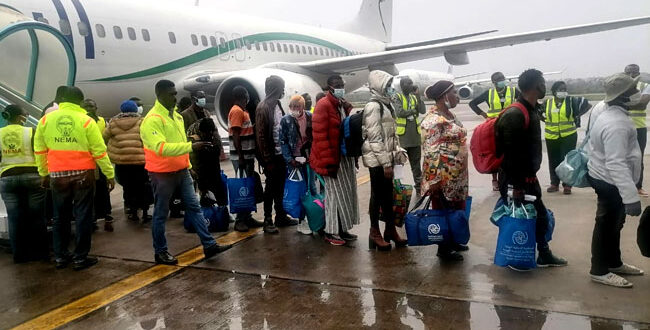
South Africa is where the word deportation becomes most misleading. Nigeria evacuated 1,490 Nigerians from South Africa in 2026 following a wave of xenophobic attacks and hostility towards African migrants. Those Nigerians were not simply part of a mass South African deportation operation.
The evacuation was voluntary, with Nigerians returning home because of security concerns surrounding attacks and hostility towards foreign nationals. Reuters reported that Nigeria completed the voluntary evacuation of 1,490 citizens, with the final flight bringing 305 people home from Johannesburg.
The circumstances surrounding the return were therefore very different from Germany, Ireland or Canada’s enforcement cases. Nigerians in South Africa were not being rounded up as part of a single deportation exercise. Instead, Nigeria organised the evacuation of citizens who wanted to leave amid fears about their safety.
The Nigerian government subsequently raised the issue with South African officials, with Abuja saying that Nigerians, including people legally resident in South Africa, had been victims of xenophobic attacks. That detail changes the entire meaning of the South African figure because legal immigration status did not necessarily protect Nigerians from the immediate security concerns surrounding the violence.
South Africa’s wider migration situation was even larger. An August 2026 Associated Press report said more than 178,000 African immigrants had left South Africa in recent months amid a government crackdown on undocumented migration and rising anti immigrant sentiment.
More than 115,000 people returned to Zimbabwe, while more than 56,000 returned to Malawi. Nigeria, Mozambique and Lesotho also recorded more than 1,000 citizens returning. Yet the majority of those departures were voluntary, while roughly 19,000 people were deported.
That distinction makes South Africa one of the most complicated parts of the 2026 story. There were genuine deportations, but there was also a much larger movement of voluntary returns. Nigeria’s 1,490 returnees were therefore connected to a broader migration crisis without being accurately described as 1,490 Nigerians deported by South Africa.
The Numbers Tell Different Stories
Placing the 6 countries beside one another makes the differences much easier to understand. Germany had 137 Nigerians reportedly deported between February and June 2026, while Ireland confirmed the removal of 6 Nigerians on July 28. Canada recorded 205 enforced removals during the first 6 months of 2026, giving it the clearest official Nigerian removal figure among the countries discussed.
The United States identified 124 Nigerians among serious criminal offenders facing deportation on July 8, but that figure does not mean all 124 had already been physically removed. Britain announced its migration partnership with Nigeria on March 19 to accelerate the return of people without a legal right to remain, but there is no comparable 2026 Nigerian removal figure established here.
South Africa recorded a very different development, with 1,490 Nigerians voluntarily evacuated following xenophobic attacks. The figure is much larger than the German, Irish or Canadian numbers, but it cannot be placed in the same deportation column because the circumstances were fundamentally different.
The figures therefore need to be read according to what actually happened to the people involved. Deportation means forced removal. Enforced removal describes a formal immigration enforcement outcome. Facing deportation describes an ongoing process. An accelerated return mechanism describes a policy change. Voluntary evacuation describes people returning home because of safety concerns.
Those differences are not technical details that belong only in government documents. They change the story Nigerians are reading.
Why Immigration Status Matters
Immigration violations remain one of the most important reasons people can eventually face removal. Someone may enter a country legally but later overstay a visa, fail to maintain the conditions attached to their immigration permission or lose the legal basis that originally allowed them to remain.
A valid visa therefore does not automatically become a permanent right to stay. Student status can have conditions, work permits can have limits and visitor visas do not automatically create a pathway to permanent residence. Once the legal basis for remaining expires or is withdrawn, immigration authorities can begin enforcement procedures.
Failed asylum claims can create another route towards removal. A person may enter a country seeking protection, make a claim and eventually exhaust the legal avenues available to challenge a negative decision. Once the process ends, the individual can become subject to removal.
Criminal convictions represent another major factor in several of the 2026 cases. Ireland’s July 28 operation involved 6 Nigerian men, with 5 reportedly carrying a combined 35 criminal convictions. The United States also highlighted 124 Nigerians facing deportation in connection with serious criminal offences and convictions.
Travel documentation can become equally important. Britain’s March 19 agreement with Nigeria specifically addressed Nigerians due for removal who did not possess valid Nigerian travel documents. That shows that immigration enforcement involves more than deciding that someone should leave. Authorities also need the administrative and practical ability to complete the return.
The Human Side Of Japa
Every statistic in the 2026 figures represents a person whose plans abroad changed in one way or another. Behind 137 reported removals from Germany are 137 individual immigration stories, while Canada’s 205 enforced removals represent 205 people whose lives were affected by a formal removal process during the first 6 months of the year.
The same applies to Ireland’s 6 removals and the 124 Nigerians identified by the United States as facing deportation. The circumstances are different, but each case involves people dealing with immigration authorities, legal consequences or decisions that can determine whether they remain abroad or return to Nigeria.
South Africa adds another human dimension because the reason for returning was connected to safety. Nigerians who had built lives in South Africa could find themselves reconsidering those lives when xenophobic attacks created an environment they considered unsafe. Voluntary evacuation can therefore be just as disruptive to a person’s plans as a forced removal, even though the legal circumstances are completely different.
Japa is often discussed through the language of opportunity. People talk about getting visas, securing admission, finding jobs, raising money for relocation and settling into a new country. Much less attention is sometimes given to the responsibilities that begin after arrival.
The reality exposed by these 2026 developments is that leaving Nigeria is not the end of the immigration journey. It is the beginning of another process in which a person’s legal status, documentation, conduct and ability to meet immigration requirements can determine how long the journey lasts.
The Real Japa Warning
The 6 countries featured in this story do not prove that the world has suddenly closed its doors to Nigerians. They show something more specific and more useful for anyone planning to relocate abroad. Immigration enforcement remains active, and governments are increasingly focused on removing people who do not have a legal basis to remain.
Germany and Ireland provide examples of actual Nigerian deportations. Canada provides official data showing 205 enforced removals during the first 6 months of 2026. The United States provides an example of Nigerians being identified for deportation without that figure necessarily representing completed removals.
Britain demonstrates how government agreements can change the machinery behind future removals, while South Africa demonstrates that Nigerians can return home for reasons completely different from immigration enforcement. Each case has its own facts, but together they provide a wider picture of the risks surrounding relocation without a secure long term legal pathway.
For anyone planning to Japa, the question should therefore go beyond how to get into a country. The more important issue is what happens after arrival. What status will allow the person to remain legally? What happens when the visa expires? Is there a realistic pathway from study to work or from temporary employment to permanent residence? What rules must be followed to keep that status?
Those questions can determine whether relocation becomes a genuine new chapter or a temporary journey that eventually ends with a return ticket.
The 2026 Exit List
Germany’s reported 137 deportations between February and June show that removal operations can happen repeatedly across several months. Ireland’s 6 removals on July 28 show how deportation orders can be executed against individuals whose cases involve criminal convictions. Canada’s 205 enforced removals during the first 6 months provide an official statistical picture of the scale of removals involving Nigerian citizens.
The United States figure of 124 shows another stage of the process, with Nigerians identified as facing deportation because of serious criminal histories while their actual removal dates were not necessarily confirmed. Britain’s March 19 migration partnership shows how governments can create systems intended to make returns faster, particularly where people have overstayed, exhausted legal options or become subject to removal.
South Africa’s 1,490 evacuated Nigerians tell a different story. Their return was voluntary and linked to xenophobic attacks, while the broader South African migration crisis involved more than 178,000 African immigrants leaving in recent months, according to an August 2026 Associated Press report. Roughly 19,000 people among the wider movement were deported, while the vast majority returned voluntarily.
That is why the phrase Japa exit list carries more meaning when the countries are examined individually. There was no single programme sending Nigerians out of 6 countries. There were separate immigration enforcement actions, policy changes, removals, pending deportation cases and voluntary returns occurring under very different circumstances.
The Question Nigerians Planning Japa Must Ask
The attraction of life abroad remains strong for many Nigerians, but the 2026 cases show why the decision cannot end with securing an entry visa. Getting through the airport, receiving admission or securing a temporary job may open the door, but staying legally requires a separate plan.
Germany’s removals, Ireland’s deportations, Canada’s enforced removal statistics, America’s deportation cases, Britain’s new return mechanism and South Africa’s evacuation all demonstrate different ways a foreign stay can eventually come under pressure. None of these developments means every Nigerian abroad is at risk of removal, and none means these countries are automatically closed to Nigerians.
The more practical lesson is that immigration status must be treated as something that needs to be maintained. Documents must remain valid, visa conditions must be respected, legal options must be understood and criminal conduct can have consequences that extend beyond the criminal justice system into immigration status.
A person planning to study abroad should understand what happens after graduation. Someone travelling for work should know how long the work permission lasts and whether the job can support a longer immigration pathway. Anyone seeking protection should understand the asylum process and the consequences of a failed claim.
The dream of Japa can still begin with the desire for a better life, but a sustainable relocation plan requires more than money for flights, tuition or accommodation. It requires a clear understanding of the legal route that keeps the person in the country after the excitement of arrival has passed.
The Story Behind The Headlines
The 2026 developments across Germany, Ireland, Canada, the United States, the United Kingdom and South Africa are not one single deportation story. They are 6 different stories connected by the growing importance of immigration enforcement, legal status, criminal records, documentation and personal safety.
Germany recorded 137 reported Nigerian deportations between February and June. Ireland confirmed 6 Nigerians removed on July 28. Canada recorded 205 Nigerian enforced removals during the first 6 months of 2026. The United States identified 124 Nigerians facing deportation on July 8, without that figure meaning all 124 had already been removed.
Britain’s March 19 agreement with Nigeria was designed to accelerate the return of Nigerians without a legal right to remain, while South Africa became the scene of a voluntary Nigerian evacuation involving 1,490 citizens after xenophobic attacks. The wider South African migration crisis involved more than 178,000 African immigrants leaving in recent months, with roughly 19,000 deported and the majority returning voluntarily.
Those numbers are important, but the distinctions between them are even more important. A deported person is not the same as someone facing deportation. An enforced removal is not necessarily identical to every use of the word deportation. A voluntary evacuation is not a deportation. A new government agreement to accelerate returns is not proof of a completed mass removal.
For Nigerians planning their next move, the message is therefore straightforward. The biggest question is not simply where the next flight to a foreign country is going. The bigger question is whether the person boarding that flight has a lawful, realistic and sustainable route to remain there.
That is the part of the Japa conversation that often receives less attention until the journey starts going in the opposite direction. In 2026, the experiences of Nigerians connected to these 6 countries show why the difference between entering a country and having the right to stay can become one of the most important distinctions of all.