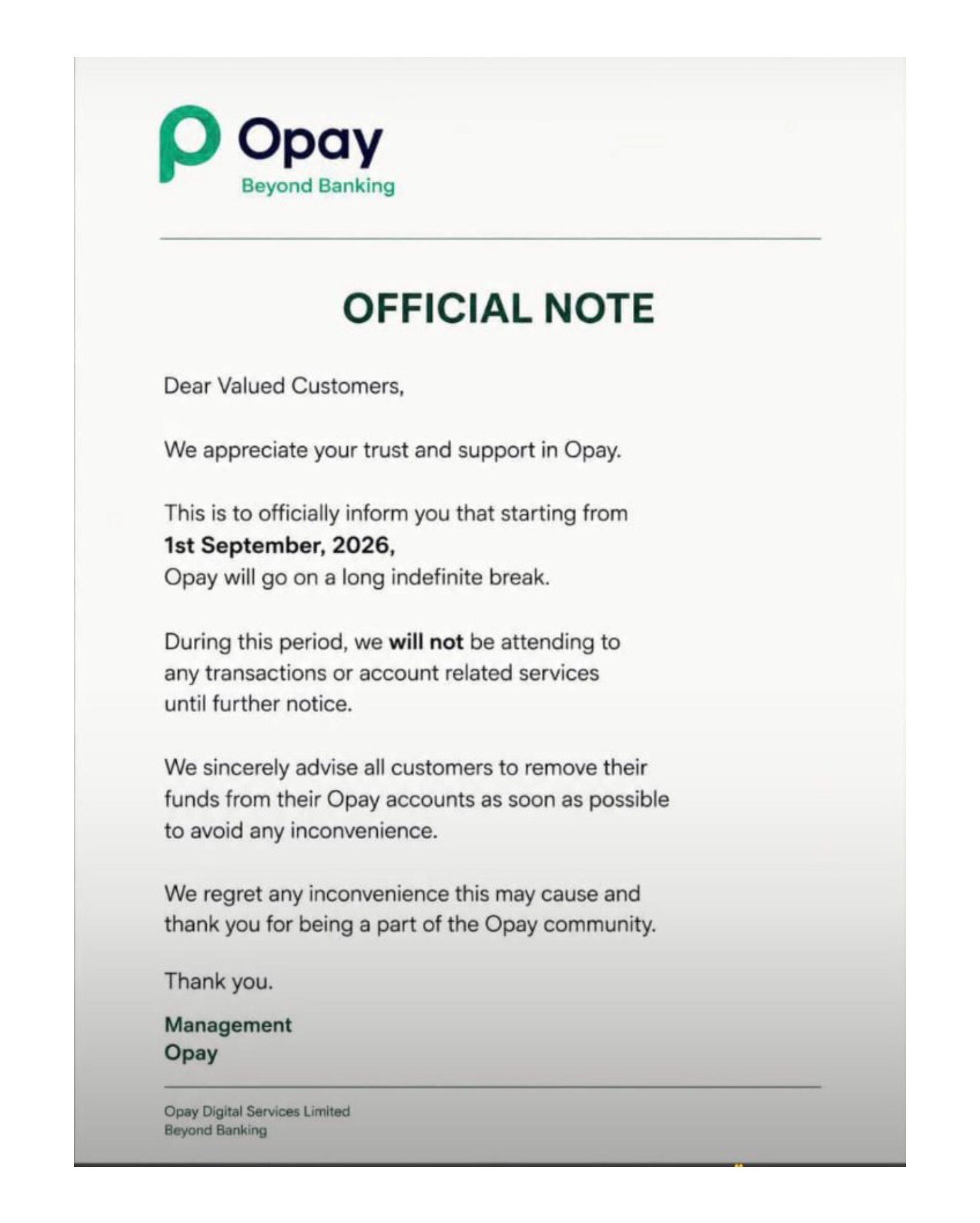
Nigerians woke up to another round of panic this past weekend after a message claiming OPay was about to go dark started making the rounds on WhatsApp, X, and Facebook. The claim was specific and alarming: OPay, it said, would begin a “long indefinite break” from September 1, 2026, freezing transactions and account services until further notice. Customers were urged to pull their money out immediately.
Predictably, the message spread fast. By Sunday it had crossed from a handful of WhatsApp groups into wider social media circulation, with screenshots of a supposed “Official Note” from OPay Digital Services Limited doing the rounds. Some users, unwilling to take chances with their savings, reportedly rushed to withdraw funds before verifying whether any of it was true.
It wasn’t.
OPay’s Response: “We’re Here, and We’re Going Nowhere”
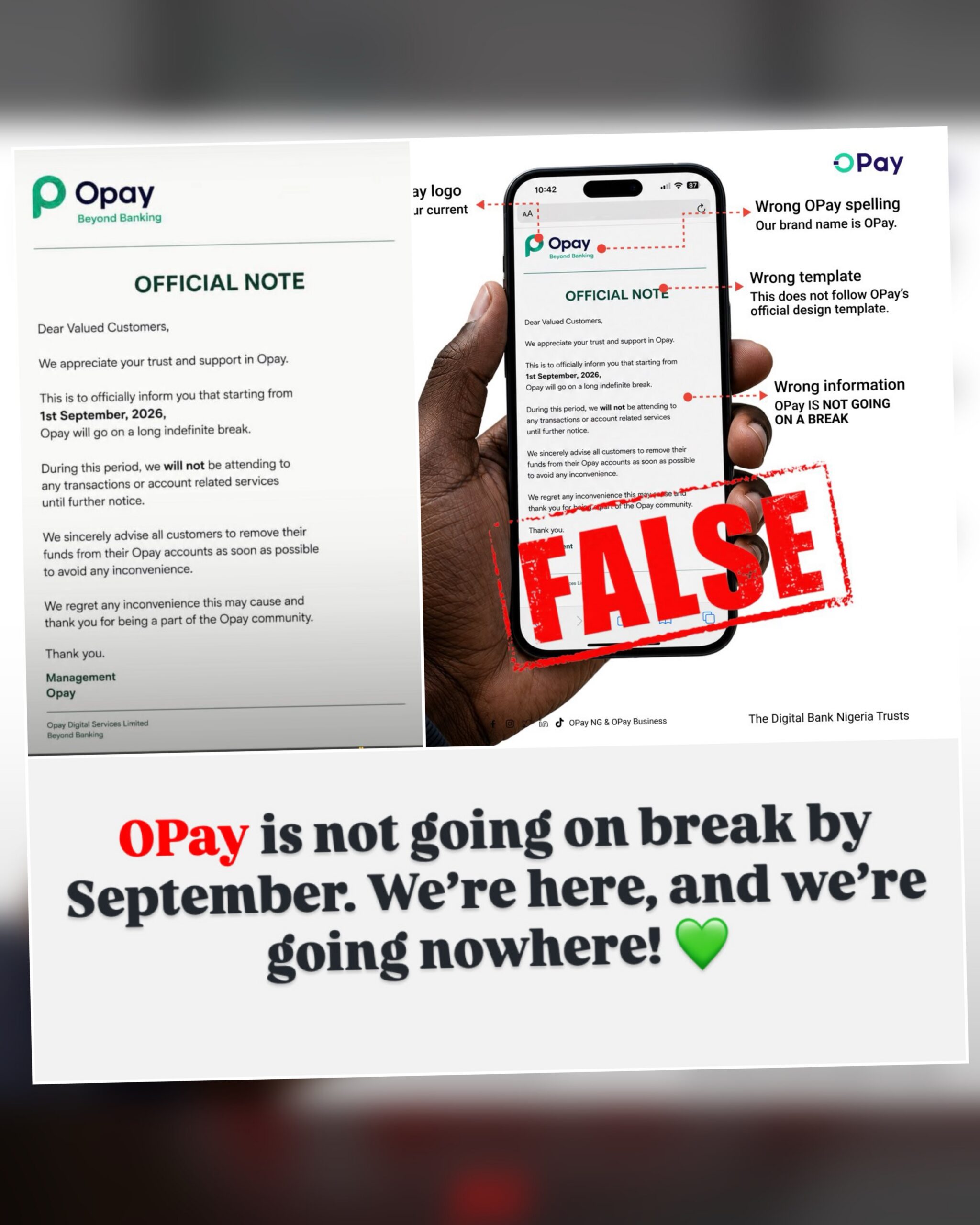
OPay moved quickly once the rumour picked up steam, issuing a direct rebuttal across its verified social media channels. The statement, titled simply “This is FALSE,” didn’t mince words.
“OPay is not going on break by September. We’re here, and we’re going nowhere!” the company said, adding a pointed reminder that genuine OPay users “know how to identify our official communications” and urging the public to look closely at the viral post for inconsistencies before sharing it further.
The company went further, confirming that its offices in Lagos, Abuja, and other locations across Nigeria remain fully open, and that services to customers, merchants, and partners are continuing without any disruption. In other words: business as usual, despite what the doctored notice claimed.
Not OPay’s First Rodeo With Shutdown Rumours
If this all feels a little familiar, that’s because it is. OPay has now had to publicly deny shutdown speculation multiple times over the past couple of years, and each episode follows a similar script, a dramatic claim spreads faster than the facts can catch up.
Back in November 2025, the company had to reassure users that their deposits and accounts were safe after a fresh wave of shutdown chatter online. Before that, in March 2026, a different story emerged claiming that OPay’s offices had been sealed by the Nigeria Revenue Service over alleged tax issues. That one turned out to be a misreading of an industry-wide directive requiring digital payment platforms to display certain statutory charges more transparently, a compliance update, not a shutdown notice. OPay clarified at the time that its offices in Lagos and Abuja remained “open and fully operational,” and that the company continued to meet its tax obligations while working with regulators.
And rewind further to 2024, and there was yet another false alarm, a WhatsApp message claiming OPay was exiting the Nigerian market altogether, also urging customers to withdraw their funds. Independent fact-checkers looked into it and found no substance to the claim after OPay denied any plans to leave the country.
The pattern is hard to miss: a fintech company as large and visible as OPay, serving tens of millions of Nigerians, has become a recurring target for shutdown hoaxes, whether driven by mischief, misinformation, or attempts to spark panic-driven withdrawals.
Why These Rumours Keep Gaining Traction
Part of what makes this particular strain of misinformation so effective is how it’s packaged. The fake notices tend to mimic OPay’s tone and formatting closely enough to look plausible on a quick scroll, especially when reshared without context by people who trust the source that sent it to them. Add in genuine anxiety Nigerians have about the stability of financial platforms, and it’s not hard to see why a message urging immediate withdrawal can spark a stampede before anyone stops to check.
OPay’s advice to customers has stayed consistent through each of these episodes: verify before you act, and treat only its official, verified channels as a trustworthy source of information about its operations. The company has repeatedly cautioned users against taking screenshots or forwarded messages at face value, however convincing they might look.
Where Things Stand Now
As it stands, OPay says nothing has changed. The fintech remains operational across Nigeria, offices are open, and there is no indication, official or otherwise, of any planned suspension of services in September or beyond. The September 1 shutdown claim has been thoroughly and publicly debunked by the company itself.
For now, OPay users can carry on using the platform as usual. But given how often this particular rumour resurfaces in one form or another, it’s a safe bet that this won’t be the last time the company has to come out and say, once again, that it isn’t going anywhere.