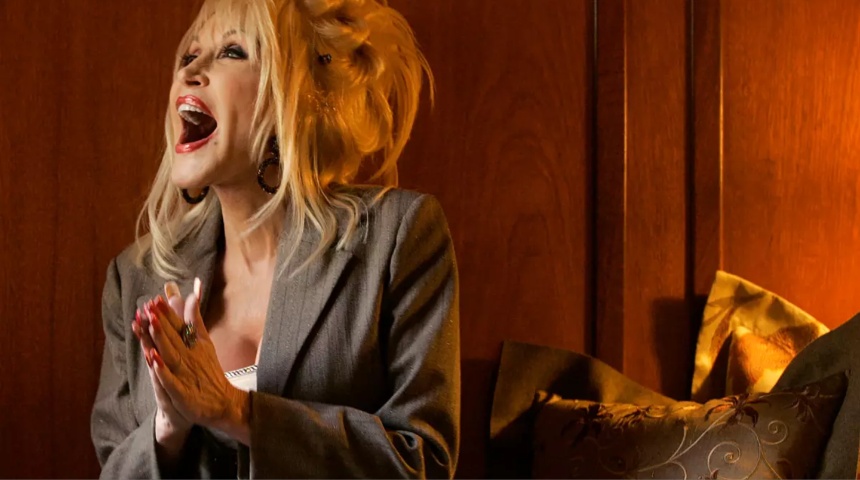
Nashville is in mourning now. Dolly Parton, the songwriter known for wearing rhinestones and who transformed her early childhood in the poor circumstances of the Great Smoky Mountains into one of the most popular careers in American entertainment, passed away on Tuesday, August 25, 2026, at her home in Nashville. She was 80 years old.
The family gave a brief statement confirming the news, which was posted on her official Instagram account by her nephew Bryan Seaver on behalf of the Parton family; in this statement it was stated that she died peacefully among her loved ones and that a small private service would take place. Marcel Pariseau, her long-time publicist, later informed the reporters that Parton had died following a short struggle with cancer, a fact which gave a painful sense of clarity to the months of speculation regarding her deteriorating health.
For millions of fans around the world, and particularly in Nigeria, where songs such as “9 to 5”, “Jolene” and “I Will Always Love You” have for decades provided the background music for weddings, road trips and Sunday afternoons, the news came as a severe blow. Dolly Parton was not just a country singer; she was a cultural institution who had managed to make rhinestones, big wigs and even bigger charity seem the most natural things in the world.
The full account of her life, of her last months, of her remarkable career, and of the wealth and legacy she leaves behind is given here.
Who Was Dolly Parton?
Dolly Rebecca Parton was born on January 19, 1946, in Sevier County, Tennessee, in the foothills of the Great Smoky Mountains; she was the fourth of twelve children and her parents were Robert Lee Parton, who was both a farmer and a construction worker, and his wife Avie Lee. According to family legend, her father gave the doctor who delivered her a bag of cornmeal because there was a lack of cash in the Parton home. The fourteen-member family resided in a one-room cabin close to Locust Ridge, a point which Parton later celebrated in songs such as “Coat of Many Colors” and “In the Good Old Days (When Times Were Bad).”
Music poured into the small cabin right from the beginning. Parton started singing and writing songs when she was a little girl, making use of a DIY instrument that she constructed from a mandolin and an old tin can long before she had a real guitar of her own. She was on Knoxville’s “Cas Walker Show” by the age of ten and had recorded her first single, “Puppy Love”, and had performed at the Grand Ole Opry, which is regarded as the mecca of country music. It was at the Opry that she met Johnny Cash, and it was his advice to her to follow her own instincts as an artist that she kept throughout her career.
The day following her graduation from Sevier County High School in 1964, Parton took a bus to Nashville, taking with her a suitcase and a abundance of song ideas. On that first day in the city she met a young man named Carl Dean, who was an asphalt contractor, outside a laundromat. They got married two years later and stayed together until his death in March 2025, their marriage lasting almost 58 years even though Dean was well known for being private and shy when it came to the spotlight.
The Career That Redefined Country Music
Parton’s first major success came when she was both a songwriter and a featured performer on “The Porter Wagoner Show” in the late 1960s; this association established her as a star but, according to her own statement, also caused tension since she was struggling to move beyond Wagoner’s influence and establish her own individuality. The choice she made to leave the show in 1974 led to one of the most well-known farewell songs ever composed, “I Will Always Love You”, which she first performed as a soft ballad and which Whitney Houston later turned into a worldwide pop hit for the film “The Bodyguard” almost twenty years later.
In the 1970s Parton established herself as a true country music superstar, as can be seen in her hits ‘Jolene’, ‘Coat of Many Colors’ and ‘Here You Come Again’, which demonstrated not only the depth of her songwriting but also her ability to appeal to a pop audience beyond country music. During the next decade she had also become a well-known figure in Hollywood, taking on a role alongside Jane Fonda and Lily Tomlin in the workplace comedy ‘9 to 5’ in 1980. The film’s theme song, which Parton composed by tapping her acrylic nails on a table to work out the rhythm, turned into an anthem for women in the workplace and won her a Grammy as well as an Academy Award nomination.
She also appeared in “The Best Little Whorehouse in Texas” and the emotionally moving ensemble drama “Steel Magnolias”, thus demonstrating that her talents went far beyond the recording studio. Over the course of a recording career that lasted more than six decades, Parton wrote an estimated 3,000 songs, put out 49 studio albums and sold over 100 million records worldwide. She currently holds the record for the greatest number of number-one singles by a woman on the Billboard country chart, having achieved 25 number-one hits, and also has 41 career top-ten country albums, a record for any artist irrespective of sex.
The number of awards she has won shows how great her success has been: she has received 11 Grammy Awards out of 51 nominations, and is a member of both the Country Music Hall of Fame and the Songwriters Hall of Fame, as well as, rather surprisingly considering the genre she is associated with, the Rock and Roll Hall of Fame, an honour she at first tried to decline but eventually accepted after both her fans and the Hall of Fame themselves persuaded her to do so and then responded to the situation by releasing a full rock album. This album, “Rockstar”, was released in 2023 and reached number three on the Billboard 200, becoming the highest-charting album of her career, with the project including collaborations featuring Paul McCartney, Elton John and Miley Cyrus, who is her real-life goddaughter.
In her last year Parton was far from slowing down; she was in fact working on a Broadway musical based on her life experience, with previews set for December 2026, together with a hotel in Nashville, a museum devoted to her career, and additional developments at Dollywood, the theme park in Pigeon Forge named after her.
Health Struggles and Cause of Death
Worries regarding Parton’s health had been growing for almost a year before her death. In September 2025 she put off some of the dates scheduled for her Las Vegas residency, giving the reason at first to fans as “nothing major”. She was then admitted to hospital because of kidney stones and a related infection, and in the months that came after her spoke frankly but cautiously about problems with her immune system and digestive system, the side effects of her medication, and episodes of dehydration and dizziness which caused her to have to cancel her appearance at Dollywood.
As Parton herself acknowledged, a great deal of that decline can be attributed to the loss of her husband. Carl Dean passed away in March 2025 at the age of 82, and later on Parton confided in her fans that she had ignored her own health while looking after him during his final illness. “I had allowed many things to go by that I should have been looking after,” she said in one of the several honest video messages that she posted over the past year to reassure concerned fans.
Even a day or so before her death, Parton was still making an effort to remain positive, informing her followers in a video message that she was “not ready to die yet” and believed her work was not finished. Reports citing people who were close to the family state that she was admitted to the Vanderbilt University Medical Center in Nashville just before she died because of complications relating to her kidneys and an autoimmune disease. Her publicist later confirmed that she had been quietly dealing with cancer, calling it a short struggle rather than a long-term illness. An exact, official cause of death has not yet been given by the family apart from this confirmation, and no details from an autopsy have been made public.
Dolly Parton’s Net Worth at the Time of Her Death
The amount of money that Parton had at the time of her death depends on the source and this highlights how difficult it is to assign a value to a career based on music royalties, ownership in theme parks, real estate, endorsements and private business activities. In the days following her death, figures given ranged from about $450 million to $650 million, and most financial publications, such as Forbes, identified the Dollywood theme park complex in Pigeon Forge, Tennessee, as the biggest part of her wealth.
In 1986 Parton made her first investment in the park and then renamed it Dollywood before expanding it to become a resort complex which included a water park and hotels. The value of her publishing catalogue, consisting of more than 3,000 songs such as “I Will Always Love You” and “9 to 5”, was estimated at about $120 million according to a 2025 Forbes assessment. She also received a regular income from her work as a published author since she co-wrote the thriller novel “Run, Rose, Run” with James Patterson and several children’s books, as well as having a number of licensing and product lines associated with her name.
In 2022 Jeff Bezos, the founder of Amazon, gave Parton $100 million as part of the Courage and Civility Award, allowing her to use the money however she wished for the causes she selected, a move which showed just how closely associated her name had become with generosity.
A Legacy Built on Giving
It is her philanthropic work, not her music, that many people are highlighting as her greatest legacy. To pay tribute to her father, who had never learned to read or write, she established the Dolly Parton’s Imagination Library in 1995. The scheme provides a free book each month to children who join it from birth until they begin school, no matter what their family’s income is. What started off as a small project offering help to children in her home county in Tennessee has now developed into a worldwide programme that sends out books in five countries.
Parton’s charitable activities went well beyond helping people to read. She donated money to medical research, including providing funding for the early stages of development of a COVID-19 vaccine, supported community relief operations following the wildfires that destroyed parts of Tennessee, and made quiet contributions to a great many causes without publicising each one. It is this desire to help without asking for recognition that explains why the tributes received since Tuesday from other musicians, actors and public figures have so often used words such as warmth, generosity and authenticity rather than merely highlighting her chart successes.
She is leaving behind her extended family, among them many nieces and nephews who used to call her “Aunt Granny”, a name which was subsequently used for a restaurant at Dollywood. Carl Dean, her husband, died before her in March 2025. The family have requested that people, instead of sending flowers, make donations to the Imagination Library.
Why Dolly Parton’s Story Still Resonates
Dolly Parton’s journey has taken her from a one-room cabin in rural Tennessee to Grammy Awards ceremonies, film sets in Hollywood, and boardrooms where she now runs a business empire worth hundreds of millions of dollars, a route that has always had a special kind of universal appeal. She openly spoke on matters of poverty and heartbreak, made fun of her own image before anyone else did, and used her large fortune to set up literacy programmes for children, many of whom will never fully understand how far she has come to be able to help them.
As tributes keep coming in from all over the world, the expression is once more used and it best sums up the situation: a life adorned with rhinestones which shone so brightly that everyone felt like family.