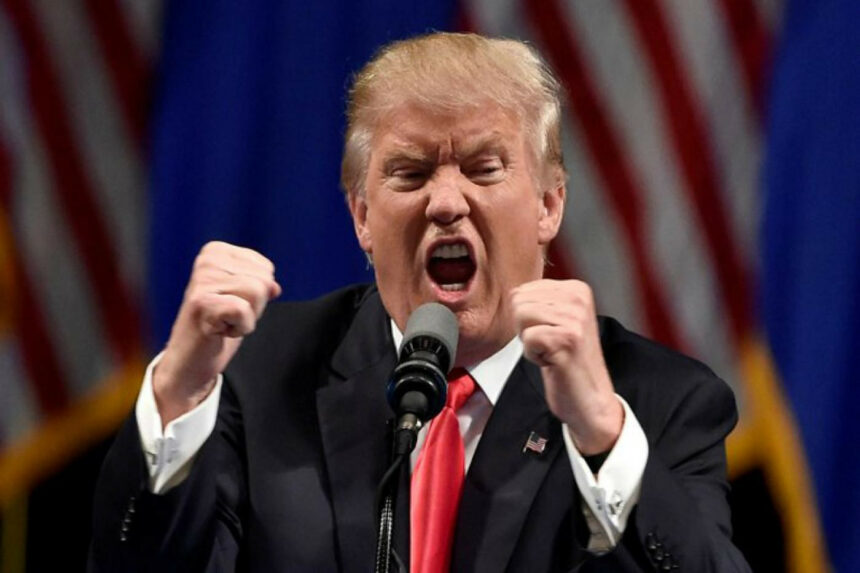
US President Donald Trump has pledged to give every American adult $5,000 if Republicans maintain control of both chambers of Congress after the November midterm elections.
The proposal, which Trump has described as a dividend, has prompted questions over whether such a payment could legally be made, how much it would cost and whether tariff revenues could provide the funds.
Legal questions surrounding the pledge
US federal law prohibits offering money in exchange for votes, while other provisions restrict promises of federally funded benefits that are tied to political support.
Trump’s proposal could avoid directly falling under those prohibitions because it has been presented as a campaign promise that would apply to eligible adults regardless of whether they voted for Republicans.
However, the president cannot unilaterally authorise such a large payment because the US Constitution requires congressional approval before money can be withdrawn from the Treasury.
Trump has previously floated similar financial promises that were never implemented, including proposals for $2,000 payments funded by tariff proceeds and $5,000 checks based on savings from major reductions in federal employment.
The potential cost to taxpayers
The scale of the proposed payment would depend on who qualifies, with the United States estimated to have about 276.8 million adults aged 18 and above in 2026.
Giving each of those adults $5,000 would require approximately $1.384tn, while limiting the programme to American citizens would reduce the estimated bill to about $1.27tn.
A narrower eligibility system based on income, similar to the approach used for pandemic stimulus payments, could bring the total cost down further.
The three rounds of stimulus payments approved by Congress during 2020 and 2021 amounted to about $814bn, according to federal oversight data.
Could the money fuel inflation?
Economists have raised concerns that distributing such a large amount of cash could increase demand and put additional pressure on prices.
The payments are sometimes likened to “helicopter money”, a term used to describe unconditional cash injections intended to stimulate an economy during periods of weak demand or deflation.
That approach could present a challenge for the US economy, where consumer inflation is currently reported at 3.4 per cent, above the Federal Reserve’s long-term target of two per cent.
Injecting roughly $1.27tn into consumers’ hands could increase spending at a time when prices are already rising, with the energy shock linked to the Iran war cited as one factor contributing to current pressures.
Research from the Federal Reserve Bank of St Louis estimated that fiscal stimulus during the COVID-19 pandemic, including assistance provided to businesses, contributed about 2.6 percentage points to US inflation.
Tariffs unlikely to cover the bill
Trump has frequently promoted tariff revenues as a source of government income, but the figures suggest they would not be sufficient to finance the proposed payments in the near term.
The US government collected a record $195bn in customs duties during the 2025 fiscal year, meaning a payout of about $1.4tn would require roughly seven years of revenue at that level.
The funding challenge has also been complicated by developments surrounding Trump’s tariff policy, after the Supreme Court struck down his major tariffs in February.
The decision required the Treasury to refund importers with interest, while net customs revenue turned negative between May and July.
Democrats condemn the proposal
Democratic politicians have strongly criticised the proposal, questioning both its motivation and its potential impact on the country’s finances.
California Governor Gavin Newsom, who has been mentioned as a possible Democratic presidential contender in 2028, described the proposal as coming from “the most corrupt man ever to occupy the Oval Office.”
“After making you sicker and poorer with his war, Donald Trump now wants to buy your vote with $5,000 in taxpayer-funded blood money,” Newsom said on X.
Representative Jamie Raskin, a Democrat from Maryland, described the proposal as the latest example of what he called a “fantastically reckless and dysfunctional presidency.”
“So after adding trillions of dollars to the national debt, driving it over an unprecedented $40 trillion, Trump now offers everyone a $5,000 political bribe (“the Trump Dividend”) if we elect Republicans to run Congress,” Raskin said.