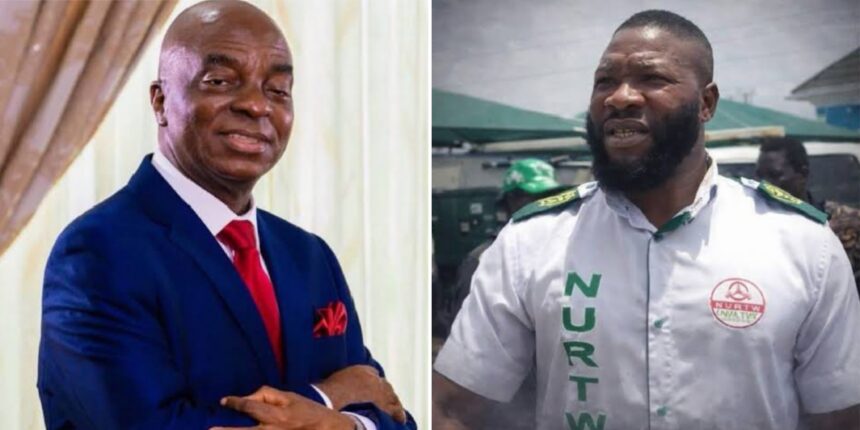
The surname Oyedepo has long been associated with one of the most recognisable religious figures in Nigeria, but another man carrying the same name has built his public identity in a completely different part of Nigerian society. One is known around the world for Christian ministry, preaching and the growth of Living Faith Church Worldwide, while the other became widely recognised through Lagos transport circles, business, entertainment and the NURTW structure. Yet their names have repeatedly appeared together because of a family connection that has been discussed for years.
That connection has become interesting again because the story is not quite as simple as a social media post suggesting that a Lagos NURTW chieftain happens to be related to a famous bishop. Koko Zaria has personally spoken about Bishop David Oyedepo as his uncle, while another member of the wider Oyedepo family later provided a different explanation of the family line. Both accounts point towards a relationship, but they do not describe it in exactly the same way.
That leaves a question worth examining closely rather than answering with a quick yes or no. How did the family connection reportedly develop, where does Koko Zaria fit into the wider Oyedepo family story, and how did 2 men connected by family end up becoming known for such dramatically different public lives?
The man behind the Oyedepo name
Bishop David Olaniyi Oyedepo was born on September 27, 1954, and his family roots are associated with Omu Aran in Kwara State, although his birthplace was Osogbo. His official church biography identifies his parents as Ibrahim and Dorcas Oyedepo and records important milestones that later shaped the ministry for which he became nationally and internationally recognised.
His religious journey began long before the enormous organisation now associated with his name. According to the official biography of Living Faith Church Worldwide, Oyedepo became born again on February 19, 1969, at the age of 15, before receiving what the church describes as his call to full time ministry on May 2, 1981. He subsequently began teaching through meetings that developed into the ministry that would become Living Faith Church Worldwide, popularly known as Winners’ Chapel.
The scale of that ministry eventually made the Oyedepo surname familiar far beyond Kwara State. Living Faith Church Worldwide identifies Oyedepo as its founder and president, while Faith Tabernacle in Ota became the international headquarters of the organisation. His influence also extended into education through institutions including Covenant University and Landmark University in Omu Aran.
That background is important because it explains why the identity of anyone claiming a close family relationship with Bishop Oyedepo naturally attracts attention. Koko Zaria did not become known because of the Oyedepo name alone, but once his full name, Ganiyu Ayinde Oyedepo, became more widely known, questions about his relationship with the bishop became almost unavoidable.
Where Koko Zaria enters the story
Koko Zaria is popularly known as Alhaji Ganiyu Ayinde Oyedepo. His public career developed largely in Lagos, where he became associated with the National Union of Road Transport Workers and the Oshodi transport environment. His later activities extended into hospitality and entertainment, creating a public identity very different from the religious world associated with Bishop Oyedepo.
The family connection became particularly noticeable because Koko did not simply share a surname with the bishop. He spoke about the relationship himself. A 2017 interview cited in subsequent reporting recorded Koko describing Bishop David Oyedepo as his uncle and his father’s younger brother. That statement is the basis for the description of Koko as Oyedepo’s nephew that has circulated over the years.

A 2020 interview also presented Koko as coming from the Oyedepo family in Kwara State and described Bishop Oyedepo as his uncle. Koko spoke about his father, his upbringing, his career choices and the road that eventually took him into transport related business.
Those interviews matter because they show that the relationship was not created recently by a viral social media account. The claim had already appeared in interviews several years before the latest renewed interest in Koko Zaria.
The family story goes deeper than the surname
The question becomes more complicated when another member of the wider Oyedepo family is brought into the picture. During a 2020 interview about the extended family, Alhaji Abdur Rahman Olabode Salaudeen Oyedepo discussed Koko Zaria and provided a different account of the immediate family connection.
Salaudeen said Koko’s own family name was Afolayan rather than Oyedepo. He explained that Koko’s father and their own father were related, although he said he did not have all the details of that relationship. He also described Koko’s father’s house as being several houses away from theirs in Omu Aran and said Koko’s father was a regular visitor to their home.
That account does not remove Koko’s own statement that Bishop Oyedepo is his uncle. Instead, it introduces another layer into the family history. One account gives a direct description of the relationship through Koko’s father, while another places the relationship within the broader extended family and questions the immediate surname and lineage.
That is why the family connection needs to be presented carefully. The public accounts support a relationship between Koko’s family and the Oyedepo family, while the exact biological route described by different family members is not completely identical.
Omu Aran connects the family story
Omu Aran is one of the most important locations in understanding the background. Bishop Oyedepo’s family roots have long been connected to the Kwara community, while the family account concerning Koko Zaria also places his father’s family around the same area.
The importance of Omu Aran is not simply geographical. It provides the setting for an extended family history in which several branches of a family could live close to one another, visit each other’s homes and maintain relationships that may not always be obvious from the surnames carried by individual family members.
Salaudeen’s account specifically described Koko’s father’s family as being close to the wider Oyedepo family. He said their houses were close and that Koko’s father regularly visited their home. That account therefore provides an independent family perspective that the connection was not merely something created because Koko later became a public figure.
The same Omu Aran connection also appears in Bishop Oyedepo’s wider biography. His official church profile identifies him with Omu Aran and lists Landmark University in Omu Aran among the institutions connected with his educational work.
The story of Bishop Oyedepo before the fame
Long before Koko Zaria became associated with Lagos transport circles, David Oyedepo had already begun developing the religious path that would define his public life. His official biography places his conversion at age 15 in 1969 and his call to full time ministry in 1981.
The years that followed transformed a personal calling into an expanding ministry. Living Faith Church Worldwide describes Oyedepo as its founder and president, while Faith Tabernacle in Ota became the headquarters of the organisation. His ministry also expanded into education, publishing and other areas associated with the church’s wider operations.
His public identity consequently became tied to preaching, Christian teaching, church administration and the development of institutions. The Oyedepo name became associated with Winners’ Chapel, Canaanland and a large network of churches across Nigeria and other countries.
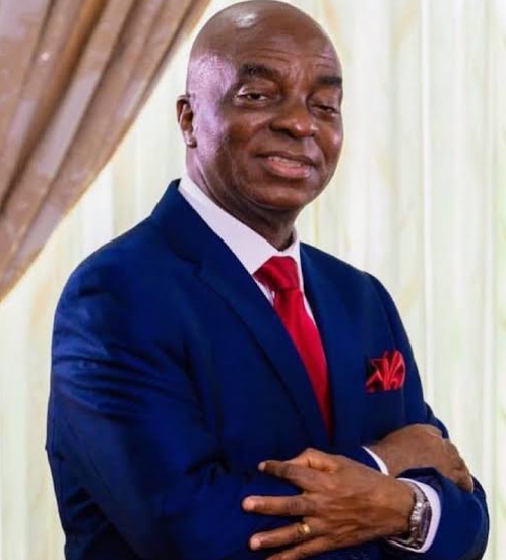
That is the background against which the Koko Zaria connection becomes unusual. The 2 men are associated with completely different professional environments, yet the family accounts place them within the same wider lineage.
Koko Zaria’s father had another kind of reputation
Koko’s account of his father provides an important bridge between the 2 sides of the story. During his 2020 interview, he described his father as a respected judge in Kwara State, a position that gave the family a professional standing quite different from the transport business Koko later entered.
Koko said his father initially opposed his decision to work in the transport business because he wanted him to continue his education and become a lawyer. His father’s objection was therefore not presented as a rejection of work itself but as disappointment that his son was choosing a career far removed from the professional path he had imagined.
The intervention of Colonel Bamgboye also featured prominently in Koko’s account. He described Bamgboye as a close associate of his father and almost a father figure who helped persuade his father to accept his decision. That eventually allowed Koko to continue along the path he had chosen.
This part of the story gives a clearer picture of the family environment from which Koko emerged. His own account does not describe a childhood centred on transport union politics. Instead, he described a father with a judicial career, family expectations around education and a young man who eventually chose another direction.
The different roads taken by 2 relatives
The contrast becomes clearer when the 2 careers are placed beside each other. David Oyedepo pursued Christian ministry after the experience he described as his call to full time ministry in 1981. His career became centred on preaching, church leadership, education and the expansion of Living Faith Church Worldwide.
Koko Zaria moved through several forms of work before becoming associated with Lagos transport. His own account mentioned trading in Lagos, selling ready made clothing around Oluwole, mechanical training and training as a turner. He also spent time in Zaria, a period that later became part of the explanation for his nickname.
The different directions taken by the 2 men are important because they show that the family connection did not translate into identical careers. One became a major Pentecostal church leader, while the other developed his reputation through transport, business and entertainment.
That contrast is perhaps one of the most interesting aspects of the family story. The same wider family name became associated with a prominent religious institution on one side and a highly visible Lagos transport personality on the other.
How Koko Zaria got the name
Koko Zaria’s nickname also connects to the earlier stages of his life. He explained that he had spent time in Zaria and often went there when things became difficult. While training in Oshodi, people began referring to him as Ayinde Zaria because of his connection with the city.
The Koko part came later. Koko explained that it was linked to the punches he used during fights, claiming that the blows could leave marks on the heads of those he fought. According to him, that eventually became part of the nickname.
He also credited MC Oluomo with giving him the name Koko Zaria. That explanation is contained in his own account of how the different names associated with him developed.
The story is significant because it shows how far his public identity moved from the formal family name Ganiyu Ayinde Oyedepo. For much of his public life, people knew him primarily as Koko Zaria rather than by the surname that linked him to Bishop Oyedepo.
His career in the transport world
Koko’s entry into transport related business eventually placed him within the NURTW structure and particularly around Oshodi. His public profile grew through his association with other prominent transport figures, especially MC Oluomo.
A 2020 interview showed just how highly Koko spoke about that relationship at the time. He described MC Oluomo as his boss and benefactor and credited him with supporting his progress. He also said MC Oluomo assisted him when he experienced financial difficulties during the construction of his hotel.
The relationship became one of the defining elements of Koko’s public life. While the Oyedepo connection explained part of his family background, MC Oluomo’s support became part of the story of his professional rise.
That distinction matters. Koko’s own account of his career did not present Bishop Oyedepo as the person who built his transport career or financed his business. He instead described his own struggles and highlighted the role of MC Oluomo in helping him during difficult periods.
The hotel became a symbol of his business journey
Koko’s Zangarza Hotel and Suites became another major part of his public identity. During his 2020 interview, he explained that the project had taken about 5 years and that he acquired the land gradually before eventually developing 3 plots.
The hotel was described as having dozens of rooms, an events hall capable of accommodating 500 people, a swimming pool, restaurant, lounge and bar. At the time of the interview, some parts of the project were still being completed.
The hotel also brought the Oyedepo connection back into public conversation because some people assumed that Koko’s famous uncle must have financed the project. Koko directly rejected that suggestion during the interview.
He said Bishop Oyedepo was living his own life and pursuing what God had asked him to do, while he was pursuing transport business. Koko credited God, his parents and particularly MC Oluomo for the support he received during the difficult period of constructing the hotel.
That statement is important when examining the family relationship because it separates the question of being related from the question of financial dependence. Koko acknowledged the family connection while rejecting the suggestion that his hotel was built with Bishop Oyedepo’s money.
Bishop Oyedepo’s family name carried its own history
The wider Oyedepo family story also contains complexities that go beyond Koko Zaria. Salaudeen’s 2020 account discussed several branches of the family and described a close family environment in Omu Aran where different members remained connected even when they did not share exactly the same surname.
His comments about Koko’s family name being Afolayan are therefore relevant because they show why a surname alone cannot settle the relationship. Family structures can extend across different surnames, particularly where different branches develop through marriages, naming patterns and separate households.
That is also why Koko’s statement about Bishop Oyedepo being his father’s younger brother and Salaudeen’s description of the wider relationship need to be placed beside each other rather than treated as if one automatically cancels the other.
The available accounts point towards a connection, but the exact genealogy requires more documentation than the interviews publicly provide.
The religious world surrounding Bishop Oyedepo
Bishop Oyedepo’s public identity has continued to be defined primarily by his ministry. Living Faith Church Worldwide describes him as the founder and president of the organisation, while his official biography records his ministry’s development from the early 1980s into a large international church network.
His work has also extended into education. Covenant University and Landmark University are both associated with his educational vision, with Landmark University located in Omu Aran, the same Kwara community repeatedly mentioned in discussions of the wider family background.
That makes the Oyedepo side of the family story important in its own right. The surname is not simply famous because of its association with a single individual. It is connected to a broader religious and educational network that has developed over decades.
Koko’s connection to that name therefore sits within a family history that existed long before he became a Lagos NURTW personality.
The 2026 story brought Koko back into the spotlight
Koko Zaria’s name became prominent again in 2026 for reasons largely connected to his relationships within the NURTW environment. His previously close association with MC Oluomo changed dramatically after public accusations made by Koko in January.
Koko accused MC Oluomo of relationships with his girlfriends and wives and alleged that his former boss had prevented him from making progress. Those statements were allegations made by Koko and should be distinguished from independently established facts.
The development was significant because of how different it was from the relationship Koko had described during his earlier interviews. In 2020, he openly praised MC Oluomo, called him his boss and benefactor and credited him with financial and professional support.
The 2026 dispute therefore became another chapter in a public life that has moved through several powerful relationships, while the family connection to Bishop Oyedepo remained part of the background.
The NURTW dispute became wider in 2026
The changes involving Koko also unfolded during a wider period of tension within the NURTW. MC Oluomo’s national leadership and his disagreements with other union figures became part of a broader leadership dispute that continued into 2026.
A reconciliation effort involving MC Oluomo and Mustapha Adekunle, popularly known as Tafa Sego, was reported on September 22, 2026, after years of disagreement. The development showed that the relationships among prominent transport union figures were continuing to evolve even as Koko remained a visible name around the same network.
Earlier, in July 2026, the Nigeria Labour Congress had intervened in the broader rivalry involving MC Oluomo and Tajudeen Baruwa, with both sides agreeing to pursue dialogue and reconciliation.
What the family accounts actually establish
There are several points that can be stated with reasonable confidence. Koko Zaria’s real name is Ganiyu Ayinde Oyedepo, and he has publicly identified Bishop David Oyedepo as his uncle. His 2017 interview was particularly direct, describing the bishop as his father’s younger brother.
The 2020 City People interview also described Bishop Oyedepo as Koko’s uncle and placed Koko within the wider Oyedepo family of Kwara State. Koko himself acknowledged that people had begun connecting his surname to the bishop and used the interview to explain that the family relationship was real.
Another family member, however, described Koko’s immediate family differently, saying his family name was Afolayan and that his father and the wider Oyedepo family were related. That account still placed the families close together in Omu Aran but did not reproduce the same immediate lineage description given by Koko.
Those details leave the strongest factual position somewhere between the 2 accounts. There is a reported family relationship, Koko has personally called Bishop Oyedepo his uncle, and another family source has confirmed that Koko’s father was related to the wider Oyedepo family. The exact biological route, however, should not be presented as completely settled without additional family documentation.
The question behind the question
The fascination with the story goes beyond whether 2 men share blood. It comes from the remarkable contrast in their public journeys. Bishop David Oyedepo became one of Nigeria’s most prominent Christian leaders after beginning his full time ministry in 1981, building Living Faith Church Worldwide and developing institutions connected with his religious and educational vision.
Koko Zaria, meanwhile, followed a very different route after the upbringing he described. His father’s career was in the judiciary, his family had professional expectations for him, and he eventually chose transport related business before becoming a recognisable NURTW figure in Lagos.
The difference does not make the family connection less interesting. If anything, it makes the story more unusual. The same wider family history produced 2 public identities that eventually became known in completely different Nigerian spaces.
One name became associated with church ministry, preaching, education and religious institutions, while the other became associated with transport, hospitality, entertainment and Lagos social circles.
So, is he truly Bishop Oyedepo’s nephew?
Based on the available public accounts, Koko Zaria has repeatedly presented Bishop David Oyedepo as his uncle, including a direct description of the bishop as his father’s younger brother. That is the clearest basis for the nephew description and explains why the relationship has been reported that way for years.
At the same time, the later family account from Salaudeen introduces a different description of Koko’s immediate lineage and says his father’s family was related to the wider Oyedepo family. That means the existence of a family connection has stronger support than any highly detailed family tree built from the available interviews.
The most accurate way to describe the story is therefore that Koko Zaria has publicly identified Bishop David Oyedepo as his uncle and has been described as a member of the wider Oyedepo family, while the precise biological relationship has been explained differently by members of the family.
As the debate continues to trend online with different reactions, that distinction preserves the part of the story that is well documented without turning an incomplete family genealogy into an established fact.
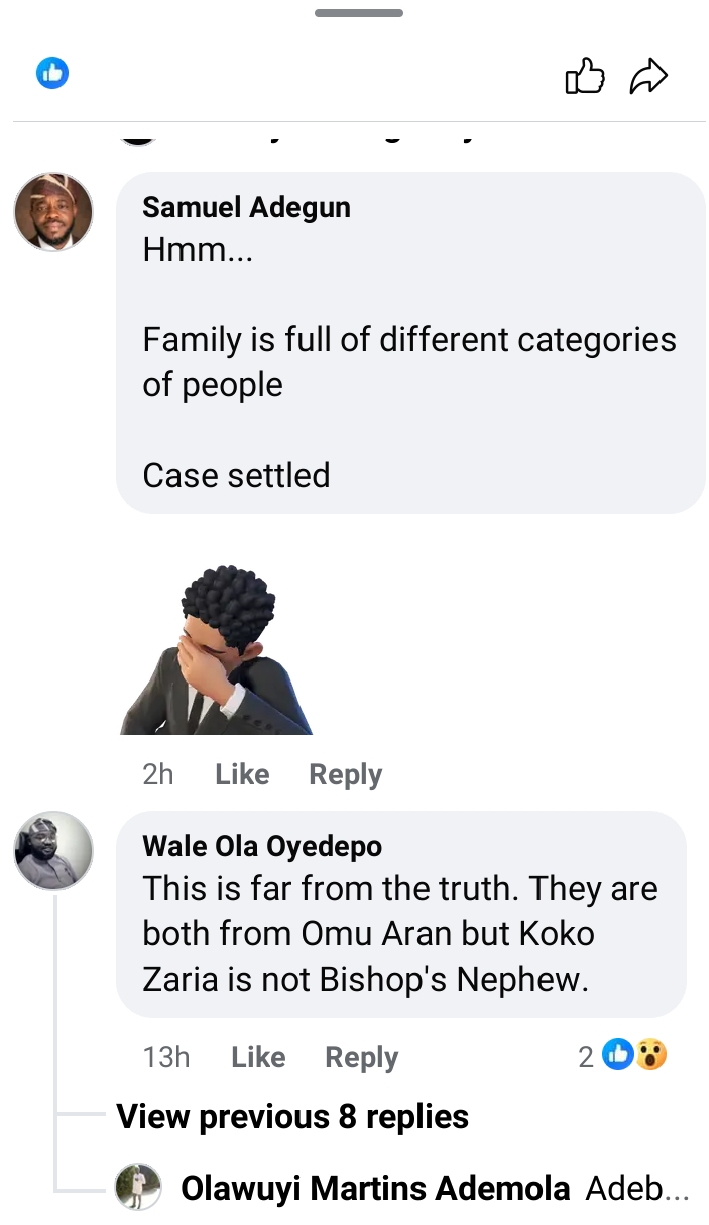
SEE SCREENSHOTS BELOW
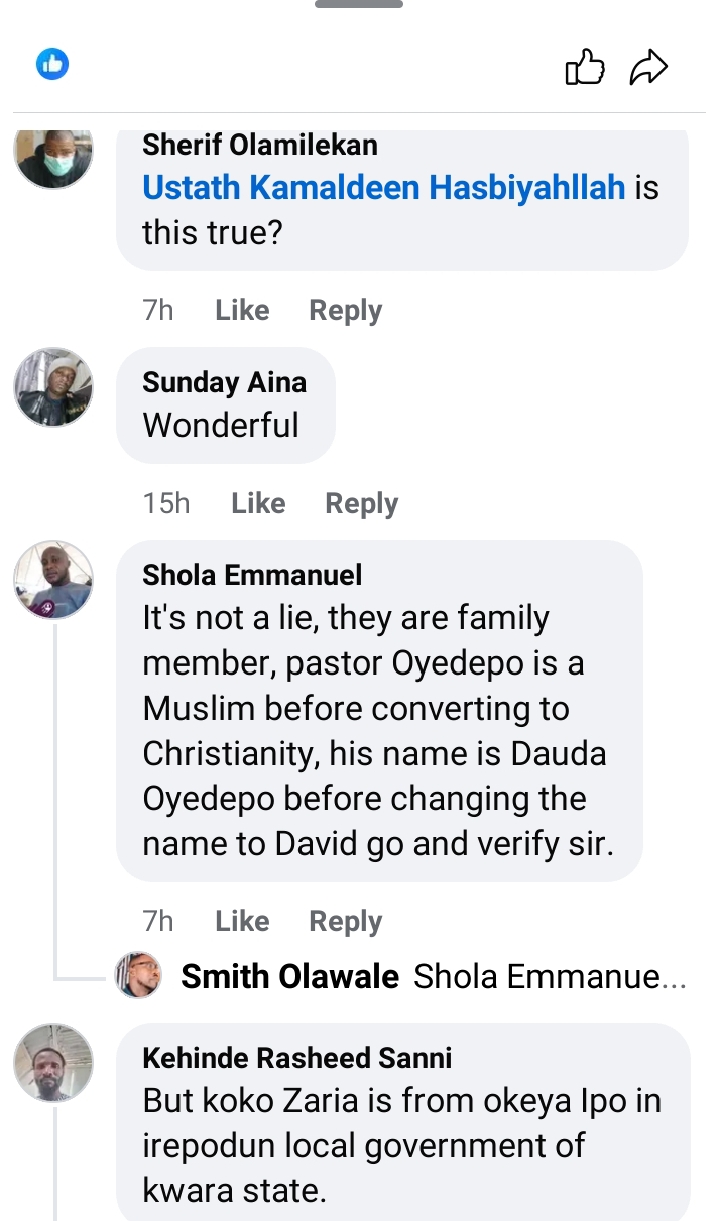
2 Oyedepo stories, 2 very different paths
Bishop David Oyedepo’s story is one of religious ministry, institution building and a career that began with the experience he described as a divine call in 1981. His official biography traces the development of Living Faith Church Worldwide from its early beginnings into a major international Christian organisation.
Koko Zaria’s story is one of a different kind of Nigerian journey. He moved through trading and technical training before entering transport related business, became associated with the NURTW, developed a close relationship with MC Oluomo, built a hotel and developed links with the entertainment industry.
The 2 stories meet at the family level, but they do not merge into the same career story. Koko himself made that distinction when explaining that his uncle was pursuing his own calling while he was pursuing transport business.
That may ultimately be the most interesting part of the entire connection. The family relationship links 2 recognisable names, but their individual lives show just how differently people from the same extended family can become known across Nigeria.
The Oyedepo name therefore carries 2 very different public stories here. One belongs to a bishop whose ministry has shaped Nigerian Pentecostal Christianity for decades, while the other belongs to Koko Zaria, a Lagos transport figure whose career has taken him through NURTW leadership circles, hospitality, entertainment and a series of highly public relationships.
And that is why the question surrounding Koko Zaria and Bishop David Oyedepo continues to return. The family connection has been publicly acknowledged, the exact lineage has been described in more than one way, and the lives of the 2 men have taken remarkably different directions from the same wider family background.