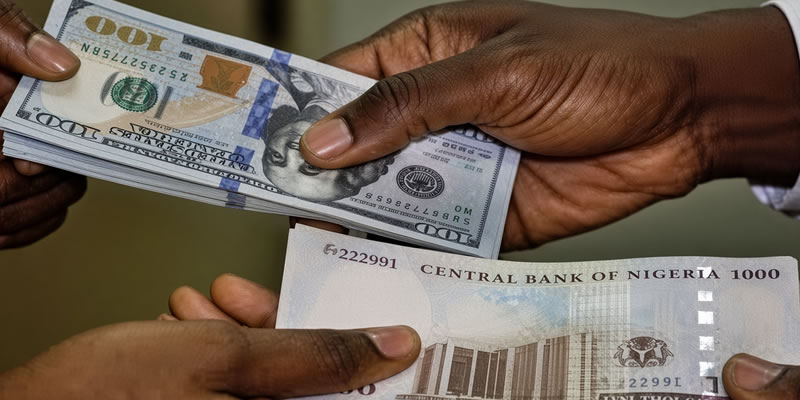
The naira closed out the trading week on a quiet note, trading within a tight band across both Nigeria’s official and street-level currency markets on Friday, September 25, 2026. For anyone converting dollars this weekend, importers settling invoices, students paying tuition abroad, or families sending support to relatives, here’s exactly where the rate stands and what’s keeping it there.
Official Market: NFEM Rate Today
At the Nigerian Foreign Exchange Market (NFEM), the official window that replaced the old I&E model, the dollar opened intra-day trading at roughly ₦1,326.00. Through the session, the rate moved in a narrow corridor between ₦1,325.82 and ₦1,327.00, eventually settling around ₦1,326.06. That’s a slight pullback from Thursday’s official close of ₦1,328.00/$1, a marginal gain for the naira rather than a loss.
| NFEM Metric | Rate (₦/$1) |
|---|---|
| Thursday’s closing rate | 1,328.00 |
| Today’s opening rate | 1,326.00 |
| Intra-day low | 1,325.82 |
| Intra-day high | 1,327.00 |
| Rate around midday | 1,326.06 |
Dealers described liquidity as comfortable heading into the weekend, with dollar supply from exporters and portfolio investors broadly keeping pace with demand from manufacturers and importers restocking ahead of the final quarter of the year.
Black Market (Parallel Market) Rate Today
Away from the regulated window, street-level trading in Lagos and Abuja, Nigeria’s two biggest currency hubs, told a similar story of calm. Bureau de change operators and street traders quoted the dollar at around ₦1,370 on the buying side, while sellers asked for between ₦1,374 and ₦1,380 per dollar.
| Parallel Market Metric | Rate (₦/$1) |
|---|---|
| Buying rate | 1,370 |
| Selling rate (low) | 1,374 |
| Selling rate (high) | 1,380 |
That puts the gap between the official and black-market windows at roughly ₦46 to ₦54, a premium that has stayed relatively narrow for months now, a far cry from the ₦400-plus spreads that used to embarrass the naira and fuel round-tripping in previous years.
Quick Conversion Guide
For readers doing quick mental math before heading out to change money, here’s what common dollar amounts fetch at today’s parallel market selling rate:
| US Dollars | Approx. Naira (Parallel Market) |
|---|---|
| $50 | ₦68,700 – ₦69,000 |
| $100 | ₦137,400 – ₦138,000 |
| $500 | ₦687,000 – ₦690,000 |
| $1,000 | ₦1,374,000 – ₦1,380,000 |
At the official NFEM rate, $1,000 would cost closer to ₦1,326,060, underscoring why anyone with access to formal banking channels still comes out ahead by avoiding the street market where possible.
Why the Naira Has Been So Steady
The stability isn’t accidental, it’s backed by numbers. Nigeria’s gross external reserves have been on a sustained climb through 2026, and the latest Central Bank of Nigeria figures show reserves hit about $54.61 billion as of September 14, 2026, a year-on-year jump of $12.76 billion from the $41.84 billion recorded in September 2025. That’s a 30.5 percent increase in twelve months, and the momentum hasn’t let up: reserves grew by roughly $707.75 million just in the first two weeks of September alone, moving from $53.90 billion to $54.61 billion.
A few forces are feeding that build-up:
- Stronger oil earnings flowing through official channels rather than being diverted around them
- Improved diaspora remittances, as more Nigerians abroad route money through licensed operators instead of informal transfer networks
- Renewed foreign portfolio investment, drawn back in by the CBN’s market-reform push under Governor Olayemi Cardoso, which has made the exchange rate more predictable and closed much of the arbitrage gap that once made round-tripping so profitable
- Steadier FX supply at NFEM, reducing the scramble that used to push importers straight to the parallel market
With reserves now covering well over a year’s worth of imports, the CBN has more firepower to smooth out the kind of sudden dollar shortages that historically sent the naira into freefall.
What This Means for You
If you’re planning to exchange money this weekend, the current spread between official and street rates is small enough that it may not be worth the hassle and risk of a street transaction unless you specifically need cash in hand. Bank customers, fintech users, and anyone with access to licensed BDCs at NFEM-linked rates are getting a noticeably better deal than they would have a year or two ago.
For businesses importing goods, the relative calm in both markets, combined with a shrinking premium, is a signal that FX planning has become easier, even if landed costs remain high by historical standards. Analysts tracking the market expect the naira to hold within its current range heading into the final quarter, barring any shock to oil prices or a sudden pullback in foreign investor appetite.
Rates change by the hour, so always confirm with your bank or a licensed BDC operator before finalising a transaction.