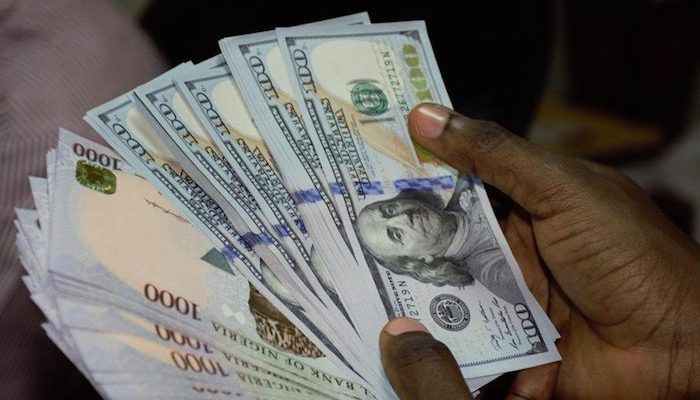
The dollar to naira rate closed the week with little change in the official market and a wide spread on the streets. The CBN’s indicative rate eased to ₦1,332.49 per dollar, while the parallel market was quoted at ₦1,363. Saturday brings no fresh trading at the official window, so the figures below are Friday’s closing positions carried into the weekend.
Dollar to Naira Exchange Rate Today at a Glance
| Market | Rate per $1 (Oct 9–10, 2026) | Note |
|---|---|---|
| Official (NFEM) | About ₦1,332 | Friday’s quotes ranged from ₦1,329 to ₦1,333 depending on the data source |
| Parallel (black market) | ₦1,361 to ₦1,385 | Varies by city, dealer and transaction size |
| Gap between the two | ₦29 to ₦56 | Roughly 2% to 4% |
The official window does not trade on weekends, so the numbers above are not expected to move until Monday. Bureau de change operators and street dealers do keep working, but Saturday volumes are usually light and quotes can shift by a few naira within hours.
Official NFEM Rate: Narrow Range Continues
The naira has barely moved at the Nigerian Foreign Exchange Market (NFEM) all month. It traded around ₦1,329.34 on Friday, and official rates have stayed between ₦1,327 and ₦1,332 since early October.
The last few sessions tell the story:
| Date | NFEM closing rate (₦/$) |
|---|---|
| September 30 | 1,329.50 |
| October 2 | 1,332.00 |
| October 5 | 1,332.90 |
| October 6 | 1,331.50 |
| October 7 | 1,331.77 |
| October 8 | 1,333.55 |
Compiled from Nairametrics, Tribune and Arbiterz reports on CBN data. Different outlets publish slightly different figures for the same day, depending on whether they quote the weighted average, the opening quote or the close.
The naira weakened by about 80 kobo on Thursday, closing at ₦1,333.55 against ₦1,332.75 the day before. That is a 0.06% move, hardly enough to change anyone’s budget. Over the past two weeks the currency has stayed within about ₦5 of the ₦1,330 mark.
Black Market Dollar to Naira Rate Today
Street rates are less tidy. Bureau de Change operators put the parallel rate at ₦1,361 on Friday, down from ₦1,362 a day earlier. Other trackers show higher numbers. Aboki Forex listed the black market at ₦1,370 on Friday evening. Another report placed it near ₦1,385.
The spread in quotes is normal. A dealer in Lagos, a trader in Kano and a Bureau de Change operator in Abuja will rarely quote the same figure, and buying and selling prices differ again. Thursday’s Aboki FX quotes, for example, were ₦1,375 for buying and ₦1,385 for selling.
| Source | Parallel market quote (₦/$) |
|---|---|
| Arbiterz (BDC operators) | 1,361 |
| Vanguard | 1,363 |
| Aboki Forex | 1,370 |
| Monierate (buy rate) | 1,378 |
| Techeconomy | 1,385 |
Anyone planning to buy physical cash should confirm the price with their own dealer before agreeing to anything.
Why the Gap Between Official and Parallel Rates Matters
The official and parallel rates are now closer than they have been for much of the past two years, yet a gap remains. Vanguard reported the margin widening to ₦29.51 from ₦28.45 the previous day. Depending on the source, the premium for street dollars ranges from about 2% to just over 4%.
Demand explains most of it. Travellers, students paying foreign fees and small importers who cannot get dollars at the official window still turn to the street. Earlier in the month, one market report described demand for physical cash as steady, which kept the parallel rate above the official NFEM level.
Trading Volumes and Reserves
Activity at the official window has been uneven. Turnover jumped 350% to $326.12 million on Thursday. It then fell 55% on Friday to $162.7 million. Swings like these are common and say little by themselves about direction.
The more reassuring number is the reserves figure. Nigeria’s foreign reserves rose to about $54.98 billion. A bigger cushion gives the Central Bank more room to supply dollars if demand picks up, which is the main reason analysts expect the official rate to stay calm.
Naira Outlook for the Coming Week
Analysts are cautious rather than pessimistic. Cowry Asset Management said the naira could stay under pressure next week, though rising reserves might offer some support. Several factors will shape Monday’s opening:
- Dollar demand: End-of-quarter import payments and school fees tend to lift demand at this time of year.
- Central Bank liquidity: Continued dollar supply to the NFEM window has kept the official rate steady.
- Policy talk: The Federal Government has been warning about the cost of reviving fuel subsidies. One headline this week carried a warning that such a move could push petrol to ₦2,000 a litre and the naira to ₦3,000 per dollar. That is a political argument, not a forecast, but it shows how closely currency and fuel policy are being watched.
- Economic growth: Nigeria’s real GDP grew 4.43% year on year in the second quarter, according to the National Bureau of Statistics.
How Much Is $100, $500 and $1,000 in Naira Today?
Using about ₦1,332 for the official rate and ₦1,370 for the parallel market:
| Amount in dollars | Official rate (₦1,332) | Parallel rate (₦1,370) |
|---|---|---|
| $10 | ₦13,320 | ₦13,700 |
| $50 | ₦66,600 | ₦68,500 |
| $100 | ₦133,200 | ₦137,000 |
| $500 | ₦666,000 | ₦685,000 |
| $1,000 | ₦1,332,000 | ₦1,370,000 |
At $1,000, the difference between the two rates is about ₦38,000, which is why the choice of channel matters for larger transactions.
Pound and Euro Against the Naira
For readers who deal in other currencies, recent CBN rates stood at about ₦1,757.93 for the pound and ₦1,489.05 for the euro, while open-market quotes were higher, at roughly ₦1,880 and ₦1,590. Those figures are from the middle of the week and may have shifted slightly.
What Nigerians Should Do
If you need dollars for tuition, medical bills or business payments, use a bank or licensed channel where you can, since the official rate is lower and the paper trail is cleaner. If you must use the parallel market, compare at least two or three dealers and avoid large cash deals with strangers. Rates are updated through the day, so check again before you transact on Monday.
Exchange rates change throughout the day and differ by dealer and location. The figures here are drawn from published reports and CBN data as of October 9–10, 2026, and are for information only.