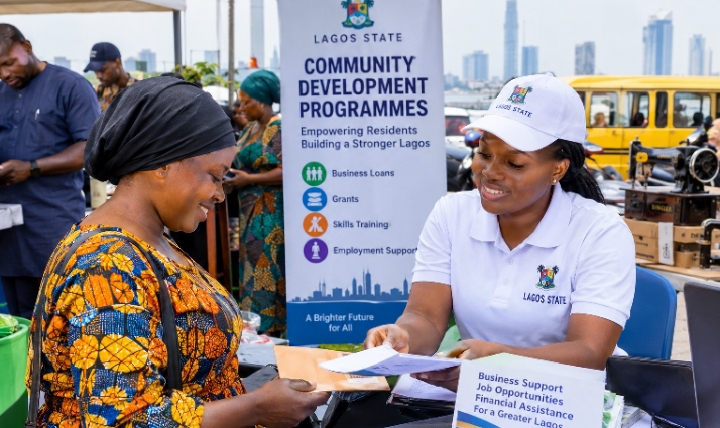
Lagos residents searching for financial assistance, business funding or support from their local councils have several government initiatives worth examining, with recent empowerment announcements bringing attention to opportunities available at the grassroots level. Some programmes provide business loans, others distribute grants or equipment, while certain initiatives focus on helping residents access existing government financing and employment services.
The details behind these initiatives reveal different levels of support, from a major local government empowerment package to business development programmes and welfare assistance for eligible households. Their announcements also raise practical questions about eligibility, application requirements and the possibility of accessing fresh funding, especially for residents hoping to benefit from programmes beyond their immediate communities.
Odi Olowo Ojuwoye LCDA’s ₦500 Million Empowerment Package
One of the most notable grassroots empowerment initiatives announced in Lagos in August 2026 came from Odi Olowo Ojuwoye Local Council Development Area. The council unveiled a ₦500 million mega empowerment package on August 17, 2026, as part of activities marking the first anniversary of its chairman, Dr Oluseyi Jakande, in office. The initiative was presented as an investment in residents’ livelihoods, with support covering different categories of economic activity rather than a single cash payment to everyone in the community.
The package includes a ₦250 million loan facility alongside grants, minibuses, catering equipment and apprenticeship tools. These components are intended to serve different groups, including small business owners, traders, artisans and residents who need equipment to earn a living. The loan facility is particularly relevant to entrepreneurs who require working capital, while equipment distribution can help skilled workers improve their services without bearing the full purchase cost themselves.
The ₦500 million headline figure represents the overall empowerment package, not an individual grant amount. The ₦250 million loan component must also be distinguished from direct grants because beneficiaries of loans are generally expected to repay the money according to the applicable terms. Residents should therefore establish the category under which they may qualify, the value of the assistance available and any conditions attached to receiving it.
Business owners who qualify could potentially use financing to purchase stock, improve their shops or increase the scale of their operations, depending on the approved terms. Artisans may benefit from the distribution of relevant tools, while transport related support and catering equipment may help beneficiaries pursue income generating activities. However, the specific allocation available to each beneficiary depends on the council’s implementation arrangements and should not be assumed from the total package value.
The announcement establishes that the programme was unveiled in August, but it does not by itself confirm that a fresh application window remains open in October. Interested residents should contact the council through its official channels to verify registration details, eligibility conditions, beneficiary selection and any new deadlines. The council’s programme is worth monitoring, particularly for residents of the area, but the availability of new applications needs to be established separately.
Who should monitor this programme?
Traders, small business owners, artisans, apprentices and residents interested in the types of equipment announced may find this initiative relevant. The best starting point is the [Odi Olowo Ojuwoye LCDA liaison office listing on LSETF’s official website](https://lsetf.ng/liaison-offices), which provides the council’s secretariat address, alongside the council’s own official communication channels. Residents should confirm that the relevant category is accepting applications before travelling or preparing documents.
Amplifier Business Clinic Offers ₦30 Million
Young entrepreneurs received another reason to monitor Lagos State’s empowerment activities following the announcement of ₦30 million in grants under the 2026 Amplifier Business Clinic. The Lagos State Ministry of Youth and Social Development disclosed the funding during the programme’s Pitch Day, held in collaboration with Pelse Consulting. The initiative is designed to help young people develop businesses from their skills, hobbies and ideas, with financial assistance forming part of a broader package of entrepreneurship support.
The programme announced grants for 10 young entrepreneurs, with the money intended to support business development. Dividing the total amount equally among 10 beneficiaries would produce an average of ₦3 million per person, although this calculation should not be treated as confirmation of an equal award for every recipient. The actual amounts depend on the organisers’ allocation arrangements, so prospective participants should rely on official programme details rather than assume that every selected entrepreneur will receive the same sum.
The Pitch Day also reflects the programme’s emphasis on helping participants present their businesses and demonstrate how their ideas can generate income. Products showcased at the event included food items, clothing, cosmetics, handbags, footwear, school bags, palm oil and other locally produced goods. The variety suggests that the initiative can be relevant to entrepreneurs across different sectors, rather than being limited to technology companies or businesses operating in a particular industry.
Beyond grants, the programme includes training and mentorship intended to help entrepreneurs manage their businesses more effectively. The organisers have indicated that beneficiaries would receive guidance on using the funds to expand their enterprises, while participants who do not receive grants may still have access to other support. This is useful for young business owners who need both financial resources and practical knowledge to turn an idea into a more sustainable source of income.
The important date for readers is October 3, 2026, when the announcement of the ₦30 million funding was reported. The Pitch Day confirms that the programme had reached a selection and presentation stage, but it does not establish that another application round is open. Young entrepreneurs should monitor the Lagos State Government official website and the Ministry of Youth and Social Development for any subsequent registration announcement, including eligibility requirements and submission deadlines.
Lagos State Employability Support Programme Phase 3
The Lagos State Employability Support Programme, known as LSESP, entered Phase 3 in August 2026, with a target of 2,000 beneficiaries across youth employment and business development categories. The programme was officially launched by the Lagos State Government in partnership with the United Nations Development Programme and other state institutions. Its purpose extends beyond direct financial assistance, focusing on practical skills, employment pathways and support for micro, small and medium sized enterprises.
Training commenced on August 3, 2026, with the first groups participating in compressed natural gas and renewable energy training, as well as digital skills development. Additional programme strands include leather works and bag making, alongside support for micro, small and medium sized enterprises. The target population includes unemployed and underemployed young people aged 18 to 45, as well as eligible business owners who can benefit from the programme’s training and enterprise development components.
The programme combines practical instruction with mentorship, potential internship placements and connections to employers and markets. These services may help participants improve their employability, develop skills that businesses need or strengthen existing enterprises. Rather than promising every participant a cash payment, the initiative concentrates on improving access to training and opportunities that can lead to employment or business growth.
Previous phases provide useful context for the new intake. The programme’s organisers reported that the first 2 phases trained more than 8,000 young people and achieved an 80 percent placement rate into employment, internships and entrepreneurship pathways. Phase 3 builds on that foundation with a target of 2,000 additional beneficiaries, although the outcome for each participant will depend on the training strand and available opportunities.
The August 3 commencement date is particularly important for anyone assessing whether the programme is newly available. Training had already begun by that date, so the announcement should not be interpreted as proof that general registration remains open in October. Residents interested in digital skills, renewable energy, leather works or enterprise development can review the official UNDP announcement on LSESP Phase 3 for the programme’s objectives and implementation details.
Ojodu LCDA Opens Access to LSETF Financing
On August 31, 2026, the Lagos State Employment Trust Fund opened a liaison office at the Ojodu Local Council Development Area secretariat to bring information about financing and employment support closer to residents. The office was provided and furnished by the council as part of its collaboration with LSETF, which supports economic empowerment, entrepreneurship and employment initiatives across Lagos State. The arrangement gives residents a local point of contact for enquiries about programmes that might otherwise be difficult to navigate.
The liaison office is intended to help residents access information about micro, small and medium sized enterprise financing, entrepreneurship development and employability initiatives. This may benefit business owners who need guidance on government loan products, people seeking support to develop their businesses and residents looking for employment related programmes. It also provides an opportunity to clarify eligibility conditions before applicants begin preparing documents or submitting forms.
The partnership builds on earlier cooperation between the council and LSETF, including an on the spot loan application exercise. Its practical value lies in improving access to existing support and connecting residents with the appropriate programme. It should not be confused with a separate cash grant scheme, and the opening of the office does not mean every resident who visits will receive a loan or financial award.
Residents interested in the service can visit the official LSETF liaison offices page which lists local government contact points and their addresses. They should confirm the current arrangements for the Ojodu office and whether staff are accepting applications for a particular product. Anyone travelling to the secretariat should first establish what services are available and what documents may be needed.
LSETF Microenterprise Loans From ₦50,000 to ₦500,000
Residents who need funding for an established small business can also examine the microenterprise loan published by the Lagos State Employment Trust Fund. The stated financing range is ₦50,000 to ₦500,000, with an interest rate of 9 percent per annum and a repayment tenor of 12 months. The facility is intended for eligible business owners who live and operate in Lagos State and need capital to maintain or improve their businesses.
The published documentation requirements include a Lagos State Residents Registration Agency identification number, a tax identification number, valid government issued identification, a Bank Verification Number and 6 months of bank statements. The business must have operated for at least 1 year, and applicants must satisfy the programme’s other eligibility requirements. Prospective borrowers should ensure that their documents are accurate and up to date before applying.
The loan could help a qualifying trader purchase inventory, replace essential equipment or increase the working capital available for daily operations. However, applicants should remember that the money must be repaid under the agreed terms, unlike a grant that does not ordinarily require repayment. Before accepting an offer, a business owner should consider whether expected sales can cover the repayments alongside rent, stock purchases, salaries and other operating expenses.
The published terms provide a useful starting point, but they do not establish that applications are currently being accepted for every product. Residents should consult the official LSETF MSME loan programme page for current requirements and any changes to the terms. They should also confirm the interest calculation, fees and repayment conditions directly with the fund before committing to a loan.
LSETF Startup Loans From ₦50,000 to ₦250,000
People preparing to establish a microenterprise may find the LSETF startup loan more suitable than the facility for businesses that have already operated for at least 1 year. The published funding range is ₦50,000 to ₦250,000, with an interest rate of 9 percent per annum and a repayment tenor of 12 months. It is intended to provide eligible startup entrepreneurs with access to capital for launching a small business.
The published requirements include identification, a LASSRA ID, a tax identification number and a Bank Verification Number. Applicants are also expected to provide a vocational training certificate issued by a certifying body recognised by Lagos State. This condition makes it important for interested entrepreneurs to check their qualifications before starting an application, particularly if their training was completed through a private institution or informal apprenticeship.
Startup capital can help cover initial expenses such as basic tools, materials, stock or other business essentials, depending on the applicant’s plan and the financing conditions. However, approval is not automatic, and applicants should avoid borrowing the maximum amount simply because it is available. A realistic business plan should show how the money will be used, how customers will be reached and how repayments can be met if sales take longer than expected.
Interested residents can use the official LSETF programme page to review the requirements and then check the LSETF application portal for the current application process. They should verify that the startup product is available before submitting their details. The published loan amount is useful information for planning, but it is not evidence of a newly opened grant window in October 2026.
LSETF Financing Up to ₦5 Million for SMEs
Businesses that require more capital can examine the LSETF financing product for qualifying small and medium sized enterprises. Its published loan range is ₦500,000 to ₦5 million, with an interest rate of 9 percent per annum and a repayment tenor of 24 to 36 months. The facility is intended for eligible businesses that have operated for at least 1 year and can satisfy the programme’s financial and documentation requirements.
The published requirements include Corporate Affairs Commission registration documents, a LASSRA ID, a tax identification number, a Bank Verification Number, valid identification and 6 months of corporate bank statements. These records help establish the company’s identity, legal registration and financial history. Applicants should ensure that their registration documents and bank records are consistent before beginning the process, as incomplete or inaccurate information may affect their applications.
Approved financing could support the purchase of machinery, expansion into new markets, increased inventory or other business needs permitted under the loan terms. The maximum amount of ₦5 million is not a guaranteed payment to every applicant, since approval and the amount offered depend on the fund’s assessment. Businesses should also calculate the cost of borrowing carefully, particularly if they have irregular revenue or existing financial obligations.
The current product details and application process can be checked through the official LSETF loan programme page. Applicants should confirm the latest interest rate, applicable charges, repayment terms and intake status before proceeding. These financing products may provide practical options for eligible Lagos businesses, but they are loans rather than free cash awards.
Eko Cares Financial Assistance for Indigent Residents
Households facing financial hardship may also want to follow the Lagos State Government’s Eko Cares financial assistance programme. On January 31, 2026, the government announced another distribution of cheques to 250 indigent residents. A further announcement published on February 8, 2026, confirmed that another 300 beneficiaries had received financial assistance cheques through the programme. These dated distributions establish that welfare assistance was being provided during the first weeks of 2026.
Eko Cares is intended to support indigent residents with welfare needs and urgent expenses, rather than provide business loans to entrepreneurs. The government has encouraged beneficiaries to use the assistance to improve their welfare, meet pressing obligations and support sustainable livelihood activities in line with their applications. This makes the initiative relevant to residents experiencing financial difficulties who may qualify under the programme’s assessment process.
The January 31 announcement stated that the latest distribution brought the number of beneficiaries since the beginning of 2026 to more than 1,000. The subsequent February 8 announcement confirmed assistance to another 300 residents. These figures refer to reported distributions at those dates and should not be presented as the number of places currently available to new applicants.
The available announcements do not establish a universal payment amount for every resident or confirm that a fresh October 2026 application round is open. Interested residents should check the official Lagos State Government announcement on Eko Cares and contact the relevant government office for updated information. Applicants should seek confirmation of eligibility, documentation and any current registration process before relying on the programme for urgent financial needs.
Surulere Empowerment Support
Surulere is another local government area associated with empowerment activities involving cash grants and business equipment. The reported support is relevant to residents and small business owners who may benefit from financial assistance or tools that can help them earn an income. Such programmes can serve different categories of beneficiaries, depending on whether the council is supporting traders, artisans, entrepreneurs or other eligible groups.
Cash grants and equipment serve different purposes, so residents should establish the precise nature of the support before applying. A grant can help a beneficiary meet an approved business or livelihood need, while equipment may provide a longer term means of earning money. The amount available, selection process and conditions for receiving assistance must be established through the council’s official announcement rather than inferred from the existence of an earlier distribution.
The available information identifies an earlier distribution in April 2026, but it does not establish a new application deadline or confirm that another round is open in October. Residents interested in participating should contact the Surulere local government administration and ask whether any new empowerment exercise has been approved. They should also confirm whether registration is limited to residents of the council area and what documentation is required.
Which Programmes Have Confirmed New Activity?
The dates attached to these initiatives help readers distinguish recent announcements from older programmes that remain useful to monitor. The Odi Olowo Ojuwoye LCDA package was unveiled on August 17, 2026, while LSESP Phase 3 commenced training on August 3, 2026. Ojodu LCDA’s LSETF liaison office was announced on August 31, 2026, and the Amplifier Business Clinic disclosed its ₦30 million grant package on October 3, 2026. These dates establish programme activity, but they do not all represent open application windows.
Eko Cares has documented distributions dated January 31 and February 8, 2026, while the Surulere empowerment information relates to an earlier distribution. LSETF’s microenterprise and SME loan products have published eligibility conditions and financing ranges, but a published product page is not the same as confirmation of a fresh intake. Residents should therefore verify each programme individually rather than assume that every initiative listed is currently accepting applications.
Where Residents Can Check for New Applications
The most practical next step is to follow official programme pages and contact the relevant government office before preparing an application. The [LSETF latest news page](https://lsetf.ng/latest-news) provides a starting point for updates on business financing and employment support, while its [liaison offices directory](https://lsetf.ng/liaison-offices) lists local government contact points. Residents can use these channels to ask whether a particular programme is accepting applications, what documents are needed and whether there is a published closing date.
Applicants should also distinguish grants from loans before making a decision. A grant is generally non repayable when its conditions are met, while a loan creates a repayment obligation. Training programmes may offer valuable skills and access to employment, but they should not be described as cash opportunities unless direct financial assistance is explicitly included in the programme terms. Understanding these differences helps residents choose opportunities that fit their needs and financial circumstances.
Anyone seeking welfare support should monitor the Lagos State Government’s official services and benefits website, while young entrepreneurs can follow announcements from the Ministry of Youth and Social Development. Residents should be cautious about unofficial registration links, agents promising guaranteed approval or requests for unexplained payments. Where eligibility is unclear, confirming details with the government office responsible for the programme is safer than relying on forwarded messages.
What Residents Should Know Before Applying
The strongest confirmed developments in this list are the August 2026 Odi Olowo Ojuwoye empowerment announcement, the August launch of LSESP Phase 3, the August 31 opening of the Ojodu LSETF liaison office and the October 3 Amplifier Business Clinic grant announcement. Each offers a different form of support, ranging from business financing and equipment to training, mentorship and welfare assistance. Their relevance depends on the applicant’s location, business status, personal circumstances and the category of assistance being offered.
The central issue for anyone seeking financial benefits in October 2026 is whether the programme is still accepting applications. Announcements and completed distributions demonstrate that an initiative exists, but they do not establish that new funding remains available. Residents should confirm current registration status, application deadlines, beneficiary requirements and the amount available to each successful applicant before making plans around any of these opportunities.
Lagos residents have several routes to investigate, particularly through local councils, LSETF and state government programmes. The next step is to verify the latest application information for the specific initiative that matches their circumstances, rather than treating every announced package as an immediately accessible cash grant.