The Lagos-Calabar coastal road project is an ambitious national infrastructure project. However, few national projects have engendered the kind of controversy and public opprobrium that have enveloped this audacious project. Cynicism and pessimism have largely characterised many Nigerians’ reaction to the project, and it has also become a subject of feisty debate between critics of the government and its supporters.
When the road was announced in 2024, there were concerns about its viability and feasibility, especially when key public procurement and contract awarding regulations were outrightly violated. The project was awarded to Hitech, a company owned by a long-standing associate of President Bola Tinubu, without any tender or competitive public bidding. But then it is not so much about the manner in which the massive project was contracted to Hitech, but the capability of the company to execute such grand and immense public infrastructure work. Everyone with a passing knowledge of what the topography and terrain of the Niger Delta looks like knows that Hitech does not have the engineering pedigree and technical know-how to execute the project.
From the outset, many Nigerians, including influential politicians and engineering experts, warned that, aside from the somewhat impracticality of the project and the secrecy surrounding the details of key components of execution, the project is a misplaced priority and defies basic concepts and operations of economic development. But these dispassionate observers were labelled naysayers and bellyachers who would never see anything good in whatever the government do.
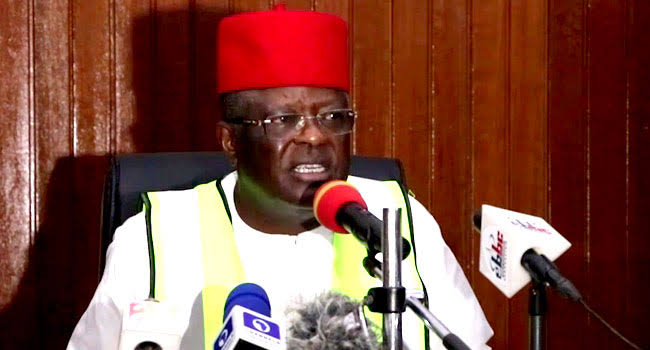
On Saturday, the Minister of Works, David Umahi, announced that the Lagos-Calabar coastal road project would no longer go through the coast after Lagos and Ogun states. Instead, it would detour inland through Edo State to join the East-West Road. Umahi calls this “a wonderful engineering decision by Mr President”. Minister Umahi cited the harsh and treacherous nature of the terrain for the decision, saying “the original route is crossing terrain with pits more than 100 metres deep and would have significantly increased construction costs.”
The Minister’s volte-face after repeatedly scoffing at the logic and reason of those who raised concerns over the project is not merely a betrayal of public trust, but an unconscionable use of public funds to advance the interests of a handful of avaricious characters who have put personal agendas over public good and national interest.
Aside from the issue of the near-impassable terrain of the Niger Delta, one of the reasons those who were not enthused about the project cited is that it is a duplicate of the existing road that links Lagos to Calabar, which is known as the East-West Road and that spending such a huge fund on a new road that links the same parts of the country that the existing East-West Road connects is an obscene level of fiscal irresponsibility, particularly when many sections of the East-West Road are in a deplorable state.
What the change in construction design has done is also to vindicate those who from the get-go opined that the project would not go beyond Lagos and Ogun State and that the goal is to use the road to link Eko Atlantic City to other strategic parts of Lagos.
After the backlash and castigation that greeted his announcement of the coastal road realignment with the East-West Road, Minister Umahi, in a subsequent press briefing, clarified, at least that was what he wanted the public to believe the presser was about, his initial announcement that sparked the furore. According to him, the 750km of the coastal road has not been abandoned or rerouted from passing through Ondo State; they only sought further approval from the President for an additional 400km to link the East-West Road to the coastal highway.
He, however, claimed that Delta, Bayelsa, and Rivers States are still being surveyed. If these three states are still being surveyed, how then was the design carried out, and how was the Environmental Impact Assessment (EIA) obtained without completing the necessary surveys? Also, his objective of correcting his initial pronouncement on the purported realignment would have been better achieved if the clarification was done through a visual presentation. That way, people will know what to expect, and the chances of misinterpretation of the project design and construction details would be reduced to the barest minimum. Using a map to illustrate the current projects and discuss the plans for future development and progress would help remove the cynicism and scepticism that mar the project.
Finally, what people expect and want to see when they hear coastal road is a highway that hugs the ocean and gives the satisfying and refreshing thrill of waves and currents crashing against the shore and the embankment of the road. But if seven out of eight states that the supposed coastal road should pass through are inland and not anywhere close to any large body of water, then what we have can no longer be called a coastal highway but another east-west road, and is the grouse of many who have opposed the project, which does not look good for the government..