
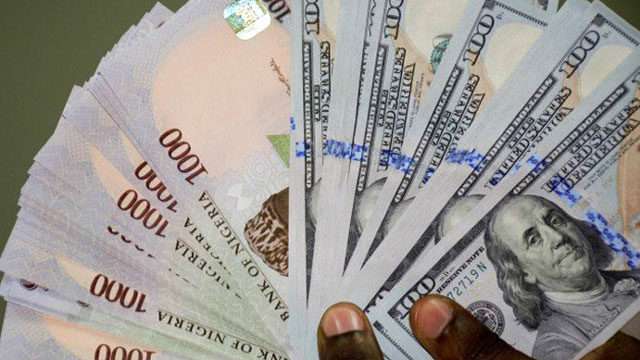
The naira opened Tuesday, October 20, 2026, much as it has for most of the past fortnight: barely moving in the official market and trading at a noticeable discount on the street.
The dollar to naira rate today stands at about ₦1,332 at the Nigerian Foreign Exchange Market (NFEM), the window regulated by the Central Bank of Nigeria (CBN). In the black market, Bureau De Change (BDC) operators are buying dollars at roughly ₦1,375 and selling at about ₦1,390, depending on the dealer, the city and the size of the deal.
That leaves a gap of around ₦58 per dollar between the two markets, or about 4.3 per cent. It is a modest spread by Nigerian standards, and a far cry from the days when the parallel market ran several hundred naira ahead of the official window.
Dollar to Naira Today at a Glance
| Market | Buying rate (₦/$) | Selling rate (₦/$) | Note |
|---|---|---|---|
| Official (NFEM / CBN) | about 1,332 | about 1,332 | Latest published CBN close was ₦1,332.26 on October 16 |
| Black market (Lagos, Abuja, Kano, Port Harcourt) | 1,375 | 1,390 | Some trackers show ₦1,365 to ₦1,380; varies by dealer |
| Gap between the two | n/a | about ₦58 | Roughly 4.3% above the official rate |
A quick word on the numbers. Different websites will give you slightly different figures for the same day, and that is normal. Some report the NFEM closing rate, others the day’s average, and a few show a live interbank quote that moves through the session. One market tracker had the naira as strong as ₦1,326 per dollar on Tuesday, while another, quoting the CBN rate, put it at ₦1,333.76. All of them sit inside a very tight band around ₦1,330.
Official Market: What the NFEM and CBN Rates Show
The official window has been remarkably quiet. According to CBN data, the naira closed at an official central rate of ₦1,332.26 per dollar on Friday, October 16, a slip of about 64 kobo from ₦1,331.61 the day before. That is a move of roughly 0.05 per cent. Turnover for the session was about $837 million, with the naira trading between ₦1,331.11 and ₦1,334.99 during the day.
Because the NFEM only trades on business days, the CBN had no fresh rate to publish over the weekend, and Monday’s figures typically appear in the bank’s data with a lag. The figure above is therefore the most recent confirmed close, and the rate you see quoted today is a carry-over with small intraday adjustments.
Here is how the official rate has behaved over the past few weeks.
| Date | Official NFEM rate (₦/$) | What happened |
|---|---|---|
| September 17 | 1,331.28 | Slight weakening from ₦1,329.56 the day before |
| September 25 | 1,328.67 | Naira steady after the CBN’s rate cut |
| October 2 | 1,329.60 | CBN central rate; buying ₦1,329.10, selling ₦1,330.10 |
| October 13 | 1,335.50 | Weakest close since August |
| October 14 | 1,332.59 | Naira regains 38 kobo as turnover jumps |
| October 15 | 1,331.61 | Gain of 98 kobo on the previous day |
| October 16 | 1,332.26 | Marginal slip of about 0.05% |
The October 13 reading is worth noting. At ₦1,335.50, the naira touched its weakest closing level since August, but it recovered within a day. Since then the currency has settled back into the ₦1,331 to ₦1,333 range where it has spent most of the autumn.
For longer-range context, the naira has come a long way from where it started the year. In late January, the official rate was around ₦1,419 to ₦1,421 and the parallel market was quoting between ₦1,482 and ₦1,495. By early June, the NFEM rate had eased to about ₦1,357. Over the past 90 days, the naira has traded between roughly ₦1,321 and ₦1,380 against the dollar, and one widely used tracker shows the currency stronger by close to 10 per cent over twelve months.
Black Market Dollar to Naira Rate Today
On the street, dealers in Lagos, Abuja, Kano and Port Harcourt are quoting about ₦1,375 when they buy dollars and ₦1,390 when they sell. That is a ₦15 spread, the same range that has held since the middle of last week.
Not every tracker agrees. One built on user reports has the parallel rate at ₦1,380 for sales and ₦1,365 for purchases, while Aboki Forex put the figure at ₦1,370 early this morning. A forex desk at GTBank quoted the dollar at ₦1,340 in the middle of last week. If you plan to trade, treat these as a guide and confirm with your dealer before you hand over cash.
| Date | Black market (₦/$) |
|---|---|
| October 13 | 1,365 buy, 1,373 sell (Lagos); up to 1,390 elsewhere |
| October 14 | 1,358 (BDC quote); 1,375 buy and 1,390 sell on another tracker |
| October 16 | 1,375 buy, 1,390 sell |
| October 18 | 1,375 buy, 1,390 sell |
| October 20 | 1,370 to 1,375 buy, 1,380 to 1,390 sell |
How Wide Is the Gap Between the Official and Parallel Rates?
At the official rate of about ₦1,332 and a black market selling rate of ₦1,390, a buyer on the street pays roughly ₦58 more per dollar. At the lower end of today’s range, ₦1,375, the premium is about ₦43, or 3.2 per cent.
Who feels it depends on where you buy. An importer who can access dollars through a bank pays less. A traveller, a student paying tuition abroad or a small trader without an allocation from the official window often has to buy from a BDC and absorb the difference. On a $10,000 purchase, the gap comes to ₦580,000.
How Much Is $100, $500, $1,000 and $5,000 in Naira Today?
| Amount in dollars | Official rate (₦1,332) | Black market, lower end (₦1,375) | Black market, upper end (₦1,390) |
|---|---|---|---|
| $1 | ₦1,332 | ₦1,375 | ₦1,390 |
| $100 | ₦133,200 | ₦137,500 | ₦139,000 |
| $500 | ₦666,000 | ₦687,500 | ₦695,000 |
| $1,000 | ₦1,332,000 | ₦1,375,000 | ₦1,390,000 |
| $5,000 | ₦6,660,000 | ₦6,875,000 | ₦6,950,000 |
The figures are straight multiplication of the rates above, so any change in the rate by the time you transact will shift the total.
Pounds and Euros: Official Rates
For travellers and students paying in other currencies, the CBN’s latest published official rates put the pound at about ₦1,765 and the euro at about ₦1,491. Parallel-market quotes for both currencies run higher, and they swing more between dealers than the dollar does.
Why the Naira Is Holding Steady
A few things are keeping the official market calm.
Reserves are at multi-year highs: Nigeria’s external reserves rose to $58.81 billion on October 12, the highest level since November 2008, according to CBN data. They had stood at $55.08 billion only three days earlier. Net reserves are reported at about $46 billion. A bigger cushion gives the central bank more room to ease pressure on the currency if demand spikes.
Oil prices have helped: Crude has traded above $100 a barrel in recent weeks, and analysts say that should keep dollar supply flowing into the economy. The CBN’s own outlook for 2026 points to stronger oil receipts, steady diaspora remittances and a smaller fuel-import bill as domestic refining improves.
Analysts are calling for more of the same: One market analyst quoted last week expects the official window to stay stable and the parallel gap to hover near 3 per cent, with oil above $100 keeping dollar supply steady. The CBN has also credited its recent policy actions for better price discovery in the market.
There is a catch. As Nairametrics noted after the naira’s slip on October 13, reserve growth does not translate into a stronger naira in every session. The currency weakened that day even as reserves climbed. Analysts also warn that the gains hold only if the CBN avoids heavy FX intervention, fiscal authorities keep spending in check and the reforms stay in place.
What to Watch This Week
- The next CBN data release: Official figures for October 19 and 20 will show whether the naira stays inside its ₦1,331 to ₦1,336 band.
- Reserve numbers: After the jump to $58.81 billion, any reversal would draw attention.
- Oil prices: A sharp drop below $100 would test dollar supply.
- End-of-year demand: School fees, festive travel and import orders usually push up demand for dollars from November, which tends to widen the parallel premium.
Frequently Asked Questions
What is the dollar to naira rate today, October 20, 2026?
At the official NFEM window, about ₦1,332 per dollar. On the black market, about ₦1,375 to buy and ₦1,390 to sell.
What is the difference between the NFEM rate and the CBN rate?
They describe the same official market. The NFEM rate comes from trades on the platform, while the CBN publishes session rates, including the closing rate and averages. The numbers often differ by a few kobo or a naira or two.
Why is the black market rate higher than the official rate?
Buyers who cannot get dollars through banks or the official window pay extra for access, convenience and speed. The premium rises when demand is high and falls when official supply improves.
How much is $100 in naira today?
About ₦133,200 at the official rate and ₦137,500 to ₦139,000 on the black market.
Does the CBN publish rates on weekends?
No. The NFEM trades on business days only, so the last Friday rate carries over until Monday.
Disclaimer: Exchange rates change throughout the day, and street quotes differ between dealers and cities. The figures here are indicative and drawn from CBN data and published market trackers as at the morning of October 20, 2026. Confirm the rate with your bank or dealer before you transact.