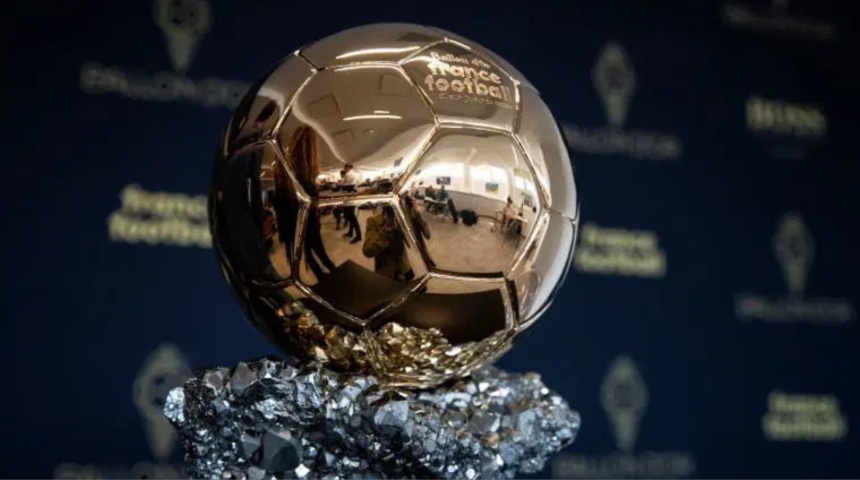
Harry Kane is the 2026 Ballon d’Or winner. The Bayern Munich striker was named the best men’s player in the world at the London Palladium on Monday night, October 26, and became the first Englishman to win the trophy since Michael Owen in 2001. He finished ahead of Real Madrid’s Kylian Mbappé and Barcelona’s Lamine Yamal.
Kane’s name now sits at the bottom of the list of Ballon d’Or winners, which starts with Stanley Matthews in 1956 and reaches its 70th edition this year. Only 2020 is missing, because France Football cancelled that year’s award during the pandemic. Below is the full year-by-year list, the players with the most wins, the tally by country and club, and the story of how Kane won it.
How Harry Kane won the 2026 Ballon d’Or
Kane’s case rested on one of the biggest scoring seasons by a forward this century. He scored 73 goals in 65 games for Bayern and England in 2025-26, 61 of them in 51 games for the club. Thirty-six came in 31 Bundesliga matches, which made him the league’s top scorer for the third season running since he left Tottenham in 2023. Bayern won the Bundesliga and the DFB-Pokal, and Kane became the first Englishman to be named Germany’s player of the year.
He also scored 14 Champions League goals, one fewer than Mbappé, before Paris Saint-Germain knocked Bayern out in the semi-finals. At the World Cup, Kane scored six goals and set up another as captain. England reached the last four, lost to Argentina, then beat France 6-4 in the third-place match. Spain went on to win the tournament, beating Argentina 1-0 after extra time in the final.
The award has been a long time coming for a player who spent most of his career without a team trophy. Kane’s best finish before this year was 10th in 2024, and he slipped to 13th in 2025 even though he had just won his first major title with Bayern. The jury put him first this time. Reports from inside the Palladium say much of the room stood and chanted “Harry!” when the result was read out. “I am almost speechless,” Kane said on stage after two-time winner Ronaldo Nazário handed him the trophy.
| Rank | Player | Club | Country |
|---|---|---|---|
| 1 | Harry Kane | Bayern Munich | England |
| 2 | Kylian Mbappé | Real Madrid | France |
| 3 | Lamine Yamal | Barcelona | Spain |
| 4 | Rodri | Barcelona (previously Manchester City) | Spain |
| 5 | Lionel Messi | Inter Miami | Argentina |
| 6 | Khvicha Kvaratskhelia | Paris Saint-Germain | Georgia |
Messi, now 39, finished fifth. Rodri, the 2024 winner, was fourth after moving to Barcelona.
Ballon d’Or winners: full list from 1956 to 2026
This is every men’s Ballon d’Or winner since France Football first handed out the award in 1956, with the club each player represented when he won. Alfredo Di Stéfano and Omar Sívori were born in Argentina; the table shows the country they played for at the time.
Winners from 1956 to 1979
| Year | Winner | Country | Club |
|---|---|---|---|
| 1956 | Stanley Matthews | England | Blackpool |
| 1957 | Alfredo Di Stéfano | Spain | Real Madrid |
| 1958 | Raymond Kopa | France | Real Madrid |
| 1959 | Alfredo Di Stéfano | Spain | Real Madrid |
| 1960 | Luis Suárez | Spain | Barcelona |
| 1961 | Omar Sívori | Italy | Juventus |
| 1962 | Josef Masopust | Czechoslovakia | Dukla Prague |
| 1963 | Lev Yashin | Soviet Union | Dynamo Moscow |
| 1964 | Denis Law | Scotland | Manchester United |
| 1965 | Eusébio | Portugal | Benfica |
| 1966 | Bobby Charlton | England | Manchester United |
| 1967 | Flórián Albert | Hungary | Ferencváros |
| 1968 | George Best | Northern Ireland | Manchester United |
| 1969 | Gianni Rivera | Italy | AC Milan |
| 1970 | Gerd Müller | West Germany | Bayern Munich |
| 1971 | Johan Cruyff | Netherlands | Ajax |
| 1972 | Franz Beckenbauer | West Germany | Bayern Munich |
| 1973 | Johan Cruyff | Netherlands | Barcelona |
| 1974 | Johan Cruyff | Netherlands | Barcelona |
| 1975 | Oleg Blokhin | Soviet Union | Dynamo Kyiv |
| 1976 | Franz Beckenbauer | West Germany | Bayern Munich |
| 1977 | Allan Simonsen | Denmark | Borussia Mönchengladbach |
| 1978 | Kevin Keegan | England | Hamburg |
| 1979 | Kevin Keegan | England | Hamburg |
Winners from 1980 to 1999
| Year | Winner | Country | Club |
|---|---|---|---|
| 1980 | Karl-Heinz Rummenigge | West Germany | Bayern Munich |
| 1981 | Karl-Heinz Rummenigge | West Germany | Bayern Munich |
| 1982 | Paolo Rossi | Italy | Juventus |
| 1983 | Michel Platini | France | Juventus |
| 1984 | Michel Platini | France | Juventus |
| 1985 | Michel Platini | France | Juventus |
| 1986 | Igor Belanov | Soviet Union | Dynamo Kyiv |
| 1987 | Ruud Gullit | Netherlands | AC Milan |
| 1988 | Marco van Basten | Netherlands | AC Milan |
| 1989 | Marco van Basten | Netherlands | AC Milan |
| 1990 | Lothar Matthäus | Germany | Inter Milan |
| 1991 | Jean-Pierre Papin | France | Marseille |
| 1992 | Marco van Basten | Netherlands | AC Milan |
| 1993 | Roberto Baggio | Italy | Juventus |
| 1994 | Hristo Stoichkov | Bulgaria | Barcelona |
| 1995 | George Weah | Liberia | AC Milan |
| 1996 | Matthias Sammer | Germany | Borussia Dortmund |
| 1997 | Ronaldo | Brazil | Inter Milan |
| 1998 | Zinedine Zidane | France | Juventus |
| 1999 | Rivaldo | Brazil | Barcelona |
Winners from 2000 to 2026
| Year | Winner | Country | Club |
|---|---|---|---|
| 2000 | Luís Figo | Portugal | Real Madrid |
| 2001 | Michael Owen | England | Liverpool |
| 2002 | Ronaldo | Brazil | Real Madrid |
| 2003 | Pavel Nedvěd | Czech Republic | Juventus |
| 2004 | Andriy Shevchenko | Ukraine | AC Milan |
| 2005 | Ronaldinho | Brazil | Barcelona |
| 2006 | Fabio Cannavaro | Italy | Real Madrid |
| 2007 | Kaká | Brazil | AC Milan |
| 2008 | Cristiano Ronaldo | Portugal | Manchester United |
| 2009 | Lionel Messi | Argentina | Barcelona |
| 2010 | Lionel Messi | Argentina | Barcelona |
| 2011 | Lionel Messi | Argentina | Barcelona |
| 2012 | Lionel Messi | Argentina | Barcelona |
| 2013 | Cristiano Ronaldo | Portugal | Real Madrid |
| 2014 | Cristiano Ronaldo | Portugal | Real Madrid |
| 2015 | Lionel Messi | Argentina | Barcelona |
| 2016 | Cristiano Ronaldo | Portugal | Real Madrid |
| 2017 | Cristiano Ronaldo | Portugal | Real Madrid |
| 2018 | Luka Modrić | Croatia | Real Madrid |
| 2019 | Lionel Messi | Argentina | Barcelona |
| 2020 | No award (cancelled because of the pandemic) | n/a | n/a |
| 2021 | Lionel Messi | Argentina | Barcelona / Paris Saint-Germain |
| 2022 | Karim Benzema | France | Real Madrid |
| 2023 | Lionel Messi | Argentina | Paris Saint-Germain / Inter Miami |
| 2024 | Rodri | Spain | Manchester City |
| 2025 | Ousmane Dembélé | France | Paris Saint-Germain |
| 2026 | Harry Kane | England | Bayern Munich |
Who has won the most Ballon d’Or awards?
Lionel Messi, with eight. Cristiano Ronaldo is next with five, and no one else has more than three.
| Player | Wins | Years |
|---|---|---|
| Lionel Messi | 8 | 2009, 2010, 2011, 2012, 2015, 2019, 2021, 2023 |
| Cristiano Ronaldo | 5 | 2008, 2013, 2014, 2016, 2017 |
| Johan Cruyff | 3 | 1971, 1973, 1974 |
| Michel Platini | 3 | 1983, 1984, 1985 |
| Marco van Basten | 3 | 1988, 1989, 1992 |
Five players have won it twice: Alfredo Di Stéfano, Franz Beckenbauer, Kevin Keegan, Karl-Heinz Rummenigge and Ronaldo Nazário. Messi’s four in a row from 2009 to 2012 is the longest streak, and between them Messi and Cristiano Ronaldo took 13 of the 15 awards handed out from 2008 to 2023. Luka Modrić in 2018 and Karim Benzema in 2022 were the only players to break in. Seven men have won in consecutive years: Cruyff, Keegan, Rummenigge, Platini, van Basten, Messi and Ronaldo.
Ballon d’Or winners by country and club
Argentina leads the country table with eight wins, all of them Messi’s. France, Germany, the Netherlands and Portugal have seven each. Kane’s win lifts England to six.
| Country | Wins | Different winners |
|---|---|---|
| Argentina | 8 | 1 |
| France | 7 | 5 |
| Germany | 7 | 5 |
| Netherlands | 7 | 3 |
| Portugal | 7 | 3 |
| England | 6 | 5 |
| Italy | 5 | 5 |
| Brazil | 5 | 4 |
Among clubs, Real Madrid and Barcelona are level on 12 wins each. Bayern Munich now has six, shared between four players: Gerd Müller, Franz Beckenbauer, Karl-Heinz Rummenigge and Kane.
What Kane’s win changes in the record books
Kane is the fifth Englishman to win the award, and the first since Michael Owen in 2001. Including Scotland’s Denis Law, he is the sixth British winner.
| Year | English winner | Club |
|---|---|---|
| 1956 | Stanley Matthews | Blackpool |
| 1966 | Bobby Charlton | Manchester United |
| 1978 | Kevin Keegan | Hamburg |
| 1979 | Kevin Keegan | Hamburg |
| 2001 | Michael Owen | Liverpool |
| 2026 | Harry Kane | Bayern Munich |
The timing is neat. The ceremony was held in London for the first time to mark 70 years since Matthews won the very first Ballon d’Or.
Bayern have not had a winner in 45 years, since Rummenigge in 1981, and Kane is the club’s first foreign winner. He is also the first Bundesliga player to win since Matthias Sammer of Borussia Dortmund in 1996.
At 33, Kane is one of the oldest winners. Only Matthews (41), Messi (36 in 2023), Benzema (34 in 2022), Lev Yashin (34 in 1963) and Di Stéfano (33 in 1959) were older or the same age when they won. Ronaldo Nazário remains the youngest, at 21 in 1997.
For African readers, the list still holds a single winner who played for an African nation: George Weah of Liberia in 1995. In this year’s ranking, Morocco’s Achraf Hakimi finished 13th and Senegal’s Sadio Mané tied for 29th.
Other 2026 Ballon d’Or award winners
Spain’s World Cup winners took most of the other prizes in London, and Alexia Putellas won the women’s Ballon d’Or for the third time, after 2021 and 2022. Barcelona’s Ewa Pajor finished second and Manchester City’s Khadija Shaw third.
| Award | Winner |
|---|---|
| Men’s Ballon d’Or | Harry Kane (Bayern Munich, England) |
| Women’s Ballon d’Or | Alexia Putellas (Barcelona, Spain) |
| Gerd Müller Trophy (men’s best striker) | Harry Kane |
| Kopa Trophy (men’s young player) | Lamine Yamal (Barcelona), third year running |
| Women’s young player | Vicky López (Barcelona) |
| Yashin Trophy (men’s goalkeeper) | Unai Simón (Athletic Club, Spain) |
| Men’s coach of the year | Luis de la Fuente (Spain) |
| Women’s coach of the year | Pere Romeu (Barcelona) |
How the Ballon d’Or winner is chosen
The men’s winner is picked by journalists, one from each of the top 100 countries in FIFA’s men’s rankings. Fans, players and coaches have no vote. Each juror ranks 10 players from a 30-man shortlist, which was unveiled on September 8. A first-place vote is worth 15 points, then 12, 10, 8, 7, 5, 4, 3, 2 and 1 down to tenth. The player with the most points wins, and ties go to whoever has more first-place votes.
Jurors had until September 28 to vote. They weigh individual performance first, then team achievements, then class and fair play. The 2026 award covered August 3, 2025 to July 19, 2026, which took in the World Cup. France Football still runs the vote, and UEFA has co-organised the award with its parent company since 2024.
Ballon d’Or winners: frequently asked questions
Who won the 2026 Ballon d’Or?
Harry Kane of Bayern Munich and England won the men’s award, ahead of Kylian Mbappé and Lamine Yamal. Alexia Putellas won the women’s Ballon d’Or.
Who has won the most Ballon d’Or awards?
Lionel Messi, with eight wins. Cristiano Ronaldo has five.
Who won the first Ballon d’Or?
Stanley Matthews of Blackpool won the inaugural award in 1956, at the age of 41.
Who won the 2025 Ballon d’Or?
Ousmane Dembélé of Paris Saint-Germain won the men’s award at the ceremony in Paris on September 22, 2025. Aitana Bonmatí won the women’s award for the third time.
Was there a Ballon d’Or in 2020?
No. France Football cancelled the 2020 award because of the pandemic.
Where was the 2026 Ballon d’Or ceremony held?
At the London Palladium on October 26, 2026. It was the first time the ceremony took place in London, and the 70th edition of the award. Thierry Henry and Kate Scott hosted.