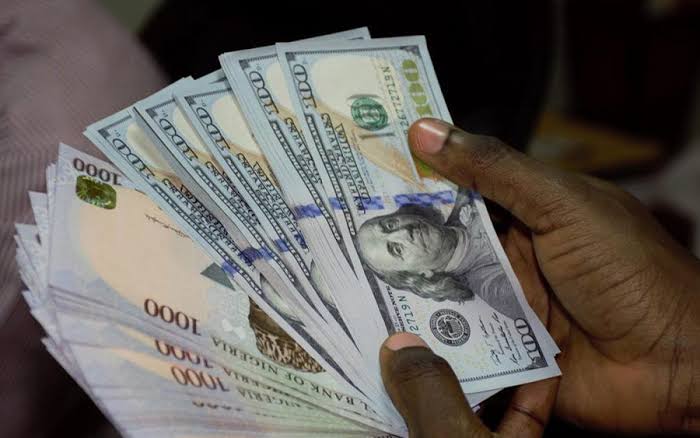
The dollar to naira rate today, Friday, November 6, 2026, is about ₦1,348.74 at the official Nigerian Foreign Exchange Market (NFEM), going by Thursday’s close. On the parallel market, popularly called the black market, dealers are quoting roughly ₦1,390 to ₦1,400 per dollar. Some Lagos operators went as high as ₦1,415 to ₦1,420 earlier this week.
The official window has been calm for days, moving by a naira or two at a time. The street market has been jumpier, and that is where this week’s real story sits.
Official NFEM and CBN Rate Today
The Central Bank of Nigeria (CBN) data showed the naira at ₦1,348.74 to the dollar on Thursday, a small depreciation from the session before. On Wednesday, November 4, the naira traded at a volume-weighted ₦1,347.80 and closed at ₦1,348.00. BusinessDay reported that the currency lost about 86 kobo that day.
That is hardly a wobble. Anyone expecting a dramatic move in the official market this week has been disappointed.
A quick note on terms, because readers often ask. The CBN’s reference rate follows the NFEM weighted average, so “CBN rate today” and “NFEM rate today” are effectively the same figure. Different trackers sometimes show numbers a naira or two apart because they pick up the rate at different points in the session. If you need the exact figure for a transaction, confirm it with your bank.
Black Market Dollar to Naira Rate Today
The street has been less settled. Dealers in Lagos, Abuja, Kano and Port Harcourt were quoting between ₦1,380 and ₦1,420 on Friday morning. Aboki Forex put the black market at ₦1,400 buying and ₦1,415 selling on Thursday. Vanguard reported about ₦1,400 for today.
Midweek was the sharp part. BusinessDay reported that the naira lost ₦23, or 1.63 percent, in the parallel market on Wednesday. The dollar moved from ₦1,385 on Tuesday to ₦1,408. That pushed the gap with the official rate to ₦61, or 4.53 percent, from ₦38 the day before.
The timing is odd. The US dollar weakened globally after the Democrats’ sweeping win in the American midterm elections, yet the naira still slid on both markets. Weakness abroad did not translate into relief at home.
Why the Naira Has Been Holding Steady
The strongest cushion is the foreign reserves. Nigeria’s gross external reserves stood at $55.22 billion on October 30, 2026, according to figures reported by Leadership. That is up from $45.57 billion in early January, a rise of 21.19 percent, and $12.02 billion higher than a year ago. Liquid reserves were $54.71 billion, with about $509 million blocked.
The CBN had projected only $51.04 billion for the end of 2026, so the target was passed some time ago. In early September the naira touched about ₦1,315 at the official window, its strongest level in two years, as reserves crossed $54 billion.
Still, the naira is not on a one-way climb. Online data shows a 52-week range of roughly ₦1,314 to ₦1,465, and the currency is down slightly from its September peak. Strong reserves help the CBN defend the official window. They do less to calm demand on the street.
Why the Official and Parallel Rates Still Differ
Three things keep the gap alive:
Access. Official dollars go through banks and authorised dealers, with documentation. Many individuals and small traders cannot get what they need there, so they turn to BDC operators.
Demand pressure. Travel, tuition, medical bills and import payments all push people to the parallel market, and this is the busy season for several of them.
Speed. Street dealers reprice within hours. The official rate settles once a day.
A gap of 3 to 5 percent is narrow compared with the years when the street premium ran past 40 or 50 percent. Whether this week’s widening continues is the thing to watch.
What to Watch Next
Today’s NFEM close. Whether the rate drifts back toward ₦1,346 or slips past ₦1,350.
The street premium. If the gap stays above ₦60, Wednesday’s jump was more than a one-day spike.
Reserve data. Further gains above $55 billion would support the CBN’s ability to hold the official window steady.
Monday’s rate. The official window does not trade on weekends, so Friday’s close will be the reference until Monday’s session, while the street market keeps quoting.
Frequently Asked Questions
What is the dollar to naira rate today?
About ₦1,348.74 officially and ₦1,390 to ₦1,400 on the black market.
What is the CBN rate today?
The CBN rate follows the NFEM average, so it is about ₦1,348.
How much is $100 in naira today?
Roughly ₦134,874 at the official rate and ₦139,000 to ₦140,000 on the street.
Why is there no new official rate on weekends?
The NFEM trades on business days, so the last Friday close stays in place until Monday. Parallel-market quotes continue through the weekend.
Why is the black market rate higher?
Limited access to official dollars and strong demand push buyers to street dealers, who price in that scarcity.
Rates change through the day. Check with your bank or a licensed BDC before any transaction.