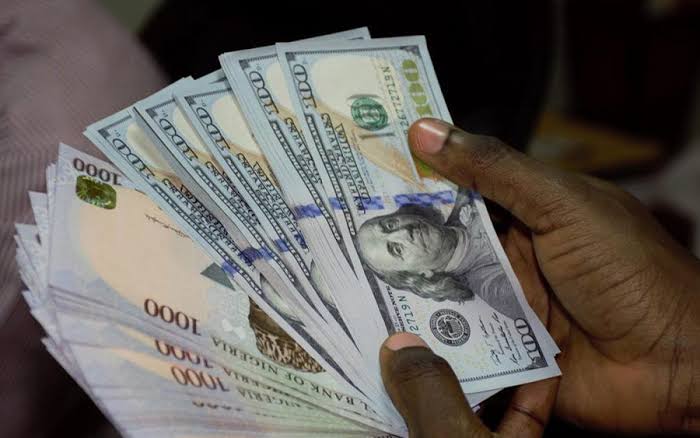
The dollar to naira rate today, Saturday, November 7, 2026, stands at about ₦1,346.79 at the official Nigerian Foreign Exchange Market (NFEM), while street dealers are quoting between ₦1,390 and ₦1,415 per dollar on the black market. The NFEM is closed at weekends, so the official figure is simply Friday’s closing rate and will not move until trading resumes on Monday.
Friday’s close was a small win for the naira. It ended a four-session slide and finished about ₦1.95 stronger than Thursday’s ₦1,348.74. Here is where each rate stands, how the two markets compare, and what could shift things when the new week opens.
NFEM and CBN Rate: A Small Bounce to End the Week
The naira spent most of the week creeping the wrong way. It slid for four straight sessions, from ₦1,346.01 at Monday’s close to ₦1,350.45 on Thursday, a combined loss of ₦4.44. Friday brought a modest recovery, with the NFEM closing at ₦1,346.79, according to a Saturday business newsletter’s market snapshot.
You will see slightly different “official” figures from site to site. The reason is simple: some outlets quote the day’s weighted average, others quote the closing price, and the two can sit a naira or two apart. The table above separates them.
Trading was patchy as well. Wednesday saw 287 deals and total NFEM turnover of about $434.54 million, according to CBN data. By Thursday, interbank activity had fallen to only 88 deals worth roughly $82.16 million. Thin volume like that is one reason prices can wobble even when nothing dramatic is happening.
Step back and the picture is calm. The naira has recently traded in a band of roughly ₦1,330 to ₦1,370, and today’s rate sits near the middle of it.
Black Market Dollar to Naira Rate Today
On the parallel market, popularly called the black market, the dollar is changing hands at about ₦1,390 to ₦1,415. Dealers in Lagos, Abuja, Kano and Port Harcourt were quoting between ₦1,380 and ₦1,420 on Friday morning, and some Lagos operators briefly touched ₦1,415 to ₦1,420 earlier in the week. The rate climbed from ₦1,385 on Tuesday to around ₦1,408 by midweek before settling in this range.
The spread between sources is normal. Street rates depend on where you stand, who is selling and how much cash a dealer has on hand that day, so treat any single number as a guide rather than a promise.
Official vs Black Market: How Wide Is the Gap?
Against Friday’s ₦1,346.79 official close, the street premium works out to between ₦43 (at ₦1,390) and ₦68 (at ₦1,415) per dollar, or roughly 3.2% to 5.1%. Proshare’s BDC average of ₦1,410 puts it near 4.7%.
That is a far cry from the gaps of previous years, when the street rate ran hundreds of naira above the official window. It is also wide enough to keep demand for dollars alive outside the banks, which is why the parallel market refuses to disappear.
Why the Naira Has Held Steady
The short answer is that the CBN has plenty of dollars to work with. Gross external reserves are about $55.13 billion, and one outlet put net reserves at a record $46 billion. Reserves have dipped for several days running from a recent peak of $55.264 billion, but the cushion remains large.
Oil is helping too. Bonny Light, Nigeria’s benchmark crude, was selling at about $115 a barrel in early November, and output is at a four-year high, so more dollars are flowing in from exports. The benchmark policy rate stands at 23.0%.
The longer view is just as encouraging for the naira. It opened 2026 at around ₦1,446 per dollar, so today’s official rate is nearly 7% stronger. It is not a one-way climb, though. Online data shows a 52-week range of roughly ₦1,314 to ₦1,465, and the currency is a little below its September high.
What to Watch When Trading Reopens Monday
• The NFEM open. Whether the rate drifts back toward ₦1,346 or slips past ₦1,350 will say a lot about demand after a quiet, thinly traded Thursday.
• Reserves. Another fall would add to the current streak. A rebound above $55 billion would strengthen the CBN’s hand.
• Oil. A sudden drop in global demand or a disruption to Nigerian output could cut dollar inflows and push the naira weaker than ₦1,350.
• Street rates. Dealers moved ₦20 or more in a few days this week, so the black market can swing faster than the official window.
• Stablecoin rules. The CBN has set a ₦15 billion minimum capital for issuers of foreign-currency stablecoins, above the ₦10 billion for naira-backed coins, a sign of how closely regulators are watching dollar flows outside the banks.
For anyone paying school fees, booking travel or settling an import bill, the practical point is that the official window has been moving by only a naira or two at a time, while the street premium shifts daily. Check live quotes before you transact.
Frequently Asked Questions
What is the dollar to naira rate today?
About ₦1,346.79 at the official NFEM (Friday’s close) and ₦1,390 to ₦1,415 on the black market.
What is the CBN rate today?
The CBN rate follows the NFEM weighted average, so it is the same figure: roughly ₦1,347 to ₦1,349 this week.
Why is there no new official rate on Saturday?
The NFEM trades only on business days. Friday’s close stays in place until Monday.
How much is $100 in naira today?
About ₦134,679 at the official rate and ₦139,000 to ₦141,500 on the street.
Why is the black market rate higher?
Demand for dollars outside the banking system, plus limited cash availability at dealers, keeps the street price above the official window.