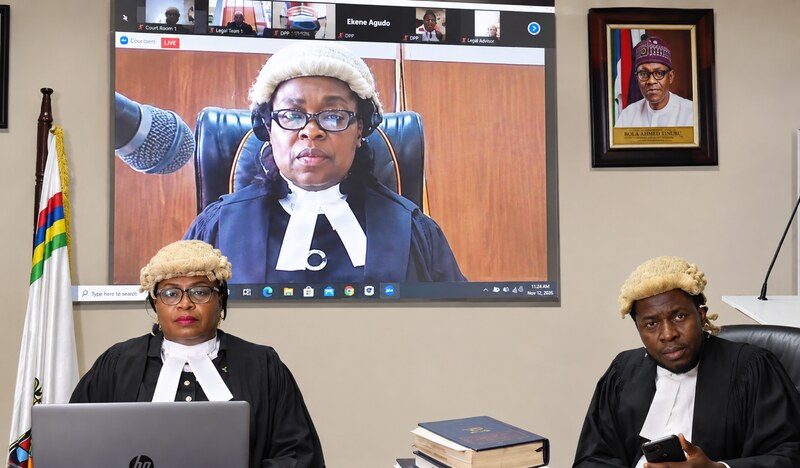
Nigeria’s courts are entering a new phase in which documents can move through electronic platforms, lawyers can attend selected proceedings remotely and some affidavits can be processed online. The changes are beginning to affect how cases are filed, how judicial records are managed and how people interact with court registries. For a country where litigation can involve repeated court visits, piles of paperwork, and long administrative delays, the shift toward digital services represents a significant change in how justice is administered.
The most prominent development arrived on July 1, 2026, when the Supreme Court introduced mandatory electronic document uploads under its new practice directions and launched the Nigeria Case Management System. Other developments have followed different timelines, including electronic filing at the Federal High Court’s Lagos Division, Lagos State’s online affidavit arrangements and the continued use of virtual hearings. Together, these reforms are changing the experience of lawyers, litigants and witnesses, while raising important questions about access, cost and the future of physical court procedures.
Supreme Court’s New Electronic Filing Rules
The Supreme Court of Nigeria took a major step towards digital administration on July 1, 2026, when Chief Justice of Nigeria, Justice Kudirat Motonmori Olatokunbo Kekere Ekun, launched the Nigeria Case Management System and introduced the Supreme Court (Mandatory Upload of Electronic Copies of Processes, Record of Appeal, and Other Matters) Practice Directions, 2026. The directions were issued under Section 236 of the 1999 Constitution, as amended, alongside relevant provisions of the Supreme Court Rules 2024. Their introduction made electronic submission a formal requirement for the proceedings covered by the new rules, rather than an optional arrangement for lawyers who preferred working with digital documents.
The requirement affects both pending cases and newly instituted matters before the Supreme Court. Lawyers handling appeals and other proceedings are expected to upload the relevant court processes and records through the prescribed electronic platform, including documents filed by their clients and processes served on them by opposing parties.
The directions also establish technical requirements for uploaded documents, including searchable PDF copies, proper document organisation and prescribed identification arrangements. This means that preparing a court document for the Supreme Court now involves more than producing a paper copy and submitting it at the registry, as legal practitioners must also ensure that the electronic version meets the court’s requirements.
The new procedure became particularly important for lawyers handling cases scheduled for hearing towards the end of 2026. On July 14, 2026, the Supreme Court issued a notice directing legal practitioners with appeals and motions listed for hearing between September and December 2026 to upload the relevant documents through the NCMS at least 30 days before their scheduled hearing dates. The notice was signed by the Chief Registrar, Kabir Akanbi, and placed additional responsibility on lawyers to ensure that their electronic records were complete before hearing dates.
The development marked a significant change in the preparation of Supreme Court cases, especially those involving extensive appeal records and several supporting documents.
How the Nigeria Case Management System Works
The Nigeria Case Management System, commonly known as NCMS, is a digital platform designed to support the management of court cases and judicial records. It provides participating courts with a framework for receiving electronic documents, organising case information, retrieving authorised records and coordinating administrative processes.
The system is also intended to improve the transmission of appeal records between courts, reducing the dependence on physical files moving from one registry to another. Its importance lies in the possibility of creating a more connected judicial process, particularly where cases move through different levels of the court system.
The initial implementation footprint announced on October 12, 2026, covered the Supreme Court, the Federal High Court’s Lagos Division and 6 State High Courts. The state courts identified were Borno, Bayelsa, Delta, Niger, Taraba and Ebonyi. The Chief Justice also announced that the Court of Appeal was expected to go live on the platform in November 2026.
That announcement indicated the direction of the rollout, although the expected date should not be confused with confirmation that the Court of Appeal had completed full operational integration nationwide. The participating institutions represent an initial phase of implementation, rather than proof that every Nigerian court has joined one national digital system.
Access to the NCMS is also structured. The official electronic filing portal identifies lawyers and court personnel with designated LegalMail accounts as authorised users of the service. Legal practitioners use accounts connected to the Nigerian Bar Association’s LegalMail arrangement, while court personnel have designated court email addresses. This means that an ordinary member of the public should not assume that they can create a personal account on the portal and independently upload any court document.
People seeking to commence proceedings may need to work through a legal practitioner or follow the specific access procedure provided by the court handling their case.
Federal High Court Introduces E Filing in Lagos
The Federal High Court also advanced its digital administration programme in 2026, with electronic filing introduced in its Lagos Judicial Division. The system was formally launched on April 28, 2026, under the leadership of the Chief Judge, Justice John Tsoho. The development followed an implementation notice indicating that electronic filing for new cases would begin on April 27, while the manual filing of new cases would end on April 24. Existing cases were to continue under their previous arrangements until their conclusion, making the change particularly relevant to new proceedings filed in the Lagos Division.
The system allows lawyers to submit court processes electronically, make payments through available payment channels and follow the progress of submitted documents through digital records. At the launch, Justice Tsoho explained that the new arrangement could reduce the time required for a file to move from the registry to a judge’s desk from days to seconds.
The reform is intended to reduce administrative delays, improve the traceability of court documents and limit the physical movement of files within the court. It also gives legal practitioners a way to handle some filing activities remotely instead of making repeated visits to the registry.
The Lagos launch should not be mistaken for a nationwide introduction across every Federal High Court division. The announcement concerned the Lagos Judicial Division, and implementation in other divisions must be established separately. Lawyers handling matters at the Federal High Court should therefore confirm the filing procedure applicable to the particular division where their cases are being heard.
This is necessary because digital services are being introduced at different speeds across the Nigerian judiciary, with some courts already operating electronic platforms while others continue to rely more heavily on traditional registry procedures.
How Electronic Filing Changes Court Procedures
Under the traditional filing arrangement, a lawyer preparing to commence a case generally produces the required documents, submits them at the appropriate registry, obtains an assessment of the filing fees and makes payment before the processes are accepted. The documents may then pass through several administrative stages before reaching the appropriate judicial officer. Electronic filing moves some of these activities onto an online platform, allowing authorised users to prepare and upload documents, make payments where supported and receive confirmation through the prescribed system. The exact procedure depends on the court, the type of case and the applicable practice directions.
Documents commonly involved in civil proceedings include writs of summons, statements of claim, statements of defence, motions, affidavits, written addresses and supporting exhibits. Under the Supreme Court’s 2026 directions, electronic copies must meet the court’s technical requirements, including searchable PDF formatting and proper organisation.
Lawyers must also ensure that documents are uploaded against the correct case and that the information submitted is complete. A successful upload should not automatically be confused with every legal requirement for filing, because the applicable rules determine when a document is treated as properly filed.
Electronic filing also does not mean that every physical document has disappeared from Nigerian courts. The Supreme Court Rules 2024 provided for electronic filing to operate alongside manual procedures until the appropriate direction was issued by the Chief Justice.
The 2026 practice directions introduced mandatory uploads for the proceedings covered by them, but requirements concerning hard copies, original documents and other supporting materials must still be checked against the relevant rules. A lawyer should not assume that a procedure introduced at the Supreme Court automatically applies to a State High Court or another Federal High Court division.
Electronic Signatures in Court Documents
Electronic signatures are another important part of the transition because a digital filing system needs a reliable way to authenticate documents submitted by lawyers and other authorised users. The Supreme Court Rules 2024 provide for electronic signatures within the court’s electronic filing framework.
This creates a legal basis for signing certain processes electronically in accordance with the rules and the technical arrangements permitted by the court’s platform. It also reduces the need to treat every document as a paper process that must be printed, signed and scanned before it can enter the electronic system.
However, the recognition of electronic signatures does not mean that any image of a signature pasted into a document will automatically satisfy every court requirement. Legal practitioners must follow the prescribed authentication process and ensure that the signature is valid for the document and proceeding concerned.
The rules governing the particular court remain decisive, especially where a document requires an oath, certification or another form of formal authentication. Electronic filing changes the way documents are submitted, but it does not remove the need for them to comply with legal requirements.
Lagos Electronic Affidavits for Everyday Services
The digital transformation also reaches Nigerians who need affidavits for personal and administrative purposes. Lagos State introduced a directive effective June 1, 2025, requiring specified general affidavits to be processed through the Lagos Court Management Information System, known as LagosCoMiS. The arrangement covers general documents such as change of name declarations, declarations of age, loss of SIM card affidavits and similar non litigation affidavits. The directive excluded affidavits used for litigation at the High Court, making it important to distinguish between ordinary administrative affidavits and sworn statements prepared for court proceedings.
LagosCoMiS provides an online route for accessing selected services of the Lagos State Judiciary. Applicants can follow the platform’s instructions, provide the required personal information, make the prescribed payment and complete the authentication procedure required for the document.
The system is intended to reduce unnecessary queues at court registries and make the processing of general affidavits more organised. For people who previously had to visit a courthouse to begin the process, the online arrangement offers a different route for accessing the service, although the precise steps and requirements depend on the type of affidavit.
The introduction of electronic processing does not mean that the legal act of taking an oath has become irrelevant. An affidavit is a sworn statement made under the prescribed procedure before an authorised person. Generating a document electronically and administering an oath are related but separate activities.
The Federal High Court’s 2024 Practice Direction on E Affidavit, which took effect on July 1, 2024, provides for electronic affidavit arrangements, while guidance issued for the Federal High Court’s Lagos filing system in 2026 indicated that a deponent was still required to appear physically before a Commissioner for Oaths for the relevant procedure. Applicants should therefore confirm the current requirements of the court or division handling their affidavit instead of assuming that every stage can be completed remotely.
Electronic Affidavits Beyond Lagos
Lagos is not the only jurisdiction where electronic affidavit services have received attention. The Federal High Court lists an E Affidavit service among its electronic facilities, alongside other online court services. The availability of this facility demonstrates that electronic affidavit processing forms part of the wider digital administration of justice. However, the existence of an online service does not establish that every category of affidavit can be processed through it or that its requirements are identical to those operated by Lagos State.
During the July 2026 controversy over judicial charges in Ogun State, the Chief Registrar of the Ogun State High Court also referred to electronic affidavit arrangements and identified Oyo, Ondo, Rivers and the Federal Capital Territory among jurisdictions with similar services. These references indicate that digital affidavit processing has spread beyond a single state, although the precise procedures, charges and categories of documents available differ. Nigerians should check the relevant judiciary’s official platform or registry before paying for an affidavit or relying on a document for an important transaction.
Virtual Hearings in Nigerian Courts
Virtual hearings allow lawyers, parties and other authorised participants to attend selected court proceedings through video conferencing or another approved electronic communication system. The arrangement can reduce travel, accommodation expenses and the time spent moving between cities for proceedings that can appropriately be conducted remotely. A lawyer based in Abuja may, for example, be able to participate in an approved Lagos hearing without travelling to the courtroom. A witness living abroad may also be considered for remote participation where the court grants permission and the applicable legal requirements are satisfied.
Virtual proceedings did not begin in Nigeria in 2026. Their expansion was accelerated by the COVID 19 pandemic in 2020, when restrictions on physical gatherings forced courts to consider alternative ways of conducting proceedings. Lagos State issued Practice Directions for Remote Hearing of Cases in April 2020, with the directions taking effect on May 4 of that year. The arrangements provided for remote hearings, electronic filing, electronic payment and specified methods of electronic communication and service. The National Judicial Council also issued guidance on virtual court sittings during the pandemic, helping to establish the basis for continued use of technology in judicial proceedings.
The Federal High Court’s 2026 Pre Election Practice Directions introduced additional technology assisted procedures for election related disputes. The directions, issued in June 2026 and subsequently amended, provided for the use of technology in managing pre election proceedings, including virtual hearings where appropriate.
They also addressed electronic notifications and communication with legal representatives, alongside arrangements for urgent filings and court operations during weekends and public holidays. These measures are significant because pre election cases operate under strict legal timelines, and delays can affect the ability of parties to obtain decisions within the periods prescribed by law.
Witnesses Abroad, Public Access to Hearings
Remote proceedings can make it possible for a witness outside Nigeria to seek permission to give evidence without travelling to the country solely for that purpose. Someone living in the United Kingdom, United States, Canada or Australia may be considered for virtual testimony where the court authorises the arrangement. The judge must still be satisfied that the witness can be properly identified, examined and cross examined, and that the arrangements protect the integrity of the evidence. The location of the witness and any legal requirements relating to evidence taken outside Nigeria may also affect whether the request is granted.
Virtual hearings can also support public observation of judicial proceedings, subject to the rules governing the particular court and case. The Supreme Court Rules 2024 provide for virtual hearings through approved audiovisual arrangements and address access to proceedings.
However, this should not be interpreted as a guarantee that every hearing will be streamed publicly on social media or made available without restriction. Certain proceedings may be held in chambers or subject to legal restrictions, while access to other hearings depends on the arrangements made by the court.
The Ogun State Dispute Over Virtual Hearing Charges
The cost of digital justice became a major issue in Ogun State in July 2026, when Nigerian Bar Association branches in Abeokuta, Sagamu and Ota organised a three day boycott of court proceedings from July 6 to July 8. The protest centred on policies introduced by the Ogun State Judiciary, including a reported charge of ₦100,000 for each virtual hearing session. Lawyers also raised concerns about an increase in oath administration charges from ₦200 to more than ₦1,500 and restrictions affecting the number of witness oaths that could be processed in a day.
The Chief Registrar of the Ogun State High Court, Olakulehin Oke, defended the policies and said the virtual hearing charge was provided for under the High Court of Ogun State Civil Procedure Rules 2024. He explained that the judiciary had invested in technology and needed resources to maintain the infrastructure supporting remote proceedings. He also maintained that virtual hearings were optional rather than a compulsory replacement for physical court sittings.
According to his explanation, virtual courtrooms had been installed in 9 of the state’s 11 judicial divisions, with more than 600 virtual hearings conducted and witnesses participating remotely from countries including Australia, Canada and the United States.
The disagreement brought the financial side of digital justice into public discussion. Electronic systems require software, internet services, equipment, technical personnel and regular maintenance, all of which involve costs. At the same time, court users already face legal fees, transport expenses and other charges associated with litigation. The Ogun dispute demonstrated that the introduction of technology does not automatically make court proceedings cheaper for everyone, particularly where additional charges are attached to particular services.
Electronic Evidence in Nigerian Courts
Electronic affidavits must also be distinguished from electronic evidence. An electronic affidavit is a sworn written statement processed through an electronic arrangement, while electronic evidence refers to information generated, stored or transmitted through digital devices and systems. Examples include WhatsApp conversations, emails, bank transfer records, CCTV footage, electronic contracts and social media publications. These materials may become relevant in court proceedings, but their existence in digital form does not automatically make them admissible.
The Evidence Act 2011, as amended, is central to the treatment of computer generated evidence in Nigeria. Section 84 addresses the conditions governing the admissibility of statements contained in documents produced by computers. A party relying on such material may need to satisfy the applicable requirements concerning its production and authenticity. This is particularly important in disputes involving electronic transactions, online communications and digital records, where the opposing party may challenge whether the material is genuine or has been altered.
The Challenges Facing Digital Courts
The success of digital justice depends heavily on reliable infrastructure. Virtual hearings require stable internet connections, while electronic filing depends on the ability to upload documents and access court platforms when necessary. A lawyer in a major city may have access to reliable broadband, but a litigant or witness in a rural community may struggle with network interruptions and the cost of mobile data. Power supply, equipment maintenance and technical support also affect whether court services can operate consistently.
Cybersecurity is another major responsibility because electronic court records may contain financial details, personal information, medical records, property documents, witness statements and confidential business information. Judicial institutions must protect their systems against unauthorised access, data theft, manipulation and accidental loss. The Nigeria Data Protection Act 2023 also forms part of the wider legal environment governing the handling of personal information. Digital records can improve accountability, but only when the systems storing them have appropriate security controls and reliable oversight.
Differences between state and federal judicial systems create another challenge. Some courts operate their own digital platforms, while others are joining the NCMS in stages. LagosCoMiS, the Federal High Court’s electronic services and the NCMS serve different institutional purposes, and their procedures are not interchangeable. Lawyers handling cases in several jurisdictions may need to work with different platforms, user requirements and filing arrangements. The expansion of the NCMS could improve coordination among participating courts, but its national reach remains a phased process.
What the Changes Mean for Ordinary Nigerians
For ordinary Nigerians, the most immediate benefit of digital court services is the possibility of completing selected activities without repeated visits to a courthouse. A person who needs a general affidavit in Lagos can use the prescribed online process, while a lawyer handling a case in the Federal High Court‘s Lagos Division can submit new processes through the electronic filing system. Lawyers and parties may also participate remotely in hearings where the court permits it. These services offer practical alternatives, although access still depends on the court, the type of proceeding and the rules governing the service.
The changes do not mean that every Nigerian can file every case from a smartphone, that all court hearings have become virtual or that physical court attendance has ended. Some documents still require particular authentication procedures, some proceedings require physical attendance and some court platforms are restricted to authorised users. People seeking legal remedies must also ensure that their cases are filed in the correct court and comply with the relevant procedural rules. Digital access can make parts of the process easier, but it does not replace the legal requirements for commencing and conducting a case.
Nigeria’s digital court revolution is therefore a gradual transformation rather than a single nationwide switch from paper to technology. The Supreme Court’s mandatory electronic uploads from July 1, 2026, the NCMS rollout, the Federal High Court’s Lagos e filing system, electronic affidavit services and virtual hearings represent important stages in that process.
The next phase will depend on how effectively more courts are connected, how securely records are managed and whether the services remain accessible to people who have limited internet access or cannot afford additional digital charges. The direction is clear: Nigerian justice is becoming more digital, but the success of the transition will ultimately depend on whether the new systems make court processes more efficient without placing additional barriers between citizens and justice.