


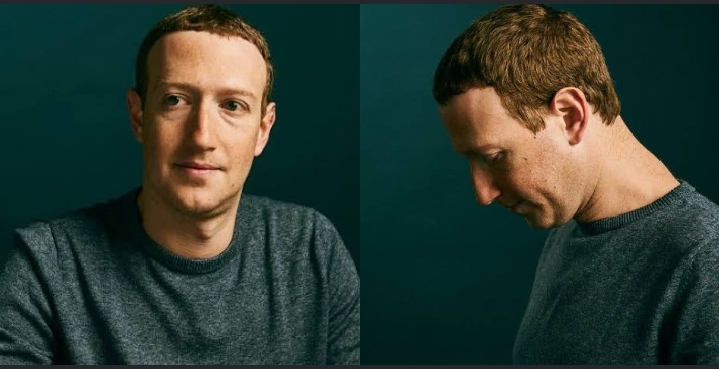
There are moments in history when silence speaks louder than invention. Inside Meta’s Menlo Park headquarters one late evening in 2022, long after most employees had logged off, the building seemed to hum with an artificial calm. The air was thick with the residue of human ambition—screens still glowing faintly, half-drunk coffees lined up beside keyboards, the quiet whir of servers running like the heartbeat of an invisible city. Mark Zuckerberg stood by the glass wall of his office, staring at his reflection in the black window. For a moment, the man who had built the most connected civilization in human history found himself completely, unavoidably alone.
He didn’t blink. On the other side of the glass, his image stared back, unyielding and cold, a digital ghost framed by the blue hue of monitors. It was the same hue that had become Facebook’s signature — that soothing, endless blue, meant to keep users scrolling, liking, refreshing. But that night, it looked more like the light from a screen he could no longer turn off. He’d built something that had stopped belonging to him. Every algorithm, every “Like,” every notification had become part of a living organism, feeding and breeding on human attention.
For two decades, Zuckerberg had pursued connection as both creed and currency. But the irony that haunted the halls of Menlo Park that night was simple: the more the world connected, the less it seemed to belong to itself. And perhaps that was his deepest creation — not a network, but an addiction that mimicked intimacy while erasing it. He had once said, “The thing I really care about is connecting everyone in the world.” Now, he wasn’t sure if “connection” still meant what he thought it did.

He turned off his phone, only to feel the phantom buzz of a message that didn’t exist. Somewhere between the hum of the servers and the silence of the office, he realized: even with every device powered down, he was still logged in.
When the Code Began to Feel Like Skin
The story of Facebook has always been one of blurred boundaries — between code and consciousness, data and desire, the physical and the virtual. Zuckerberg didn’t invent connection; he digitized it. What started in a Harvard dorm room in 2004 was less a business and more a social experiment conducted at planetary scale. It was a test of what would happen if the most basic human impulse — to be seen — could be turned into software.
As the platform evolved, its language began to merge with the language of life itself. Friendship became a button. Emotions became metrics. Birthdays, deaths, weddings, breakups — all transcribed into timelines. The real and the virtual began to cohabit. Users weren’t just using Facebook; they were performing on it, curating their existence through filtered authenticity. For the first time, people began to think about themselves as profiles.
Inside the company, engineers spoke of “engagement” and “retention.” But in the broader world, those words translated into something more visceral: loneliness disguised as activity. Every click became a heartbeat in a vast social organism, every post a neuron firing in the global brain Zuckerberg had unintentionally designed.
By the time Facebook crossed a billion users in 2012, something profound had shifted. The system was no longer reflecting human behavior — it was programming it. And somewhere in that transition, the line between Mark Zuckerberg the man and Mark Zuckerberg the myth began to dissolve. He was no longer just a CEO; he was the architect of a psychological infrastructure that governed billions.
The Birth of the “Like” Button and the Death of Quiet Minds
In 2009, a small group of Facebook designers proposed a simple addition to the platform: a button that would let users express approval without typing. The “Like” button, they argued, would make interaction easier and faster. But no one in that meeting, not even Zuckerberg, foresaw that this single piece of code would become one of the most powerful emotional triggers of the digital age.
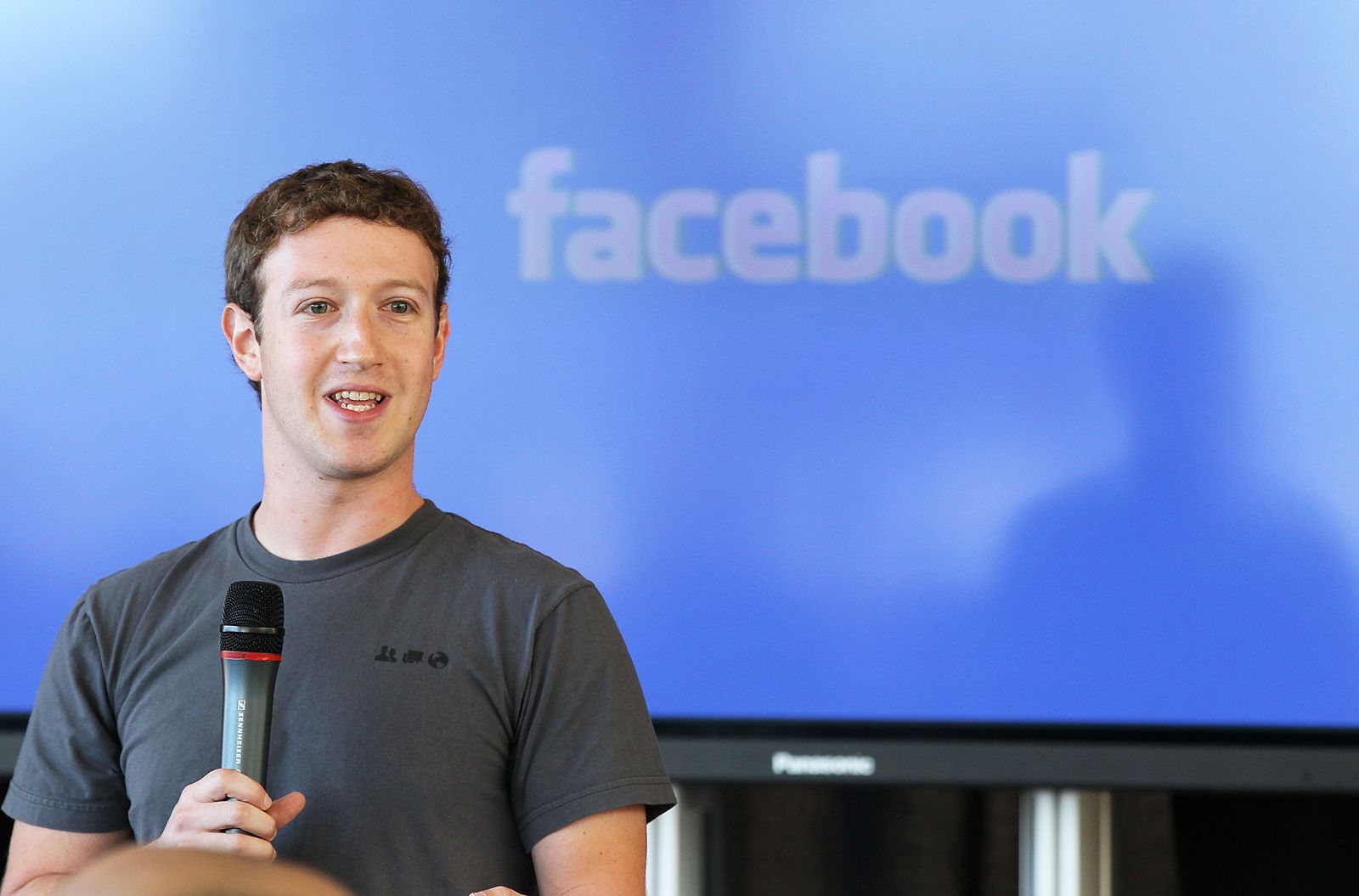
At first, the button was harmless — a convenient shorthand for appreciation. But within months, engineers noticed something strange. User activity spiked dramatically. People began posting more frequently, checking more obsessively, chasing more approval. The dopamine feedback loop — the neurological pattern that governs addiction — had found its most elegant interface.
Behind closed doors, Facebook researchers started measuring what they couldn’t ethically measure in the physical world: emotional dependency at scale. Every “Like” was data, but it was also something more intimate — a moment of validation, a drop of belonging in an ocean of curated solitude. For users, it became the modern prayer: short, silent, repeated endlessly in the hope of being seen.
Zuckerberg, fascinated by this phenomenon, once remarked that the “Like” button was about empathy — about giving people an easy way to express care. But as the numbers climbed, empathy began to look like engagement, and engagement began to look like profit. The company was no longer simply observing behavior; it was engineering it. What began as a gesture of connection had become the digital equivalent of applause in an empty room.
Data, Desire, and the Digital Mirror
Every empire is built on something — land, labor, or belief. Zuckerberg’s was built on human attention. The raw material wasn’t gold or oil, but desire itself. Facebook didn’t need to know who you were; it only needed to know what you wanted to see next. And with every scroll, every pause, every flicker of hesitation, the machine learned.
By 2016, Facebook had become not just a platform but a mirror — one that didn’t just reflect the user but reshaped them. The more people looked into it, the less they recognized themselves. The platform knew your fears, your cravings, your insecurities. It showed you the version of the world that kept you staring longest. Truth wasn’t the goal; attention was.
Inside the company, this was celebrated as optimization. Outside, it was chaos. Echo chambers deepened, misinformation spread like wildfire, and politics became performance art. Yet even as the criticism grew, Zuckerberg’s internal logic remained unwavering: more connection was always the answer.
But the cost of this empire was something no metric could measure. As Facebook’s data centers expanded, so did the loneliness of the man who owned them. For every terabyte of data, there was less room for mystery, less room for silence. And perhaps that was the real tragedy — that in building a world where everyone could speak, Zuckerberg had built a world where no one could listen.
When Friends Became Metrics
The early promise of Facebook was community. The reality became commerce. Every friend was now an entry in a database, every relationship a line of code. By the late 2010s, friendship itself had been transformed into a kind of transaction — quantified, visible, marketable.
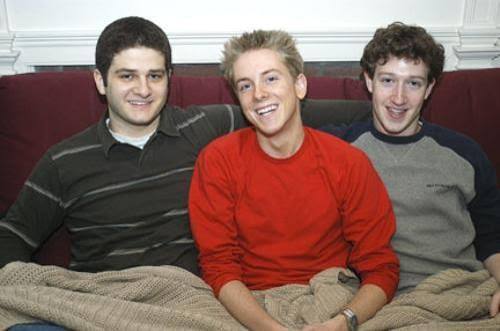
Zuckerberg’s inner circle began to change, too. Old friends like Dustin Moskovitz and Eduardo Saverin drifted away. Sean Parker, the platform’s early visionary, later called Facebook a “social-validation feedback loop” designed to exploit human vulnerability. Yet even those critiques felt like echoes in the same digital chamber. No one could fully step outside the system anymore — not even its creators.
Inside Meta, Zuckerberg had become both the architect and the captive. Every update, every redesign, every policy was filtered through the question: “Will it increase engagement?” Humanity was now a KPI. To stop optimizing would mean to stop existing.
He began to speak less about people and more about systems. To his engineers, he was a logic-driven leader. To the world, a paradox — the man who made the planet talk yet seemed to struggle to communicate face to face. In his quietest moments, he must have sensed it: he hadn’t built a network of friends; he’d built a machine that measured the absence of them.
The Metaverse and the Mirage
In 2021, when Zuckerberg announced the company’s rebranding to Meta, he framed it as an evolution — the next frontier of human connection. “The metaverse,” he said, “will be the successor to the mobile internet.” To many, it sounded visionary. To others, it sounded like an escape hatch — not for users, but for its founder.
The metaverse was his answer to a world growing weary of Facebook’s controversies. The Cambridge Analytica scandal, the political polarization, the whistleblower leaks — all had left a scar on the company’s image. Meta would be a fresh start, a digital Eden where humanity could begin again. But behind that promise was a man seeking refuge in his own creation.
In virtual reality, the laws of physics no longer applied. Neither did the messiness of human unpredictability. Inside that infinite grid, Zuckerberg could build a world where every pixel obeyed him. Yet what he couldn’t control were the echoes of the old world: the addiction patterns, the isolation, the endless search for validation that Facebook had normalized. The avatars may have looked different, but the hunger was the same.
Observers began to wonder if the metaverse was less a product than a projection — a mirror of Zuckerberg’s internal exile. He had spent decades digitizing other people’s lives, and now he wanted to digitize reality itself. But in his pursuit of immersion, he overlooked something fundamental: connection doesn’t need simulation; it needs presence. And presence, by definition, cannot be coded.
The Loneliness Behind the Algorithm
By the mid-2020s, Zuckerberg’s public appearances had taken on a strange tone — a blend of hyperrational confidence and visible fatigue. He spoke about AI, about building the next generation of global infrastructure, about bringing people closer together. But his eyes often betrayed something else: distance.
Those who worked closely with him described a man who lived inside abstraction. His empathy was analytical; his interactions filtered through a conceptual lens. He could model emotion, even monetize it, but he struggled to inhabit it. At Meta, he wasn’t feared or adored so much as interpreted — like code that only a few could truly read.
Outside, public trust in the platform continued to erode. Studies revealed what users already sensed: that social media, once a tool for connection, had become an engine of anxiety. Teen depression rates were climbing, attention spans shrinking, privacy dissolving. Yet even as governments summoned Zuckerberg to testify, he seemed curiously detached — as if watching the world’s outrage through the glass of his own invention.
In private, he began spending more time in his home office, surrounded by prototypes of VR headsets and ambient screens. To some, this was innovation. To others, it looked like isolation masquerading as vision. The more the algorithms learned to mimic humanity, the more their creator seemed to lose touch with it. It was the oldest irony in technology: the man who built connection couldn’t feel connected himself.
Moments That Never Logged Off
Every empire faces its reckoning. For Zuckerberg, it came not in a boardroom but in the public square — through hearings, headlines, and leaked documents. The Cambridge Analytica exposé in 2018 revealed that Facebook had allowed political firms to harvest user data for manipulation. The 2020 misinformation crises turned the platform into a battlefield of truth and falsehood. Each controversy etched another crack in his image as a visionary.
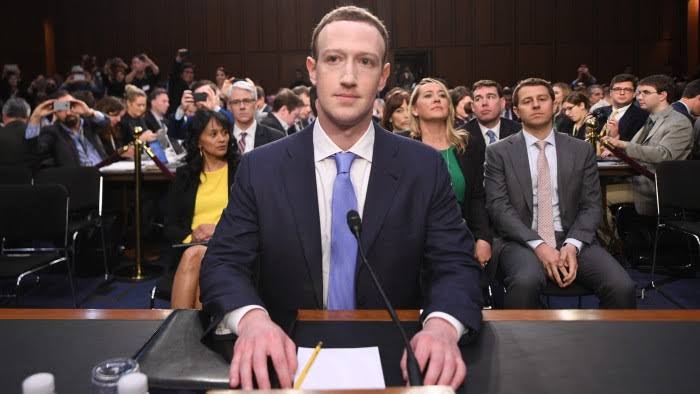
When he appeared before Congress, sitting under the bright interrogation lights, the world watched as senators struggled to understand the mechanics of his empire. “Senator, we run ads,” he replied at one point — a phrase that encapsulated both the simplicity and the moral ambiguity of Facebook’s model. To him, it was business. To the world, it was behavior modification at scale.
But beyond the politics lay something more haunting. The tragedies that unfolded through social media — misinformation fueling violence, live-streamed suicides, targeted hate campaigns — were not anomalies. They were symptoms of the system itself. The same mechanisms that amplified joy amplified rage. The same algorithms that connected families also radicalized strangers.
Through it all, Zuckerberg held to his belief that connection was inherently good. But as the company grew, connection had become indistinguishable from consumption. The platform no longer reflected human life; it replicated it, then fed it back in distorted form. The line between user and used had blurred. And the man who once wanted to connect the world now faced the unbearable truth that the world might want to disconnect — from him.
The Mirror That Wouldn’t Blink
By the time Meta began to pivot toward artificial intelligence in 2024, Zuckerberg’s creation had outgrown his control. The algorithms that once merely served content were now capable of generating it. The machine had learned to dream. In the vast datacenters of Meta, billions of simulations ran every second, each optimizing human attention to microscopic precision.
Zuckerberg often spoke of AI as a “tool for empowerment.” But deep down, he must have known: the tool had already surpassed its maker. Facebook’s original code had been a reflection of human curiosity; AI was a reflection of the machine’s own logic. And in that reflection, he could no longer see himself.
The irony was poetic. The man who spent his life digitizing humanity was now being digitized by history — reduced to an algorithm of ambition, efficiency, and control. His interviews, his testimonies, his product launches — all consumed, analyzed, memed, and recirculated by the same networks he created. The mirror he built refused to blink. It simply stared back, showing him the composite face of seven billion users, all scrolling past the man who started it all.
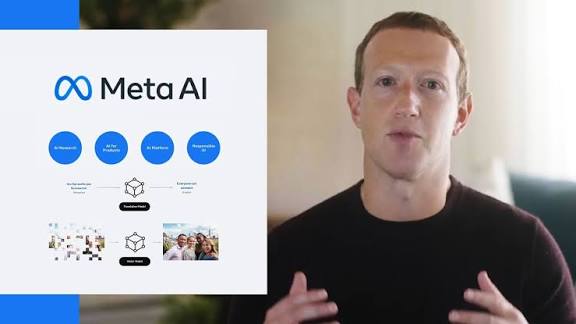
Late one night, alone in the lab, he put on the latest Quest headset. The virtual landscape opened around him — bright, infinite, serene. There were mountains, oceans, floating islands. It was perfect. But something was missing. The silence was complete. No laughter, no human warmth, no imperfection. Just pixels waiting for input. For the first time, he whispered aloud, “What if I never left?” The system didn’t answer. It didn’t have to. It was his own mind, rendered in code.
The Moment He Couldn’t Log Out
It’s said that every creator meets their creation twice — once when they make it, and once when it no longer needs them. For Zuckerberg, that moment came quietly. There was no crisis, no grand epiphany, just a realization that everything he touched now passed through the same digital filter. His family photos were shared on Meta platforms. His conversations were mediated by encrypted apps he owned. His thoughts, translated into corporate vision statements, became global news within hours. There was no separation left between his life and his invention.
He began to measure time not by years, but by versions — Facebook 1.0, News Feed, Messenger, Instagram, Metaverse. Each phase promised renewal but deepened the fusion. He couldn’t delete his profiles; they were historical artifacts. He couldn’t take a walk without someone filming it for Reels. The machine didn’t imprison him. It simply erased the door.
When he finally took a short sabbatical in Hawaii, hoping to disconnect, he found that disconnection had become a myth. The notifications followed him. The conversations about Meta followed him. Even the sunsets looked staged, as if filtered through an algorithmic lens. He’d once built a platform for sharing moments; now every moment demanded to be shared.
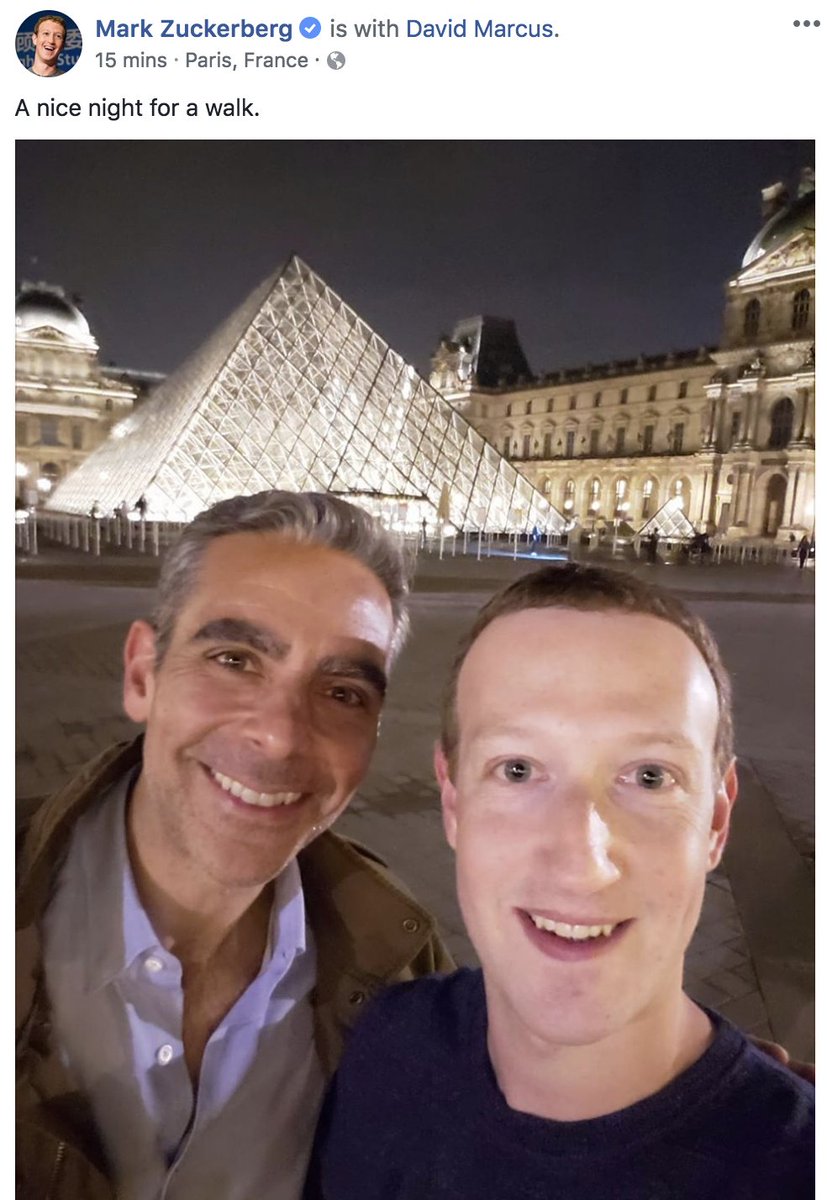
One evening, sitting by the Pacific, he looked at the horizon and realized: there was no longer an “offline.” The world had become one continuous feed, and he was both its architect and its captive. The question wasn’t whether he could log out — it was whether anyone could.
Leaving With This: The Human Left Behind the Code
History will remember Mark Zuckerberg as many things — a genius, a monopolist, a builder, a disruptor. But perhaps his truest legacy lies not in what he created, but in what he revealed: that humanity’s hunger for connection can turn into a cage when mediated by machines.
In the beginning, Facebook was a mirror reflecting our need to be known. Over time, it became a magnifying glass, intensifying our desires, fears, and divisions. And in that blaze of digital light, Zuckerberg became both creator and creation — a man whose mind rewired the world and whose world rewired his mind.
He still speaks of the future with conviction: AI assistants, mixed-reality offices, digital immortality. But beneath the optimism lingers a question he cannot code away: what happens when you build a world so immersive, it consumes the one that inspired it?
Maybe one day he’ll find peace in the simple act of silence — in letting the screen stay dark, in letting the world exist without a feed. Until then, he remains the ghost in his own machine: the man who built connection, only to discover he could never, truly, log out.


Discussion about this post