


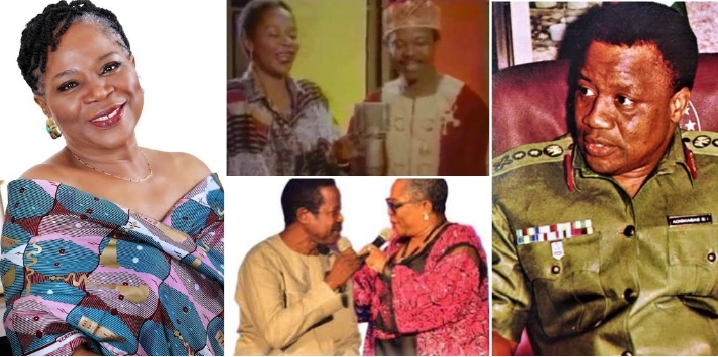
Lagos in the 1980s moved to the rhythm of its own heartbeat. The streets vibrated with Juju, Afrobeat, and pop melodies, while markets and avenues carried whispers that traveled faster than sound. In this city of music and rumor, fame was never simple—it illuminated and exposed in equal measure. For Onyeka Onwenu, known for her voice as much as her conscience, every performance was both a triumph and a test, a stage where melody intersected with scrutiny.
Her memoir, My Father’s Daughter, recounts how these years were a delicate balance of artistry and attention. Fame brought admiration, yes, but it also attracted speculation. A professional collaboration, a shared studio session, or even a photograph could ignite stories that reached far beyond the intended audience. In the labyrinth of Lagos’ cultural scene, the echoes of music sometimes carried the shadows of rumor.
Amid the hum of city life and the swirl of public attention, there emerged an unusual intersection: music, gossip, and political curiosity. Questions about her private life arrived quietly, filtered through aides and intermediaries, signaling that her artistic choices had attracted interest from unexpected quarters. The stage had become a threshold between expression and observation, and Onyeka found herself navigating both with quiet awareness.
It is into this subtle tension—the collision of creativity, rumor, and power—that her story begins. The notes she sang, meant to celebrate culture, became a backdrop for questions she had never asked, and attention that she had neither sought nor anticipated.
Biography: Onyeka Onwenu
Onyeka Onwenu was born on May 17, 1952, in Obosi, Anambra State, though she grew up in Owerri, southeastern Nigeria—a region known for its cultural vibrancy and intellectual tradition. She was the youngest daughter of D.K. Onwenu, a revered educationist and politician who served as chairman of the Nigerian Railway Corporation, and Hope Onwenu, a devout schoolteacher who embodied discipline and quiet strength. Her father’s public career and principled stance on governance exposed her early to the double-edged nature of visibility—admiration on one hand, scrutiny on the other.
The Onwenu household was a blend of intellect, culture, and faith. Books filled their home as much as music did, and discussions about ethics, service, and justice often punctuated mealtime conversations. Her mother’s moral clarity balanced her father’s public charisma, shaping Onyeka into a child who understood both the dignity of service and the weight of expectation.
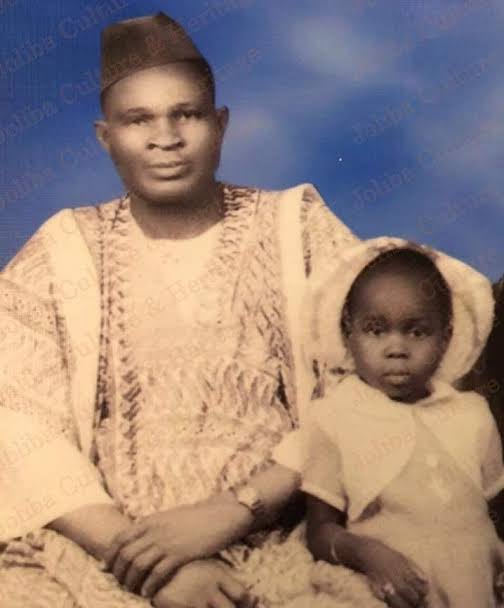
When her father died in a tragic car accident in 1958—just as Nigeria’s political tides were shifting—the loss left a void that deepened her awareness of life’s fragility and the responsibility of carrying a respected name.
Her childhood became a careful study in perception. In the postcolonial Nigerian environment, she watched how society evaluated women—their speech, dress, and ambitions—through lenses of propriety and tradition. Yet she also saw how intelligence and grace could coexist, how a woman could embody both empathy and strength. These observations quietly shaped her worldview, later emerging in her songs and advocacy for women’s rights.
Education and expression became her twin callings. She excelled academically, earning degrees from the University of Ife (now Obafemi Awolowo University) and later the New School for Social Research in New York, where she studied International Relations and Communication. But music became her truest medium—a bridge between intellect and emotion, storytelling and social reflection. By the time she returned to Nigeria in the late 1970s, she was not just a journalist or a singer in the making; she was a woman conscious of her identity, her lineage, and the social weight of visibility.
Her First Journey Into Music
Onyeka’s early forays into music were marked by experimentation and reflection. Singing at school events, local gatherings, and university functions, she began to understand the dynamics of performance—the power of a well-placed note, the resonance of emotion across an audience, and the subtle way music could communicate ideas beyond words. Her early experiences were laboratories of artistry, shaping both voice and presence.
The Nigerian music industry of the 1970s and early 1980s posed challenges, especially for women. Onyeka’s path required skill, resilience, and strategic navigation of male-dominated networks. Her early recordings and performances reflected both talent and a disciplined approach, earning her recognition as a rising voice with both artistic and social consciousness.
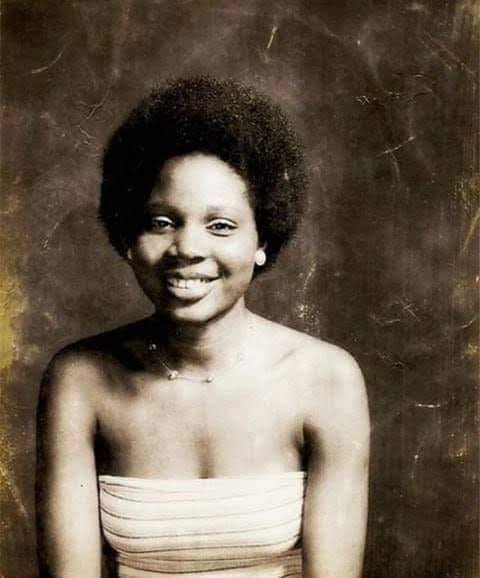
Her first singles, including tracks like “One Love,” were not merely entertainment; they carried commentary, emotion, and the beginnings of a public persona. The audience responded, and with each performance, her visibility expanded. But as her public presence grew, so did the potential for scrutiny, and every professional connection became an opportunity for public speculation.
By the mid-1980s, Onyeka had established herself as a significant figure in Nigerian music. Her reputation was not only for vocal talent but for the integrity and thoughtfulness she brought to her work. It was at this juncture that a collaboration with King Sunny Ade, one of Nigeria’s most celebrated musicians, would bring her both acclaim and unexpected attention.
Lyrics That Sounded Like Love
“If you love me, you go wait for me…” — that line alone was enough to set hearts in motion. When Wait for Me first graced Nigeria’s airwaves in 1989, it wasn’t supposed to be romantic. It was a campaign anthem — funded by the Federal Ministry of Health and supported by global partners — urging young couples to make careful choices about marriage, intimacy, and childbirth. But Nigerians didn’t just hear a message. They heard a moment.
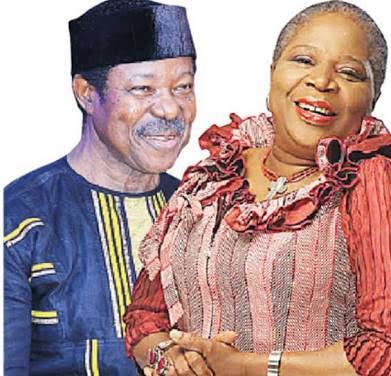
Onyeka Onwenu’s voice glided through the melody with emotional precision, her tone equal parts warmth and warning. Then came King Sunny Ade’s reply — steady, teasing, filled with that familiar Yoruba musical confidence:
“Love dey for your front, take your time well make you no spoil am…”
“Having babies no be joke oh… you go feed them…”
The words were plain, even instructional, but the delivery — the way their voices leaned toward each other, the pauses, the gentle laughter between verses — made the air around the song shimmer with suggestion. It was as if public service had accidentally turned into poetry.

Audiences forgot the message and fell for the mood. They began to believe what they wanted to hear: that something more than music existed between Nigeria’s golden voices. In taxis and living rooms, the lyrics became codes for something unsaid — a duet mistaken for a love confession.
By the time the video aired — showing the two artists side by side, smiling through their lines — the nation had made up its mind. Rumor outran fact. Even in official quarters, whispers began to circulate. The song’s moral purpose became secondary to its emotional illusion. Wait for Me had crossed from message to myth, and in doing so, tied Onyeka Onwenu and King Sunny Ade together in a story neither had written — a story that would soon reach the ears of power itself.
When Babangida’s Curiosity Turned Political
Nigeria in the late 1980s was a country ruled by silence and spectacle. Power lived behind tinted glass — watching, listening, interpreting. Under General Ibrahim Babangida, gossip didn’t just travel; it ascended. Everything the public loved, the powerful monitored. And when Wait for Me began to echo from radios to banquet halls, curiosity climbed its way into the Villa.
The duet had become a national obsession. Newspapers wrote about its message; others wrote about its mood. Onyeka Onwenu, already a public figure known for her poise and conviction, suddenly found her name tethered to King Sunny Ade’s in a way she hadn’t anticipated. The chemistry that was meant to humanize a public-health message was now being dissected like state intelligence.

Inside Aso Rock, someone — perhaps even the General himself — reportedly asked questions that sounded less political and more personal. Who was this woman whose presence could command both moral authority and sensuality without compromise? What kind of bond could produce such haunting harmony? It wasn’t scandal they sought; it was understanding. But in a country where rumor feeds on reverence, the inquiry itself became a story.
When the word reached Onyeka, she did what few dared in that era of surveillance and protocol — she remained silent. No denial, no outrage, no performance. She understood that to answer would be to dignify curiosity, to reduce art to confession. Instead, she let time speak for her. Her silence became a statement — a refusal to let politics script her humanity.
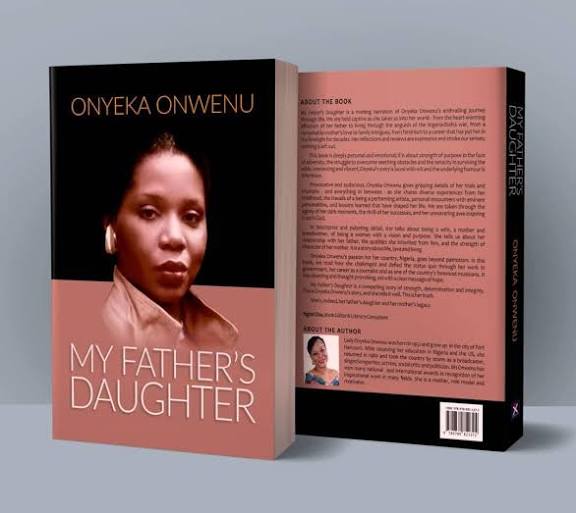
In her memoir, My Father’s Daughter, she would later acknowledge the episode with the restraint of someone who had learned the difference between exposure and expression. The Babangida inquiry was not about romance; it was about power’s fascination with authenticity. Onyeka’s calm dignity unsettled the system because she embodied something no authority could control — a woman secure in her voice, unmoved by curiosity, unshaken by myth.
Public Scrutiny and the Gender Lens
The scrutiny Onyeka faced was inseparable from the social expectations of women in Nigeria at the time. Public interest often measured female artists not just by their skill but by their associations, conduct, and perceived propriety. Men in similar collaborations rarely endured the same level of speculation.
She quickly realized the subtle rules governing perception. A gesture, a remark, or a photograph could be read as evidence of character, moral stance, or relational intent. Navigating these expectations required constant awareness, discretion, and resilience.
The experience underscored the gendered nature of fame. Onyeka writes in her memoir about the tension between pursuing artistic excellence and defending personal integrity against narratives she did not author. The societal gaze, she learned, could be relentless, and navigating it became part of her professional education.
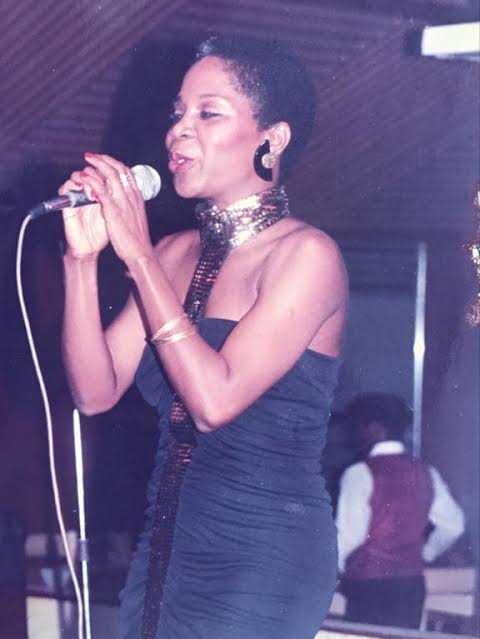
Yet through it all, Onyeka remained grounded in her work. Music provided a refuge and a medium of agency, allowing her to continue her career with focus and integrity. The experience of rumor and inquiry, while unavoidable, became a lens through which she understood fame, the responsibility of visibility, and the resilience required to navigate public life without surrendering personal truth.
The Marriage That Hid Behind the Music
Love, for Onyeka Onwenu, arrived like a verse between choruses — quiet, necessary, and fleeting. She had spent much of her life beneath stage lights, where admiration often masqueraded as affection. So when marriage came, it felt like stepping into shade — into a gentler rhythm where love could breathe without applause.
She married a Yoruba Muslim man — an intentional crossing of lines in a time when ethnic unions were still quietly judged. He was not of the music world, not dazzled by the spotlight, but drawn to the woman who existed beyond it — the disciplined daughter of D.K. Onwenu, not the star of “One Love.”
Their union was calm but brief, shaped by differences that neither bitterness nor scandal amplified. Onyeka guarded it fiercely, speaking of it rarely. What she chose to preserve were its quiet gifts — her two sons, the truest continuation of her melody.
Motherhood became her longest duet. It softened her fire, redefined her idea of success, and gave her love new grammar — not stage applause, but the laughter of boys who saw her not as a legend, but as home.
Even after the separation, she never carried regret publicly. Instead, she carried grace. “Marriage,” she once reflected indirectly, “teaches you who you are when no one is watching.” And in that private lesson, love ceased to be performance — it became prayer.
The Final Note
Her death came with the same quiet dignity that had marked her life. On the evening of July 30, 2024, Onyeka Onwenu performed at a private birthday event for Stella Okoli, founder of Emzor Pharmaceuticals, in Lagos. The room, witnesses said, was filled with warmth and nostalgia — Onyeka’s voice threading through memory like silk.
She had just finished her set when she sat down, smiled faintly, and collapsed. The scene that followed was urgent but unreal — doctors, shouts, the rush to Reddington Hospital. Minutes later, the announcement came: cardiac arrest. The heart that had carried so many emotions, so many decades of sound and advocacy, had finally stilled. She was 72.
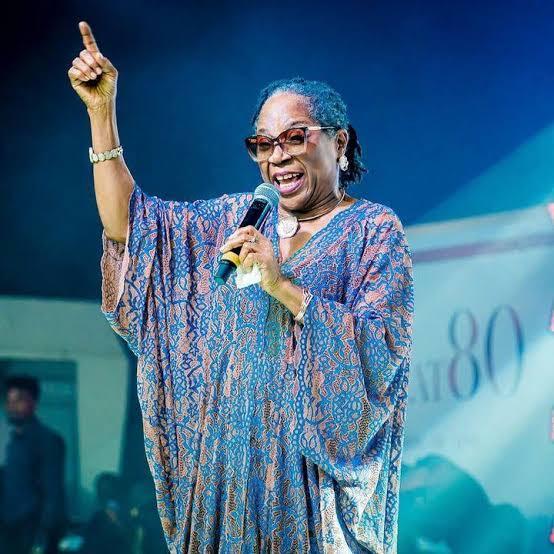
The news swept through Nigeria with the intimacy of personal loss. It wasn’t just a singer who had died; it was a voice that had narrated a nation’s growing pains — through independence, dictatorship, democracy, and modern confusion. Her passing was not dramatic; it was the quiet end of a song sung perfectly to the last note.
For those who knew her, it felt like the world had lowered its volume. The air itself seemed to pause, unsure how to continue without the familiar grace of her tone.
The Funeral Without Headlines
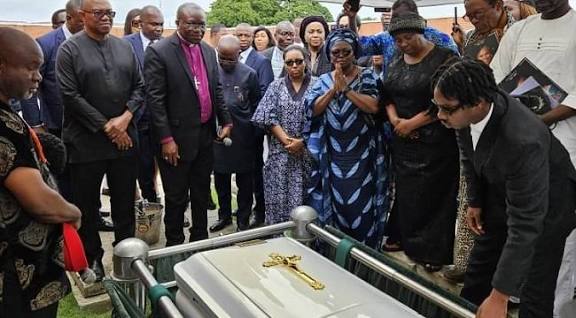
Her funeral reflected her spirit — graceful, simple, deeply human. No political parade, no cameras chasing soundbites. Just music, prayers, and family under the mild sun of Lagos. Her two sons stood beside her casket, faces calm, embodying the poise their mother had lived by.
There were no grand speeches. Instead, her own songs played softly through the service — One Love, You and I, Ekwe — the soundtrack of a nation’s conscience. People wept, not just for her death, but for the quiet way she had lived: refusing spectacle, choosing sincerity.
The priest’s words were brief: “She lived for truth and beauty, and both will outlive her.” Then came silence — the kind that feels like respect, not absence. In that silence, those present realized that Onyeka’s influence had never needed volume; it had always been vibration.
When the earth closed over her casket, Lagos did not wail. It sighed. Across radios, from taxis to kitchens, her songs rose again, defying finality. It felt less like a burial and more like a benediction — a reminder that art, when lived sincerely, never dies.
Personal and Professional Lessons
The experience of rumor, scrutiny, and indirect political attention left lasting impressions. Onyeka learned that fame was not merely applause; it was a mirror reflecting perception, often distorted, where every professional choice could be interpreted as personal statement. She understood that resilience was essential—not only to sustain a career but to maintain personal integrity.
Navigating the intersection of artistry and societal expectation required strategy. Onyeka refined how to engage with the public, choosing when to speak, when to remain silent, and how to let music convey truth where words might mislead. Professional focus became a shield, allowing her to continue performing and recording despite the swirling narratives beyond her control.
Gendered scrutiny shaped her awareness of social dynamics. Onyeka observed that women were often judged more harshly, their relationships and conduct scrutinized in ways that men were rarely subject to. The lesson was subtle yet powerful: professionalism and dignity were forms of resistance against misrepresentation and rumor.
Through it all, music remained her anchor. The studio, the stage, and the recording room became spaces where she could assert control, craft her narrative, and connect authentically with audiences. Artistic excellence and personal integrity became intertwined, proving that skill and character could withstand misinterpretation and societal curiosity.
The Legacy That Refused to Fade
In the years since her passing, Onyeka Onwenu’s name has grown into symbol. Her voice is still studied, her documentaries still referenced, her courage still quoted by young women who seek to speak without fear. She became, in absence, what she had always been in essence — a quiet revolution.
Her legacy isn’t just her discography or her activism. It’s her insistence that art must have conscience, that talent without truth is just noise. She redefined what it meant to be a woman in public life — strong but tender, outspoken yet measured. Her life proved that dignity can coexist with fame, and that endurance can be the most elegant form of rebellion.
Every generation rediscovers her differently. To some, she’s the singer of One Love. To others, the journalist who confronted political power. To many, she’s the embodiment of grace under misunderstanding. But to Nigeria at large, Onyeka Onwenu remains a sound that never stopped echoing — the golden timbre of a woman who refused to be simplified.
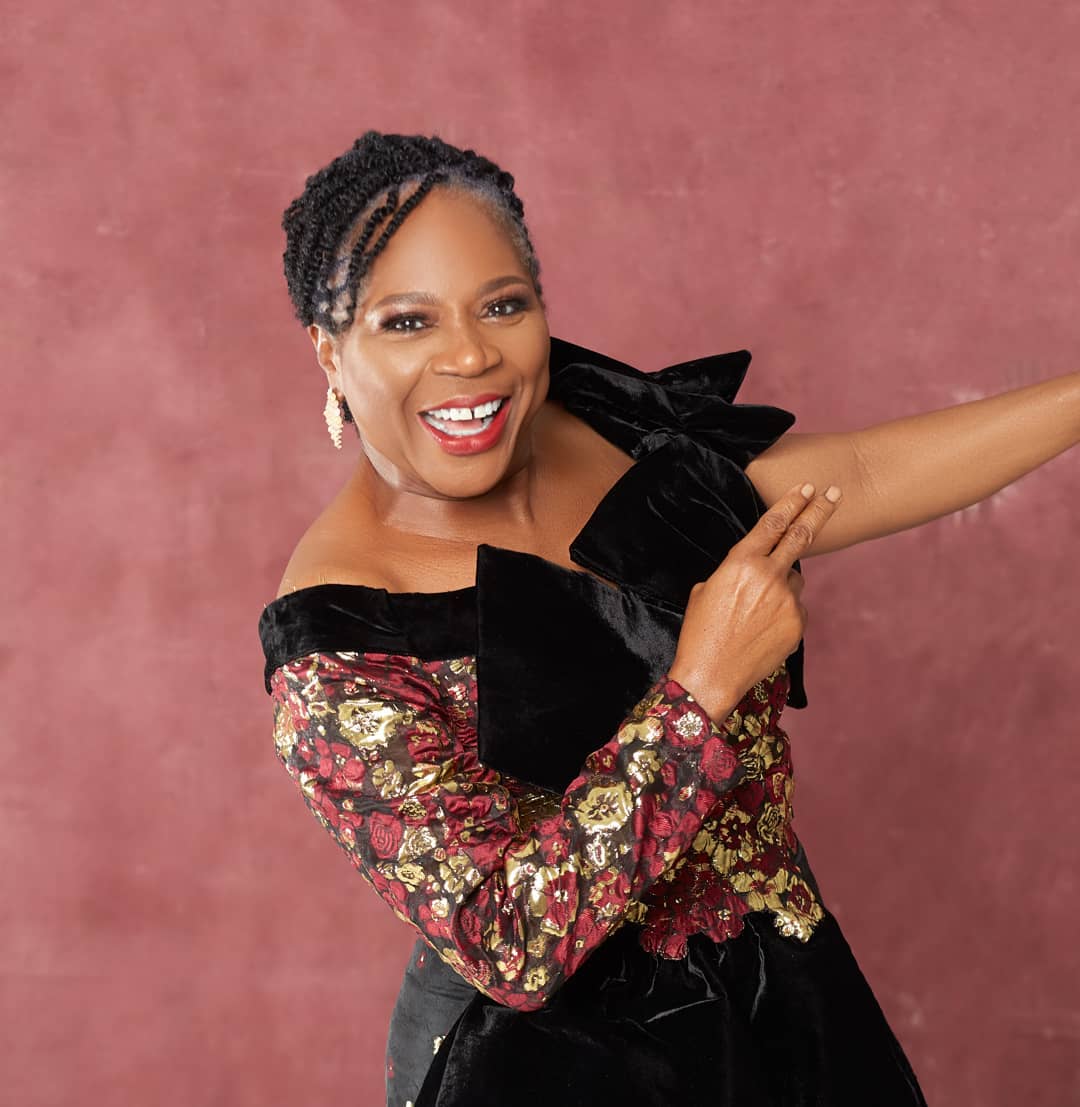
Even now, when her songs play on dusty radios or streaming platforms, there’s a pause — a collective intake of breath — before the first line begins. It’s as if the air itself remembers who she was. And that, perhaps, is legacy: to leave behind not memory, but resonance.
Leaving With This: The Echo After the Question
History is full of moments that begin as whispers — a rumor, a curiosity, a question asked behind closed doors. In Onyeka Onwenu’s story, that whisper came from the highest corridors of power. A military ruler, intrigued by a song, sought to understand the chemistry between two voices — hers and King Sunny Ade’s. It was a question born not of gossip but of fascination, of how music could hold the intimacy of love without the touch of it.
But the question outlived its asker. It followed Onyeka into interviews, corridors, and memoirs. It became part of her mythology — not for what it revealed, but for what it suggested about a woman whose grace unsettled even those who commanded nations.
In a country where rumor often writes faster than truth, Onyeka learned to master silence. Her restraint became her rebellion. She would not explain what needed no defense.
Years later, as her songs became history and her name turned to echo, that same question—What really happened between them?—lingered like perfume in a forgotten room. Perhaps it was never about romance. Perhaps it was about the unsettling beauty of a woman whose art blurred the boundaries between admiration and desire, politics and melody, myth and memory.
And so, when Babangida’s inquiries landed at her door, they did not find scandal — they found a woman who knew the cost of being misunderstood and the grace of being unbothered. Onyeka Onwenu’s life was not defined by what was asked of her, but by what she refused to answer. In that refusal, she became what few ever manage to be in public life — an enigma that time could not simplify.
Discussion about this post