


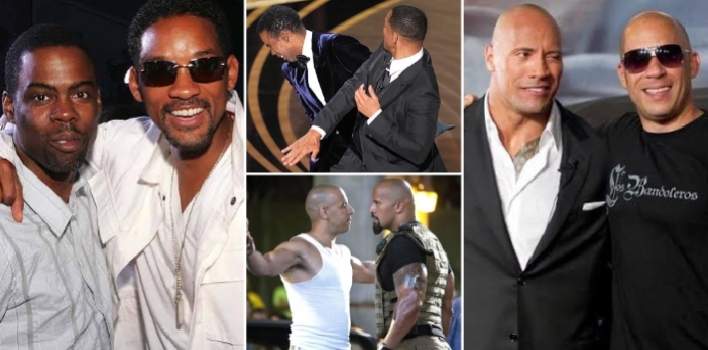
Hollywood thrives on spectacle — the light, the applause, the curated chaos that makes emotion a commodity. But there are moments when the performance fractures, and what spills through feels unfiltered, human, almost too raw for the cameras that feed on it.
The Oscars slap of 2022 and the Fast & Furious fallout that split its own family belong to that category — twin eruptions of pride and misunderstanding that reminded the world that fame doesn’t cancel feeling.
Long after the red carpets rolled up and the headlines cooled, both stories kept breathing through silence. They lived not in tabloids, but in tone — the slight hesitation when Will Smith appears on screen again, the uneasy camaraderie when Vin Diesel and Dwayne Johnson stand near the same franchise name. Each clash carried the scent of wounded ego and public vulnerability, each tested how much forgiveness the modern world can still afford when the internet never forgets.
Two stories, separated by context but united by energy — men who built empires on charm and control suddenly losing grip of both. One slap froze the world mid-breath. The other feud stretched across years of coded captions and indirect apologies. Together, they revealed something deeper than scandal: the emotional cost of being seen too clearly.
What follows is not gossip. It’s the anatomy of rupture — and the uncertain geography of reconciliation when reputation, pride, and human regret all share the same stage.
When Fire Met Mirror: The Biographies Beneath the Feuds
Will Smith and Chris Rock — Two Origins, One Collision of Temperaments
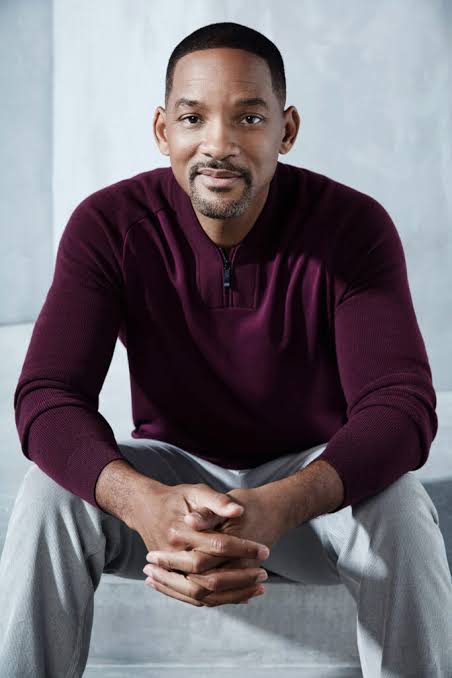
Willard Carroll Smith Jr. was born on September 25, 1968, in Philadelphia, Pennsylvania, to a U.S. Air Force veteran father, Willard Carroll Smith Sr., and a school administrator mother, Caroline Bright. He grew up in West Philadelphia’s Wynnefield neighborhood, the second of four children, where rhythm was refuge. His parents’ separation when he was thirteen left silence in the house that he filled with humor. By the time he was sixteen, he had turned that humor into rap — DJ Jazzy Jeff & The Fresh Prince, a duo that would win the first-ever Grammy for Best Rap Performance in 1989.
Fame came early and smoothly, his charisma turning sitcom lines into global slang when The Fresh Prince of Bel-Air debuted in 1990. But behind the grin was a perfectionist molded by discipline — his father’s military order, his mother’s insistence on education. Will Smith became America’s charming optimist, the boy who smiled his way past conflict. Yet every performer who builds a world on laughter eventually discovers what happens when laughter fails.
Chris Rock, born February 7, 1965, in Andrews, South Carolina, came into a different rhythm — one shaped by migration, movement, and survival. His mother, Rosalie Rock, was a teacher and social worker; his father, Julius Rock, a truck driver and newspaper deliveryman. When the family moved to Brooklyn, New York, Chris was bused to predominantly white schools, enduring racism that later became the spine of his comedy. He dropped out of high school but earned a GED, learning faster onstage than in classrooms.
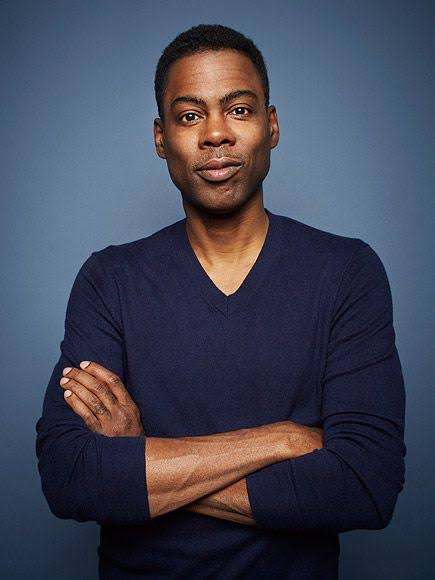
Discovered by Eddie Murphy in the 1980s, Rock joined Saturday Night Live in 1990, the same year Smith’s sitcom premiered. Their careers, though parallel, embodied different energies — Smith’s warmth, Rock’s edge. Both men mastered audiences by decoding pain into rhythm: one through smiles, the other through satire. When their paths crossed decades later at the Oscars, it wasn’t coincidence; it was the universe testing what happens when two kinds of survival meet under the same spotlight.
Vin Diesel and Dwayne Johnson — Brotherhood Written in Steel
Vin Diesel was born Mark Sinclair on July 18, 1967, in Alameda County, California, alongside his twin brother, Paul Vincent. Raised in New York City by his mother, Delora Sherleen Sinclair, an astrologer, and his African-American stepfather, Irving Vincent, a theatre manager and acting instructor, Diesel grew up backstage — literally. His first acting role came at age seven, after breaking into a theater with friends and being caught by the director, who offered them parts instead of punishment.
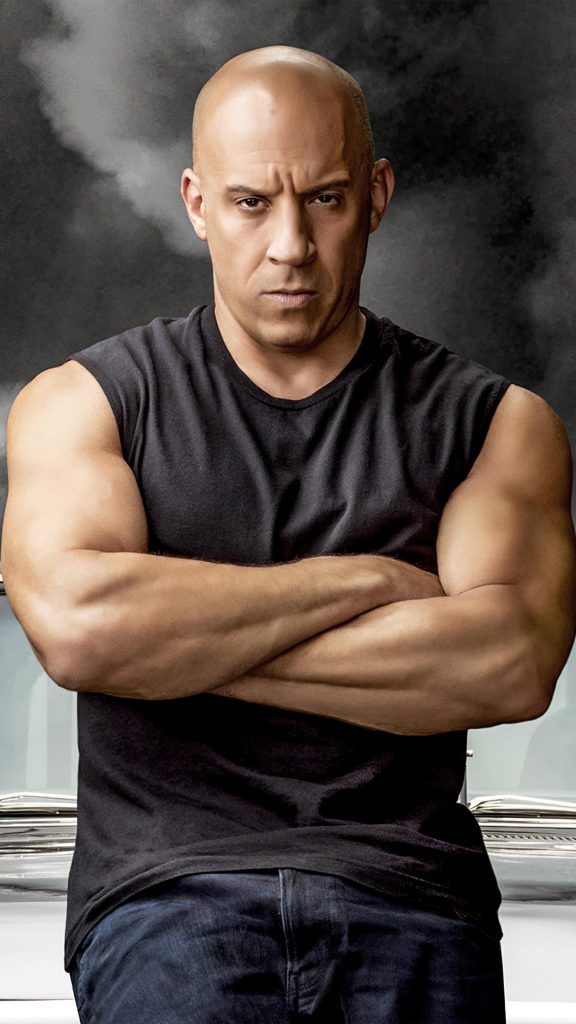
Diesel’s life was always about creation through control. He wrote, directed, and starred in his own short film, Multi-Facial (1995), which caught Steven Spielberg’s attention and led to a small but pivotal role in Saving Private Ryan (1998). By 2001, with The Fast and the Furious, he had transformed his self-made myth into global franchise — preaching “family” on-screen while practicing it off. His private world remained guarded; even his children’s names — Hania, Vincent, and Pauline (named after late co-star Paul Walker) — carried symbolic weight.
Dwayne Douglas Johnson was born on May 2, 1972, in Hayward, California, to Rocky Johnson, a Canadian professional wrestler of Black Nova Scotian descent, and Ata Maivia, daughter of Samoan wrestling pioneer Peter Maivia. His lineage was pure performance — sweat, showmanship, and spectacle. As a teenager, he lived in Hawaii, Pennsylvania, and Nashville, often moving as his parents pursued work. By age 15, he’d been arrested multiple times for theft and fighting, channeling his restlessness into football.
A University of Miami graduate and defensive lineman, he won a national championship in 1991 before injuries redirected his path. By 1996, he stepped into the World Wrestling Federation as Rocky Maivia, later rebranding himself The Rock, and became one of the most electrifying performers in wrestling history. Transitioning to film in the early 2000s, Johnson became Hollywood’s most bankable star, blending discipline, humor, and calculated authenticity.
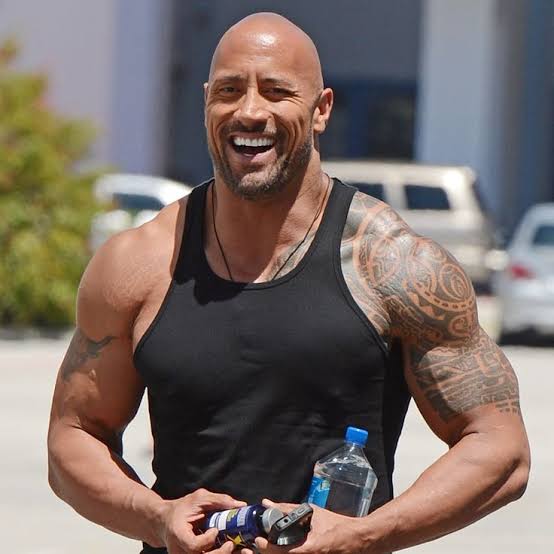
When he joined Fast & Furious in 2011, his energy revitalized the saga — but it also introduced another alpha into Diesel’s territory. Diesel, the architect of the family; Johnson, the soldier of structure. Both men born under summer suns, both children of mixed heritage who learned performance as power. Their eventual clash wasn’t just ego; it was physics — two gravitational forces drawn to the same orbit.
The Slap That Stopped the Oscars
It was meant to be a night of restoration. March 27, 2022 — the Academy Awards had returned to live audiences after the pandemic years, promising glamour and grace. Then, in an instant, the ceremony turned into something else entirely — a broadcast moment that didn’t fade when the lights did.
Chris Rock stood on stage, tossing jokes with effortless precision, when he looked at Jada Pinkett Smith in the audience and quipped, “Jada, I love you — G.I. Jane 2, can’t wait to see it.” The smile that followed from the crowd was uneasy. Jada’s face stiffened. Will Smith’s laughter faltered. The cutaway to Rock’s grin was the last normal image before a century of live television etiquette shattered.
The slap was so fast that people first thought it was scripted. The sound wasn’t. It echoed like a gavel — one man’s breaking point dressed in evening wear. As Rock tried to regain composure, Smith’s voice cut through the stunned silence: “Keep my wife’s name out your f*ing mouth.”
For a moment, the stage — symbol of performance — became a courtroom of emotion. What the world saw wasn’t just violence; it was implosion. The Oscars, built to immortalize fiction, had suddenly hosted a moment too real for its own stagecraft.
Will Smith’s Burden of Aftermath
In the weeks that followed, Will Smith’s life became a paradox of empathy and exile. His tearful Best Actor speech, delivered minutes after the incident, landed not as triumph but as confession. “Love makes you do crazy things,” he said — a line meant as explanation but heard by millions as rationalization.
The Academy’s response was swift and severe. Smith resigned from membership before they could expel him, and a ten-year ban from all Oscar events followed. Netflix and Sony quietly paused pending projects. In public, he became a symbol of conflicted masculinity — protective yet impulsive, repentant yet broken.
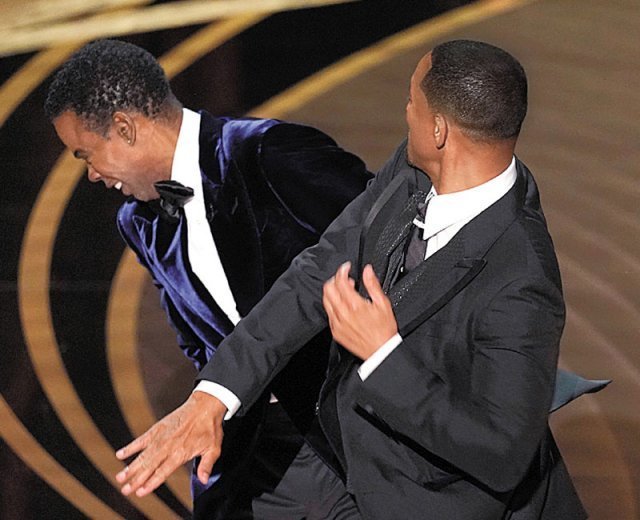
Months later, he posted a formal apology video. “I’ve reached out to Chris,” he said, “and the message that came back is that he’s not ready to talk.” His voice trembled not with performance but fatigue. It was the sound of someone learning that forgiveness cannot be scheduled.
Privately, friends described him as withdrawn, spiritually restless. Public redemption in Hollywood has always been transactional — a few interviews, a quiet rebrand, a new role that rewrites the narrative. But Smith’s rupture wasn’t professional; it was emotional. What he lost couldn’t be rebuilt with a film.
Chris Rock’s Silence and Stand-Up Resurrection
For nearly a year, Chris Rock said nothing. No interviews, no retaliatory jokes, no tell-all. His silence became its own narrative — a kind of dignified defiance in an era addicted to reaction. When he finally spoke, it wasn’t in an op-ed or social media rant, but in a Netflix special titled Selective Outrage.
“I got smacked by Suge Smith,” Rock said, breaking the tension with humor only he could weaponize. The crowd roared. “People ask me if it hurt — hell yeah, it hurt. He’s way bigger than me. I played Pookie in New Jack City! He played Ali!” Beneath the laughter, though, lived something raw: humiliation turned into art.
He refused to be pitied. “I’m not a victim,” he said firmly. “You will never see me on Oprah crying.” That line wasn’t a jab — it was a thesis. Rock had converted pain into performance, choosing irony over intimacy.
In an age where apologies are currency, his refusal to reconcile publicly became its own power. By standing alone, he reasserted control over a story that had once blindsided him. The audience, perhaps recognizing their own quiet humiliations in his restraint, rewarded him with renewed reverence.
The Long Wait for Closure
The world loves full circles — the handshake after the fight, the photo of peace restored. But real closure rarely obeys narrative expectations. As of 2025, Will Smith and Chris Rock remain publicly unreconciled.
There are reports of private messages sent, of mutual acquaintances encouraging conversation, but no visible reunion. Each man has moved forward differently — Smith through self-examination and cautious comeback roles, Rock through creative reinvention. Their silence toward each other now feels less like hostility and more like acceptance of distance.
In a way, both won something rare in Hollywood: ownership of their own narrative. Smith reclaimed his vulnerability, admitting imperfection. Rock preserved his dignity by refusing spectacle. Between them lies a quiet acknowledgment that some fractures don’t heal in public view.
And yet, audiences still wonder — what would a public reconciliation mean? Would it undo the memory of that night, or would it finally humanize it? Perhaps the truest peace between them will remain unseen, whispered in time rather than televised.
Shift to Diesel and The Rock: Brotherhood Turned Battlefield
If Will Smith and Chris Rock’s feud was a slap heard around the world, Vin Diesel and Dwayne Johnson’s was a slow burn — a brotherhood corroded by pride. Their story unfolded not in one shocking moment, but across years of coded messages, subtle power plays, and the blurred boundary between family and franchise.
The Fast & Furious saga, once Hollywood’s loudest anthem of brotherhood, became the stage for a quiet civil war. Johnson joined the franchise in 2011’s Fast Five, injecting new life and muscle into a series that had begun to tire. Fans loved the chemistry — the street racer and the super-agent, oil and fire. But off-screen, that energy mutated into friction.
By 2016, during filming for The Fate of the Furious, Johnson posted a now-infamous Instagram rant. “Some male co-stars conduct themselves as stand-up men,” he wrote, “while others don’t. When you watch the movie next April, you’ll see my true feelings.” It didn’t name Diesel, but everyone understood.
Behind that post lay clashing philosophies: Diesel, the franchise patriarch, saw himself as protector of tone and legacy; Johnson, the global action powerhouse, demanded discipline and directness. Hollywood couldn’t handle two alphas steering one ship.
On-Set Storms and Public Subtext
Crew members later confirmed the tension was palpable. Scenes were filmed separately. Diesel’s scheduling control frustrated Johnson, whose military precision clashed with the franchise’s flexible chaos. “We’re two different breeds,” Johnson later told Rolling Stone. “Philosophical differences.”
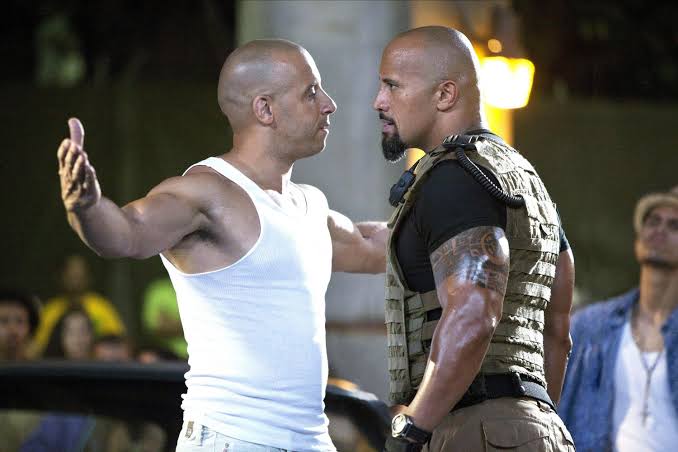
Diesel, in turn, told Men’s Health that he used “tough love” to motivate Johnson’s performance. “That’s something I’d do with anyone I’m proud of,” he said — a comment Johnson publicly dismissed as “manipulation.” The press fed on the rift, labeling it “Fast Feud.”
Yet, through the noise, both stars kept their composure. Johnson focused on his spinoff Hobbs & Shaw, carving out his own lane. Diesel pressed ahead with F9, keeping the main franchise alive. They weren’t just actors; they were empires negotiating borders.
Years passed, and like all prolonged conflicts, fatigue replaced fury. By 2023, an olive branch appeared — not through interviews, but on-screen. Johnson’s surprise return in Fast X’s post-credit scene was the unspoken truce the world had been waiting for.
Vin Diesel’s Control vs. Dwayne Johnson’s Discipline
Their reconciliation didn’t come from sentiment; it came from maturity — and business acumen. Diesel, ever the producer, understood the brand’s survival depended on unity. Johnson, now more seasoned in diplomacy, saw value in closing the loop.
Behind closed doors, the two reportedly met privately in early 2023. Johnson later told fans, “We put the past behind us. We’ll lead with brotherhood and resolve.” The statement was both personal and strategic — a message to audiences that family, the franchise’s core theme, wasn’t just a slogan.
Their personalities remain different. Diesel’s energy is instinctive, nostalgic, rooted in legacy. Johnson’s is tactical, relentless, built on precision. But that contrast — once combustible — became, over time, complementary again.
Reconciliation didn’t erase what happened; it reframed it. What had once been an ego battle evolved into a professional partnership renewed by perspective. Hollywood, for once, witnessed a feud end not in failure but in evolution.
From Feud to Franchise Diplomacy
The Fast & Furious reunion carried symbolic weight. It wasn’t just about two men making peace — it was about preserving a cinematic myth. For decades, the franchise has sold the idea of family as its emotional core. To see that ideal fracture behind the scenes felt almost heretical.
By reconciling, Diesel and Johnson restored faith in that narrative. Their return promised fans a grand finale built not only on spectacle but sincerity. In a sense, they achieved what Smith and Rock couldn’t — a public reconciliation that also made commercial sense.
It wasn’t purely business, though. Both men had aged into different versions of themselves: fathers, producers, cultural figures aware of legacy. Pride had done its damage; perspective repaired it. Hollywood, ever hungry for closure, finally had one feud that ended in harmony.
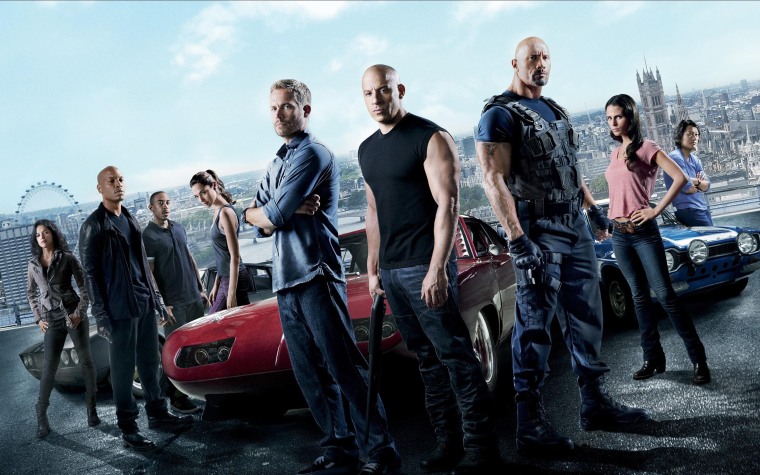
The slap had symbolized rupture; the handshake symbolized repair.
Hollywood Mirrors: Two Conflicts, Two Endings
Set side by side, the two stories read like moral inverses. Will Smith and Chris Rock — one moment, one wound, still unrepaired. Vin Diesel and The Rock — years of tension, slowly untangled. Both were mirrors reflecting the cost of ego under fame’s magnifying glass.
Smith’s pain was public, his regret immediate. Rock’s silence was strategic, his response delayed. Diesel and Johnson’s feud was drawn out, calculated, layered with corporate diplomacy. Each exposed different facets of masculinity: impulsive emotion versus strategic restraint, pride versus pragmatism.
In both cases, the internet served as both courtroom and confessional. Fans chose sides, brands calculated optics, and narratives hardened. Yet behind every headline was something quieter — men struggling to define strength without violence, respect without submission.
Perhaps the real difference lies in what was at stake. Smith and Rock had nothing to sell together. Diesel and Johnson had a billion-dollar bridge to rebuild. Reconciliation, like every Hollywood act, depends on the script’s incentives.
Cultural Meaning of Public Male Conflict
At its core, both feuds speak to how modern culture consumes masculinity — demanding vulnerability but punishing it in real time. The slap and the Fast feud are not opposites; they’re chapters in the same story of public men learning to be human while the world records it.
The spectacle of confrontation fascinates audiences because it breaks the illusion of control. Smith’s outburst was emotion unfiltered; Johnson’s Instagram post was control disguised as defiance. In both cases, men who built careers on invincibility revealed the fragility beneath.
Reconciliation, too, becomes theater — a ritual the world craves for closure, though it rarely satisfies the participants. For Smith and Rock, silence may be the only form of respect left. For Diesel and Johnson, partnership became proof that forgiveness can coexist with ambition.
Hollywood teaches the world to love conflict; these stories remind it that peace, though less cinematic, takes more courage.
Leaving With This: The Stillness After the Storm
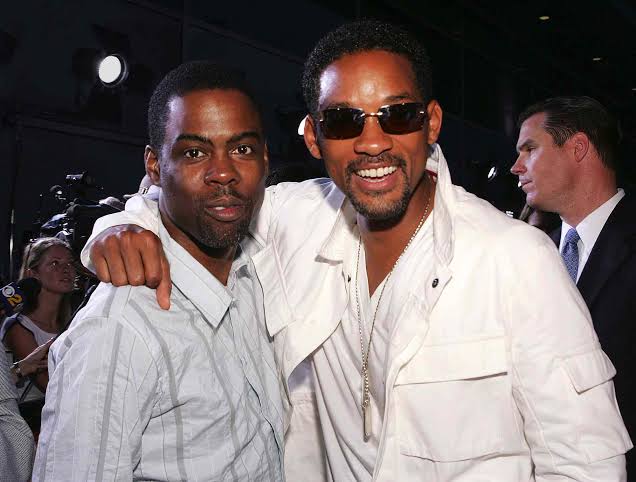
Will Smith and Chris Rock, in their separate stillness, are learning what no award could teach — that peace is not applause, it is repair. The night of the Oscars will forever be replayed, but the world forgets the aftermath: men, both fathers, both icons, standing before mirrors that no longer lie. For Smith, forgiveness became a pilgrimage; for Rock, restraint became a kind of wisdom. Neither won. Both grew.
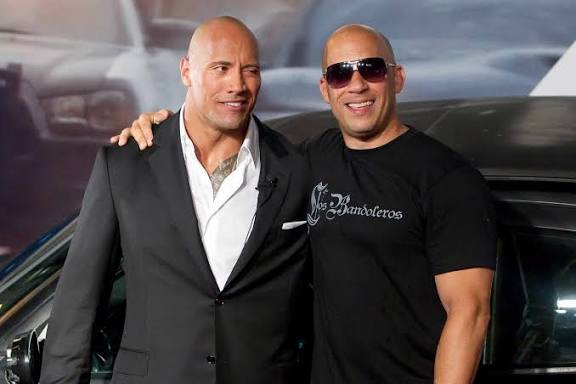
Vin Diesel and Dwayne Johnson continue orbiting the same cinematic universe, bound by a franchise that began with cars but ended up mirroring human egos at full throttle. Behind the public smiles and reconciliatory posts lies something more human — two leaders navigating pride, loyalty, and legacy. In their world, muscle was never just strength; it was metaphor. Diesel wanted family. Johnson wanted freedom. Both discovered that even brotherhood breaks when power refuses to share its steering wheel.
And so the story ends not with a handshake or a feud settled, but with an understanding: Great men are rarely enemies — they are reflections who met too soon, before they learned that mirrors can also be bridges.
The world loves conflict, but what truly endures are the men who rise from it — quietly, privately, with lessons the screen will never show.
Because beyond fame, beyond fury, beyond forgiveness — what’s left is what we all chase in the dark: the courage to be understood.
Discussion about this post