


The city hums before dawn—the kind of hum that trembles beneath fluorescent bulbs and generator fumes. Somewhere between the last danfo honk and the first radio jingle, Ikeja begins its daily rehearsal. In the still-blue hours of morning, speakers sputter from corner shops, mixing gospel with static, Fuji with traffic, and hope with exhaustion. From Opebi to Computer Village, every sound feels half-finished, like a beat waiting for permission to bloom. The air itself seems to remember; this was once the city where Nigeria’s heartbeat learned to sync with rhythm.
Yet there is a sadness to its noise. The jingles that once promised glory now echo in dusty taxis. The clubs that birthed revolutions stand sealed behind new signboards. Ikeja’s music didn’t just fade—it fractured. Its people still dance, but the songs don’t last long enough to heal them. Each beat, each echo, carries an undertone of something lost—a dream erased by its own frequency.
When the sun finally climbs over the rooftops, the city looks ordinary. But beneath the asphalt lies a buried studio of memories—reel-to-reel tapes, broken microphones, unpaid session sheets. Ikeja is alive, yes, but it lives with an ache. The world may call it the commercial capital of Lagos, yet for those who once chased melody through its narrow streets, Ikeja is something else entirely: the capital of broken sounds.
Birth of a Sound City
Before the streaming era, before hashtags and TikTok choreography, there was a raw pulse that belonged to this place. In the mid-1990s, Oregun and Allen became sanctuaries for restless youth who believed rhythm could rewrite their lives. Tiny studios—some no larger than kiosks—sprang up around warehouses and radio towers. Names like RayPower FM, AIT, and Kennis Music didn’t just broadcast songs; they created a generation.
2Face Idibia arrived with nothing but a cassette demo and belief. Plantashun Boiz rehearsed in dim corners where amplifiers shared sockets with fans. Sound engineers slept on floors beside mixers that sparked during power cuts. But somehow, magic thrived in the mess. The static became texture; the noise became rebellion. In that chaos, Nigerian pop found its grammar—raw, hybrid, ungoverned.

Ikeja’s transformation wasn’t designed; it was improvised. Every malfunction became part of the melody. Each time PHCN cut the light, producers layered silence into rhythm. The imperfections built character. What emerged was neither hip-hop nor highlife—it was Ikeja sound, a defiant fusion stitched from scarcity. Fame, however, rarely arrives without fracture. By the early 2000s, the same corridors that birthed legends began to echo with disappointment.
The Age of Crackling Wires
As the millennium opened, record labels multiplied faster than their contracts. Studio doors stayed unlocked, trust ran on verbal promises, and entire albums vanished into the pockets of pirates before release day. Allen Avenue became both a haven and a trap. By daylight, it glittered with posters of upcoming shows; by nightfall, it muttered the rumors of betrayal. The rhythm industry that began as family soon turned survivalist.
Electricity—both literal and emotional—was never stable. Generators throbbed like anxious hearts, swallowing profits in diesel fumes. Artists recorded takes in candlelight, mixing tracks while the engineer fanned away heat with lyric sheets. Out of that disarray came masterpieces—“African Queen,” “Olufunmi,” “Stylee.” But behind each anthem stood unpaid producers, erased credits, and studios repossessed by landlords.
Ikeja became a paradox: the more music it produced, the more silence it left behind. Piracy turned art into residue. Songs leaked from one flash drive to another until ownership dissolved. The dream that once carried microphones like torches now staggered beneath its own noise. Everyone was singing; no one was listening.
When the Beat Went Missing
By 2005, you could feel it—the slow unraveling. RayPower’s once-revolutionary broadcasts sounded weary; Kennis Music’s golden roster thinned. Alaba pirates ruled distribution, shipping thousands of counterfeit CDs daily while legitimate studios drowned in debt. Ikeja’s rhythm began to stutter. Even the new stars—Wande Coal, D’banj, 9ice—looked elsewhere for permanence, carrying their fame across borders.
Nightclubs like Planet One and O Jez closed or changed identity. The audiences moved online before the city could follow. A generation raised on analogue soundboards was left behind, their craft rendered obsolete by software. You could still hear the echoes—an engineer tapping a desk in frustration, a vocalist rehearsing to nobody—but the city’s confidence had cracked.
The phrase broken sounds wasn’t metaphor alone; it was the reality of speakers distorting under unpaid repairs, of producers recycling beats because fresh plugins were unaffordable. The spirit that once turned scarcity into creativity now turned exhaustion into silence. Ikeja’s music capital was still loud, but it was the wrong kind of loud—fragmented, haunted by what it once promised.
The Shrine and the City
Every city that births art needs an altar, and Ikeja’s was built not in marble but in music. The New Afrika Shrine, tucked between Alausa and Agidingbi, became more than a performance space—it was the city’s confession booth. By evening, the air thickened with sweat, incense, and truth. The stage where Femi Kuti shouted into brass wasn’t just entertainment; it was exorcism. Every horn blast felt like a rebellion against silence, a reminder that sound could still mean something sacred.
Around the Shrine, vendors sold roasted corn beside imported beer. The crowd was a democracy of Lagos—hawkers beside CEOs, expatriates beside barefoot dancers. Ikeja’s duality lived here: elegance and grime, rhythm and ruin, coexistence and collapse. The walls absorbed everything—the laughter, the politics, the grief of a generation still searching for a melody that hadn’t betrayed them.
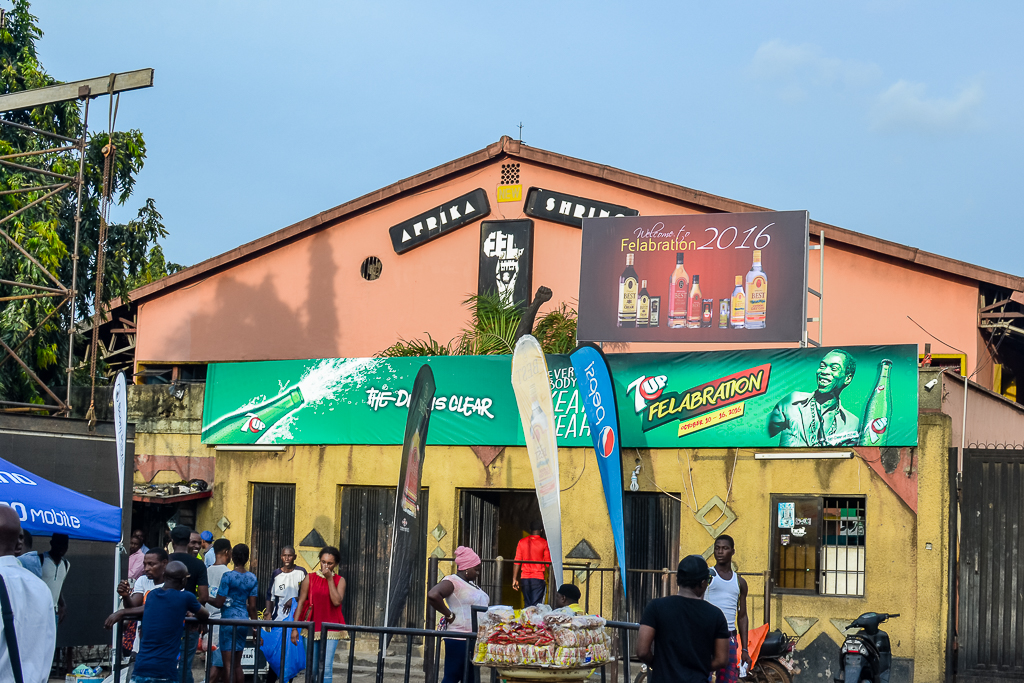
Yet even the Shrine’s resilience could not muffle the city’s exhaustion. Outside, a few streets away, once-famous studios were falling quiet. Music houses became cyber cafés, their mixing consoles replaced by desktop monitors. The same electricity that powered rebellion also powered obsolescence. The Shrine played on, but the echo of broken sounds spread faster than applause.
By 2008, the Shrine had become a symbol of both endurance and loss. It stood as proof that Ikeja still had rhythm, but its surroundings told another story—the dream was cracking under digital transition, economic fatigue, and the slow death of communal sound.
Pirates, Prophets, and the Price of Noise
Before streaming, music in Nigeria was faith without scripture. Artists trusted street vendors to distribute their work. CDs pressed overnight were sold at dawn. Contracts were often verbal, and loyalty was thinner than plastic wrapping. Out of this chaos, pirates became prophets of mass reach—blessing artists with fame, robbing them of fortune. Alaba Market was miles away in Ojo, but its invisible empire ruled Ikeja’s airwaves.
For every radio hit, there were twenty counterfeit copies spinning in buses across the mainland. Ikeja’s producers began to see their work on street stalls before they even heard their final mixes. The irony was brutal: piracy gave Nigerian pop its ubiquity and took away its stability. What should have been wealth became whispers of betrayal, laughter over losses, and songs sung too often to feed their creators.
Still, the noise did not stop. Like any true capital, Ikeja learned to disguise its wounds. Radio presenters played hits with enthusiasm that masked disillusionment. Artistes smiled in press photos while their royalties evaporated. Engineers learned to pray before every mix-down, not for perfection, but for electricity to last another five minutes.
When history looks back, it might call this era romantic—the rebellion years, when dreamers built sound from scraps. But for those who lived it, Ikeja was not glamorous. It was a workshop of exhaustion, a city whose rhythm depended on improvisation. The price of its music was silence that followed after every song ended.
The Digital Exodus
Then came the laptops—the revolution that would save the industry and quietly erase the old guard. The digital wave arrived like a prophecy fulfilled and betrayed. Suddenly, artists could record in bedrooms, distribute on MySpace and NotJustOk, and upload dreams without gatekeepers. It was liberation, but it came with exile. The once-crowded studios of Allen and Oregun thinned to echoes. The engineers who once commanded analog boards now watched teenagers mix entire EPs on cracked software.
The sound changed too. What was once tactile became pixelated. Beats grew cleaner but emptier; the warmth of imperfection disappeared. Ikeja’s old producers called it “the ghost frequency”—a sterile clarity that lacked soul. The digital world offered control but not connection. The city’s creative pulse migrated into the cloud, leaving behind only noise and nostalgia.
Even the nightlife reflected the shift. Where live bands once owned smoky lounges, DJs ruled the decks. Club speakers no longer carried stories—they carried algorithms. The communal rhythm of rehearsals was replaced by solitary creation. Ikeja was still loud, but it no longer knew who was listening. The music that began as rebellion had become background noise to itself.
By the mid-2010s, only remnants of the old rhythm remained: a few aging engineers at RayPower, aging posters on studio walls, Femi Kuti’s horn echoing across a gentrifying Alausa. Ikeja had modernized—but in doing so, it had also lost its heartbeat. The sound was clearer, but the soul was broken.
Echoes from the Basement
Every city hides its genius underground, and Ikeja’s lived literally below ground. Beneath plazas and office blocks, studios once flourished in windowless basements—places where time meant nothing, where men chased perfection in loops. The walls sweated from heat and electricity. Microphones dangled from improvised stands. Soundproofing came from mattresses nailed to concrete. Yet the music that rose from these rooms changed Africa’s destiny.
In one of those basements, at Oregun Road, Cobhams Asuquo produced early tracks that would redefine Nigerian pop. In another, a young ID Cabasa shaped beats for an unknown artist named Olamide, while across Allen Avenue, Terry G experimented with madness until it became a genre. From the outside, these were just buildings; from within, they were volcanoes of sound. Ikeja’s basements turned scarcity into alchemy.
But every invention carries its curse. The city’s new sound became a victim of its success. Demand soared, infrastructure did not. Power failures erased half-mixed sessions. Hard drives crashed before backups. The most haunting truth? Many of Nigeria’s greatest songs were lost not to time, but to poor electricity. What remains are myths—half-finished records whispered about by aging engineers. In that way, Ikeja’s history became a graveyard of masterpieces.
Today, those basements have new tenants—boutiques, betting shops, phone repair stores. The soundproof walls still stand behind fresh paint. If you lean close enough, you can almost hear it: faint beats, laughter, shouts of “roll it again,” trapped in the plaster. Broken sounds that never stopped echoing.
What Remains in the Static
Yet in every ruin lies residue. Beneath Ikeja’s noise still lives the hum of memory. In Computer Village, where phone chargers hum like synthetic crickets, you can still find flash drives named after lost producers. In Opebi, the ghost of a studio lingers in a warehouse now selling electronics. Walk through the backstreets after rain, and you might hear it—the faint echo of a beat that refuses to die.
Ikeja’s broken sounds are not just a metaphor for lost music; they are the city’s biography written in decibels. Each distortion tells a story: a record label that never recovered, a hitmaker who vanished, a song that became a prayer. Even the silence here is rhythmic—it pulses with what once was, what could have been, and what still fights to be heard.
Today, younger artists stream from laptops and sing in rented Airbnbs, but unknowingly they inherit the city’s residue. Every auto-tuned hook carries a trace of the analog ghosts that came before them. The imperfections of the past have become the software presets of the present. Ikeja’s sound never truly broke—it simply changed frequency.
And maybe that’s the truth hidden beneath the metaphor: Ikeja didn’t die; it adapted through fracture. Its brokenness became a new kind of perfection—a reminder that in Nigeria’s musical evolution, even noise has memory.
A City Built from Sound
Ikeja never planned to become a creative capital; it simply grew into one out of necessity. As Lagos Island filled with banks and bureaucracy, Ikeja became the alternative city—affordable, restless, accessible. When the Federal Capital moved to Abuja in the 1990s, Lagos lost its title but not its noise. The artists, the dreamers, the wanderers—most found refuge in Ikeja. It was close enough to the centre to matter, far enough to be forgotten by the government.
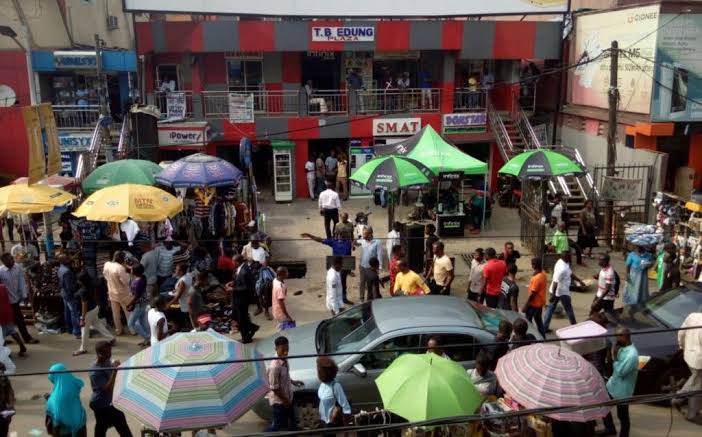
Out of that anonymity came freedom. Musicians didn’t need permission to be loud. Studios could operate through the night, blending church choirs with street slang, borrowing harmonies from mosques and motor parks. Every record reflected the city’s contradictions: spiritual and sensual, comic and tragic, polished and rough. Ikeja’s true genius was its ability to hold opposites and make them sing.
Yet, like all capitals of art, it thrived on fragility. As rent rose and technology evolved, artists migrated to Lekki, Surulere, or remote studios beyond Lagos. Ikeja remained, but its pulse changed. The same roads that once carried aspiring singers now carry corporate workers and delivery bikes. The music never fully left; it just became invisible—embedded in how the city breathes.
Listen closely, and you’ll find rhythm everywhere: in traffic lights switching red, in generators coughing back to life, in the hawker’s melodic sales pitch. Ikeja built itself from sound, and even as the formal studios died, the city kept composing—its daily chaos turning into an unwritten symphony.
The Rebirth of Silence
When an industry breaks, it often leaves behind silence—but in Ikeja, silence didn’t mean death. It became reflection. Many of the city’s forgotten producers found solace in mentorship, teaching new artists how to make something lasting from imperfection. Some converted their old studios into churches, letting sermons echo where music once roared. Others drifted into anonymity, swallowed by the same noise they helped create.
But a quiet resilience lingered. Around Alausa, small indie labels began reemerging in the late 2010s, fueled by nostalgia and necessity. They didn’t have the glamour of the early 2000s, but they carried something purer—a hunger to restore community. In those compact studios, you could feel an echo of the old Ikeja spirit: collaboration without ego, creativity without expectation. It was music as healing.
Silence also brought reckoning. Artists who once glorified chaos began speaking about mental health, burnout, and identity. The culture of excess faded, replaced by introspection. Ikeja learned that silence could be rhythm too—that stillness might be the truest sound left. This new quiet was not emptiness; it was a city exhaling after years of shouting.
The new generation that rose from this silence—artists like Johnny Drille, Tems, Asa’s successors—carried a different frequency: one of restraint, craftsmanship, and emotional honesty. They inherited Ikeja’s wounds and turned them into melody. The capital of broken sounds was healing, note by note.
The Frequency of Survival
At its core, Ikeja’s story is not about music—it’s about survival. To live here is to adapt, remix, and rebuild. The city itself behaves like a producer: sampling its own ruins, layering progress over pain, adjusting its tempo to match the times. Every artist who ever passed through Ikeja carried that code—the ability to turn difficulty into design.
In the global Afrobeats explosion, fragments of Ikeja can be heard everywhere. The rhythmic imperfections, the raw mixing, the boldness of voice—these are not coincidences. They are fingerprints from the days of scarcity. When Burna Boy performs at Madison Square Garden, you can still hear Oregun’s echo in his phrasing. When Wizkid glides through a minimalist beat, it’s the old Allen Avenue minimalism—make beauty with what’s left.
Ikeja taught a nation that art doesn’t need perfection; it needs pulse. It built a culture from improvisation and left a legacy written in distortion. Broken sounds became a survival language, proof that beauty could live inside chaos. The capital of broken sounds may no longer hold the studios, but it holds the memory of how to build them again.
Because every time a generator coughs into life, every time a radio hums faintly in traffic, every time a young singer records her first verse through a borrowed mic—somewhere, in a frequency we can’t measure, Ikeja is still producing.
Cities Don’t Forget
Cities, like people, remember through scars. Ikeja’s roads remember every barefoot dreamer who walked them after midnight, every studio that vanished into new real estate, every night of sound that ended in blackout. The billboards might change, the clubs might move, but the memory hums beneath the concrete.
You can still feel it near Allen Junction — that invisible vibration of ambition and fatigue. The old studios, now turned into cyber cafés or betting shops, still echo faintly with music if you listen closely enough. Even the traffic — chaotic, unrelenting — carries rhythm. Every honk, every generator rumble, every impatient conductor’s shout forms part of an unintended orchestra that never stops playing.
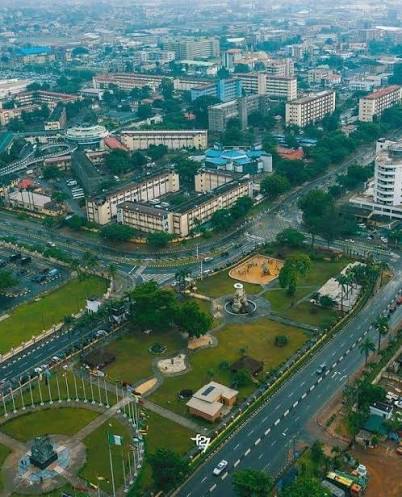
Cities don’t forget the people who gave them sound. The ghosts of Ikeja’s music past — the early DJs, the backup singers, the technicians — still inhabit the airwaves. They live in the way a street vendor hums a hook from 2007, in the ringtone of a bus driver, in the melody a child whistles absentmindedly while buying fuel. Memory here is not housed in monuments; it’s carried in vibration.
And when the rain falls on Opebi at night, it sounds eerily like applause — as if the city itself is clapping for everything it survived. Broken sounds may fade from charts, but they do not leave the soil. Ikeja, even in its silence, still hums.
Closing Reflection: The Sound That Refused to Die
In the end, it wasn’t the polished music videos or the global remixes that kept Ikeja alive. It was something quieter, older — the persistence of rhythm in the face of ruin. The sound that began as error became a language. The distortion became identity. The hiss became heartbeat.
Young producers who never knew the old city now use its brokenness as inspiration. They sample static, distort vocals, add noise intentionally — unknowingly resurrecting the same aesthetic born in rooms powered by candlelight and faith. The cycle has come full circle. The capital of broken sounds lives again, this time in the digital ether — in headphones, in TikTok snippets, in underground EPs that echo the spirit of those who came before.
And perhaps that’s the truest legacy of Ikeja: not fame, not industry, not even sound — but survival through imperfection. What started as an accident became an anthem. What was once a flaw became a fingerprint.
Somewhere, under the neon and the traffic, a generator starts again. The red light flickers on a recording deck. A new voice clears its throat. And once more, the city of broken sounds begins to sing — imperfectly, endlessly, beautifully alive.

Discussion about this post