


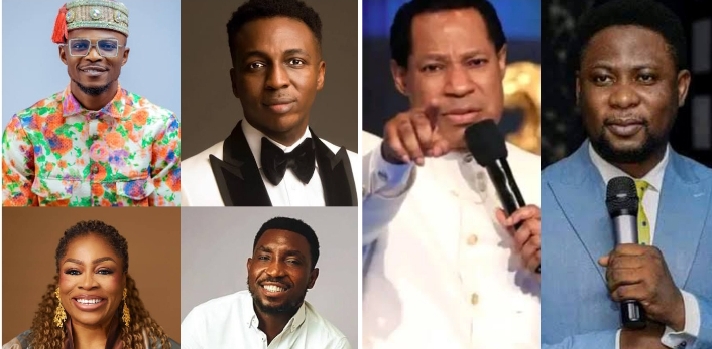
In Nigeria, gospel music is more than melody; it is the pulse of devotion, the quiet echo of prayer in towering cathedrals and humble street corners alike. Yet beneath the harmonies and hallelujahs, an invisible tension coils like a shadow between the walls of churches and recording studios. Pastors lay claim to sacred authority, singers chase notes that stretch far beyond pews, and the audience—faithful and worldly alike—watches the delicate dance unfold. Who owns gospel music? The shepherds of the flock, or the voices that carry the message to millions?
This tension is not abstract. It emerges in hushed critiques, veiled public statements, and the sometimes sharp edges of social media. A pastor expects devotion; a singer seeks resonance beyond the altar. And in this interplay, faith collides with ambition, devotion meets commerce, and the sacred rhythm of worship finds itself competing with the relentless beat of the market.
The modern gospel artist is a tightrope walker, balancing between the invisible hands of spiritual oversight and the tangible allure of global fame. Every lyric, every collaboration, every stage performance becomes a test: Is the song a ministry, a product, or both? Pastors watch, evaluate, sometimes admonish. Fans cheer, stream, and share, reinforcing a complex ecosystem of ownership that neither scripture nor contract alone can resolve.
The rift is the heartbeat beneath the hymn. It is felt in the spaces between prayers and applause, in the subtle tug-of-war between divine calling and worldly recognition.
To trace it is to trace the evolution of Nigerian gospel itself: a story of devotion, ambition, faith, and artistry, each note vibrating with the tension of who truly owns the song.
From Choir to Charts: The Evolution of Nigerian Gospel
To understand the rift, one must hear its echo in history. In the 1970s and 1980s, gospel singers were nurtured entirely within churches. Choirs trained under pastoral guidance were the proving grounds for talent, and the audience was primarily congregational. Ministry dictated message and medium; market considerations were negligible. The boundaries were clear, almost sacred.
Yet even then, tensions simmered beneath the surface. Singers who sought recognition beyond the congregation risked censure, whispers of ambition outweighing devotion. The tension was muted, almost imperceptible, but it foreshadowed the seismic disputes to come. Ministry was ownership, and the church was the gatekeeper.
The late 1990s and 2000s brought recording studios, distribution networks, and global airwaves into the mix. Gospel music’s reach extended far beyond pews, its power amplified by technology and commerce. Suddenly, stewardship and ownership were no longer identical: pastors guided the spiritual intent, but singers could wield influence, income, and fame independently.
This evolution set the stage for modern conflicts. Pastors maintained spiritual claims; singers cultivated artistic and commercial ones. Social media, streaming, and international recognition made disputes visible and public. The rift, once subtle, became a central narrative: a story of faith, fame, and the contested ownership of the gospel itself.
Money, Royalties, and the Invisible Ledger
Beneath the melodies lies another battlefield: financial control. Royalties, streaming revenue, performance fees, and endorsements are not merely numbers—they represent power, independence, and influence. Artists seek compensation for their labor, while pastors sometimes perceive financial negotiations as a challenge to spiritual authority. In gospel music, money is never just money; it is a measure of legitimacy, stewardship, and trust.
The conflicts between artists and pastors often revolve around contracts, revenue sharing, and intellectual property. Pastors may view artists’ entrepreneurial pursuits as distractions from ministry, while singers may see financial autonomy as an extension of their vocation—a necessary means to sustain ministry and life. This duality creates a friction that, when unresolved, spills into public discourse.
Social media magnifies these tensions. Every post, tweet, or video about a royalty dispute becomes a public document, subject to interpretation and judgment. Fans become participants, applauding independence or criticizing perceived disloyalty. The ledger of ownership is no longer confined to accounting books; it exists in the court of public opinion, where every financial move is scrutinized for moral as well as legal propriety.
Ultimately, these disputes reflect a deeper question: can ministry and market coexist without conflict, or will financial autonomy always challenge pastoral authority? For Nigerian gospel artists, the answer is as complex as the harmonies they create—interwoven with faith, ambition, and the unrelenting demands of a global audience.
Case Studies
1) Pastor Chris Oyakhilome and His Artists: Harmony in Discord
The saga of Pastor Chris Oyakhilome and his gospel artists reads like a gospel symphony punctuated by dissonant chords.
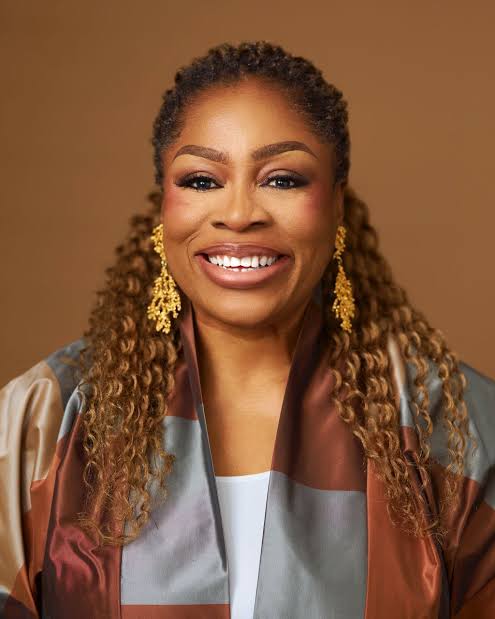
Sinach, whose “Waymaker” became a global anthem, was long cradled under his spiritual mentorship. Yet even stars nurtured in the fold are not immune to friction. In 2025, Pastor Oyakhilome publicly remarked that he had to release certain artists, including Sinach and Frank Edwards, noting that worldly ambitions sometimes overshadowed divine missions. The sacred dance between ministry and market had reached a delicate breaking point.

Frank Edwards, a masterful architect of contemporary gospel, felt the invisible tension of dual allegiance. Grateful for mentorship yet seeking broader reach, he walked a line as fine as a harp string—where artistic expression met pastoral expectation. Praise and opportunity beckoned from international stages, yet the call of spiritual fidelity demanded restraint. Here lay the paradox: devotion as vocation, ministry as livelihood, and the public eye as both benefactor and judge.

Testimony Jaga’s narrative adds a sharper, more complex note. Speaking of alleged misconduct within Christ Embassy, he challenged the unspoken boundaries of authority, revealing fractures that extended beyond artistic control into accountability and ethics. The rift was no longer just about music; it had become a dialogue about trust, oversight, and moral jurisdiction. Public and private spheres collided, forcing a reconsideration of who truly directs the rhythm of gospel influence.
In every movement of this symphony, the pastor’s hand, the singer’s voice, and the audience’s gaze intertwine. What emerges is a tableau of faith under negotiation—a living illustration of the eternal question: does gospel music belong to the shepherd, the singer, or the collective heartbeat of the faithful?
2) Timi Dakolo: When the Spotlight Meets the Pulpit
Sometimes, the stage and the pulpit speak in different tongues. Timi Dakolo, celebrated for his soulful voice that moves hearts across concert halls, found himself at the center of a storm when Pastor Femi Lazarus questioned the fees secular artists command at church events. What should have been a celebration of music and ministry became a mirror reflecting tensions between art, value, and perception.

For Dakolo, music is both livelihood and craft—a labor of devotion to audiences, if not to liturgy. Charging for performances was not greed; it was acknowledgment of time, talent, and effort. Pastor Lazarus, representing the moral rhythm of the church, saw the fees as discordant with the spirit of giving. The clash was subtle but profound: artistry and spiritual expectation struggling for harmony in the same space.
Their public debate played out online, each post like a note in a complex composition—criticism, defense, clarification, and perspective interweaving. Yet beneath the headlines lay a human story: respect and principle, pride and reconciliation. Both voices sought acknowledgment, though from different angles, and both revealed the fragile space where commerce meets devotion.

In the end, the tension did not fracture the relationship. Dialogue, transparency, and mutual recognition allowed both to find resonance. Dakolo’s story reminds us that music—sacred or secular—carries value, and the spaces where faith and artistry intersect are delicate, demanding understanding, patience, and an ear tuned to both spirit and craft.
The Audience as Arbiter
If pastors and artists are the primary players in the gospel music rift, the audience is the silent yet decisive arbiter. Congregants, fans, and online followers shape perceptions of legitimacy, success, and spiritual authenticity. Their applause validates artistry; their critique defines moral boundaries. In this way, listeners participate in the ownership of gospel music, whether consciously or not.
Sinach’s global reach, amplified through online streams and international tours, demonstrates the power of audience influence. Fans embraced her music regardless of pastoral criticism, asserting that spiritual resonance transcends institutional endorsement. Similarly, Timi Dakolo’s stylistic innovations found acceptance among followers who valued faith expressed through artistry rather than conformity.
Audience engagement also exerts pressure on pastors. Public expectation and fan advocacy can prompt church leaders to reconsider, negotiate, or clarify their positions. In this dynamic, ownership is no longer a simple hierarchy; it is a negotiation among three forces—pastor, artist, and audience—each exerting authority in different spheres.
This triadic interplay shapes modern Nigerian gospel. The rift, once a private tension, now plays out across stages, streaming platforms, and social media feeds. It is a living negotiation, where ministry, market, and listener converge, and the ownership of gospel music becomes as layered and complex as the harmonies themselves.
Global Comparisons: Nigeria and Beyond
The pastor-singer rift is not unique to Nigeria; similar tensions echo across global gospel scenes. In the United States, for example, artists like Kirk Franklin and Tasha Cobbs navigate ministry expectations while building global music careers. Franklin’s work, blending choir-led worship with contemporary production, mirrors the Nigerian experience: pastors and churches often debate where spiritual service ends and commercial success begins.
In Ghana, gospel artists frequently straddle traditional church roles and mainstream entertainment. Singers such as Joe Mettle illustrate how music ministry can be simultaneously devotional and market-driven. Yet, pastors occasionally assert moral authority, emphasizing that financial gain should never overshadow spiritual purpose. These parallels highlight that ownership conflicts emerge wherever gospel music evolves into a commercial industry.
South Africa offers another lens. Artists like Rebecca Malope maintain close pastoral ties while commanding expansive audiences. Here, ownership disputes often center on creative control and representation, echoing Nigerian debates over intellectual property, collaborations, and social media influence. In every context, the tension revolves around a core question: who has the right to direct the trajectory of gospel music—spiritual leaders, artists, or audiences?
These global examples underscore the universality of the rift. While cultural and theological specifics differ, the underlying challenge is consistent: reconciling spiritual stewardship with professional autonomy. Nigeria’s experience, amplified by a booming entertainment market, offers a particularly vivid case study, but it is part of a broader, transnational negotiation between ministry and market.
Long-Term Implications for Ministry and Gospel Music
The pastor-singer rift has lasting consequences for church leadership. Pastors must navigate dual responsibilities: safeguarding spiritual integrity and supporting artists’ professional growth. Failure to manage this balance can lead to internal disputes, congregational dissatisfaction, or public controversy, all of which can erode the church’s credibility.
For singers, the rift shapes career trajectories. Choices regarding collaborations, endorsements, and social media presence carry both spiritual and financial weight. Missteps can trigger pastoral censure or audience backlash, while successful navigation enhances both ministry impact and personal brand. Singers must cultivate wisdom, negotiation skills, and spiritual grounding to operate effectively in this contested space.
The industry itself is evolving in response. Record labels, streaming platforms, and digital distributors increasingly recognize the dual nature of gospel music. Contracts and agreements now accommodate both spiritual oversight and commercial rights, signaling a shift from unilateral pastoral control to collaborative governance. This structural adaptation suggests that ownership models may become more flexible, though tension is unlikely to disappear entirely.
Culturally, the rift influences audience expectations. Congregants and fans alike are learning to interpret gospel music both as a spiritual message and a marketable product. Appreciation for artistry, production quality, and global reach is now part of how listeners measure impact, creating a nuanced understanding of gospel ownership that blends ministry, market, and audience authority.
The Future: Independent Gospel Artistry vs Church-Led Models
Looking ahead, the landscape of gospel music promises continued complexity. Independent gospel artists—those who operate outside formal church structures—are increasingly prominent. Social media, streaming platforms, and digital marketing empower singers to reach millions without pastoral mediation, redefining notions of ownership and influence.
However, church-led models remain vital. Institutional support provides spiritual mentorship, community connection, and moral accountability. Churches retain symbolic authority over the spiritual essence of music, even if singers gain commercial independence. The pastor-singer rift may evolve into negotiation rather than conflict, with artists and pastors sharing influence over both spiritual and market dimensions.
Technology will continue to drive change. AI-assisted production, global distribution networks, and virtual worship experiences challenge traditional hierarchies. Singers and pastors must adapt, negotiating ownership in increasingly fluid contexts where influence is measured by reach, engagement, and spiritual resonance rather than geographic proximity.
Ultimately, the future hinges on collaboration, trust, and mutual respect. Those who navigate these tensions successfully will redefine gospel music ownership, demonstrating that ministry and market need not be mutually exclusive but can coexist in dynamic, evolving harmony.
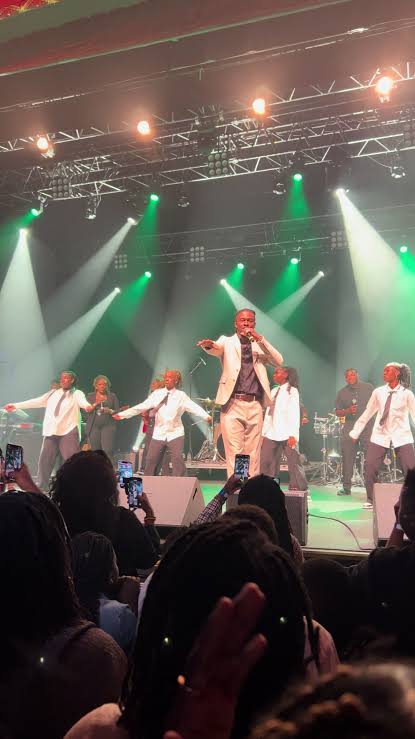
The Song That Belongs to All (Conclusion)
The pastor-singer rift is not merely conflict—it is the tension that shapes the soul of Nigerian gospel music. It reminds us that faith cannot be confined, nor can artistry be silenced. Each song becomes a bridge: between sacred calling and personal expression, between the walls of the church and the world beyond.
In the end, gospel music belongs not to pastors, not to artists, but to the spaces where spirit and sound meet. It lives in the courage of those who dare to sing their truth, in the hearts of listeners who feel it, and in the quiet moments when devotion finds its voice.
This is the melody that refuses ownership, yet inspires devotion—a reminder that the most powerful music is the one that sets both ministry and ambition free.

Discussion about this post