



On some nights in Abuja, when the lights dimmed across Nyanya and the hum of generators took over the city’s silence, a single voice would pierce through — sharp, aching, unmistakably divine. It was not just melody. It was something older, something ancient, the kind of voice that sounds as though it had seen God and returned trembling. That voice belonged to Osinachi Nwachukwu.
To millions, she was the voice behind “Ekwueme” — a worship anthem so drenched in reverence that even atheists paused when it played. But in the quiet years after her death in 2022, when Nigerians began replaying that song, line by line, frame by frame, something unsettling emerged. “Ekwueme”, a song once celebrated as total surrender, began to sound like something else — a confession wrapped in melody, a warning buried in worship.
What if “Ekwueme” wasn’t just praise, but prophecy? What if Osinachi was not only singing about God’s sovereignty but whispering about her own captivity? And what if the song that made her immortal was also the cry no one truly heard while she was alive?.
The Girl Who Sang to the Sky
Long before the name Ekwueme became a prayer point, there was a young girl in southeastern Nigeria who sang into the wind because the world around her was too loud to listen. Osinachi was born in Isuochi, Abia State, one of four children in a devout Igbo Christian family. Her twin sister, Amarachi, would later tell interviewers that Osinachi began singing before she could properly speak — humming fragments of hymns after church service, her small voice rising above the rustle of cassava leaves drying in the compound.
It wasn’t the ordinary kind of singing. Her father used to say that when Osinachi sang, “even the harmattan paused to listen.” By secondary school, her voice had become a spectacle at crusades and fellowships. She joined every available choir, often standing barefoot on makeshift stages during revivals that swept through Abia and Imo in the 1990s. Her voice carried a haunting power that seemed both fragile and fierce — the kind that made preachers stop preaching.
When she moved to Enugu, she joined the church choir under Pastor Paul Enenche’s ministry, which would later evolve into Dunamis International Gospel Centre. There, the seed of Ekwueme began to take shape — though it would take decades, a marriage, and a thousand tears before it found its way into the world.
The Making of “Ekwueme”: Worship, Wounds, and Warnings
The word “Ekwueme” means “The One who says and does” in Igbo — an attribute of God’s unchanging authority. But in Osinachi’s rendering, it carried an intimacy that was almost painful. Her voice trembled on the word “Ekwueme” like someone trying to convince themselves that the God who speaks would still act — even when He seemed silent.
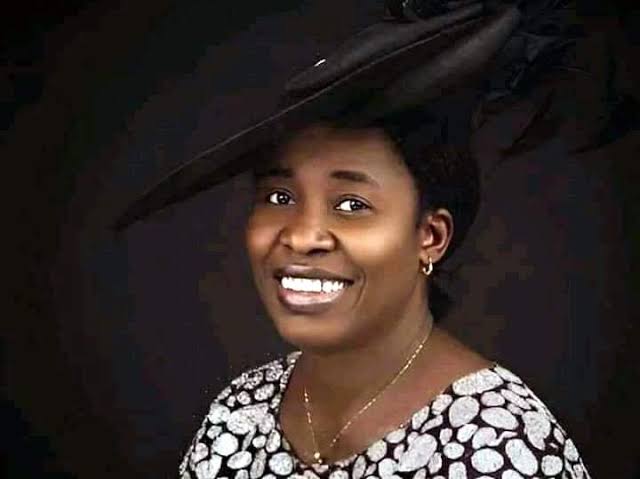
In 2017, the collaboration between Osinachi and Prospa Ochimana birthed the song that would define a generation of Nigerian worship. Recorded live, the performance of Ekwueme was raw, almost unsettling. The crowd swayed as her voice rose and cracked; her eyes closed, her body slightly trembling, her lips forming words that sounded more like pleas than lyrics.
Listeners around the world called it anointed, powerful, soul-breaking. But beneath that intensity was a different story — one that people would only begin to piece together years later. While the song ascended on YouTube and filled churches across Africa, Osinachi herself was quietly descending into a life of fear.
Behind the perfection of her stage presence was a marriage that, according to family testimonies and investigative reports after her death, was marked by domestic abuse and psychological control. Her husband, Peter Nwachukwu, allegedly dictated her movements, her earnings, even the songs she could perform. The woman who sang “Ekwueme” before thousands often returned home to the kind of silence that worship could not heal.
Fame Without Freedom
By 2019, Ekwueme had crossed borders. Churches in Kenya, Ghana, South Africa, and even the Caribbean sang it in translation. Osinachi performed at crusades attended by presidents and ministers. Yet even as her star rose, she often looked withdrawn. Friends later revealed that she seldom mingled after performances — preferring to sit quietly, staring into space as though listening to an audience only she could hear.
Several gospel insiders claimed she turned down multiple recording contracts because her husband would not allow them. Her ministry became both her pulpit and her prison.
In one interview snippet resurfaced after her death, she said softly, “When I sing, I forget everything.” It wasn’t metaphor. It was confession.
The same worship that lifted millions became her coping mechanism — her way of disappearing into sound when reality became unbearable. This is why Ekwueme feels heavier now — because we are listening with knowledge we didn’t have before. Every time she stretched that final “You are the living God…”, it sounds less like triumph and more like endurance — the sound of someone who had learned to make peace with delayed deliverance.
The Silence That Followed the Song
On April 8, 2022, the news broke like a tremor. At first, it came as an unconfirmed WhatsApp broadcast: “Ekwueme singer dead.” Within minutes, gospel chat groups across Nigeria were flooded with disbelief. Screenshots, emojis, question marks. Someone even wrote, “Impossible. That voice can’t die.”
But it was true. Osinachi Nwachukwu — the voice millions associated with heaven’s doorway — was gone. She died at an Abuja hospital after weeks of illness that, at first, was attributed to an undisclosed throat infection. Then the story shifted. Colleagues began whispering. Family members began speaking. A darker truth started surfacing. It wasn’t sickness that silenced her. It was years of abuse.
The Hidden Scars Behind the Anointing
In the days following her death, Nigeria’s gospel industry convulsed with grief and guilt. Her twin sister, Amarachi Eze, told journalists that Osinachi had been enduring physical and emotional violence from her husband for years. “She kept it all in because she didn’t want people to mock the gospel,” Amarachi said, her voice shaking.

Members of her church confirmed that Osinachi had often shown up to rehearsals or crusades with visible marks, sometimes claiming she “fell.” Some colleagues said they suspected, but “didn’t want to interfere in marital matters.” Others said they had tried to intervene, but she always begged them not to make it public. “She said God hates divorce,” one friend revealed.
In that single sentence lay the paradox that killed her — a religious culture that mistakes silence for virtue, endurance for faith.
The same woman who led millions to sing about the God who speaks was living under a roof where her own voice was muted. And that is where “Ekwueme” begins to sound prophetic. Because if God is truly the One who says and does — Ekwueme — then her life became the haunting question: what happens when the words of men contradict the words of God? She believed the Lord would act. The world acted too late.
When Lyrics Begin to Speak Back
When “Ekwueme” went viral in 2017, most people focused on its melody, not its message. But listen again, with hindsight:
“You are the Living God, oh,
There’s no one like You…”
That declaration sounds triumphant — yet when Osinachi sang it, her body language told another story. She bent slightly forward, hands clasped, eyes half-closed, voice breaking into sobs. It felt less like someone singing about God and more like someone talking to Him directly from a prison cell of pain.
The repetition — a literary and musical device — turned the song into a ritual of survival. Each “Ekwueme” felt like a self-reminder: You are still faithful. You are still true. You are still watching.
That’s how worship becomes therapy in Nigeria — the more you repeat the words, the more you try to outsing the pain.
When story of her passing broke, those lines began to bear new meanings. Churches that once danced to “Ekwueme” began to weep to it. Gospel DJs stopped midway through the song on live radio. Listeners said they couldn’t hear it the same way again. Because now, “Ekwueme” wasn’t just a testimony — it was a recorded lament, a hidden cry that echoed louder after death than it ever did in life.
The Night of the Last Cry
According to family accounts, Osinachi’s final days were marked by physical decline. She was said to have been admitted to an Abuja hospital after an assault that left her with internal injuries. Friends said she still prayed for her husband even while in pain. Some said she wanted to leave; others said she couldn’t bear to bring public disgrace to the ministry she loved.
On the night she passed, gospel artists around Nigeria were preparing for Easter programs. Many heard the news mid-rehearsal. At Dunamis Church, where her voice once led thousands, the sanctuary fell silent. For a woman whose life revolved around sound, her death felt like the night heaven stopped singing.
But death did not silence her completely.
If anything, it amplified her message.
Because after her passing, Nigerians began replaying “Ekwueme” not as worship, but as evidence — a lyrical testimony of a woman’s endurance in a faith that sometimes demands too much of women.
The Trial That Followed
After Osinachi’s death, her husband, Peter Nwachukwu, was arrested and charged with culpable homicide under Section 221 of Nigeria’s Penal Code. The Federal Government’s involvement turned the case into a national debate — not just about domestic violence, but about the silence of faith communities that often spiritualize abuse.
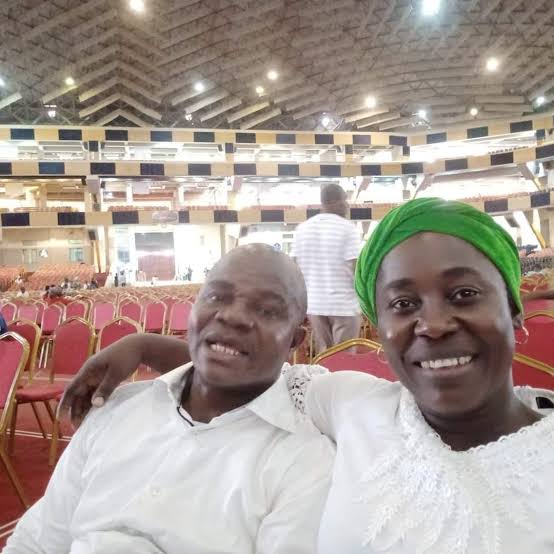
During court hearings, multiple witnesses — including her children and colleagues — gave chilling testimonies. One of her sons reportedly said his father often told them their mother was “possessed” whenever she tried to resist his control. The children described a home ruled by fear, where worship was compulsory but love was conditional.
The court case dragged through the months, and public attention waned. But each time the proceedings paused, Ekwueme returned to the airwaves — a haunting reminder that justice delayed is worship desecrated.
The Nigerian church, for its part, began hosting panels on gender violence and pastoral accountability. But beneath the noise, many wondered: would anything really change? Because Osinachi’s story wasn’t isolated. Other female gospel ministers had whispered similar experiences — the tension between spiritual duty and self-preservation.
Her death forced a reckoning the church had long postponed: the line between submission and suffering, between spiritual silence and self-destruction.
A Nation Confronts Itself
Nigeria’s reaction to her death revealed something uncomfortable.
For a brief moment, empathy surged. Social media timelines filled with her photos, captions like “Rest well, woman of God.” But soon, the hashtags faded, and the deeper conversations about gender violence and church accountability dissolved into familiar silence.
Still, Osinachi’s name lingers — in sermons, in conferences, in whispered cautionary tales. Every time a gospel minister mounts the stage with visible sadness, someone wonders if another Ekwueme is unfolding in real time.
Her passing became a mirror to the soul of a nation that prays loudly but listens poorly.
The Cultural Weight of Her Name
In Igbo cosmology, names are never accidents; they are destinies in disguise. Osinachi means “It comes from God.” It is both a confession and a submission — the belief that all things, even pain, have divine origins or purposes.
Throughout her life, she lived that name literally. Every event — her rise, her silence, her suffering — she saw as “from God.” Even her restraint from speaking publicly about her abuse may have stemmed from that deep-seated theology: “If it comes from God, then it must serve His purpose.”
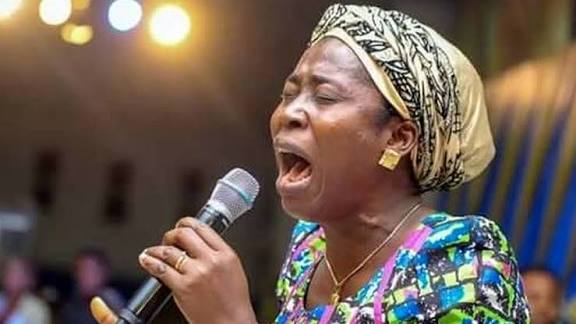
But her death forced a cultural reinterpretation. What if the divine origin of her voice was meant not just to bless, but to expose? What if her name wasn’t about accepting pain but transforming it into prophecy?
In the months following her burial, the phrase “Ekwueme woman” became shorthand for any person who suffered silently while believing God would act. But slowly, it also became a cautionary term — “Don’t be another Ekwueme woman.” The culture was beginning to understand what she never got to articulate: that faith without justice is not faithfulness; it’s fatalism.
From Woman to Symbol
In death, Osinachi became more than a singer; she became a symbol of every silenced woman cloaked in righteousness. Her face appeared on posters about domestic violence, her voice underscored documentaries about gender inequality in religion. Even the Nigerian National Human Rights Commission referenced her story in campaigns addressing spousal abuse.
In universities and seminaries, theology students began writing papers about her — exploring how her songs embodied the intersection of faith, feminism, and suffering in African Christianity. Scholars compared her voice to that of Fela’s mother, Funmilayo Ransome-Kuti, and poet Flora Nwapa — women who, in different ways, bore witness through pain.
But Osinachi’s witness was musical, not militant. She fought no battles publicly, yet her melody became a battlefield where meaning and faith collided.
The tragedy of her life was that she lived in a culture that could only interpret power through noise. Her resistance was too soft to be noticed — until it was too late.
The Sound That Refused to Die
Today, if you walk through markets in Lagos or buses in Enugu, you’ll still hear her voice from radios and loudspeakers. Children hum Ekwueme absentmindedly while doing chores. Pastors use it as background for altar calls. It has become part of Nigeria’s spiritual soundscape — a soundtrack to both hope and heartbreak.
But for those who know her story, the song carries an extra layer of reverence. Each time her voice rises in the chorus, it feels like a visitation. The song doesn’t just remind you of God’s sovereignty — it reminds you of the cost of ignoring human suffering.
Because every generation produces its prophets, and sometimes prophecy doesn’t sound like thunder. Sometimes it sounds like a woman whispering Ekwueme into a microphone, tears sliding down her face.
Legacy in the Mirror
In 2023, the Osinachi Foundation for the Protection of Women and Children was launched by activists inspired by her story. Its goal: to provide shelter and legal support for victims of domestic abuse in faith communities. On its banner were the words, “When God speaks, act.” It was a direct inversion of her song — a call to human beings to embody the very attribute they sang about in God.
Her twin sister, Amarachi, took up gospel music full-time, often performing Ekwueme at memorials while looking after her sister’s kids. But she sings it differently now — stronger, steadier, like a woman determined to keep her sister’s prophecy alive. In interviews, she often says, “When I sing that song, I feel she’s singing with me.” Maybe she is.
Because music doesn’t just outlive the musician; it extends their presence. And in Osinachi’s case, it also extends her message — that worship must never become a substitute for truth.
The Final Note
In one of her last recorded performances — at a women’s conference months before her death — Osinachi closed her eyes midway through Ekwueme and whispered something barely audible over the microphone. When the sound engineers enhanced the recording later, they realized what she had said: “Use my life to speak.”
It wasn’t rehearsed. It wasn’t poetic. It was prophetic. And God did, her life became a sentence that outlived her voice.
Now, when Ekwueme plays in churches, something shifts. The room listens differently. Because embedded within its melody is a message that transcends music: Faith must never silence truth.
Holiness must never excuse harm.
And worship must always lead to action.
Reflection: The Song Continues
Years will pass, and new worship songs will rise. New voices will echo through Nigerian churches, some more powerful, some more technically skilled. But none will sound quite like Osinachi. Because hers was not just a voice — it was a wound that sang.
Each time the piano begins the first notes of Ekwueme, something sacred happens. The room stills. The air thickens. Even those who don’t know the full story feel it — that weight between beauty and sorrow. That is the mystery of art born of pain: it carries memory in every vibration.
Maybe that’s what she wanted all along — not fame, not pity, but to be remembered for making heaven audible even while earth failed her. And maybe Ekwueme wasn’t only her song. Maybe it was God’s song through her, warning a world that listens too late.
Because sometimes, heaven speaks through broken instruments — and Osinachi was one such instrument. She broke — and heaven spoke. And we, the listeners, were finally forced to hear.

Discussion about this post