


It was sometime after midnight when a message meant for one heart became public property. A grainy screenshot surfaced—two sentences, unpunctuated, written in the familiar cadence of someone who once held her. Within minutes it was everywhere: on fan blogs, in gossip feeds, in the fluorescent cruelty of social media timelines.
Nobody could confirm its authenticity, yet everyone behaved as though they’d read scripture. The sender: Chris Brown. The receiver: Rihanna. The content—mundane, almost gentle—felt heavier than it looked, like a whisper accidentally broadcast through a megaphone.
By morning, entertainment portals were ablaze with theories. Was it real? Was it bait? Why now, years after their lives had already been dissected, mourned, and monetized? The message was short, but what it reopened was vast: the collective scar tissue of a public love story that had already become one of pop culture’s most documented wounds.
That’s the trouble with digital ghosts. They do not age, they resurface.
Early Sequence: Two Children of Rhythm
Before the headlines and restraining orders, there were only two prodigies orbiting fame.
Chris Brown, born in 1989 in the small Virginia town of Tappahannock, was light-footed, sharp-voiced, molded by Usher’s choreography and Michael Jackson’s silhouette.
Rihanna, born Robyn Fenty in 1988 in Saint Michael, Barbados, was rhythmic even in speech—a Caribbean teen whose voice carried both steel and sweetness.
When they met in 2005 at an industry showcase, both were barely adults, both products of households shadowed by volatile fathers, and both newly in possession of a weapon called fame. Their chemistry was instant, almost cinematic. Publicists encouraged collaborations; the public encouraged dreams.
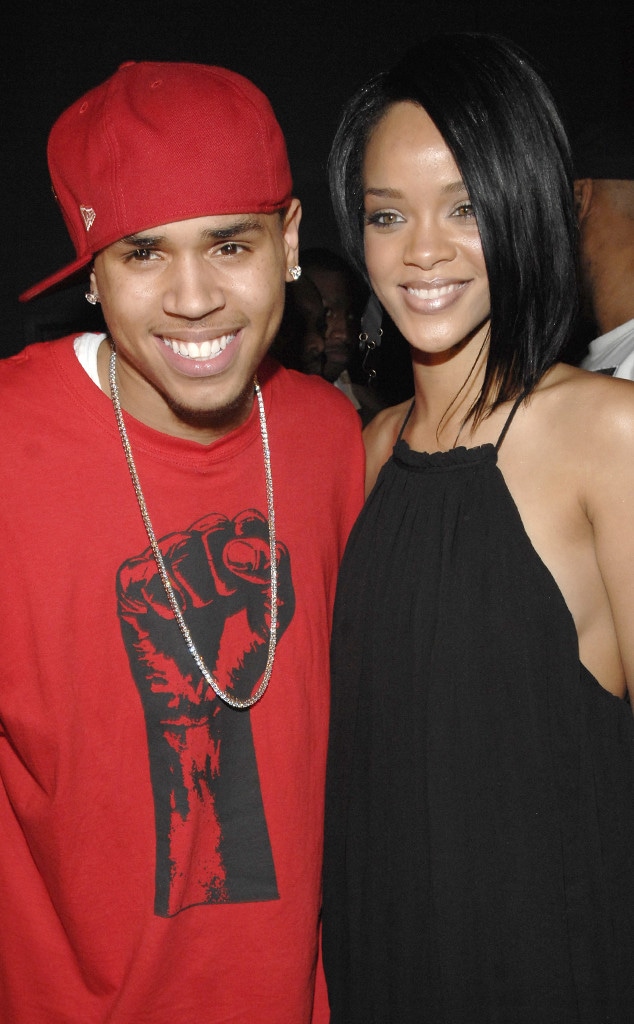
By 2007, they were the genre’s golden pair: playful, photogenic, profitable.
But behind the glimmer was youth—reckless, unprotected, and unsupervised. Fame accelerated everything: affection, jealousy, expectation. They were learning to love under the lens of a billion strangers, each moment one push notification away from immortality.
The Car and the Camera
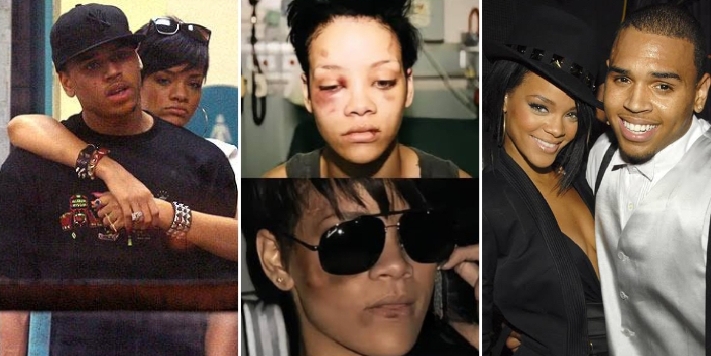
February 8, 2009. The night that will never fully leave pop culture’s bloodstream. Los Angeles, pre-Grammy weekend. What began as an argument inside a rented Lamborghini ended in violence severe enough to shock even a scandal-saturated audience.
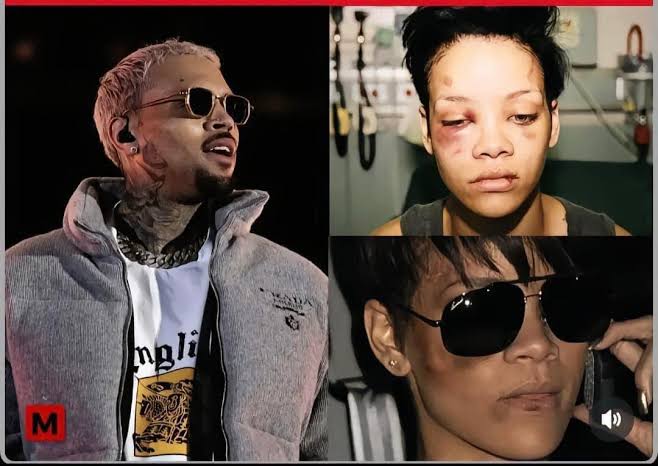
Within hours, Rihanna’s bruised face became evidence, her name trending in sentences she never authorized. Chris Brown turned himself in; the photograph, leaked by someone within law enforcement, traveled faster than any apology could.
That image—half portrait, half indictment—became a turning point in how celebrity violence was seen, discussed, and consumed. It was no longer a private matter; it was a mirror for society’s own contradictions about love, control, and punishment.
Chris Brown was sentenced to five years’ probation and community service. Rihanna withdrew, speaking little but communicating everything through absence. For months, the industry tiptoed: radio bans, PR statements, strategic silences. Two careers that had once danced together were now divided by collective morality.
The Age of Forgiveness
Time, in pop culture, heals selectively.
By 2011, Chris Brown was attempting his return. He released F.A.M.E., won a Grammy, and performed again before millions. To some, it was proof of redemption; to others, proof of society’s amnesia. Rihanna, meanwhile, evolved into something unrecognizable from her former self—stronger, edgier, her music darker, her fashion sharper. She seemed to absorb her pain and weaponize it.
Then came the collaboration that shocked everyone: “Birthday Cake (Remix)” in 2012, featuring Chris Brown. It was as though the past had been rewritten in studio reverb. The track was magnetic, defiant, and discomforting. For fans who had drawn moral boundaries, it blurred them again.
Was this reconciliation or rebellion? Forgiveness or a performance of control?
Their renewed connection—private or otherwise—remained mostly invisible until the leak.
The Leak
Years later, when the alleged text appeared online, it carried the eerie weight of déjà vu.
“Still think about u sometimes,” it read, followed by a timestamp too ambiguous to verify. The message, screenshotted by an anonymous source, circulated across Reddit threads and gossip accounts before being picked up by larger outlets. It was never proven real, but the precision of its phrasing, the lowercase intimacy of its tone, made it believable enough.
For Rihanna, the leak was more than an invasion—it was a resurrection of pain she had buried under platinum plaques and billion-dollar business ventures. For Chris Brown, it was another reopening of a wound he had spent a decade suturing with public contrition and private chaos.
But what fascinated the public wasn’t the message itself—it was what it symbolized: the world’s inability to let this story rest. The text was treated less as communication and more as prophecy, an artifact excavated from pop culture’s most traumatic archive.
The Algorithm of Memory
The internet has no concept of mercy.
Once the text appeared, old clips resurfaced in algorithmic waves: interviews, courtroom photos, concert snippets where Rihanna looked distracted, paparazzi videos where Chris Brown looked restless. Artificial intelligence even generated fake duets between them, layering new vocals over old beats, erasing consent in the process.
The leak didn’t just resurrect history—it remixed it. It turned trauma into content, and content into currency.
Some fans romanticized it. They read the message as proof of unfinished love, as if pain was the highest form of connection. Others condemned the collective nostalgia, arguing that the world’s obsession with their story trivialized the violence that started it. But the internet doesn’t think in ethics—it thinks in engagement. The longer people debated, the more the leak lived.
Chris Brown’s New Kind of Loneliness
For Chris Brown, the resurfacing came at a fragile time. His career had been recovering but never fully restored. Each new project—no matter how acclaimed—carried invisible asterisks. He had evolved musically, blending R&B with rap, dance, and experimental beats, yet every success was shadowed by a single question: Has he changed, or has he simply learned to apologize better?
He began performing longer sets, smiling wider, speaking less. He tattooed his pain into skin and rhythm—his body becoming both confession and camouflage. In interviews, he danced around the past, offering fragments of accountability wrapped in exhaustion. The world wanted clarity; he wanted peace.
The leak stole that peace. It reminded everyone that redemption in the digital age isn’t linear—it’s a treadmill powered by public memory. For every thousand new fans who forgave, there were a thousand others ready to reopen the case file.
And deep inside his music—beneath the high-tempo bravado—there were hints of fatigue. His songs began sounding like apologies written in code.
Rihanna and the Art of Moving Without Looking Back
Rihanna had long stopped playing the victim people once made her.
She had become a billionaire by mastering transformation—beauty mogul, fashion executive, cultural icon. Yet behind every headline about Fenty’s profits, there was always one subtle undertone: she did it despite him.
After the leak, that narrative returned like an old reflex. Commentators dissected her silence, interpreting it as strength, strategy, or pain. But perhaps silence, for her, was neither of those. It was simply freedom—the luxury of not explaining herself anymore.
Friends described her as unfazed, yet those close enough noticed the quiet withdrawal that followed. She stopped posting for a while, avoiding digital noise, curating her distance with surgical precision. It wasn’t fear—it was fatigue from the endless recycling of her most personal chapters.
Rihanna understood something the internet didn’t: healing isn’t about erasing history. It’s about refusing to let it narrate you again.
The World That Refuses Closure
If there is one addiction stronger than fame, it is nostalgia. The world doesn’t just consume celebrity—it archives emotion, replaying it until the original moment loses meaning. The Chris Brown and Rihanna saga had long become a case study in cultural contradiction: how a society that condemns abuse can simultaneously romanticize toxic love when it’s dressed in celebrity packaging.
Every few years, something—an anniversary, a lyric, a leak—pulls the story back to the surface. Journalists revisit the events, psychologists dissect the power dynamics, fans post old pictures captioned “They were so good together.” The collective memory behaves like a wound that itches more than it hurts.
The leak was not the first reopening, nor would it be the last. But it revealed something deeper: our appetite for redemption stories often outweighs our understanding of them. We want to believe that people can heal, but we also want to witness their scars.
And so, both Chris and Rihanna remain symbols—unwilling mythologies trapped in a morality tale that keeps evolving without their permission.
Technology’s Hand in Human Pain
In another era, that text might have disappeared in the dark, swallowed by privacy. But in this century, technology functions as an archivist of emotion. A single screenshot becomes a time capsule; an impulsive message becomes permanent evidence. The leak represented not just a resurfacing of two lives but a reflection of how our digital world feeds on personal failure.
For Chris Brown, it was another trial held in the courtroom of public opinion.
For Rihanna, it was an uninvited reopening of a chapter she had already edited out of her story. And for the world watching, it was an opportunity to perform morality again—to debate, to empathize, to judge—all while scrolling.
The irony is haunting: the same internet that destroyed their privacy also immortalized their pain.
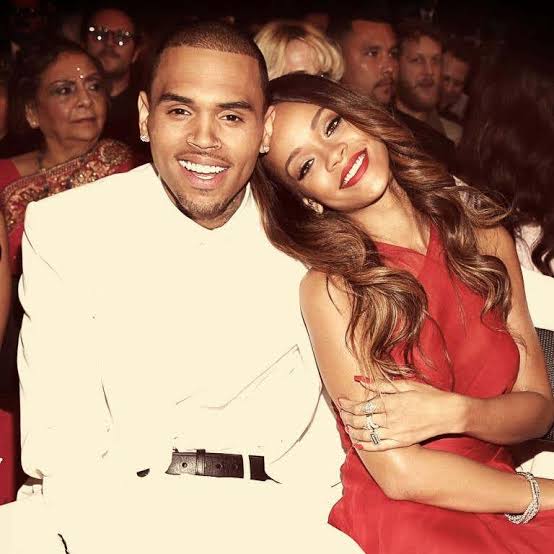
Echoes in Their Work
After the leak, their creative outputs began to sound eerily introspective. Chris Brown’s lyrics hinted at isolation, the kind that doesn’t come from being alone but from being perpetually misunderstood. His choreography slowed down, his tone deepened. He started painting, posting art of broken wings, metallic hearts, and shattered glass—visual metaphors for a man trying to assemble what he once broke.
Rihanna’s music, though sparse since her business pivot, grew emotionally precise. When she sang of desire or distance, listeners could still trace the tremor of memory beneath her confidence.
She had turned experience into authority—the authority to exist without needing to prove survival.
Closure in the Age of Screens
The real tragedy wasn’t in the text. It was in the fact that it existed at all — that private conversations, if real, could never truly stay private in a digital world built for spectacle.
Both Chris Brown and Rihanna built empires from their pain. Yet, the internet continues to pull them back to the same night, the same question, the same scar.
No one really wins in digital resurrection — not the victim, not the culprit, not the audience.
Leaving With This: What Remains Unsaid
In a quieter world, the leak would have faded. But in ours, everything remains searchable, replayable, immortalized. Maybe that’s the real lesson — that time can forgive, but data never forgets.
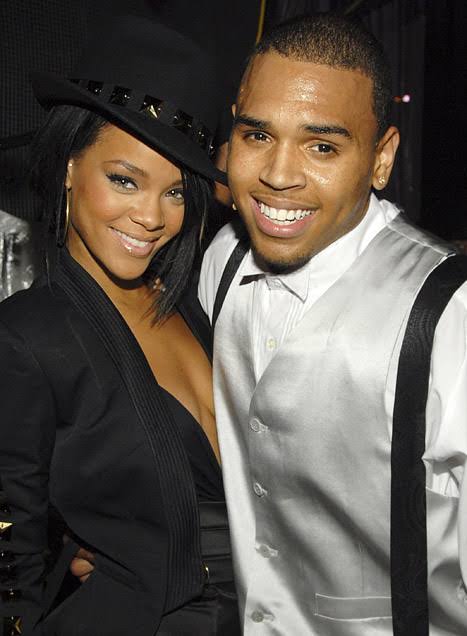
Chris Brown and Rihanna became more than a couple. They became a case study in how modern love — filtered through fame, pain, and surveillance — never really dies; it just migrates from heart to hard drive.
Their story, once human, now lives in the cloud. And sometimes, even clouds leak.
Discussion about this post