



There are actors who live in the shadows of their characters, and there are those whose names eclipse the very stories they tell. In Nigeria’s film industry, Funke Akindele has long ceased to be just an actress — she has become an institution, a blueprint for commercial and creative reinvention. Her success transcends the rhythm of performance; it thrives in the delicate tension between art and enterprise.
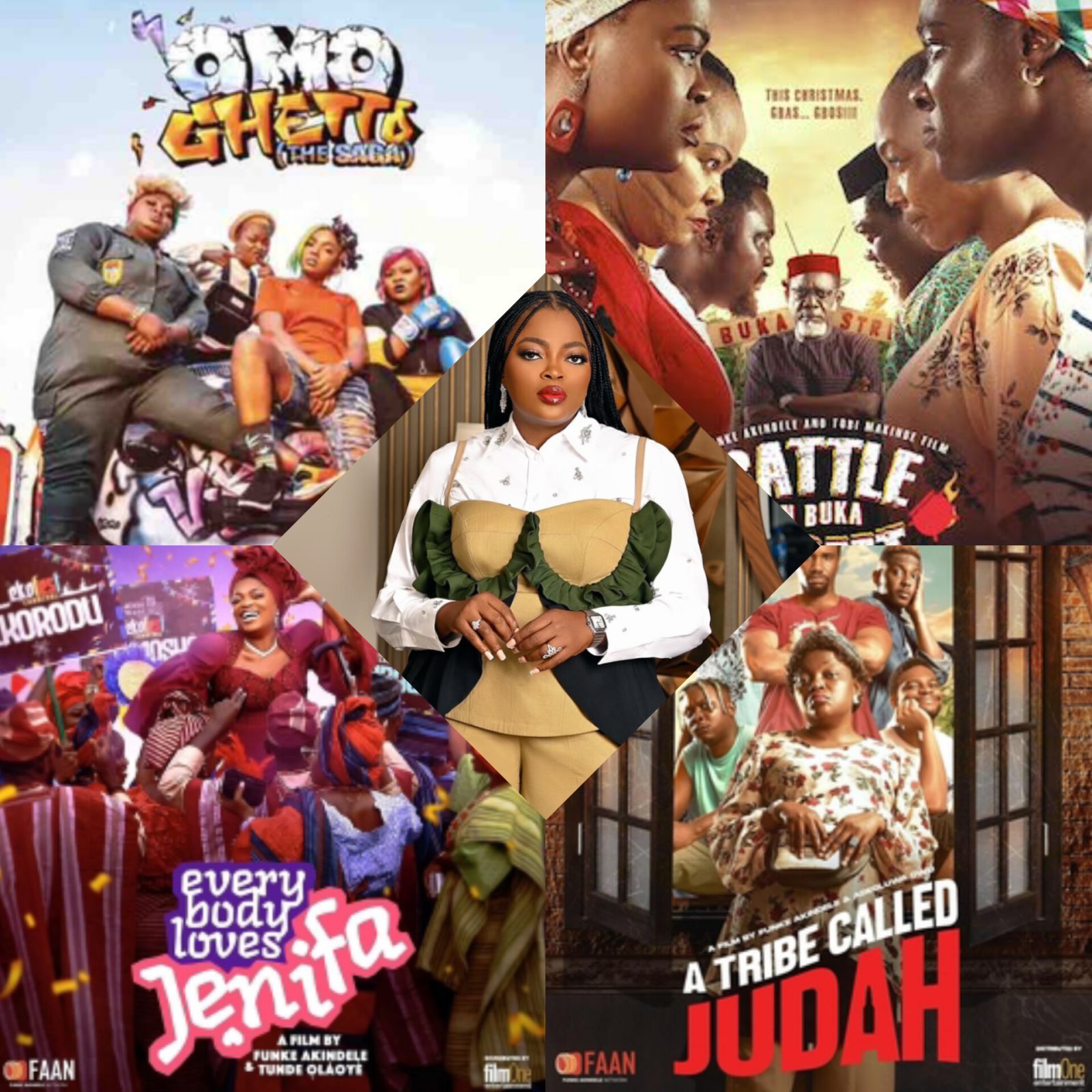
For over two decades, Akindele has navigated Nollywood’s unpredictable waves — from the modest production days of I Need to Know to the billion-naira box office feats of Battle on Buka Street and A Tribe Called Judah. Yet beneath the applause lies a quieter question: Is Funke Akindele herself the business, or has her business outgrown the star?
This question doesn’t seek to glorify her fame. It probes the machinery behind it — the discipline, vision, and resilience that turned a creative career into one of Nigeria’s most profitable entertainment enterprises. To understand this, one must look not at her films alone, but at the ecosystem she built around them.

The Making of a Brand Beyond the Camera
Born in Ikorodu, Lagos State, Funke Akindele’s journey mirrors the gradual evolution of Nollywood itself — from an informal local movement to a global cultural export. Her rise began humbly, shaped by a blend of formal education, raw ambition, and an innate understanding of audience psychology. After studying law, she took the unconventional route toward acting, appearing in television dramas before crafting her own film identity.
Her breakthrough came with Jenifa (2008), a comedy that became a cultural turning point. The film didn’t just entertain; it created an archetype — the naïve village girl navigating Lagos sophistication — that audiences found both comic and emotionally familiar. When Jenifa’s Diary expanded that universe into television, Akindele was no longer just an actress. She was a producer, a strategist, and a brand architect.

The franchise proved that Nigerian audiences could emotionally invest in character-driven storytelling without big-studio machinery. It also demonstrated Akindele’s knack for longevity — transforming one character into an empire. This was where her business instincts became most visible: the ability to monetize relatability, not just talent.
From Character to Corporation
In today’s Nollywood, very few stars maintain creative independence while running profitable enterprises. Akindele’s company, Scene One Productions, has done exactly that. It functions as a creative hub — producing, distributing, and marketing her works with calculated consistency. Unlike older Nollywood structures reliant on distributors, Scene One controls its supply chain, from scripting to streaming.
This control didn’t come by chance. Akindele understood early that creative ownership translates to financial autonomy. Each production under her watch reflects a balance of artistry and market logic — choosing stories that resonate deeply with Nigerian life while ensuring cinematic appeal. Whether it’s Omo Ghetto: The Saga or Battle on Buka Street, her formula blends humor, morality, and social realism.
Her leadership style mirrors the corporate discipline of successful entrepreneurs. Team members have often described her as firm but collaborative, driven by results, and attentive to audience feedback. Through this structure, she transformed her production outfit into a small economy that sustains dozens of film professionals — writers, camera operators, editors, and costume designers.
Redefining Success in Nollywood’s Digital Age
Akindele’s rise coincided with Nollywood’s transition from DVD distribution to digital streaming. While many producers struggled to adapt, she embraced the shift. Her content began streaming on YouTube, Netflix, and African Magic platforms, expanding her audience beyond national borders.
This digital integration did not dilute her local authenticity. Instead, it introduced her work to new demographics — Nigerians in the diaspora who saw in her films a reflection of home, humor, and humanity. By maintaining cultural fidelity while appealing to global sensibilities, she bridged the gap between domestic popularity and international recognition.
Her digital footprint also enhanced her brand visibility. Across social media platforms, Akindele maintains one of Nollywood’s most engaged fan bases. Her public image — disciplined, hardworking, family-oriented, and philanthropic — adds emotional depth to her professional narrative. For many fans, she represents not just stardom, but proof that creative work can be both profitable and purposeful.

The Politics of Stardom and the Burden of Expectation
When Akindele ventured into politics in 2022 as the deputy governorship candidate of Lagos State under the People’s Democratic Party, it became a test of how far celebrity influence could translate into civic participation. Though the campaign ended without electoral victory, it reinforced one truth: Akindele’s name commands attention beyond cinema.
The public’s reaction reflected the complexity of her brand. Some saw it as a bold move toward national development; others perceived it as overextension — the blending of entertainment and governance. Yet even in defeat, her campaign reshaped public discourse on celebrity responsibility. It raised questions about the role of cultural figures in political reform and the fragility of public image in electoral politics.
That period also highlighted Akindele’s resilience. While others might have withdrawn after political scrutiny, she returned to film production almost immediately. Within months, she released A Tribe Called Judah, setting a new box office record and re-establishing her dominance. This capacity to rebound — to turn setbacks into momentum — is what solidifies her as more than a performer. She is a strategist who thrives under reinvention.
Why the Business Never Sleeps
Behind every public success lies a network of unseen labor. For Akindele, her work ethic is legendary. Colleagues describe her daily routine as rigorous — balancing production logistics, casting, and post-production oversight. She treats each film like a start-up, with structured planning, marketing budgets, and performance tracking.
Her films’ commercial success is not coincidental. Each release is timed with precision — often during festive seasons when cinema attendance peaks. Marketing is handled like a corporate campaign, leveraging social media trends and influencer engagement. This level of organization distinguishes her from contemporaries who rely solely on artistic merit.
Even endorsements follow the same logic. Akindele aligns only with brands that complement her public image, reinforcing trust and continuity. Whether partnering with telecoms, FMCG companies, or fintech platforms, her brand collaborations are extensions of her screen persona — disciplined, relatable, and aspirational.
Cultural Impact: When One Woman Mirrors a Generation
To assess Akindele’s impact, one must look at what her success symbolizes for women in entertainment. She emerged during a time when female leads were often confined to supporting roles. Today, she stands as the highest-grossing filmmaker in Nigeria’s history — male or female. Her success has expanded the industry’s gender narrative, proving that women can lead both on-screen and behind the camera.
She also represents a generational bridge — connecting the grassroots humor of early Nollywood to the technical sophistication of its modern era. Her productions maintain cultural authenticity without sacrificing production quality. That balance has redefined what mainstream entertainment in Nigeria looks like.
More importantly, Akindele’s influence extends into mentorship. Through her production company, she continues to nurture emerging actors and crew members. For many young creatives, she is not just a success story but a model of sustainability — proof that stardom can coexist with structure.
Legacy in Motion
The question of whether the star is the business or the business is the star doesn’t find a definitive answer in Akindele’s story. Instead, it reveals a cycle — each feeding the other. Her public image fuels her enterprise, and her enterprise sustains her relevance. In a landscape where fame fades quickly, she has built something that endures.
Funke Akindele’s trajectory illustrates that true influence lies not only in visibility but in continuity. The business of being a star, in her case, is not about glamour but governance — the disciplined management of vision, people, and purpose. She remains a case study in how entertainment, when treated with structure, becomes an economy of its own.

As Nollywood continues to evolve, her story stands as both inspiration and challenge — a reminder that the lines between talent and enterprise have blurred. The question will always linger, but the evidence speaks for itself: Funke Akindele has become both the star and the business.
Conclusion: The Mirror and the Market
So perhaps the question isn’t meant to be answered, but understood. Is the star the business, or the business the star? In Funke Akindele’s world, the two are inseparable — like reflection and mirror. The audience doesn’t just buy tickets to her films; they invest in the consistency she represents. Every success under her name reaffirms that stardom, when sustained by structure, becomes its own market force.
Funke Akindele has built more than a career — she has designed a living enterprise that grows with her evolution. Each project, each milestone, each setback turned triumph reveals a larger truth: she isn’t merely playing the part of a businesswoman; she has become the template for creative capitalism in Nigerian entertainment.
In the end, the balance between the “star” and the “business” no longer exists as two halves — they have merged into one formidable identity. She has proven that artistry can be an economy, and discipline can outlive applause. For every young creative watching her rise, the lesson is quiet but enduring: the star will shine, but only the business behind the light keeps it from fading.

Discussion about this post