


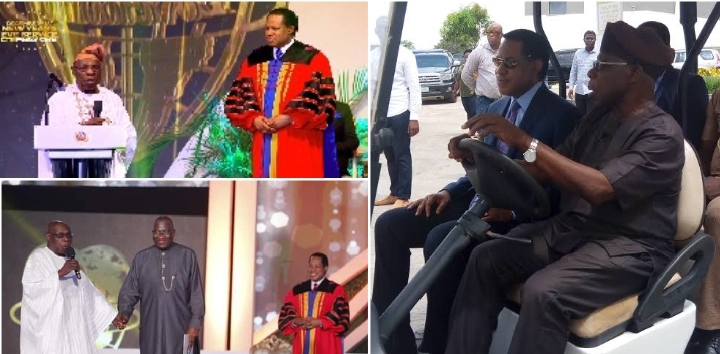
Twilight draped the Lagos skyline in a bruised hue, the kind that turns every building into a question mark. Along Kudirat Abiola Way, headlights trailed like restless prayers, and a convoy eased toward the golden glass façade of Christ Embassy. The moment felt heavy, too deliberate for coincidence. People whispered long before the first car door opened. Something was about to unfold—something that had less to do with protocol and more with prophecy.
Inside, the air vibrated with worship. The orchestra was still playing when the sanctuary began to stir. Ushers straightened their jackets. The front pew, usually reserved for ministers, shifted with quiet anticipation. Then, the familiar silhouette appeared—broad-shouldered, unmistakable, walking with the slow authority of a man who had carried Nigeria’s burdens longer than most of its citizens had lived. Olusegun Obasanjo had entered the sanctuary.
It wasn’t his first time inside a church. Yet this moment was different. The cameras didn’t flash as much as they trembled, caught between reverence and disbelief. The man who once ruled from Aso Rock, known for his brusque humour and military restraint, was standing before Pastor Chris Oyakhilome, the charismatic leader whose pulpit had birthed a multimedia empire and a global ministry. It was the sort of convergence Nigeria rarely witnesses—one forged not by invitation, but by intent.
Nothing about the encounter was casual. Even from the back rows, people could feel the room recalibrate. Worship turned into observation. Faith merged with curiosity. Was this a reunion of power and prophecy, or just another page in the endless script of Nigerian spirituality where politicians find absolution in sanctuaries they once ignored? No one could say. But one truth was certain: history was quietly rewriting itself inside that golden auditorium.
Between Power and Prophecy: Obasanjo’s Complex Dance with Nigeria’s Faith Movements
Olusegun Obasanjo has never been far from the pulpit. As a soldier, he quoted scripture like a commander issuing orders. As president, he turned Sunday services into instruments of diplomacy. His public spirituality often walked a fine line between conviction and calculation—sometimes sincere, sometimes strategic, but always unmistakably present.
During his presidency (1999–2007), Obasanjo cultivated an unusual rapport with the Pentecostal movement. He maintained visible relationships with figures such as Pastor Enoch Adeboye of the Redeemed Christian Church of God, Bishop David Oyedepo of Living Faith Church, and Pastor Ayo Oritsejafor, then president of the Christian Association of Nigeria. He attended crusades, invited clerics to Aso Rock, and often turned national events into stages of intercession.
Critics saw in this an attempt to baptise political power; supporters viewed it as the restoration of moral conscience in governance. Either way, Obasanjo mastered the choreography of Nigerian religio-political performance: kneeling before pastors on camera, quoting the Bible before signing economic reforms, and invoking divine will before political shifts.
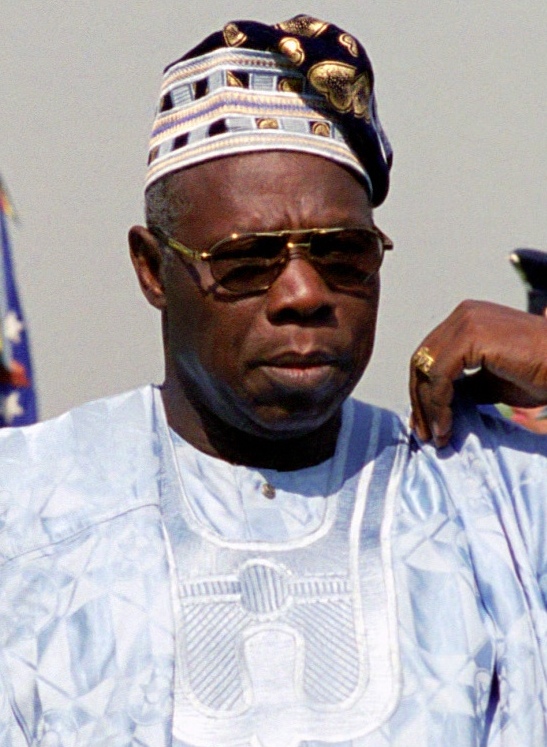
By the time he walked into Christ Embassy in 2021 for the Future Africa Leaders Awards (FALA), he was no longer president but remained the nation’s enduring political conscience—a man whose opinion could tilt conversations in Abuja and whose presence could validate or unsettle a congregation. The visit was thus not random. It was an act of continuity, another page in his long conversation with Nigeria’s pulpit elite.
For Oyakhilome, the moment was delicate. His ministry, known for global conferences and satellite broadcasts, rarely entertained overt political figures on its stage. Unlike Adeboye or Oyedepo, who occasionally spoke on national matters, Oyakhilome cultivated an other-worldly aura—his language celestial, his metaphors cosmic. The presence of Obasanjo in such a space blurred those carefully drawn boundaries. It raised questions not just about who came to whom, but what each represented in Nigeria’s hierarchy of influence.
Pastor Chris Oyakhilome: The Prophet of Prosperity and the Politics of Distance
Pastor Chris Oyakhilome has always been difficult to define. His ministry floats somewhere between faith and performance art, between television spectacle and spiritual science. To his millions of followers, he is the man of God, a vessel of revelation whose words shape destinies and whose teachings transcend geography. To his critics, he is an enigma—a preacher whose eloquence conceals an economy of influence too vast to quantify.
Long before Obasanjo walked into his world, Oyakhilome had already built a kingdom of light and media. Christ Embassy—also known as LoveWorld Nation—was not just a church; it was an infrastructure of faith. Its satellites beamed messages across continents, its concerts drew crowds that rivalled political rallies, and its television channel, LoveWorld TV, turned sermons into cinematic events. By 2021, the year of Obasanjo’s public appearance, Oyakhilome was no longer just a preacher. He was a global brand, commanding a digital empire that reached homes from Lagos to London, Johannesburg to Jakarta.
What set him apart from other Nigerian megachurch leaders was his studied distance from politics. He rarely commented on elections or government affairs, even when others used their pulpits to endorse candidates or criticise policies. His gospel of “the believer’s dominion” focused on personal transcendence rather than national critique. Where Adeboye prayed for Nigeria’s leaders, and Oyedepo thundered against injustice, Oyakhilome taught his followers to rise above earthly systems. It was a theology of detachment, an invitation to live in a kingdom not of this world—even while flourishing in this one.
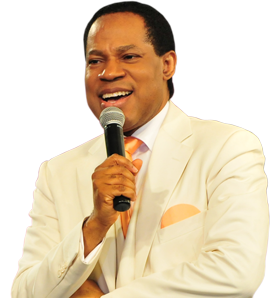
So when Obasanjo, the former president and master tactician of political theatre, appeared in his sanctuary, it jarred the symmetry of Oyakhilome’s world. For a man who seldom entertained political company, the visit risked blurring a careful boundary. Yet, Oyakhilome received him with the grace of one who understood that destiny often enters unannounced. He smiled, he nodded, and the choir swelled with a medley of praise.
That handshake—brief, solemn, and wordless—became a tableau of paradoxes. Two men who had shaped Nigerian consciousness in profoundly different ways now shared a stage. One was the architect of modern Pentecostal media, the other a veteran of national reconstruction. In that single image, cameras captured more than respect; they captured a dialogue between eras—the faith of the future acknowledging the power of the past.
For many Nigerians, it was more than a photograph; it was an allegory. It spoke to a nation where the spiritual and the political had ceased to be separate realms. It was as though the old general had come, not to be blessed, but to acknowledge a new kind of authority—one not forged in barracks or ballots, but broadcast on satellite beams of belief.
Echoes in the Sanctuary: What Really Happened That Day
Those who were present at Christ Embassy that afternoon speak of a silence that felt almost sacred. The atmosphere inside the auditorium shifted from exuberant to contemplative the moment Obasanjo was introduced. Pastor Chris, poised and luminous under the studio lights, paused his teaching to acknowledge the visitor. The choir halted mid-song, their microphones lowering as if to make room for history.
Obasanjo, alongside Goodluck Jonathan, stood to greet the congregation. His face bore that familiar half-smile—a mix of humility and authority, the look of a man who had seen too much of both the divine and the pragmatic. His words were short, almost offhand. He congratulated the ministry for its global impact and commended Pastor Chris for “the excellent work being done for God and Nigeria.” The audience rose in applause, some out of reverence, others out of bewilderment.
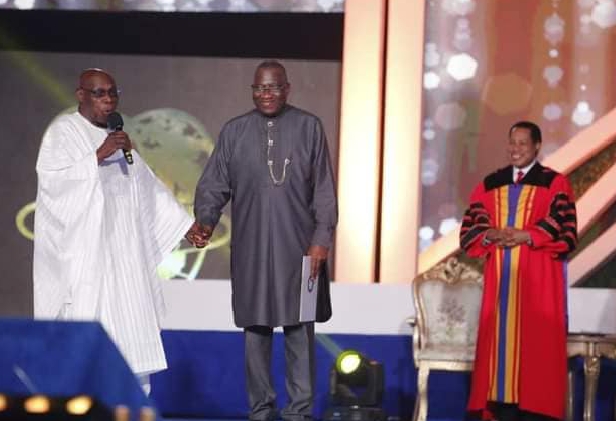
Observers later recalled how Oyakhilome’s response was equally measured. He thanked the former president and spoke briefly on the importance of leadership as stewardship—a term he often used to frame influence as responsibility rather than privilege. To the untrained ear, it sounded like polite exchange; to those attuned to the subtext of Nigerian spirituality, it was a coded conversation.
Because in Nigeria, visits like this are never merely visits. They are parables enacted in real time. A handshake can signify reconciliation. A photograph can restore lost relevance. A seat on the front row can speak louder than any endorsement. The sanctuary, on that day, became a parliament of symbols—faith, power, and legacy conversing in a language too complex for microphones.
After the service, Obasanjo lingered a moment longer than expected, chatting briefly with senior ministers before leaving the auditorium. No press conference followed, no official statement was issued. Yet by nightfall, social media was awash with clips, analyses, and interpretations. Some declared the encounter divine; others dismissed it as political optics. But the truth lay somewhere in between—a quiet blend of sincerity and strategy, as is often the case in Nigeria’s sacred politics.
Nigeria’s Culture of Spiritual Diplomacy
To understand the weight of that visit, one must understand the terrain it occupied. In Nigeria, religion is not merely faith; it is infrastructure. The church and the mosque function as parallel governments, offering what the state often cannot—hope, stability, and moral arbitration. Every Sunday, cathedrals become parliaments of emotion, where sermons double as state-of-the-nation addresses and offerings are cast like ballots of belief.
Political leaders, aware of this vast constituency, have long courted spiritual authority. From the early days of independence to the democratic transitions of the 2000s, visits between presidents and pastors have become a kind of unspoken ritual. Each handshake signals not just mutual respect but mutual necessity. The politician seeks legitimacy; the pastor gains access to power’s corridors. Together, they sustain the illusion of a moral republic.
Obasanjo’s 2021 appearance at Christ Embassy fit neatly into this tradition. Decades earlier, he had attended crusades by Adeboye and Oritsejafor, often kneeling for prayers that doubled as public absolution. Yet the visit to Oyakhilome carried a different resonance. This was not a man seeking forgiveness; it was a statesman acknowledging the new order of influence—the age when preachers wielded larger audiences than politicians.
Critics have labelled this exchange as spiritual diplomacy—a system where faith becomes currency and pulpits serve as diplomatic embassies of morality. It’s a system sustained by mutual performance: the leader bows, the pastor prays, the cameras capture, and the nation interprets. But beneath the choreography lies something profoundly human—the recognition that both priest and politician are navigating the same uncertainty, seeking control over an uncontrollable narrative called Nigeria.
It’s why, even years after that day, people still debate the motive behind Obasanjo’s visit. Was it a gesture of faith, a call for unity, or a carefully timed signal to a new generation of believers who had never known him as president but revered Oyakhilome as prophet? In Nigeria, those lines blur easily, and sometimes intentionally so.
Prayer, Politics, or Prophecy? The Unanswered Question
Every photograph tells a story, but some tell several at once. When Obasanjo’s image standing beside Pastor Chris began to circulate online, interpretations multiplied like parables. The faithful called it a meeting of grace and governance; skeptics read it as calculated optics; spiritual theorists labeled it an alignment in the prophetic timeline. What everyone agreed on, however, was that it meant something.
Obasanjo’s long relationship with religion has never been casual. During his military and civilian tenures, he frequently leaned on spiritual symbolism to anchor his leadership. From morning devotion sessions at Aso Rock to his public alliance with prayer groups during the 1999 transition, faith had always been his chosen instrument of legitimacy. His political diary was filled with visits to clerics, from Catholic bishops to Pentecostal leaders — not as ritual, but as strategy. To him, Nigeria’s soul was not governed solely by constitutions; it was animated by faith.
But Pastor Chris Oyakhilome represented a different spiritual language. His messages rarely invoked Nigeria’s political system; instead, they revolved around cosmic citizenship — the believer’s transcendence over worldly limitations. The fusion of both worlds, however brief, created a theological tension that fascinated the public. Could a general known for commanding armies of men submit, even symbolically, to a prophet who commanded armies of faith?
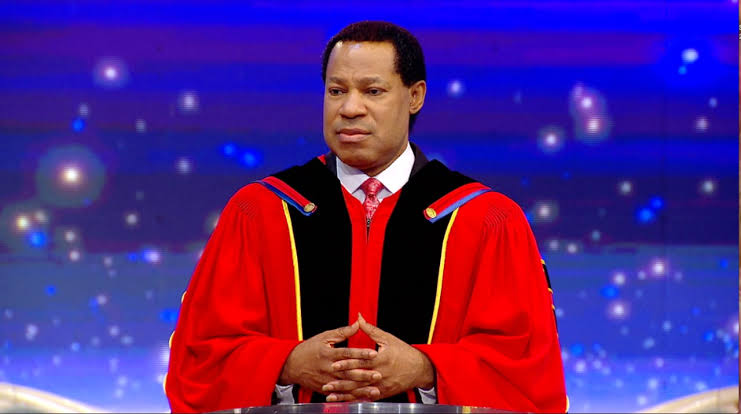
In the weeks following the visit, newspapers and blogs replayed the moment with the precision of courtroom analysts. Some argued that it was purely ceremonial, a courtesy visit by a former leader known for his sociopolitical outreach. Others believed it carried prophetic undertones, linking it to Obasanjo’s recurrent statements about Nigeria’s need for spiritual rebirth. LoveWorld News framed it as an “honourable recognition” of the ministry’s contribution to national morality, careful not to fuel political speculation.
But the public conversation refused to fade. Why Pastor Chris? Why that moment? Why that visible gesture of respect from a man who had hosted Popes, Imams, and monarchs?
Those who understood Obasanjo’s instinct for symbolism found the answer in the calendar. The visit occurred amid national introspection—when Nigeria was still navigating economic and social challenges, youth activism, and debates over governance. For a retired leader who had long championed moral consciousness, standing beside one of Africa’s most influential preachers was a statement of alignment. It was as though he sought to tell Nigerians, “If the future of this nation is to be reborn, it will be through men who speak to its conscience, not just to its institutions.”
For Oyakhilome, who had long championed personal transformation as a precursor to national change, the moment required no sermon. He let the symbolism speak. Sometimes, silence is the most eloquent homily.
Behind Closed Doors: The Meaning in the Pause
If the handshake in public drew attention, what happened after the cameras went off remains the deeper story. Sources within the ministry described the post-event exchange as brief but cordial. Obasanjo spoke privately with Pastor Chris in a side room adjoining the auditorium — a space usually reserved for ministerial guests. The content of their conversation was never disclosed, yet those familiar with Oyakhilome’s pastoral style said it likely revolved around prayer and mutual encouragement rather than political negotiation.
Still, in Nigeria, privacy invites imagination. Some worshippers speculated that Obasanjo had come seeking divine guidance for a personal project or national concern. Others believed he came to bridge a generational gap — a symbolic alignment of statecraft with spiritual leadership. The truth may never be confirmed, but the fact of the visit alone carried symbolic arithmetic: a soldier of order meeting a prophet of vision.
In the wider Christian community, reactions were split. Traditional Pentecostal blocs interpreted the moment as proof of Oyakhilome’s expanding influence within Nigeria’s religious hierarchy. For years, his ministry had been admired by youth yet not fully integrated into the older Christian networks dominated by the Christian Association of Nigeria (CAN). Obasanjo’s presence was, to some observers, an informal acknowledgment of legitimacy, a gesture that subtly repositioned Christ Embassy within Nigeria’s moral elite.
Political analysts, however, saw it differently. They viewed it as a continuation of Obasanjo’s long game — his habit of engaging influential voices in every generation to remain relevant in the nation’s moral conversation. To them, this was less about prophecy and more about optics, an elder statesman reading the nation’s spiritual pulse.
But perhaps, at its core, the moment was neither purely prayer, politics, nor prophecy. It was something subtler — a convergence of influence and introspection. Both men had reached stages in life where visibility mattered less than legacy. Each understood that the truest form of power was no longer institutional but inspirational. For a brief afternoon, their worlds met — and in that meeting, Nigeria’s enduring conversation between the altar and the state found its latest verse.
Legacy and Afterlife: How the Visit Still Reverberates
Years after the visit, its resonance remains. It is often revisited in theological circles as a case study in the evolution of religious legitimacy in post-democratic Nigeria. Scholars cite it as a turning point when generational authority—once monopolized by political veterans—began to migrate toward spiritual entrepreneurs.
For Pastor Chris, the moment cemented his role as a national conscience figure, even if indirectly. He continued to focus on his global mission, launching new media projects and conferences that reached millions, while maintaining his apolitical posture. Yet observers note that the respect shown by Obasanjo subtly recalibrated public perception: it positioned him not merely as a preacher of prosperity but as a statesman of faith.
For Obasanjo, the gesture reinforced his lifelong habit of engaging diverse moral voices. It was consistent with his broader narrative — the elder who sought counsel in all corners, from the mosque to the monastery, from crusade tents to universities. His faith journey had never been about allegiance to one sect but about the orchestration of spiritual legitimacy within Nigeria’s plural consciousness.
Both men walked away unchanged in rhetoric yet altered in public symbolism. The image of their handshake lingers because it embodies a truth larger than them both: in Nigeria, the corridors of heaven and the halls of power often echo the same prayers, though for different reasons.
The photograph remains a study in subtle authority — the pastor whose empire needed no constitution, and the president whose legacy could not be complete without divine consultation. Together, they remind Nigeria of its enduring paradox: a nation perpetually negotiating between revelation and realpolitik.
Closeout – When Kings Bow and Prophets Rise
Every generation in Nigeria has its defining meeting between faith and power. The 1980s had Benson Idahosa’s crusades with governors in attendance. The 1990s saw Adeboye’s altar moments with presidents and coup survivors. The 2000s brought Oyedepo’s thunderous interventions in politics and education. And then, the 2010s and early 2020s gave us a quieter, subtler moment: Obasanjo’s handshake with Pastor Chris Oyakhilome at FALA 2021.
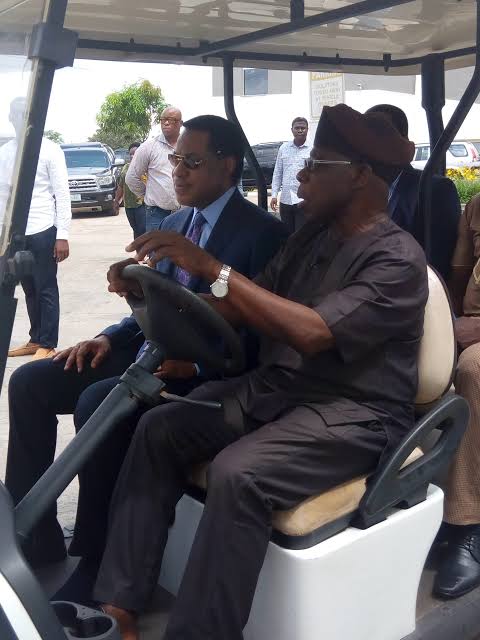
It was not loud, it was not televised live, and it carried no overt declaration. Yet it reverberated precisely because of its restraint. It was a moment of mutual recognition between two men who had mastered different vocabularies of power — one of government, the other of glory.
For Obasanjo, perhaps it was a reminder that true legacy transcends tenure. For Oyakhilome, it was affirmation that influence need not be political to be profound. And for Nigeria, it was yet another verse in the ongoing dialogue between faith and leadership, power and prophecy, prayer and pragmatism.
Discussion about this post