



When the Lagos State Government demolished a property linked to Peter Obi’s brother, it was more than just another building lost in a planning dispute — it was a political moment loaded with expectation.
This was no ordinary victim. This was family. And Peter Obi, Nigeria’s most visible opposition figure and champion of the rule of law, was suddenly on the receiving end of the very state action he’d long criticized.
Nigerians waited to see how he would respond.
Would he speak out in anger? Would he defend his family? Would he remain neutral to protect his image?
This article breaks down exactly what Peter Obi did, what he avoided, why it matters, and what his handling of this politically sensitive demolition says about power, loyalty, and strategy in a country where silence is never just silence.
The Demolition: What We Know So Far
➤ The Structure
The building, located at No. 10, Wole Madariola Street in the GRA area of Ikeja, Lagos, reportedly belonged to Next International Nigeria Ltd — a company associated with the Obi family, his younger brother and allegedly used for logistics, trading, and office leasing. The area is commercially zoned and tightly regulated by multiple Lagos state development authorities.
➤ The Incident

According to Peter Obi:
- Demolition started over the weekend (June 22–23, 2025).
- By June 25, it was nearly completed without any notice of demolition, court order, or formal service of process.
- His brother, who flew in from Port Harcourt, found the building almost razed.
- Obi’s direct words, published via verified channels, characterized the act as “coordinated lawlessness” carried out without legal justification.
What Peter Obi Did
1. He made it public immediately
Obi published a sharply worded statement on X (formerly Twitter), stating:
> “This is not just about my family; it is about the future of the rule of law in Nigeria…”
He framed the action as evidence of systemic disorder, suggesting that even prominent citizens could not rely on state institutions to protect basic property rights.
2. He physically visited the site
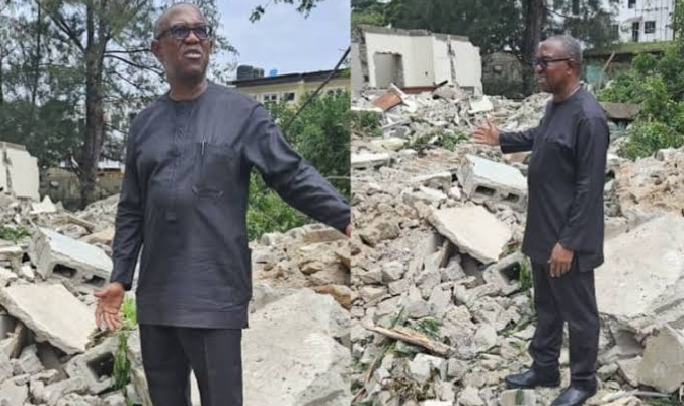
Obi traveled from Abuja to Lagos, according to multiple accounts. At the site, he was reportedly denied access by security personnel. Despite being a former governor and presidential candidate, he wasn’t briefed by any state official, nor was there any accompanying documentation for the demolition, which further stoked his outrage.
3. He demanded legal accountability (but didn’t rush to court)
Obi stated his brother would seek redress in court, but he refrained from making it a courtroom spectacle immediately, perhaps deliberately avoiding a framing that would pit him in direct legal warfare with the Lagos government.
This restraint may have been strategic — or a sign of deeper political caution.
4. He framed the issue as a civil rights warning, not just a property dispute
His broader message: if this could happen to his family, imagine the fate of ordinary Nigerians. He tapped into the populist narrative of lawlessness that transcends tribal identity, political party, or social class.
What Peter Obi Didn’t Do
1. He didn’t directly accuse the Lagos State Government
Despite public suspicion, Obi’s statement did not name LASBCA, the Ministry of Physical Planning, or any Lagos agency. He spoke of “unknown persons,” even though the action took place in a city with a dense web of bureaucratic oversight.
This omission allowed:
Political flexibility — avoiding claims that he was attacking Governor Sanwo-Olu without evidence.
Media framing — letting the public and press ask the questions he only implied.
2. He didn’t initiate immediate legal injunctions
To date, no known lawsuit has been filed by Peter Obi’s brother, nor has any emergency court motion been made to halt the demolition or recover damages.
That might appear weak — until one considers the strategy:
Obi may want to wait for the government to complete its internal investigation and either reveal culpability or appear to whitewash it.
Any premature filing might collapse under jurisdictional fog.
3. He didn’t leverage political surrogates to weaponize the issue nationally
Unlike similar events, no known members of the Labour Party national executive council or presidential campaign council have launched media offensives over the incident. It was Obi’s voice alone.
This silence may reflect an intention to:
Keep the issue as an ethical question, not an ethnic one.
Avoid fanning flames between Southeastern and Southwestern regions.
The Lagos State Government: Tactical Denials
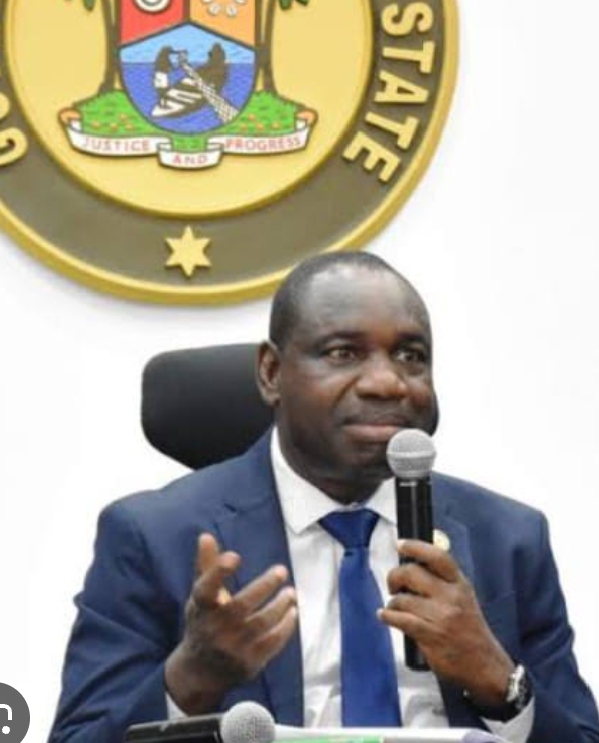
Lagos State Commissioner for Information, Gbenga Omotoso, issued a categorical denial:
“No agency of the Lagos State Government was involved in any demolition of Peter Obi’s brother’s property.”
He added that the Lagos State Building Control Agency (LASBCA) had not approved any demolition in the area and promised an internal review.
Agency Perspective
LASBCA’s supervising Special Adviser, Dr. Olajide Abiodun Babatunde, doubled down:
- No demolition authorized.
- No court judgment recognized by their agency.
The Investigation
Lagos state has now launched a formal investigation, reportedly being handled by the Office of the Permanent Secretary of the Ministry of Urban Development, Arc. Gbolahan Oki. The investigation is expected to trace:
- Whether any agency personnel acted unilaterally.
- Whether third-party contractors or land cartels used falsified orders.
- Whether judicial processes were misrepresented to justify unlawful action.
Ethnic, Legal, and Symbolic Fallout
1. Ethnic and regional suspicions
Though Obi refused to ethnicize the event, Igbo groups like the Ohanaeze Youth Council responded swiftly, calling it an affront to Igbo investment and property rights in Lagos.
This taps into a longstanding wound: the belief that Lagos — despite its cosmopolitan image — remains quietly hostile to Southeastern business interests.
2. Legal ambiguity: the ghost of “Unknown Person”
The court order cited allegedly involved “unknown persons and squatters.” This is a tactic common in land racketeering — using court rulings that are:
- Vaguely titled.
- Deliberately non-specific.
- Designed for abuse by hired thugs and complicit insiders.
- No known land disputes over the property had been recorded publicly.
3. Property rights under siege
This case exposes an ugly Nigerian truth:
Property titles do not protect you.
Demolitions occur with impunity — under pretext of “urban development,” “encroachment,” or “public interest” — often with no transparency.
If Peter Obi’s brother can be hit this way, the ordinary landlord in Ajegunle has no hope.
Deeper analysis
Structural flaws in Lagos demolition regimes
Shard enforcement across LASBCA, LASPPPA, and other bodies causes uncertainty in responsibility—common pattern in contested demolitions .
Lack of visible permits or public notices implies private actors may act on ambiguous authority.
Political lens
Obi, a major opposition figure narrowly defeated in 2023, frames this as intimidation—appealing to civic and judicial sympathies.
Lagos Government’s firm denial and procedural framing may be aimed at deflecting political backlash and preserving public order ahead of elections.
Legal remedies
Property owner (Obi’s brother) must file suit for illegal demolition, seek injunctions, damages, and official accountability.
The Lagos investigation, if thorough, could lead to prosecution or administrative sanctions—but transparency will determine its credibility.
What to watch for next (~weeks ahead)
1. Investigation findings: Will LASBCA name individuals, agencies, or contractors? Will they justify action or formally apologize?
2. Legal filings: Has Obi’s brother initiated court proceedings? Are rights/legal teams mobilizing petitions or human-rights reports?
3. Political reverberations: Will local bodies (e.g., councils) or national voices leverage the event in upcoming campaigns?
4. Media scrutiny: Tracking follow‑ups in republication and in‑depth reporting—if leak(s) or whistleblower(s) emerge, narrative may shift.
FINAL THOUGHTS
Peter Obi immediately moved to spotlight what he portrays as an unlawful demolition, ensuring public and community response, while deliberately refraining from direct state accusations or premature legal action.
Meanwhile, Lagos State swiftly responded with denials, policy reassurance, and an investigation order—aiming to neutralize criticism and affirm due process.
The coming days will test whether this becomes an example of state accountability or unbridled, unexamined enforcement by non‑state actors.
Discussion about this post