


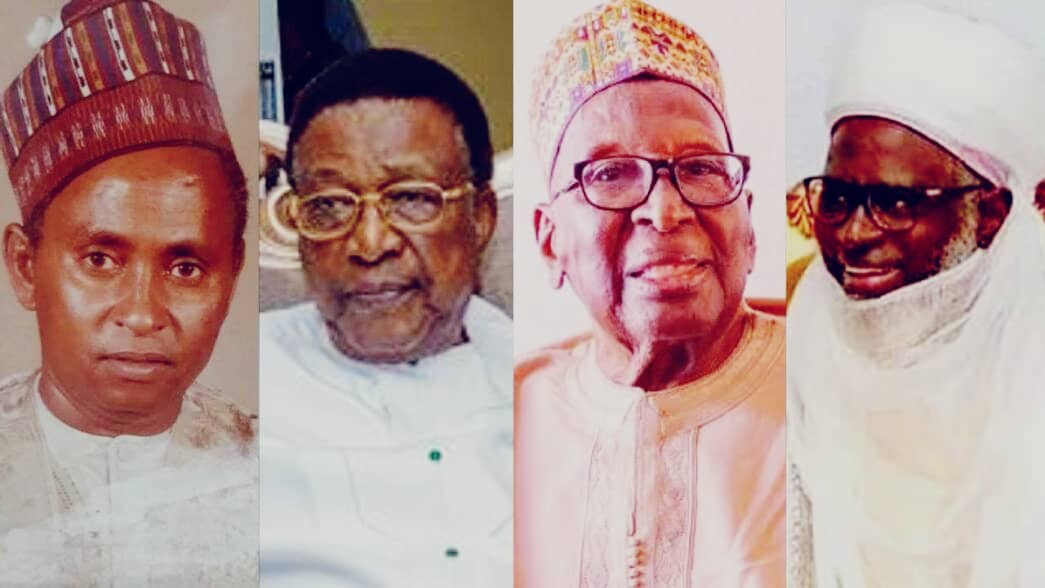

- Four Second Republic governors — Nwobodo, Ibrahim, Tukur, and Jarma — remain alive out of the original thirty-two state leaders.
- Military coup in December 1983 abruptly ended the Second Republic, removing all elected civilian governors from office nationwide.
Cornelius Adebayo, former governor of Kwara State during Nigeria’s Second Republic and later minister of communications, died on Wednesday at 84.
His brief three‑month tenure—between October and December 1983—saw him succeed Adamu Atta before a military coup brought the era to a close.
THE SECOND REPUBLIC’S GOVERNORS
The Second Republic began on October 1, 1979, with the election of nineteen state governors under Nigeria’s new presidential constitution.
These leaders were tasked with rebuilding the nation in the aftermath of prolonged military rule, shifting from a parliamentary to a U.S.-style presidential system.
Among the original 1979 cohort were:
- Bola Ige (Oyo)
- Ambrose Alli (Bendel)
- Aper Aku (Benue)
- Mohammed Goni (Borno)
- Clement Isong (Cross River)
- Sam Mbakwe (Imo)
- Balarabe Musa (Kaduna)
Other governors included Adamu Atta (Kwara), A. Tatari Ali (Bauchi), Abubakar Barde (Gongola), Solomon Lar (Plateau), Shehu Kangiwa (Sokoto), Bisi Onabanjo (Ogun), Melford Okilo (Rivers), Michael Ajasin (Ondo), Mohammed Rimi (Kano), Lateef Jakande (Lagos), Jim Nwobodo (Anambra), and Awwal Ibrahim (Niger).
Four governorates ended prematurely: Kangiwa, killed during a polo match in 1981; Musa, the first to be impeached; Rimi and Barde, who resigned.
In the 1983 elections, nine of the initial 1979 governors—including Ige, Alli, Goni, Rimi, Atta, Juta, Rimi, Nwobodo, and Isong—lost their seats, paving the way for new leaders like Cornelius Adebayo in Kwara.
By the time of the December 1983 coup led by General Muhammadu Buhari, twenty governors had served across the Second Republic’s lifespan of four years and three months.
THE LAST LIVING GOVERNORS
Only four of the 32 individuals who governed between 1979 and 1983 are still alive:
1. Jim Nwobodo (Anambra, aged 84): A former businessman-turned-politician with the NPP, credited with founding Anambra State University of Technology (now ESUT). He remains an elder statesman based in Enugu and has held roles including senator and sports minister.
2. Awwal Ibrahim (Niger, aged 84): The first civilian governor of Niger State and a traditional royal figure. After the coup, he became Emir of Suleja in 2000. Though no longer active politically, his palace continues to influence regional affairs.
3. Bamanga Tukur (Gongola, aged 89) : Former governor and subsequent national chairman of the PDP. Tukur has since retreated from the public eye, capping his political career with efforts to strengthen party cohesion before stepping down.
4. Asheik Jarma (Borno): Governor from 1979 to 1983 under the GNPP, Jarma was known for prioritizing rural development and education. In the 1990s, he became an early member of the PDP, helping to shape its structure in northeastern Nigeria.
FALLEN GOVERNORS: LEGACY IN REVIEW
These former leaders passed on between 1981 and 2021:
- Solomon Lar (Plateau): Died in October 2013 at 80. A revered grassroots activist and co-founder of the PDP.
- Abubakar Rimi (Kano): Died April 2010 at 69 after a heart attack following a robbery incident.
- Lateef Jakande (Lagos): Died February 2021 at 91. His UPN government built schools and housing.
- Bisi Onabanjo (Ogun): Died April 1990 at 63. Championed rural electrification and education.
- Michael Ajasin (Ondo): Died October 1997 at 85. A committed advocate for education.
- Ambrose Alli (Bendel): Died September 1989 at 60. Founded Bendel State University; died in debt post-imprisonment.
- Clement Isong (Cross River): Died May 2000 at 80. Former CBN governor noted for fiscal discipline.
- Melford Okilo (Rivers): Died July 2008 at 74. Advocated for Niger Delta minorities.
- Sam Mbakwe (Imo): Died January 2004 at 82. Remembered as “the weeping governor” for his passion.
- Abubakar Barde (Gongola): Died June 2002 at 72. Focused on rural development before impeachment.
- Wilberforce Juta (Gongola): Died August 2020 at 75. Completed Barde’s term; later served as Nigeria’s ambassador to Zimbabwe.
- A. Tatari Ali (Bauchi): Died May 1983 at 48 of cardiac arrest. Strengthened civil service and healthcare.
- Shehu Kangiwa (Sokoto): Died November 1981 at 38 in a polo accident.
- Lawal Kaita (Kaduna): Died January 2018 at 85. Briefly succeeded Kangiwa before helping form the PDP.
- Balarabe Musa (Kaduna): Died November 2020 at 84. The only Second Republic governor removed by impeachment, and a key figure in left-wing politics.
- Aper Aku (Benue): Died November 1988 at 48 after prolonged illness following imprisonment. His administration prioritized education, agriculture, and infrastructure.
- Bola Ige (Oyo): Died December 2001 at 71. A staunch federalist and UPN leader, he served as minister and attorney-general before being assassinated in Ibadan—an unresolved crime that shook the nation.
Discussion about this post