


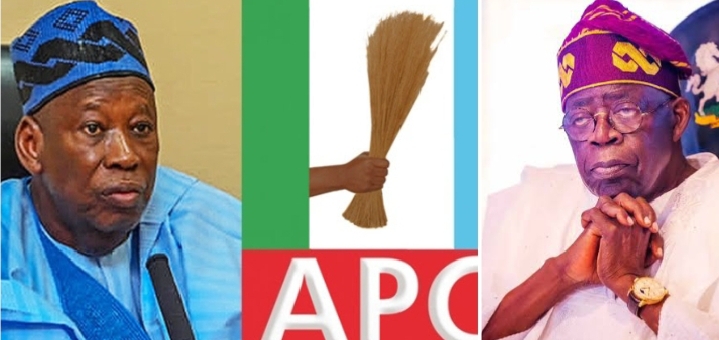

The resignation of Abdullahi Umar Ganduje as National Chairman of the All Progressives Congress (APC) has altered the internal power dynamics of Nigeria’s ruling party.
Officially described as a personal decision, the move has raised critical questions about the party’s direction, its leadership stability, and the strategies being considered ahead of the 2027 general elections.
What this shift signals—and who benefits from it—will shape the months to come.
Ganduje’s Sudden Exit: What Really Happened
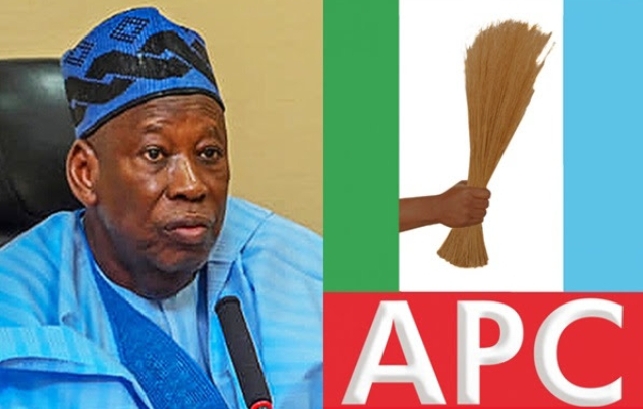
On June 27, 2025, the APC formally announced that Abdullahi Ganduje had stepped down as national chairman, effective immediately. Party spokesman Felix Morka confirmed that the former Kano governor had submitted his resignation through the National Secretary, Senator Ajibola Basiru.
The official statement cited “personal health reasons,” but those close to the development, including senior party members and political analysts quoted by Premium Times, Punch, and Vanguard, offered a different story.
Ganduje’s resignation came under intense internal pressure after weeks of strategic meetings among the APC’s northern powerbrokers and presidential advisers. Central to the crisis was the increasing belief within Tinubu’s circle that the chairman had become politically obsolete, even obstructive.
His leadership was seen as incapable of holding together the competing factions within the party, particularly at a time when the president was preparing to bring back estranged heavyweights—especially Senator Rabiu Musa Kwankwaso.
The leadership had to shift. The party machinery needed to be recalibrated. Ganduje, once a loyal soldier of the Tinubu agenda, became the first major casualty of the 2027 political war.
From Leadership to Vacuum: What Ganduje Controlled
Ganduje’s power within APC was not purely symbolic. As national chairman, he presided over critical components of the party’s national architecture:
Nomination oversight: He held influence over delegate selection and screening committees.
Zoning structure enforcement: He was central to maintaining regional balance within the National Working Committee (NWC).
Kano powerbase representation: His chairmanship was a reward for delivering APC interests in Kano—until NNPP took over the state in 2023.
His removal immediately created a gap in all three dimensions.
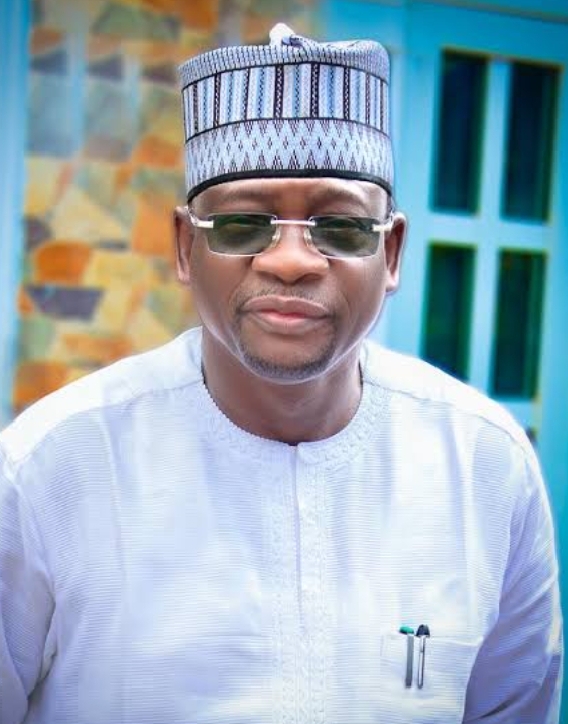
The party’s interim leadership now rests with Deputy Chairman (North) Ali Bukar Dalori, a relatively neutral figure with no expansive political machinery of his own. The APC constitution allows for this temporary step, but the party must convene a National Executive Committee (NEC) meeting—or special convention—before December 2025 to elect a substantive chair.
Until then, the party remains in flux.
Why Ganduje Was Seemingly Sacrificed: The Northern Chessboard
At the core of Ganduje’s ouster is a supposed deliberate northern repositioning.
In 2023, Tinubu lost significant votes in Kano, Katsina, and Sokoto. The party underperformed in many Muslim-dominated North-West states.
Meanwhile, Rabiu Kwankwaso, running under the NNPP banner, won Kano resoundingly and garnered over 1.4 million votes nationwide. His party seized Kano’s governorship, several House of Assembly seats, and began building regional influence.
Behind closed doors, reconciliation talks between Tinubu’s emissaries and Kwankwaso’s handlers began as early as April 2025. However, they hit a stalemate. Kwankwaso made it clear he would not return to APC under Ganduje’s chairmanship—a man he had politically battled for nearly a decade.
Removing Ganduje was therefore not about restructuring; it was about clearing a political obstacle to reabsorbing a formidable regional player. Kwankwaso’s possible reentry into APC now becomes not just plausible, but likely.
A Path for Kwankwaso: What the Power Vacuum Enables
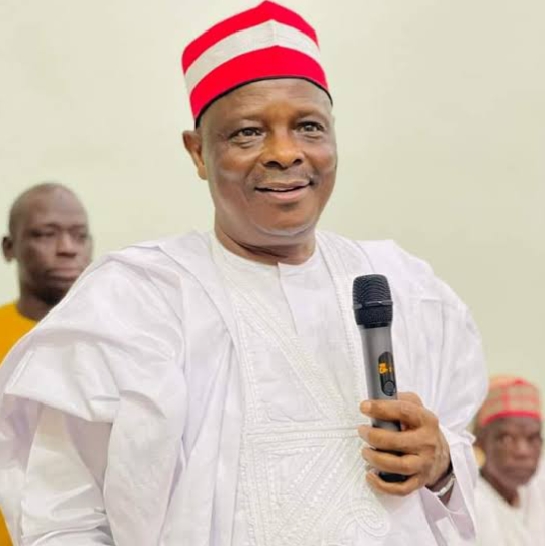
With Ganduje out of the way, Kwankwaso’s demands can now be entertained.
There are three key areas where his influence could reshape the APC:
1. Vice Presidency: Should Tinubu choose to rebalance the 2027 ticket, Kwankwaso could be offered the vice-presidential slot—especially if internal polling shows Shettima offers diminishing returns in the North-East.
2. Ministerial Control: Kwankwaso may be incentivized with expanded federal control over ministries tied to education, works, or youth—areas important to his movement’s grassroots appeal.
3. Party Merger Blueprint: His entry could lead to formal absorption of parts of the NNPP or a coalition-building effort targeting the North-West and North-Central regions.
This recalibration hinges on the vacuum Ganduje’s exit created. The former chairman would never have permitted such negotiations. His removal signals that the old lines of resistance have been lifted.
The Vice Presidential Dilemma: Shettima’s Position Shifts
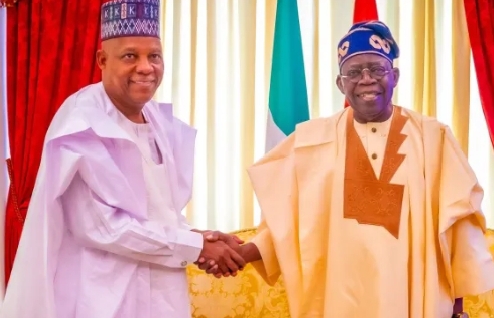
Vice President Kashim Shettima, who played a stabilizing role in the 2023 campaign, now finds himself in a more precarious position.
In political terms, Shettima’s North-East base lacks the voting heft of the North-West. Kano alone can deliver over 1.5 million votes. Borno and Yobe combined cannot match that figure. If APC plans to strengthen its 2027 ticket with a more populous northern running mate, Shettima becomes expendable.
This is not just theoretical. Political analysts have noted that a second Tinubu-Shettima ticket may face diminishing returns if Kwankwaso is in play, or if internal resentment rises among the North-Central bloc, which remains underrepresented in both executive and party leadership.
Tinubu must now choose between retaining a loyal deputy and embracing a stronger electoral gamble in the form of a new VP pick.
APC Re-Zoning: The Next Chairman and Regional Tensions
With Ganduje’s North-West representation gone, APC zoning calculus will be reviewed.
Historically, the national chairmanship has rotated among regions for political balance. After South-South’s Adams Oshiomhole, the chair moved to the North-West with Ganduje. The next destination, logically, is the North-Central.
Contenders for the seat include:
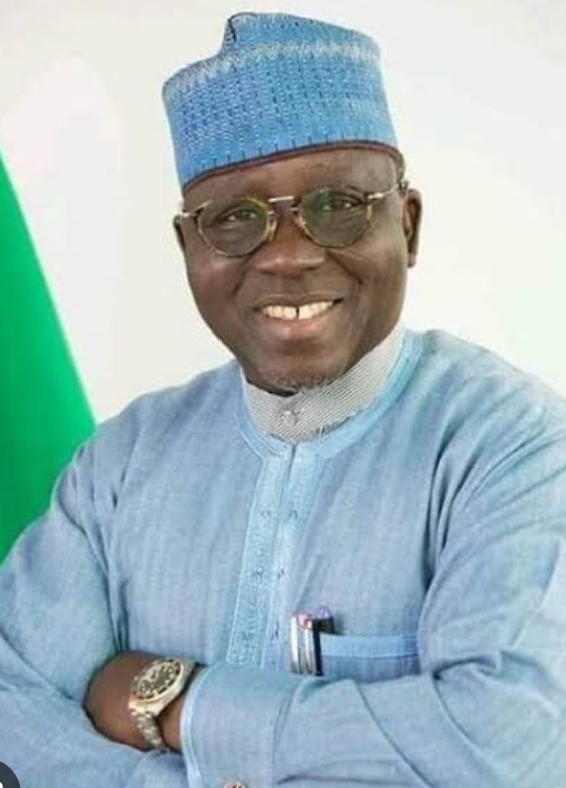
Senator Umaru Tanko Al-Makura (Nasarawa): Respected elder with ties to both Tinubu and the Buhari-era Northern caucus.
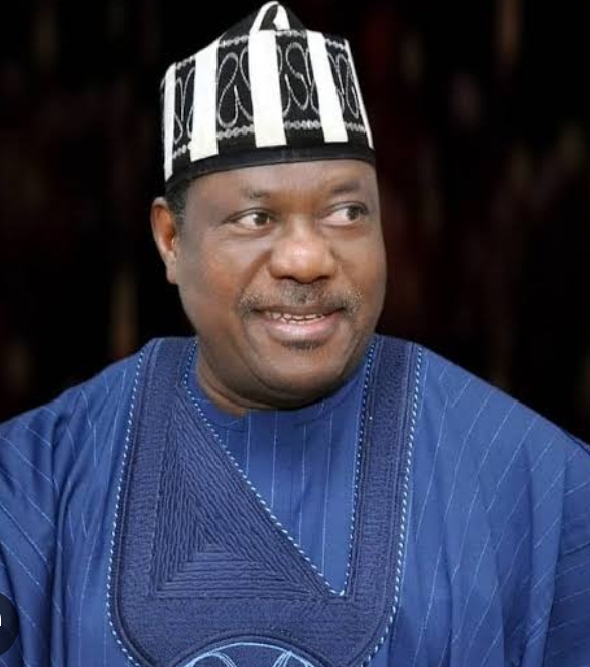
Former Governor George Akume (Benue): Though currently serving as Secretary to the Government of the Federation (SGF), he has the stature to transition if needed.
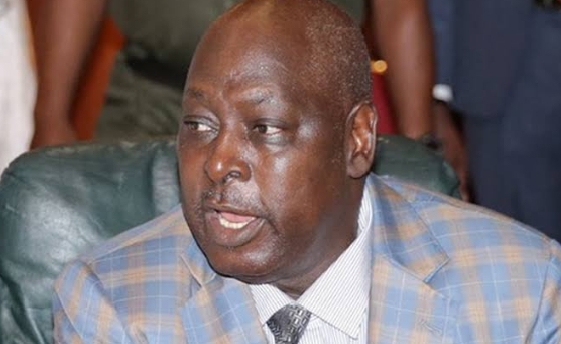
Babachir Lawal faction candidates: Though unlikely to secure top roles, the Christian North-Central camp will seek internal leverage.
This chairman appointment will not only appease northern zones, it will signal the regional leanings of Tinubu’s 2027 campaign. A misstep could cause further fractures in the party’s delicate coalition.
What Tinubu Gains: Strategic Consolidation Ahead of 2027
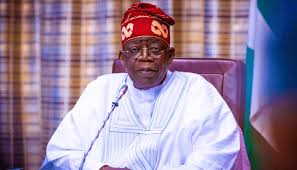
Despite its risks, Ganduje’s ouster grants Tinubu more control than ever before.
Here’s what changes in his favor:
Delegation Control: A new chairman chosen by his camp can shape the composition of 2026/2027 national delegates.
Ticket Freedom: Shedding loyal but unpopular figures like Ganduje gives Tinubu room to restructure the executive ticket.
Party Discipline: The precedent shows that even long-time loyalists are not untouchable. This sends a strong internal message.
With Tinubu already endorsed by APC for 2027, his strategy now involves streamlining the party’s factions and eliminating voices that could derail primary dominance or resist key alliances.
Internal Risks: Blowback and Distrust
Yet, Ganduje’s exit is not without consequences.
1. Factional Retaliation: His loyalists in the Kano APC structure may resist any Kwankwaso-aligned policies. Grassroots members feel betrayed and may defect or disengage.
2. Northern Power Struggles: The North-West now contains competing ambitions—Kwankwaso, Shettima (if retained), and emerging Kaduna elites may all vie for a future stake.
3. Southern Fatigue: Some Yoruba progressives already accuse Tinubu of favoring northern expansionism at the expense of southwestern cohesion.
These internal discontents must be managed carefully. One factional revolt, particularly in Kano or the Middle Belt, could unravel APC’s consolidation plans before 2027.
Opposition Opportunity: Can PDP or LP Capitalize?
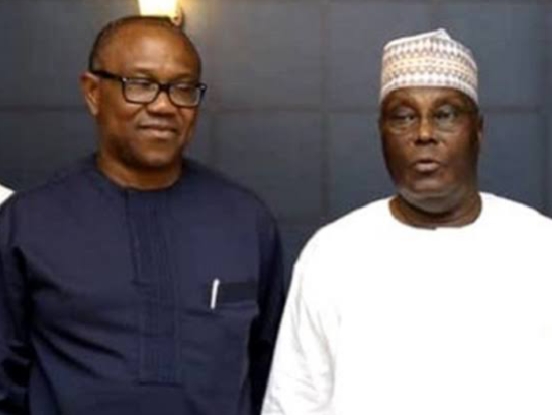
The Peoples Democratic Party (PDP) and Labour Party (LP) are watching APC’s internal reshuffle with interest.
For PDP, which has struggled to recover since the Atiku-Obi split in 2023, Ganduje’s exit is less a gift and more a warning. Their inability to reform or attract significant northern youth support leaves them politically vulnerable. If Kwankwaso returns to APC, PDP’s presence in the North-West could collapse entirely.
For LP, which has maintained an anti-establishment image, the real opening lies in southern discontent. Should Tinubu’s reshuffle alienate voters in Lagos, Rivers, or Delta, Obi and his surrogates may position themselves as credible southern defenders against northern bloc dominance.
Neither party, however, has yet demonstrated the organizational capacity to exploit the APC’s temporary disarray.
What to Expect Next: The Critical Timeline
July–October 2025
– Formal consultations begin for electing new APC chairman.
– Kwankwaso engagement intensifies behind the scenes.
November–December 2025
– APC holds national convention. New chairman emerges.
– Party may amend internal rules to allow earlier 2027 declarations.
Q1 2026
– Tinubu publicly announces re-election bid.
– Official position on VP slot expected.
– Final defectors (Kwankwaso, others) either absorbed or sidelined.
Closing Reflection: A Vacuum with a Purpose
Ganduje’s resignation is a political vacuum—but not an accidental one. It is a manufactured emptiness designed to make room for a more flexible, more expansive 2027 strategy. Tinubu is not merely purging loyalists; he is reconfiguring the party’s very foundation.
In the short term, the APC may look divided. In reality, it is undergoing a realignment that could make it even more dominant—if it survives the internal fallout.
The vacuum left by Ganduje is now the most important space in Nigerian politics. Who fills it, and how Tinubu manages the consequences, will determine whether the APC consolidates power or fractures before the next election.
Discussion about this post