


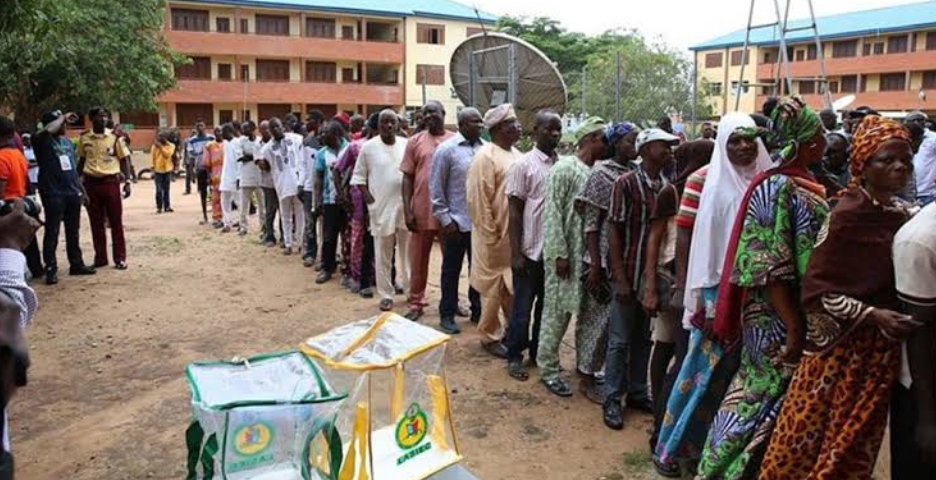

Local government elections in Nigeria have become a key instrument for ruling parties to consolidate power and maintain influence over grassroots governance.
In 2024, following the supreme court ruling granting financial autonomy to the country’s 774 local government areas (LGAs), elections across the 36 states drew nationwide attention.
In 2024 and 2025, all 36 states conducted local government elections, with outcomes highlighting the enduring advantage of incumbents across the country.
The federal government had on May 5, 2024, approached the apex court seeking direct payment of allocations to LGAs and to prevent state governors from dissolving elected councils and imposing caretaker committees.
A seven-member panel of justices in July ruled that the federal government must pay funds directly to local councils and that states must conduct democratic elections for council executives.
The court also barred funding for unelected councils appointed by governors.
Some state governors, political leaders resisted the judgement. James Ibori, former Delta state governor, described it as “an assault on true federalism”, while Seyi Makinde, Oyo state governor, called it a “mere distraction”.
Despite these protests, many states moved swiftly to organise local elections.
OVERVIEW
Across Nigeria, ruling parties dominated most elections, winning the majority of chairmanships and councillorships.
From Lagos to Kano, Rivers to Enugu, ruling parties leveraged their incumbency to secure significant victories in local councils.
In Cross River, the All Progressives Congress (APC) won all 18 LGAs on November 2, with opposition parties, including the Peoples Democratic Party (PDP) and Labour Party (LP), fielding incomplete candidate lists.
In Kano, the New Nigeria Peoples Party (NNPP), which took power from APC in 2023, won all 44 LGAs, while APC withdrew from the polls.
Kaduna saw APC claim all 23 LGAs, Benue 23 chairmanships and 276 councillorships, Kebbi 21 chairmanships and 225 councillorships, and Kwara 16 chairmanships and 193 councillorships.
PDP-controlled states such as Plateau and Bauchi secured all 17 and 20 chairmanship positions, respectively.
In Anambra, the All Progressives Grand Alliance (APGA) won all 21 council positions. In Adamawa, PDP won almost all seats except one councillorship claimed by NNPP.
Rivers State reflected political manoeuvring, with the Action Peoples Party (APP) winning 22 of 23 LGAs due to support from Governor Siminalayi Fubara, despite PDP being the official ruling party.
Similarly, in Abia, the ruling Labour Party (LP) lost all LGAs to Zenith Labour Party (ZLP) and Young Progressives Party (YPP), owing to internal party disputes.
Akwa Ibom was another exception where PDP won 30 LGAs and APC won one.
Senate President Godswill Akpabio expressed surprise at APC’s reported victory in Essien Udim, questioning the credibility of such sweeping results.
FACTORS BEHIND RULING PARTY SUCCESS
Political analysts cite multiple reasons for the ruling parties’ continued dominance in local government elections, including, control over state electoral commissions that influence election logistics and timelines, access to government resources enabling comprehensive voter mobilisation and campaign visibility, incumbency advantage providing governors and local executives with leverage over policy implementation, patronage networks that reinforce loyalty among community leaders and ward executives, and strategic candidate selection to ensure alignment with party interests and electoral success.
IMPACTS ON POLITICAL COMPETITION
The results of these elections carry significant consequences for Nigeria’s democratic landscape.
Limited competition arises as opposition parties struggle to win seats against well-established incumbents, political pluralism is constrained by dominant party control, governance accountability may weaken without meaningful opposition scrutiny, public perception of electoral fairness can be affected, and the concentration of power at local levels may entrench patronage politics rather than policy-driven administration.
While most elections proceeded without major disruptions, some states reported petitions alleging irregularities and procedural breaches.
Political parties have increasingly relied on tribunals and state high courts to contest outcomes, reflecting a broader trend of judicial involvement in local government disputes.
The Supreme Court has consistently underscored that, although tribunals can overturn elections, legal challenges require substantial evidence of malpractice, setting a high threshold for opposition parties seeking to reverse results.
CThe 2024 and 2025 local government elections illustrate the entrenchment of ruling parties across Nigeria’s political landscape, demonstrating how incumbency, resource control, and strategic alliances consolidate power.
While these elections provide stability and continuity in governance, they also highlight structural challenges to competitive democracy at the grassroots level.
As Nigeria approaches future electoral cycles, the ability of opposition parties to gain traction and the role of judicial mechanisms in maintaining electoral integrity will remain key to assessing the country’s democratic maturity.
Discussion about this post