


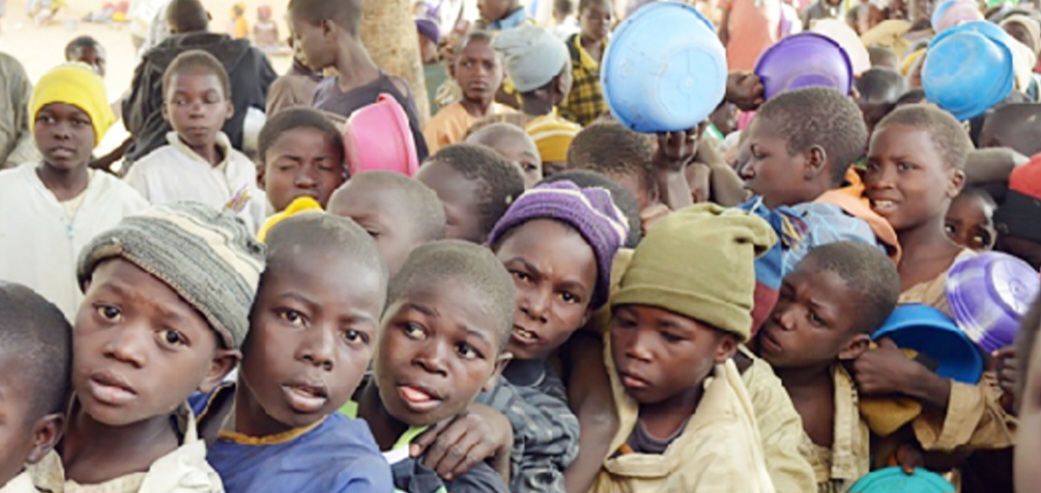

On a hot afternoon in Kano, a group of boys in ragged clothes sit under a tree, holding empty bowls.
The boys, some no older than six, wait patiently, hoping that passers-by will drop food or coins into their plates.
They are Almajiri children, part of a centuries-old Islamic learning tradition that still exists across northern Nigeria.
Once designed to promote moral discipline and Quranic education, the Almajiri system has, over time, become a symbol of poverty and neglect.
Today, behind the dusty streets and crowded makeshift shelters, another crisis is unfolding — one of health.
A life of struggle
The daily routine of an Almajiri child is simple but harsh. They wake at dawn for religious lessons, after which they are sent out to beg for food or money.
What they eat depends entirely on the kindness of strangers. Sometimes it is leftover rice, other times, it is nothing at all.
Without stable nutrition or care, their health continues to decline unnoticed.
Sickness on the streets
Public health experts say Almajiri children face the same diseases common among poor communities, but with little chance of treatment.
Malaria, diarrhoea, skin infections, and respiratory illnesses are widespread among them.
Small cuts and wounds often go untreated, leading to infections.
A public health physician in Kano said many of the conditions affecting the children are preventable.
The absence of vaccination makes them especially vulnerable during outbreaks of measles, cholera, or meningitis.
Hunger and malnutrition
Food is both scarce and inadequate. Nutrition experts note that most Almajiri children survive on one or two meals daily, often lacking basic nutrients.
A nutritionist observed that this leaves them weak, anaemic, and unable to focus during learning.
The long-term consequence is stunted growth and poor brain development, trapping them in a cycle of disadvantage.
Living without hygiene
In many northern towns, Almajiri children sleep in overcrowded shacks close to mosques or classrooms. There are no toilets, no clean water, and no waste disposal.
Open defecation is common, while handwashing is rare. In the rainy season, floods sweep through their shelters, spreading cholera and diarrhoeal diseases.
For most of them, a bar of soap is a luxury, and access to clean water depends on charity.
Mental health burden
Beyond the visible health problems lies another silent crisis — mental health. Separated from families at a tender age, many of the children grow up with feelings of abandonment.
They fend for themselves daily, battling rejection, hunger, and harsh treatment from strangers.
Social workers argue that this neglect leaves lasting scars, with many struggling with anxiety, trauma, or depression.
Yet, with no counselling or support system, these struggles remain invisible.
Government efforts
Successive governments in northern states have promised reforms to address the Almajiri crisis.
Attempts to integrate Islamic education with formal schooling have recorded limited progress.
During the COVID-19 pandemic in 2020, thousands of Almajiri children were returned to their home states in a mass repatriation effort.
But the relocation exposed another problem — lack of planning. Most of the children were received without any structured welfare, healthcare, or rehabilitation programme.
Experts say the absence of long-term policies has left the health burden unresolved.
NGOs step in
Civil society organisations have attempted to fill the gap with mobile clinics, feeding schemes, and immunisation drives.
In Sokoto, a community-based group organises weekly medical outreach for Almajiri children, treating common illnesses at no cost.
Similar efforts in Bauchi and Katsina have targeted hygiene education and vaccination.
But these interventions, though helpful, remain too small compared to the scale of the challenge.
Voices calling for change
Child rights advocates insist that the health condition of Almajiri children is not just a welfare issue but a national concern.
They argue that a generation left untreated and unprotected could contribute to wider public health risks.
The road ahead
The plight of Almajiri children is woven into Nigeria’s broader struggle with poverty, governance, and inequality.
While the system is deeply rooted in culture and religion, its current form leaves millions of children at the mercy of disease and neglect.
For now, their health remains an invisible crisis — spoken of in hushed tones, but rarely addressed with urgency.
And until stronger policies, structured healthcare, and social protection are provided, the children will continue to wander with bowls in hand, carrying more than just hunger but also an unseen health burden.
Discussion about this post