


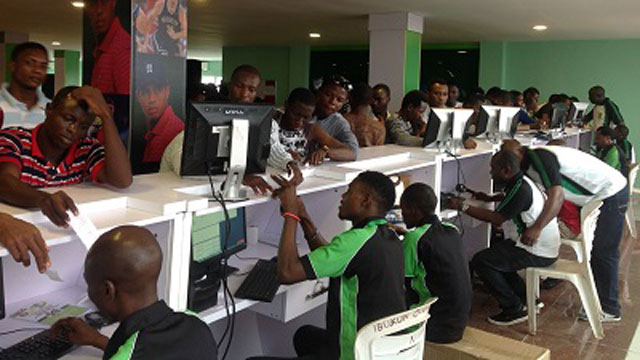

On a narrow street in Ojuelegba, Lagos, rows of betting shops glow with bright signboards promising instant winnings.
Inside, young men, most clutching slips of paper, study odds displayed on television screens, their eyes fixed on football fixtures in faraway leagues.
This scene has become common across Nigeria where betting has moved from a quiet pastime into a national obsession.
For many youths, the shops are not only places of recreation but also escape routes from joblessness, hardship and uncertainty.
Betting culture takes root
In nearly every Nigerian city, from Lagos to Kano, the green-painted shops of betting companies now stand beside banks, pharmacies and schools.
Statistics from regulatory bodies and industry reports suggest that millions of Nigerians under the age of 35 regularly stake money on sports outcomes.
Football remains the most popular choice, with English Premier League and Champions League matches drawing the highest attention.
For youths, each ticket is a chance at breaking free from financial strain.
Economic hardship fuels the rush
Nigeria’s current economic climate has been marked by rising inflation, job scarcity and increasing cost of living.
For many, betting offers a small hope of quick money that regular jobs or unstable businesses cannot guarantee.
“I stake because jobs are scarce,” a young bettor in Abuja explained. “Even if I win small, it helps me buy food.”
Industry insiders argue that this desperation has kept the betting sector alive and growing even in difficult times.
A billion-naira industry
Betting companies in Nigeria now run as some of the most visible players in the economy.
From sponsoring football clubs to advertising heavily on radio, television and social media, their reach has extended beyond traditional business boundaries.
Online platforms have expanded the business further, allowing anyone with a smartphone to place bets without visiting a physical shop.
This has made betting both more accessible and more addictive.
The daily life of bettors
For many youths, betting has become part of daily routine.
Some walk into shops early in the morning, placing multiple bets before heading to school, apprenticeship or work.
Others gather in the evenings to watch live matches, monitoring every goal, foul or substitution that could decide their fate.
A 22-year-old apprentice in Port Harcourt described it as “a small investment,” noting that he spends between ₦200 and ₦500 each day on bets.
Winners and losers
While some claim to have won big sums, most bettors admit that losses outweigh gains.
The hope of striking a major win often keeps them returning, even when losses accumulate.
Psychologists warn that this cycle mirrors gambling addiction, where anticipation of winning overshadows rational judgment.
In many communities, stories abound of youths who spent school fees, shop rent or apprenticeship savings on betting slips that ended in disappointment.
Government regulation and concerns
The federal government and state lottery boards regulate betting through licensing and taxation.
Despite these measures, there are concerns about underage gambling, lack of awareness on addiction, and the absence of counselling for compulsive bettors.
Experts argue that while the betting sector contributes revenue, the social cost of addiction and financial ruin among young people remains underreported.
Some clerics and community leaders have also raised alarms, describing betting as a silent crisis that chips away at productivity and stability.
Social spaces beyond gambling
Beyond the risks, betting shops have also evolved into social spaces where young men gather to discuss football, politics and everyday struggles.
In many towns, these centres double as informal “clubs” where relationships are built and information spreads.
Observers note that this role in shaping youth culture cannot be ignored, even as debates on its negative impacts continue.
A future on chance
The rise of betting among young Nigerians reflects broader issues of unemployment, inequality and limited opportunities.
As long as formal employment remains scarce, many youths may continue to view betting as a lifeline, however fragile.
Analysts warn that unless addressed, reliance on gambling could further entrench cycles of poverty rather than break them.
In the dim glow of betting shops, hopes rise and fall with every kick of the ball.
For the young Nigerians who gather there daily, each ticket represents not only a game but also a gamble with their future.
Discussion about this post