


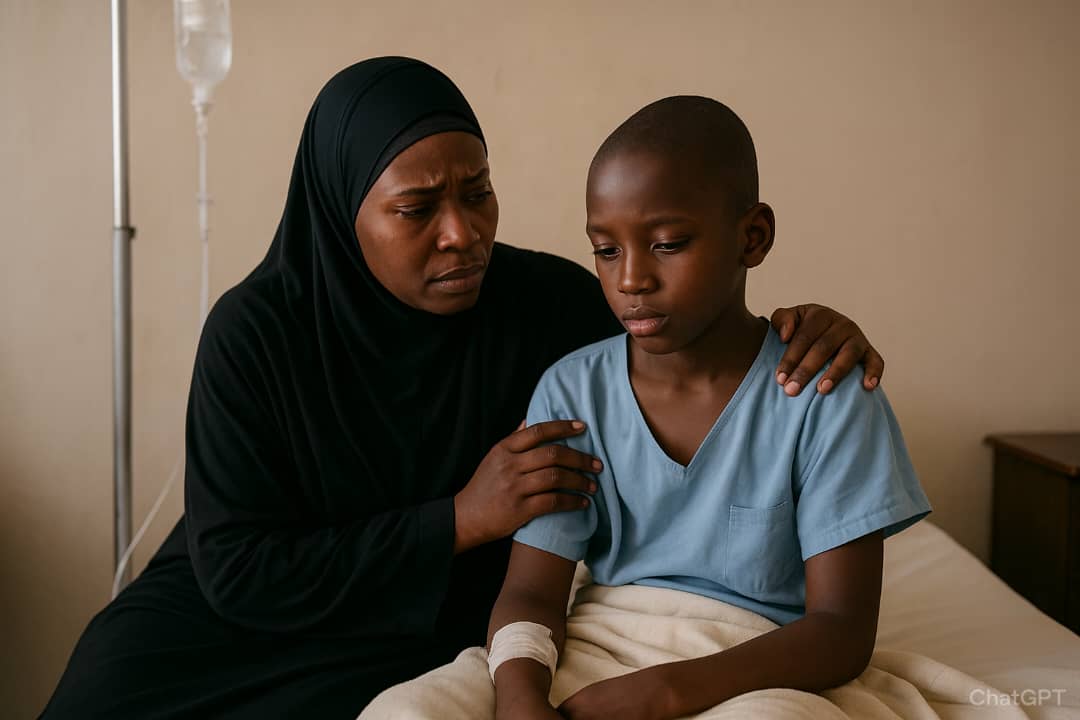

When 42-year-old trader, Aisha Abdullahi, was diagnosed with kidney failure, her family thought the hardest part would be finding a hospital.
They soon realised the real battle lay in the cost of keeping her alive.
Each dialysis session cost N40,000, and doctors recommended three per week.
Within three months, her husband had sold his only farmland in Kano, borrowed from neighbours, and emptied their savings.
“We had to choose between feeding our children and keeping my wife alive,” her husband, Musa, said, his voice heavy.
Nigeria’s fragile healthcare system has left many families in similar predicaments.
With limited health insurance coverage, millions pay out-of-pocket for services, plunging households into poverty.
According to the World Health Organisation, catastrophic health spending is a major driver of household debt in low- and middle-income countries.
In Nigeria, only about 5 per cent of citizens are covered by any form of health insurance, leaving the rest to fend for themselves.
The national health insurance authority, established to widen coverage, has struggled with implementation.
Dr Amina Bello, a health economist at the University of Ibadan, described the situation as “a ticking time bomb for families.”
She said: “When people are forced to borrow or sell assets for treatment, it perpetuates poverty across generations. The economic impact goes beyond the patient.”
For families battling chronic illnesses such as cancer, diabetes, and kidney disease, the costs are relentless.
In Lagos, 15-year-old Ifeanyi is undergoing chemotherapy for leukaemia.
His mother, Blessing, said she had borrowed from five different cooperatives to continue treatment.
“Each session is almost N200,000,” she explained. “My husband is a mechanic, and I sell foodstuffs, but it is never enough.”
She added that one cooperative had threatened to seize her small kiosk because she could not meet repayment deadlines.
Across the country, stories like Blessing’s are common.
A 2024 report by the Nigerian Economic Summit Group revealed that out-of-pocket expenditure accounted for 70 per cent of total health spending in the country.
The report noted that households were the “shock absorbers of a failing health financing system.”
Experts argue that the lack of affordable healthcare pushes families into what they call “medical poverty traps.”
Professor of public health, Emmanuel Okafor, said that once a household falls into debt because of treatment, recovery becomes extremely difficult.
He said: “When children are withdrawn from school so that fees can cover hospital bills, the long-term consequences are severe. Families lose both financial stability and future opportunities.”
Private hospitals, often seen as better equipped, charge significantly more than public facilities.
Yet, even in government hospitals, patients are required to pay for drugs, diagnostic tests, and sometimes basic items such as syringes.
This reality forces many to delay treatment or resort to traditional alternatives.
Dr Ngozi Eze, a consultant oncologist at the National Hospital, Abuja, said delays often worsen outcomes.
She said: “We see patients coming in with advanced stages of cancer because they could not afford earlier treatment. By then, the costs are higher, and survival chances are lower.”
For some, community support and crowdfunding have become lifelines.
Social media campaigns often highlight desperate appeals for donations to cover medical bills.
While these efforts sometimes succeed, they also reflect the gaps in a system where survival depends on charity.
In rural areas, the burden is heavier.
With limited access to facilities, families spend additional funds on transportation and accommodation near hospitals.
For example, the family of a farmer in Taraba had to relocate temporarily to Jos for their daughter’s surgery.
His brother, James, said they sold three goats and a motorcycle to raise money for hospital fees.
He said: “After the surgery, we had no money to transport her back home. We had to borrow again.”
Economists warn that such debts are rarely repaid in full, leading to long-term hardship.
Many households slide into a cycle where borrowing for health expenses keeps them in poverty for years.
The minister of health, Muhammad Ali Pate, has repeatedly acknowledged the problem of out-of-pocket payments.
He said the government was working on expanding the national health insurance coverage, particularly for vulnerable groups.
In July, he announced a plan to enrol millions of indigent Nigerians through a new financing model.
But health advocates say implementation has always been the stumbling block.
Dr Francis Fagbemi of the Health Reform Foundation said policies often look good on paper but fail in execution.
He said: “Unless we fix governance issues and ensure accountability, the same gaps will persist. Families will continue to bear the brunt.”
Meanwhile, pharmaceutical costs remain another barrier.
Nigeria imports more than 70 per cent of its medicines, and the weakening naira has pushed prices higher.
For patients with chronic conditions requiring daily medication, the costs are crippling.
“I spend almost N60,000 monthly on hypertension drugs for my parents,” said Abiola, a banker in Ibadan.
He added that his salary could no longer stretch across medical bills, school fees, and rent.
Beyond the economic strain, the psychological toll is significant.
Families under financial stress from medical bills report higher levels of anxiety and depression.
Psychologist, Dr Olufunke Alade, said parents often feel guilt when they cannot afford care for their children.
She said: “The emotional distress compounds the problem. Illness becomes not only a physical challenge but also a mental and social crisis.”
Some states have tried to ease the burden by establishing contributory health schemes.
Lagos, for instance, has rolled out a programme that subsidises treatment for low-income earners.
However, enrolment rates remain low, and public awareness is limited.
Aisha’s family, after months of debt, eventually lost her to complications.
Her husband still struggles to pay off the loans.
He said: “We did everything we could, but the money was never enough.”
Experts insist that solutions must address both financing and service delivery.
They argue that without stronger public investment in healthcare, Nigeria will continue to record preventable deaths and rising medical debt.
Dr Bello stressed that urgent reforms were needed.
She said: “The right to health should not depend on a family’s ability to borrow. Until health is treated as a public good, survival will remain a privilege for the few.”
For families like Musa’s, the price of survival has been too high.
And for many more, the struggle continues.
Discussion about this post