



On some forgotten afternoon in the late 1980s, in a corner of Owerri where the heat clung stubbornly to rusted rooftops, a wiry boy chased a ball that wasn’t really a ball at all. It was stitched together with plastic bags, tied with twine, and scuffed so badly that even the streets seemed reluctant to carry its weight.
His knees bore the marks of collisions with gravel, his laughter carried louder than the honks of passing taxis, and his feet—long and unshod—seemed to stretch further than his slim frame should have allowed.
That boy was Nwankwo Kanu, and though the world had not yet heard his name, Owerri already knew.
What no one watching him then could have guessed was that these streets, cracked and uneven, were shaping a legend. Years later, when he would silence stadiums from Lagos to London, or when his heart would be cut open and mended only for him to return stronger, the lessons of those streets—improvised, unforgiving, and deeply human—would still echo in his game.
This is not just the story of a footballer. It is a story of what it means to begin small, to draw strength from scarcity, and to build an identity on the resilience of community. The streets of Owerri were his first classroom, and the chalkboard was dust. From there, he wrote a global legacy.
Owerri in the 1970s and 80s – A City Between Scars and Dreams
To understand Kanu’s beginnings, one must first enter Owerri, the capital of Imo State, in the years after Nigeria’s civil war. The conflict had ended in 1970, but its consequences lived on in everyday hunger, fractured infrastructure, and families piecing themselves together from loss.
Owerri was not Lagos; it did not carry the dizzying lights of commerce or the sprawling reach of ports. It was smaller, quieter, but also a place where post-war resilience blended with youthful ambition.
Football became a common denominator. It was cheap, accessible, and expressive. A ball—even if made from rags or plastic bags—could dissolve tension and replace silence with laughter. For young boys, it wasn’t just a pastime; it was survival, identity, and a way to imagine a future bigger than the patched walls of their homes.
Born on August 1, 1976, Kanu was one of many children running through this landscape. His father, Iheme Kanu, a civil servant, and his mother, Susan, worked tirelessly to keep their family afloat. They were not wealthy, but they provided a foundation of discipline, Christian faith, and a belief in education.
Yet, for young Kanu, the pull of football was irresistible. The streets of Owerri became his first stage, and the audience was whoever stopped long enough to watch a boy bend his thin frame into something graceful.
Dreams Against Reality
But dreams didn’t erase reality. His parents expected academic discipline. Football, at the time, was not considered a safe career. Nigeria’s football industry was unstable; few made it out. The paradox was clear: chase the ball at risk of poverty, or bury the dream in pursuit of something “safer.”
For Kanu, the choice was instinctive. He pursued football, but his pursuit was strategic. He played for local youth sides, gradually attracting attention. Scouts noticed not just his height but his intelligence. He could see spaces before others did. He anticipated passes like someone playing with shadows.
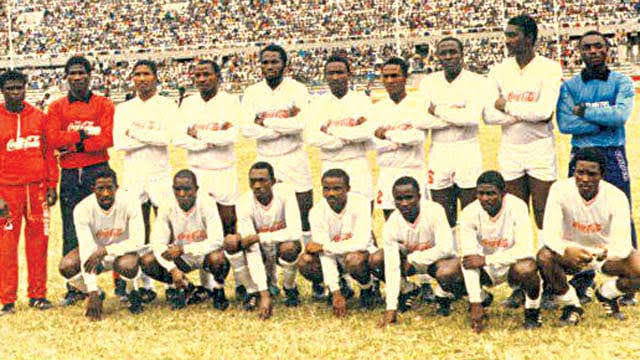
By his teenage years, he joined Federals Works team in Owerri and then Heartland FC (then Iwuanyanwu Nationale)—a local club that gave him structured football for the first time. It was a bridge between the informal chaos of street matches and the professional rigor that awaited him abroad.
From Owerri to the World
By 1993, at age 17, Kanu was captain of Nigeria’s Golden Eaglets, leading them to the FIFA U-17 World Cup victory in Japan. His composure in lifting that trophy was not the arrogance of someone newly successful; it was the calmness of someone who had already fought bigger battles on cracked concrete.
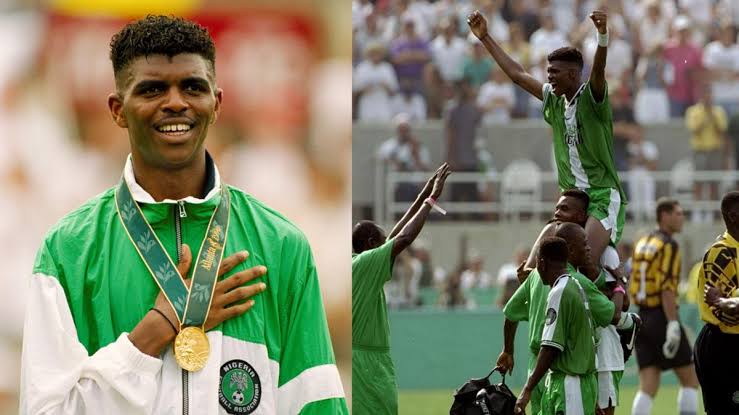
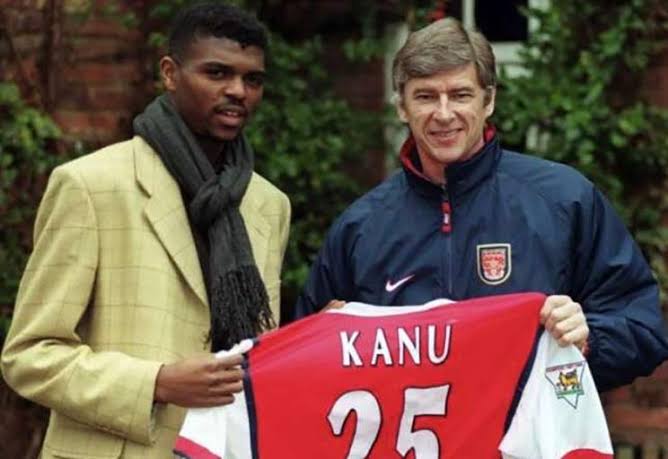
His Owerri lessons became portable wisdom: when he shocked the world with two goals against Brazil at the 1996 Olympics, when he battled and survived a career-threatening heart defect in 1997, and when he lifted the FA Cup with Arsenal, the DNA of Owerri was visible. Resilience, patience, and humility followed him like shadows.
The Streets as a School of Skill
What textbooks could not teach, the streets did. And for Kanu, these lessons were brutal but transformative.
1. Improvisation as Creativity
With no football boots, Kanu played barefoot. With no regulation ball, he played with anything round enough to roll. On gravel, on sand, on uneven ground—each surface demanded a different style of play. He learned to adjust quickly, to think with his feet and anticipate the unpredictable bounce of a rag-ball. This improvisation honed the deceptive close control that would one day leave European defenders bewildered.
2. Endurance through Scarcity
Long matches stretched into dusk. Hunger was a constant companion, but games went on. In those hours, his body learned to outlast fatigue, to dig into reserves beyond muscle. That stamina later defined his ability to influence games in the dying minutes, scoring when others were spent.
3. Street Football as Philosophy
The streets taught him that football was never just about the ball. It was about angles, anticipation, and psychology. Older boys, stronger and faster, forced him to think rather than just run. His tall, slim build could have been a disadvantage, but he turned it into an advantage—using long legs as deceptive shields, using pauses as traps.
In Owerri, football was war, and every match was a test. Win or lose, the real prize was learning how to survive.
Lessons Etched in Dust
The lessons Kanu carried from Owerri weren’t abstract—they were lived truths:
Resourcefulness: Turning scarcity into opportunity—playing with plastic balls became preparation for handling any kind of pressure.
Resilience: Street football taught him to rise after every fall, literally and figuratively.
Vision Beyond Immediate: His unique playing style—slow, deceptive, almost lazy-looking—came from knowing that energy must be preserved for decisive moments.
Faith and Family: His mother’s prayers, his father’s quiet discipline, and the family’s modest background kept him grounded even when fame tempted excess.
Each scar from gravel became a reminder that success is never polished at the start—it is carved in dust.
What the World Can Learn From Owerri
Kanu’s early life offers universal lessons beyond football:
1. Dreams Don’t Need Perfect Beginnings – Scarcity is not an excuse; it is often the soil of innovation.
2. Community Builds Champions – The collective support of neighbors, mentors, and teammates becomes the unseen force behind every success story.
3. Resilience Is a Muscle – The capacity to endure hardship becomes transferable across challenges, whether on streets, stadiums, or surgical tables.
4. Humility Amplifies Legacy – Kanu remained approachable even at the height of fame, a direct inheritance from the teasing, cheering streets of Owerri.
Conclusion: The Dust That Polished Gold
When one watches highlight reels of Nwankwo Kanu today—his subtle flicks, impossible angles, and goals scored with grace—it is easy to forget that the foundation of that genius was laid not on manicured pitches but on unpaved streets. Owerri’s dust became his polish, and every stumble became a rehearsal for glory.
The world remembers him as a two-time African Footballer of the Year, a Champions League winner, a Premier League hero, and the founder of the Kanu Heart Foundation. But long before that, he was just a boy chasing a plastic ball past rusted zinc fences.
The greatest lesson of all is simple: greatness can be born anywhere—even on a street corner in Owerri, with nothing but hope, dust, and the determination of a boy who refused to stop running.
Discussion about this post