


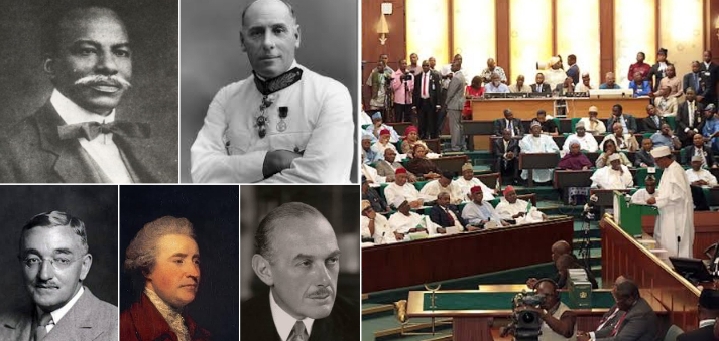

The sun had barely risen over Lagos in 1923 when Herbert Macaulay stepped into the Legislative Council chamber for the first time—not as a British official, but as one of the few Nigerians whose voice would echo against the walls of colonial authority. Outside, the city was alive with commerce, the clamor of traders, the smell of salt from the lagoon, and the distant hum of a people who barely suspected that their future was being quietly debated by men in suits.
Inside, however, it was a different world. The chamber smelled of polished wood and ink, and every sentence spoken carried the weight of a nation yet unborn. Macaulay, editor of the Lagos Daily News, was no stranger to controversy. He had spent years challenging the British administration through sharp editorials, calling out policies that exploited the populace. But now, he had a seat at the table. A seat that, for decades, had been reserved for colonial officers.
What unfolded in the next decades was not a tale of guns or battlefield heroics, but of words, laws, and the relentless negotiation of power. Nigeria’s path from a colony governed by imperial decree to a modern National Assembly was a journey of suspense, compromise, rivalry, and resilience.
Every legislative session, every constitutional amendment, and every regional dispute was a step in a story that would eventually culminate in the country’s independence on October 1, 1960—and the creation of a federal legislature designed to represent millions of diverse Nigerians.
Seeds of Representation – The Lagos Legislative Council
The Nigerian Legislative Council, created in 1914, was the British colonial administration’s first experiment in local governance. Initially, it was nothing more than a rubber stamp for policies dictated from London. Nigerians could attend, listen, and occasionally speak, but the council’s decisions were controlled by expatriates.
Herbert Macaulay changed that dynamic. As the founder of the Nigerian National Democratic Party (NNDP) in 1923, he orchestrated a strategy that allowed Nigerians to win seats in the council—the first instance of electoral representation in the colony. In the 1923 elections, the NNDP won all seats it contested, sending a message: Nigerians were no longer content with symbolic participation; they wanted power to shape laws that affected their lives.
Meanwhile, the Clifford Constitution of 1922 had introduced the elective principle in Lagos and Calabar but excluded the Northern provinces that created early tensions between regions that would later define Nigeria’s federal structure. The British justified this exclusion with paternalistic reasoning, claimed the North was “not ready” for self-rule—a claim that sowed seeds of political inequality and would haunt the legislative process for decades.
The Richards and MacPherson Constitutions – Stirring Regional Tensions
By the mid-1940s, Nigeria had changed. Urban centers like Lagos, Ibadan, and Enugu were buzzing with educated elites who demanded meaningful participation.
The Richards Constitution of 1946 attempted to broaden representation by introducing regional councils, though ultimate power remained with the colonial governor.
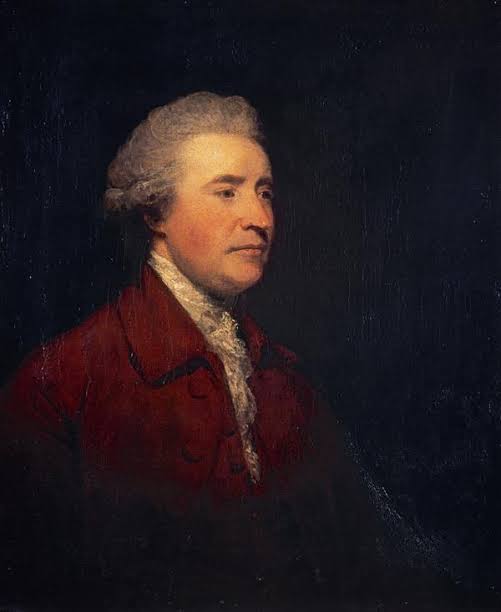
The MacPherson Constitution of 1951 went further, granting regional autonomy and elective representation in the Western, Eastern, and Northern regions. But with autonomy came competition. Political parties emerged along regional lines:
- Action Group (AG) dominated the West.
- National Council of Nigeria and the Cameroons (NCNC) claimed the East.
- Northern People’s Congress (NPC) rose in the North.
These regional allegiances, while politically strategic, often clashed with the idea of a cohesive national assembly. Debates in the council chambers were intense: leaders argued over taxation, education policy, and infrastructure, but underlying all these disputes was a more profound question: Could Nigeria survive as a unified nation while accommodating its vast ethnic diversity?
The Lyttleton Constitution and the Road to Independence
The 1954 Lyttleton Constitution marked a turning point. For the first time, Nigeria was formally organized as a federation of regions, each with its own assembly, while Lagos remained the seat of central government.
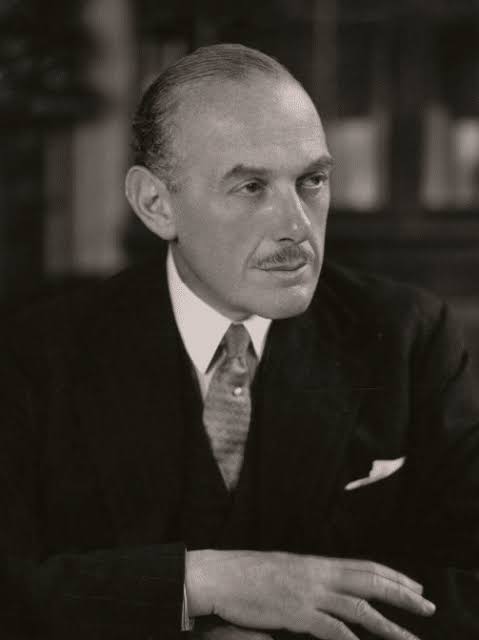
This created a quasi-national legislature, a prototype of today’s National Assembly.
During this period, legislative debates were fierce and often personal. Sir Abubakar Tafawa Balewa, representing the North, often clashed with western politicians like Obafemi Awolowo. Discussions about resource allocation, federal revenues, and minority rights frequently threatened to derail progress toward independence.
Despite these tensions, the 1950s were a decade of political maturation. Nigerians learned the art of negotiation, compromise, and public accountability—skills that would be critical when they assumed full control of the Federal Parliament in 1960.
The First Republic – Parliamentary Experiments
On October 1, 1960, Nigeria achieved independence. The Federal Parliament was bicameral, consisting of the Senate and the House of Representatives. Sir Abubakar Tafawa Balewa became the first Prime Minister, navigating a parliament full of ambitious regional leaders.
The early years were tumultuous. Legislative sessions saw heated arguments over language policy, federal vs. regional authority, and economic strategy. The premier of the Western Region, Obafemi Awolowo, famously opposed federal interventions in regional education, arguing that each region should preserve its cultural identity. These conflicts were more than political squabbles—they reflected the struggle of a young nation to define itself.
Military Coups and the Suspension of Democracy
The 1966 coups marked a dark period. Both the National Assembly and regional legislatures were dissolved, and military rulers assumed control. Generals like Aguiyi-Ironsi and Yakubu Gowon governed by decree, bypassing the legislative process entirely.
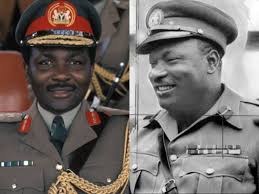
Yet even in these dark times, the vision of a legislative system endured. Civil servants, former legislators, and legal scholars worked behind the scenes to draft constitutional frameworks that would eventually allow Nigeria to return to civilian rule. The absence of parliament underscored its importance: a nation without a legislative voice was a nation adrift.
The Second and Third Republics – Fragile Attempts at Governance
The Second Republic (1979–1983) introduced a presidential system, modeled after the United States, with a bicameral National Assembly. Elections were contentious, and political violence marred legislative sessions. Still, the Assembly functioned as a platform for debate and negotiation, passing laws on banking, education, and resource management.
The Third Republic (1993) was short-lived but notable for the failed transition to civilian rule. The annulment of the June 12, 1993 election threw the country into crisis, illustrating that a legislature alone cannot stabilize a democracy without trust and transparency.
The Fourth Republic – Modern Lawmaking and Challenges
In 1999, Nigeria returned to democratic governance. The National Assembly, seated in Abuja, became the centerpiece of legislative authority. Its responsibilities included:
- Lawmaking on national and regional issues.
- Oversight of the executive branch.
- Representation of the Nigerian populace.
Despite its powers, the Assembly has faced ongoing challenges: corruption scandals, partisan rivalry, and inefficient lawmaking. Yet, it remains a symbol of Nigeria’s hard-won democracy. Modern legislators, whether debating oil revenue policies or social reforms, inherit a legacy dating back to Macaulay and the first elective council in 1923.
Human Faces Behind the Laws
The story of Nigeria’s National Assembly is not just constitutional; it is personal. Figures like:
Herbert Macaulay: The father of Nigerian nationalism.
Obafemi Awolowo: The visionary regional leader.
Sir Abubakar Tafawa Balewa: The parliamentary tactician navigating a fractious new nation.
Late senators and representatives in post-1999 Nigeria: champions of reform or victims of political compromise.
Each of them contributed to shaping laws, negotiating power, and defining Nigeria’s identity. Their struggles, debates, and sacrifices humanize the cold text of constitutions.
Conclusion: A Nation’s Legislative Soul
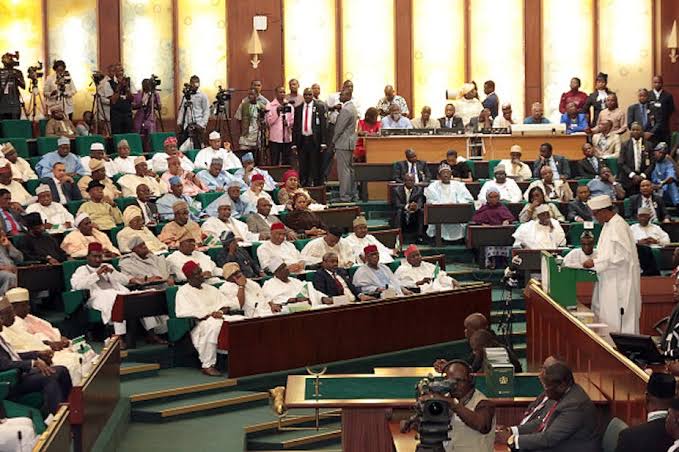
From colonial chambers to the grand halls in Abuja, Nigeria’s legislative history is a story of ambition, resilience, conflict, and compromise. Each constitutional reform, each debate, and each political crisis has built the foundation for a National Assembly that—though imperfect—represents the dreams, struggles, and aspirations of millions.
To understand the modern National Assembly is to understand Nigeria itself: a nation still learning to balance diversity with unity, ambition with responsibility, and democracy with accountability. The chambers may have changed, the rulers may have changed, but the heartbeat remains: a nation’s people, demanding a voice, refusing to be silent.
Discussion about this post