


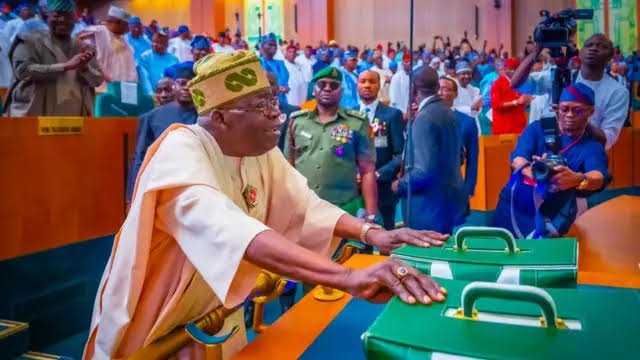

The air in Abuja’s National Assembly chamber was thick with anticipation on December 18, 2024. Journalists pressed their microphones closer, legislators shuffled stacks of papers, and staff whispered hurried updates into phones. At the center of this controlled chaos, President Bola Ahmed Tinubu adjusted his tie, preparing to unveil what would be remembered as Nigeria’s boldest—and most controversial—budget yet: ₦49.74 trillion, dubbed the “Budget of Restoration.”
The number alone caused murmurs in the room. To the untrained eye, it was a symbol of ambition, a statement that Nigeria could rise from years of economic malaise, inflation, and infrastructural decay. But to economists and political insiders, it was a high-stakes gamble, a document that relied on optimistic oil prices, robust revenue collection, and flawless execution in a country notorious for bureaucratic bottlenecks.
The drama did not end at the podium. Over the next two months, the budget’s trajectory—from proposal to approval—seemingly revealed fault lines in governance, expose political maneuverings, and highlighted the tensions between ambition and realism.
This is the story of Nigeria’s 2025 budget: a financial thriller, told through the lens of numbers, policy, politics, and the everyday citizens whose lives it touches.
Setting the Stage – From Vision to Proposal
The genesis of the 2025 budget traces back to the Ministry of Finance’s offices in Victoria Island, Lagos. Behind closed doors, teams of economists, budget analysts, and advisers debated projections that would define the nation’s spending for the year. The main pillars of the budget were clear: infrastructure, security, human capital development, and economic stabilization. But how to fund these ambitions? That question became the first fault line.
Key targets included:
Crude oil production: 2.06 million barrels per day.
Benchmark oil price: $75 per barrel.
Revenue projection: ₦36.35 trillion.
Analysts were quick to challenge these assumptions. Nigeria had struggled to hit oil production targets in previous years due to militant disruptions in the Niger Delta and logistical inefficiencies. Similarly, a $75 benchmark was considered optimistic, given the volatility of global oil markets. Any deviation could trigger a fiscal shortfall, forcing borrowing or cuts.
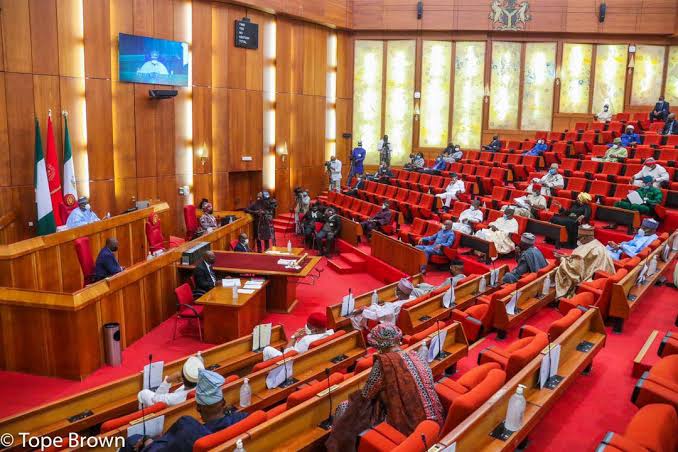
Inside the chambers of the National Assembly, lawmakers began their own calculations. Special committees were tasked with reviewing sectoral allocations, scrutinizing debt servicing plans, and identifying potential areas of mismanagement. It was during these weeks that political undercurrents began to surface—contracts appeared to favor companies linked to influential figures, and allocations to certain states sparked debates of favoritism versus merit.
Meanwhile, the public began to absorb the headline figure: ₦49.74 trillion. Newspapers splashed it across front pages. Social media buzzed with analyses, memes, and skepticism. Citizens wondered: Would this budget lift them from the rising cost of living, or was it an accounting illusion?
Legislative Theatre – Debate, Delay, and Drama
Passing a budget in Nigeria is never a simple procedural task; it’s a political theatre, often revealing alliances, power plays, and hidden agendas. For the 2025 budget, the first hurdle was reconciling presidential projections with legislative priorities.
Duration of deliberation: 58 days of intense debate.
Final approved figure: ₦54.99 trillion—an increase of over ₦5 trillion from the original proposal.
The hike drew immediate criticism. Analysts and civil society groups questioned how and why the allocations had ballooned, suspecting inflation of project costs and the inclusion of new, unvetted line items. Among these, the Lagos-Calabar Coastal Highway emerged as a lightning rod. Estimated to cost $11–12.5 billion, the project represented one of the largest single infrastructure commitments in Nigeria’s history. Critics asked: Could this expenditure have been distributed more evenly across education, healthcare, and poverty alleviation?
The session was also marred by tension between the executive and legislative arms. Reports indicated that some lawmakers were pressured to approve allocations for their constituencies in exchange for political loyalty. The atmosphere was fraught: what was meant to be a transparent process often appeared as a negotiated compromise between ambition, political expediency, and public scrutiny.
The Debt Dilemma – Borrowing to Stay Afloat
The approved budget highlighted a stark reality: Nigeria was spending heavily to manage past spending. Debt servicing alone accounted for ₦16.33 trillion. Domestic and external debts, combined with rising interest rates, meant that a significant portion of the budget was essentially pre-committed.
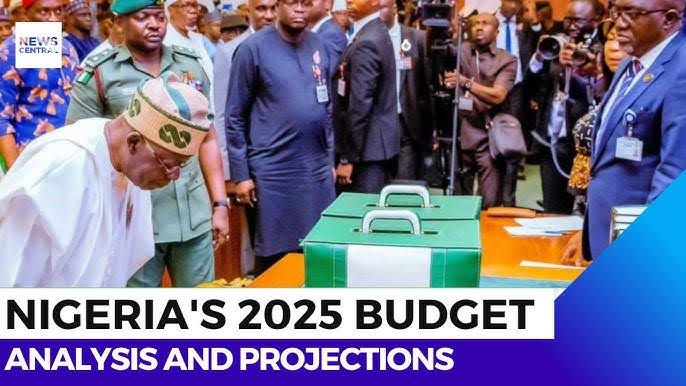
The IMF had already issued cautionary statements. If oil prices fell below $75 per barrel, the government would struggle to meet its obligations without further borrowing. Moreover, analysts warned that relying on optimistic tax revenues and increased VAT could place undue strain on households already grappling with a 34.8% inflation rate as of December 2024.
This fiscal tightrope, balancing debt repayment with ambitious development spending, framed much of the year’s economic discourse. It underscored the tension at the heart of the 2025 budget: the desire to transform Nigeria while remaining shackled by the weight of past fiscal choices.
The Infrastructure Enigma – Ambition vs. Reality
Infrastructure was the heartbeat of the 2025 budget, with ₦14.85 trillion earmarked for capital projects. Roads, bridges, airports, and railways were to be revitalized, signaling a government eager to demonstrate progress.
Among these, the Lagos-Calabar Coastal Highway stood out—not just for its scale but for the symbolic power it carried. Stretching over 1,000 kilometers, the highway promised to link economic hubs from the Atlantic coast to the oil-rich Niger Delta and Cross River.
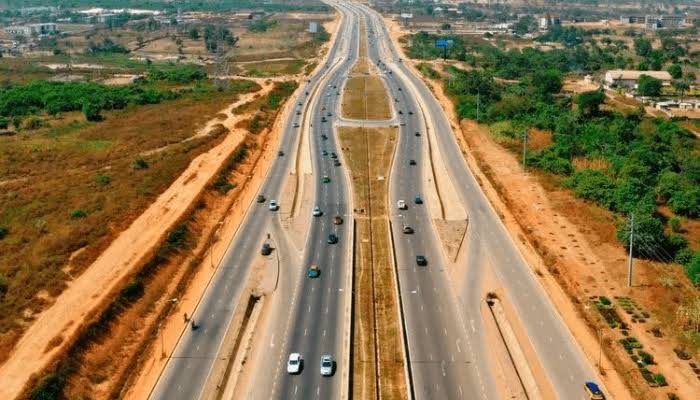
Yet, ambition collided with reality. Funding such a massive project required foreign loans, contractor selection controversies, and rigorous project management, areas historically fraught with corruption and delays in Nigeria. Public discourse quickly turned critical. Economists questioned whether the cost-benefit ratio justified this massive allocation, suggesting that smaller, strategic investments in health, education, and rural roads might yield more immediate improvements in citizens’ lives.
Meanwhile, citizens in Lagos and Cross River followed developments with uneasy anticipation. Traders and commuters wondered if construction delays would disrupt local economies or if budget overruns would divert funds from social services. Across social media platforms, hashtags such as #CoastalHighwayDebate and #49TrillionBudgetTrends sparked nationwide debates, reflecting both hope and skepticism.
The Revenue Mirage – Optimism or Illusion?
To fund its ambitious spending, the government projected a ₦36.35 trillion revenue. This figure assumed robust tax collection, increased compliance, and stable oil earnings. But historical performance painted a starkly different picture: Nigeria’s revenue often fell short of projections, leaving budget deficits that triggered borrowing or currency instability.
Civil society groups like BudgIT highlighted these risks early on. In their January 2025 briefing, they warned that revenue assumptions were overly optimistic, particularly for VAT collections and customs duties. The public, meanwhile, worried about hidden taxes or cuts to essential services, fearing that the burden of revenue shortfalls would ultimately fall on citizens rather than government efficiency.
The unfolding reality of 2025 validated these concerns. By mid-year, reports indicated slower-than-expected VAT inflows and oil revenue underperformance due to fluctuating crude prices. Economists warned that without recalibration, the ambitious budget could become a blueprint for fiscal strain rather than economic revival.
The Inflation Conundrum – Policy Under Pressure
Inflation had been a persistent shadow over Nigeria’s economy, and by December 2024, it hovered at 34.8%, the highest in nearly a decade. The 2025 budget sought to address this through a tax reform plan, including the gradual increase of VAT to 12.5% by 2026, while exempting essential goods such as food and medicine.
This reform sparked debate. On one hand, economists argued that higher VAT could stabilize revenue, reduce fiscal deficits, and fund social services. On the other, critics highlighted the potential adverse impact on consumption and low-income households, who already struggled with soaring prices.
Across the country, citizens felt the tension in their wallets. Market traders in Lagos recounted rising food prices, while educators in Abuja noted increased operational costs. The budget’s measures were framed as necessary for macroeconomic stability, but the human cost was immediate and tangible, creating an undercurrent of suspense: would reforms stabilize the economy, or would inflation spiral further?
The Security Quandary – Money Against Chaos
Security remained a top priority. Terrorism in the Northeast, militia activity in the Niger Delta, and kidnappings in several states had strained government resources and public confidence. The budget allocated billions to defense, law enforcement, and emergency responses.
Yet money alone could not guarantee safety. In Rivers State, political tension escalated when disputes over budget allocations led to suspensions of both the governor and state lawmakers, marking the first emergency intervention of its kind in over a decade. The spectacle underscored the fragility of governance structures and the risks inherent in tying budget success to political stability.
Citizens watched anxiously. In Port Harcourt, families feared for daily safety; in rural communities, the gap between budget promises and ground realities seemed vast. The drama of security allocations became a recurring theme: could fiscal commitment translate into tangible protection for Nigerians?
Looking Ahead – The Test of Execution
The months following the budget’s approval became a litmus test. Implementation required precise coordination, transparent contracting, and effective monitoring. Any misstep risked financial mismanagement, debt crises, or public disillusionment.
Observers noted that the government’s ability to deliver on promises would define its credibility. Infrastructure projects like the Lagos-Calabar highway, tax reforms, and security funding became benchmarks for accountability, with citizens and analysts tracking progress closely.
Economists emphasized that success depended on fiscal discipline, macroeconomic stability, and citizen inclusion. The stakes were high: Nigeria’s ₦49 trillion budget was not merely about numbers—it was a national experiment in governance, strategy, and the balancing of ambition with reality.
Final Thoughts: A Nation at the Crossroads
Nigeria’s ₦49 trillion budget is more than numbers—it’s a reflection of ambition, risk, and the nation’s fragile balance between hope and reality. Mega-projects, debt obligations, and lofty revenue targets hang in the balance, while citizens watch closely, measuring promises against daily struggles.
The true test is not in the approval or allocation but in execution. Will these trillions translate into roads, schools, security, and prosperity—or will they dissolve into fiscal uncertainty? In 2025, Nigeria stands at a crossroads, and the answer will define the nation’s economic and political trajectory for years to come.
Discussion about this post