



President Tinubu must know that borrowing not attached to key development goals is a recipe for fiscal mess and economic disaster. The middle course to be steered here by his government would be to tackle runaway inflation, which is critical to bringing down the interest rate. This will help create an enabling environment for economic growth, which in turn would shore up our grossly undervalued national legal tender.
The former president, Olusegun Obasanjo, is a man of many sides. The good, the bad, and the ugly. His administration between 1999 and 2007 is also a bag of mixed feelings. While many talked about his government with profound nostalgia and longing for an era deemed as Nigerian halcyon days that offers a ray of hope and a glimpse into what the nation can become if it had a visionary leader that can harness its potential, others tell the story of his time as a democratically elected president through the darkened prism of horror, social upheaval and highhandedness.
However, one tremendously poignant move that has a salutary effect on his administration and that even his staunchest critic hailed him for was his ability to pay off the nation’s massive debts which the civilian and military regimes before him had accumulated and defaulted on. He was said to have paid off over $30-something billion in debt. The country was told of the notorious London and Paris clubs, which are always willing and ready creditors. The successful renegotiation of the debts and their final settlement etched Obasanjo’s name on the right page of Nigeria’s checkered history. This crucial and monumental fiscal achievement somewhat drowned out and overshadowed other aspects of his government that many were displeased with and disillusioned by.
But that was over two decades ago and the Nigeria of 2003 under Obasanjo is vastly different from what we have today in many ways and forms. Successive governments have reversed the gains made by Obasanjo in not just offsetting the nation’s debt but growing its reserves and saving for the rainy days. As if squandering the enormous savings was not enough, his predecessors have also plunged the nation back into debt. While a few of these loans were justified, many were irrational, incomprehensible and unnecessary.
If borrowings during the government of former president Goodluck Jonathan were negligible, and those of his successor, Muhammadu Buhari, were worrisome, then the borrowings and loans under Tinubu have left many petrified and aghast. These loans are dollar-denominated, which not only eats into the nation’s relatively paltry revenue but also puts immense pressure on our undervalued and struggling currency. To underscore the severity of the nation’s debt profile under Tinubu and the urgency of the situation, Nigeria’s public debt soared from N87.379 trillion in June 2023 (one month after Mr Buhari’s exit from power) to N121.7 trillion in the first quarter of 2024 to N142.319 trillion in September. The debt reached N144.67 trillion in December and N149.39 trillion, equivalent to about US$97 billion, in the first quarter of 2025. This represents an astronomical rise from the previous year.
Last week, while addressing members of the Buhari Organisation, led by former Nasarawa State Governor, Senator Tanko Al-Makura, at the Presidential Villa, President Tinubu announced with aplomb that Nigeria had met its annual revenue target by August, attributing the success to robust non-oil revenue performance. He also disclosed that Nigeria is no longer borrowing from local banks. While Tinubu would like Nigerians to think that the much-touted revenue success will usher in a change in fortune for them, the opposite is the case. If anything, some of the methods used in achieving the revenue objective are hurting the people and making their lives more difficult. He also spoke about not borrowing from local banks, but was curiously silent on loans from foreign creditors and international lenders
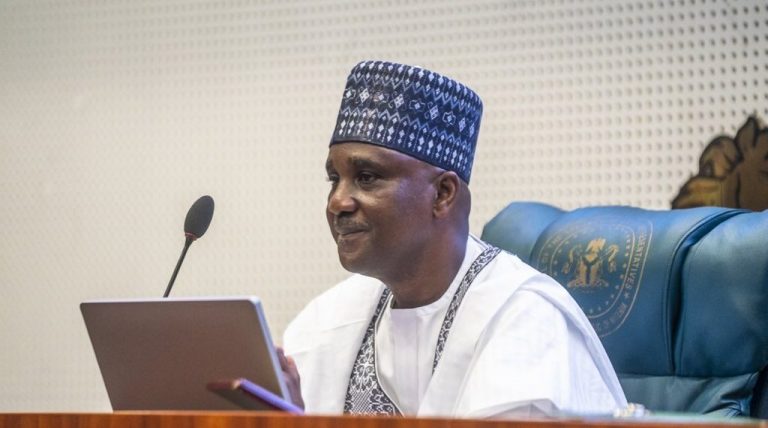
But the nation’s number four citizen and speaker of the House of Representatives, Tajudeen Abbas, is one person who sees silence on the troubling debt profile of the nation as a burden that is too heavy to bear. Yesterday, he voiced his concern regarding the public debt. Abbas, who spoke at the opening of the 11th Annual Conference and General Assembly of the West Africa Association of Public Accounts Committees (WAAPAC) at the National Assembly, Abuja, declared that Nigeria’s debt under President Bola Tinubu had reached “a critical point” and highlighted the need for urgent reforms in borrowing practices and parliamentary oversight. He described the violation of the debt limit as “a signal of strain on fiscal sustainability,”
Speaker Tajudeen did not say anything new, even the most casual and passive observer of how the nation’s economy is being managed is aware of these precarious fiscal situations. But when someone like him, who is believed to be one of the president’s right-hand men, shares the sentiment and growing concern of the public regarding the nation’s debt, then the gravity of the issue can no longer be ignored. The speaker also can’t distance himself from the debt mess as he approved many of the loans that push us into a dangerous fiscal zone.
Publicly decrying Nigeria’s huge debt stock won’t be enough, the speaker and other members of the nation’s lower legislative must call the bluff of the executive and pull the handbrake on further loans to prevent the future of the next generation from being totally mortgaged. They must also embark on aggressive and comprehensive oversight exercises to ensure that already approved loans are judiciously used and channelled to growth-boosting and productivity-enhancing projects and essential services.
President Tinubu must know that reckless borrowing not attached to key development goals is a recipe for fiscal mess and economic disaster. The middle course to be steered here by his government would be to tackle runaway inflation, which is critical to bringing down the interest rate. This will help create an enabling environment for economic growth, which in turn would shore up our grossly undervalued national legal tender.
A proper management of our vast resources would, without a doubt, guarantee a self-financing and self-sustained rapid economic growth and development. Wastages need to be curbed, just as corruption must be tackled headlong. African countries whose public debts were worse than ours have wriggled out of their economic debt vice, and so can we because we’ve done it before. As they tell us, it is not rocket science.
Discussion about this post