


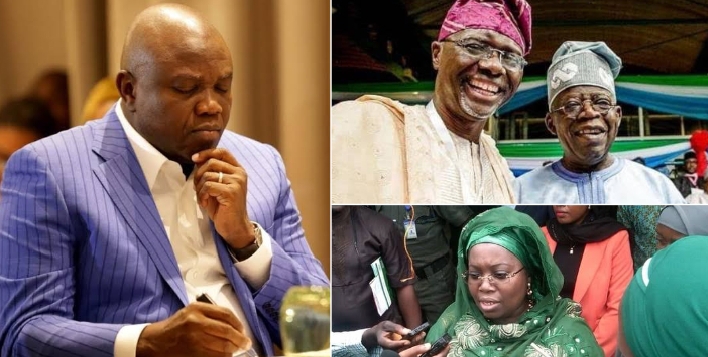

It began with whispers. In the heat of Lagos traffic—amid the roar of danfos racing down Ikorodu Road, the blaring horns at Ojota, and the patient wait of traders along Mile 12—the story traveled faster than the city’s famed yellow buses. Something was shifting, something unspoken, and it carried the weight of inevitability. Lagos, restless and unforgiving, had turned its gaze inward, not on a stranger, but on one of its own.
The man at the center of the storm was not new to the city’s rhythms. He had grown up in its labyrinth of ambition, climbed the ladder through loyalty and calculation, and held in his grasp the most coveted seat in Nigeria’s commercial capital. To govern Lagos was to hold the beating heart of West Africa’s most relentless metropolis. Yet, to sit there was also to balance on the edge of a knife.
By the time the rumors became headlines, and the headlines hardened into betrayals, Lagosians were left asking how quickly admiration could turn to rejection, and how the ground beneath power could vanish almost overnight. The betrayal was not a single act but a symphony of silences, of doors closed in the night, of allies who found new loyalties under the fluorescent lights of political negotiation.
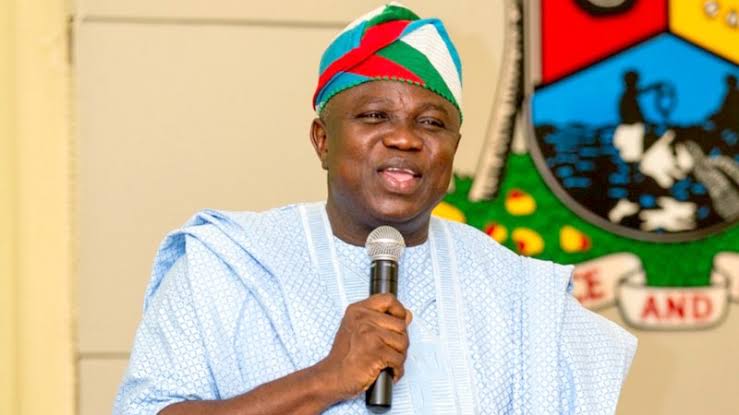
In the markets of Balogun, the chatter framed it as a lesson: Lagos did not simply discard its leaders—it consumed them. To serve the city was to be embraced in daylight and doubted by twilight. Power here was not a prize to be kept but a flame to be borrowed, and when it no longer burned bright enough for those who claimed ownership of its spark, it was quietly taken back.
This was the story of a governor who rode into office on waves of expectation, who imagined a legacy built on bridges, roads, and silent efficiency. But the deeper legacy became something darker, more intimate: the story of how Lagos swallowed its own governor.
The City That Makes and Unmakes
Lagos is no ordinary city. It is a restless organism, an unending experiment in survival and ambition. Over 20 million people wrestle daily with its chaos, its promises, and its betrayals. The city thrives on hustle, but its politics thrives on loyalty. Since 1999, when Nigeria returned to civilian rule, Lagos has been shaped by a political structure designed not just to govern but to endure.
At its center stood Bola Ahmed Tinubu. After ruling as governor from 1999 to 2007, Tinubu built a machinery that ensured Lagos remained under his influence. His successors, Babatunde Raji Fashola and later Akinwunmi Ambode, were products of this arrangement: chosen not by accident but by design. Lagos was a machine that selected, tested, and recycled loyalty.
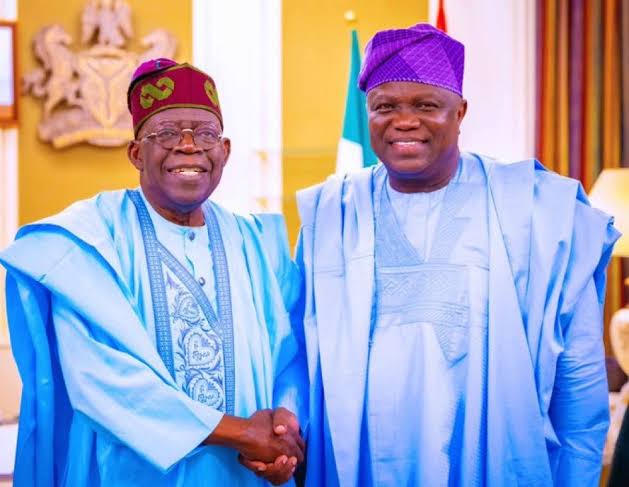
For nearly two decades, this continuity created the illusion of stability. But stability in Lagos politics comes with conditions. Governors are expected to serve not only the public but also the party structure that sustains them. This is where Ambode’s tragedy began—he believed competence could replace loyalty, and in Lagos, that was a fatal miscalculation.
Akinwunmi Ambode: The Accountant Who Dreamed of Lagos
Born on June 14, 1963, in Epe, Ambode’s early life bore no signs of impending political drama. He was the son of a schoolteacher, raised with values of discipline and quiet ambition, numbers became his language. He studied Accounting at the University of Lagos, then earned a master’s degree in Accounting and Financial Management.
His career was forged in public service. From 1988, he worked in the Lagos State civil service, rising through the ranks with precision. By 2001, he was Auditor-General for Local Governments; by 2005, he became Permanent Secretary of the Ministry of Finance. His colleagues described him as methodical, unflinching with figures, and unusually quiet for someone rising so quickly.
In 2012, after 27 years of service, he voluntarily retired. But retirement was not an ending; it was a calculated pause. Behind the scenes, Ambode was being groomed for bigger responsibilities. Tinubu, the grandmaster of Lagos politics, saw in him the perfect technocrat to continue the Lagos project after Fashola.
By 2014, Ambode had become the anointed candidate of the All Progressives Congress (APC). The party’s primaries were fierce, but Tinubu’s blessing proved decisive. In April 2015, Ambode was elected governor of Lagos, riding on a wave of expectations. He was sold to Lagosians as a blend of loyalty and competence, a man who would preserve continuity while deepening reforms.
The accountant had become governor. But Lagos was about to test his arithmetic.
Governing with Efficiency, Alienating the Machine
Ambode’s first months in office revealed his technocratic style. He was not flamboyant like some Nigerian politicians. He rarely smiled for cameras, preferring spreadsheets to slogans. For Lagosians used to Fashola’s visible charisma, Ambode’s style felt detached, but his results were tangible.
He tackled traffic gridlock with new road projects. The Abule Egba Flyover opened to fanfare, easing congestion along the Lagos-Abeokuta Expressway. He expanded road networks in Alimosho, built pedestrian bridges, and accelerated work on the Lagos-Badagry Expressway.
Security became another focus. Ambode revamped the Lagos Rapid Response Squad, purchasing new patrol cars, helicopters, and gunboats. For a state plagued by armed robbery and kidnappings, this brought relief.
He also invested in culture. Four new theatres were built across the state, signaling his vision for Lagos as Africa’s creative capital. Ambode spoke of turning Lagos into a 21st-century megacity.
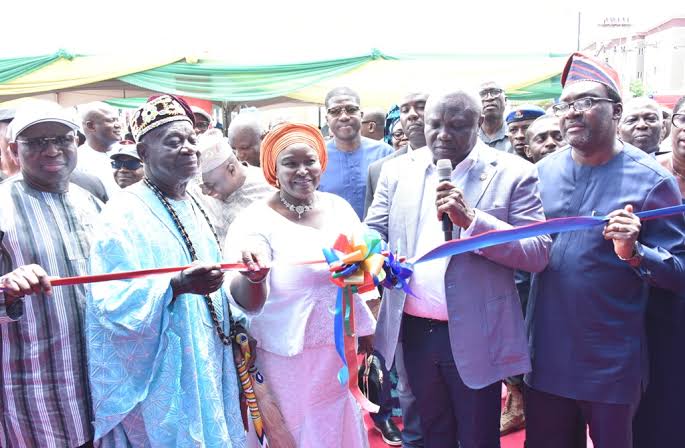
Yet, beneath the progress lay a growing distance between Ambode and the party machinery. His governance was clinical, but politics in Lagos is not clinical—it is relational, transactional, and often personal. Ambode’s refusal to bend budgets to satisfy party loyalists, his habit of scrutinizing contracts, and his detachment from grassroots consultations sowed quiet resentment.
In Lagos, efficiency without patronage is interpreted as arrogance. And arrogance is unforgivable.
The Cracks Appear
By 2017, murmurs grew louder. Key party leaders complained that Ambode was “too independent.” He was accused of sidelining loyalists who expected appointments, contracts, and patronage. His relationship with Tinubu, once his strongest pillar, became strained.
Sources later suggested that Ambode refused to approve certain contracts that would have favored Tinubu’s allies. His insistence on fiscal discipline was admirable on paper, but in Lagos politics, it amounted to rebellion.
By 2018, as the next elections approached, Ambode’s fate was already sealed. The APC’s internal machinery began shifting toward a new candidate. Names were whispered, and one began to stand out: Babajide Sanwo-Olu, a former commissioner and loyal Tinubu ally.
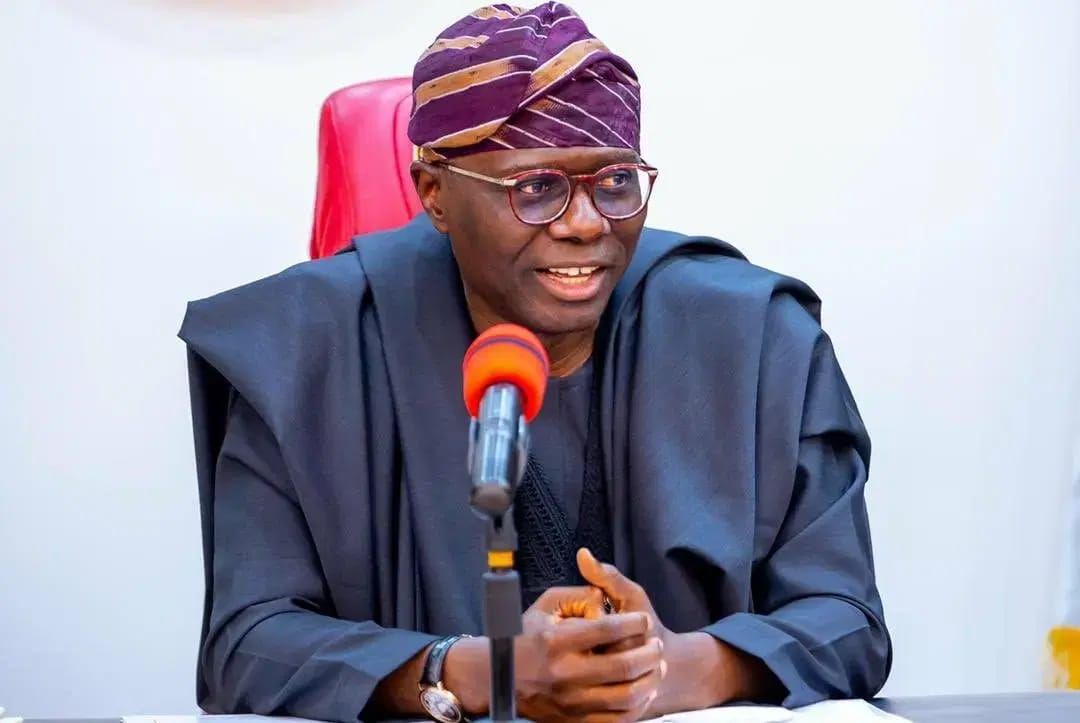
The betrayal was quiet at first. Meetings were held without Ambode. His requests were ignored. But the quiet soon gave way to open defiance.
The Deputy’s Knife
Perhaps the sharpest blow came from within Ambode’s own cabinet. His deputy governor, Dr. Oluranti Adebule, publicly declared her support for Sanwo-Olu during the APC primaries source.
For Lagosians, it was a stunning moment: a deputy turning against her principal while he was still in office. The symbolism was devastating. If even his deputy abandoned him, Ambode was finished.
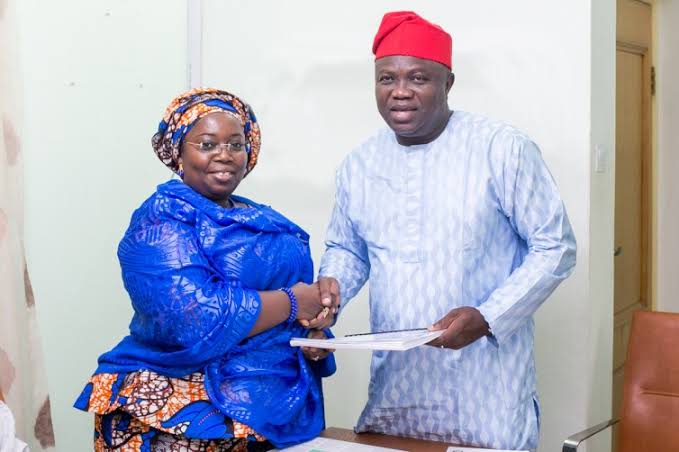
This was not merely politics—it was betrayal of the deepest kind. Lagos had become a stage for Shakespearean drama, and Ambode stood at its tragic center.
The Primaries: A Public Execution
On October 2, 2018, the APC governorship primaries in Lagos played out like a public execution. Ambode, the sitting governor, was humiliated. Sanwo-Olu won by a landslide, securing the backing of the entire party structure.
For many Lagosians, the speed of Ambode’s fall was breathtaking. Just three years earlier, he had been the golden boy of the APC. Now, he was discarded like an afterthought.
Ambode’s concession speech was subdued, almost lifeless. He did not defect to another party. He did not stage a rebellion. Instead, he quietly accepted defeat and served out the remainder of his term.
The betrayal was complete. The Lagos politics had swallowed him whole.
Lagos as a Devouring Machine
Ambode’s fall was not the first, nor would it be the last, to illustrate Lagos’s political logic. Since 1999, the city has functioned as a carefully controlled fiefdom. Tinubu’s power structure ensures continuity, but it also ensures obedience.
Fashola had survived by balancing competence with loyalty. Ambode miscalculated, assumed that results could replace relationships. Lagos taught him otherwise.
In Lagos, governance is not just about building roads and bridges. It is about feeding the political machine. Ambode’s refusal to play that game was interpreted not as integrity but as betrayal.
The irony is that Ambode’s greatest strength—his independence—became his undoing. Lagos does not forgive independence.
Closing Thoughts: Lessons of a Betrayal
The story of Akinwunmi Ambode is more than a personal tragedy. It is a mirror of Lagos itself: a city that embraces ambition but punishes independence, that applauds progress but demands loyalty above all.
Ambode’s fall teaches that in Lagos, efficiency without politics is vanity. Integrity without compromise is defiance. And in a system built on obedience, defiance is betrayal.
In the end, Ambode was not consumed because he failed Lagosians. He was consumed because he failed Lagos’s power brokers.
The betrayal of Akinwunmi Ambode was the betrayal of a governor who believed Lagos could be ruled by numbers, not by loyalties. But Lagos is not a city of numbers. It is a city of bargains, of alliances, of betrayals.
And when the bargains break, even governors are swallowed whole.
Discussion about this post