



On the evening of June 19, 2021, Nairobi looked like any other African city at twilight. The streets of Kilimani were alive with the hum of engines, streetlights flickered lazily into life, and the scent of roasted maize from roadside vendors hung in the cool evening air.
In the middle of this ordinary rhythm of city life, one man walked with extraordinary caution. Nnamdi Kanu, leader of the Indigenous People of Biafra (IPOB), had spent the better part of two months living quietly in Kenya. He blended into Nairobi’s upscale neighborhoods, careful never to draw unnecessary attention, his life reduced to a series of cautious errands, guarded phone calls, and silent prayers. He believed he had mastered invisibility. Yet, at that exact moment, forces beyond his control were converging.
As he approached Jomo Kenyatta International Airport to pick up a visitor, the sanctuary he thought he had built unraveled. A team of men, efficient and silent, lay in wait. Within moments he was surrounded, subdued, and taken away. His calls stopped. His movements ceased. By the time news of his disappearance filtered out, Nnamdi Kanu was already a ghost in transit, somewhere between Nairobi’s shadows and Abuja’s triumphal declaration.

The world would soon learn that he had been rearrested and flown to Nigeria. But what the world has never learned—what still hangs like a ghostly question in corridors of law and history—is how exactly those who came for him knew where to look. Who betrayed his location in Nairobi? Who whispered his presence to the very men he had tried to outwit? The answer lies buried in a maze of denials, half-truths, and silences.
The Road to Exile
To grasp the gravity of the betrayal, one must return to the beginning of Kanu’s political odyssey. Born in 1967 in Abia State, the very year Nigeria descended into the Biafra War, Kanu grew up with the shadow of conflict in his household stories. The defeat of Biafra in 1970 ended with millions dead, and generations of Igbo people carried the weight of loss. For decades, the Nigerian state imposed a fragile peace on the Southeast, one built more on fear than reconciliation.
Kanu emerged as a radical voice in the diaspora, broadcasting on Radio Biafra from London. His voice was fiery, his rhetoric uncompromising. He attacked Nigerian leaders, called for secession, and painted a vision of a reborn Biafra. By 2015, IPOB had become a movement, rallying young Igbo people who felt betrayed by Nigeria’s broken promises.
His activism brought him into collision with the Nigerian state. Arrested in 2015, he spent two years in detention, released only after an avalanche of protests. But his release was fragile. By 2017, Nigerian troops stormed his family home in Umuahia, a raid that left scores dead. Kanu disappeared. For months, rumors swirled: had he been killed, or had he escaped? By late 2018, he resurfaced in Israel, alive but exiled.
Exile became his weapon. From London, he mobilized supporters across Europe, North America, and Africa. His message remained clear: Nigeria was irredeemable, and only Biafra offered salvation. For Abuja, this was more than dissent—it was a threat to the foundation of the state. The government filed new charges, including terrorism. Court summons were ignored. By 2020, as IPOB’s security arm—the Eastern Security Network—clashed with Nigerian security forces, the state hardened its resolve. Kanu, once a dissident, was now a fugitive.
Nairobi: A Fragile Sanctuary
In May 2021, Nnamdi Kanu arrived in Kenya. Why Kenya? The country had long been a hub for exiled politicians, dissidents, and businessmen seeking to disappear from the chaos of home. Nairobi’s cosmopolitan neighborhoods provided both comfort and anonymity. From independence struggles to Cold War intrigues, Kenya’s capital had hosted exiles, spies, and fugitives. Kanu, with his British passport and a Rwandan-issued visa, blended easily into this tradition.
He rented a modest but well-furnished apartment in Kilimani. From there, he coordinated IPOB’s international strategies, held meetings, and communicated cautiously with family. His brother Kingsley recalled that he kept a low profile, venturing out only when necessary. To further limit exposure, he hired a Kenyan assistant. For nearly two months, his life in Nairobi was uneventful, hidden in plain sight.
Yet, beneath the calm surface, cracks had begun to form. Every dissident in exile lives under the fear of betrayal. The circle of trust narrows with each passing day. Who knows your address? Who sees your movements? Who listens when you pick up the phone? Kanu was no different. He relied on his assistant, trusted his visitor schedule, and believed his anonymity shielded him. But someone, somewhere, was watching.
The Arrest in the Shadows
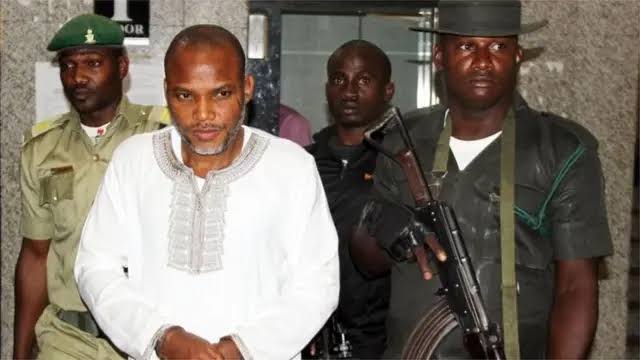
June 19, 2021. The day unfolded like any other. That morning, Kanu spoke briefly with family. By evening, he set out for Jomo Kenyatta International Airport to meet a visitor. He called Kingsley one last time on the road. His voice was steady, betraying no fear. Minutes later, he was gone.
What followed was a carefully executed operation that bore the hallmarks of trained intelligence. According to reports later published by Sahara Reporters, plainclothes men intercepted him in the airport’s parking lot. The arrest was silent, efficient, and brutal. He was bundled into a vehicle, taken not to a police station, but to a private location. For nearly a week, he was held incommunicado. Accounts from his family alleged torture, beatings, and denial of medical care. By June 27, he was placed on a private jet, flown into Abuja, and paraded before cameras.
Nigeria’s Attorney General, Abubakar Malami, announced triumphantly that Kanu had been “intercepted through collaborative international efforts.” For the government, it was a victory against secession. For IPOB, it was a betrayal too deep to ignore.
Kenya’s Denials, Nigeria’s Boasts
From the moment Abuja declared victory, questions arose. Kenya was the scene of the arrest, yet Nairobi’s government denied involvement. Its ministries of foreign affairs and interior issued statements insisting they knew nothing of the operation. Interpol, often accused in renditions, also denied participation. The denials contradicted Nigeria’s narrative of “collaborative intelligence.”
Diplomatic tensions followed. IPOB accused Kenya of selling out. Activists protested outside Kenyan embassies in Europe. The British government, pressured by Kanu’s status as a UK citizen, sought clarifications. But the Kenyan government remained firm: it had no role in the arrest.
Yet court records later told a different story. In June 2025, the High Court in Nairobi ruled that Kanu had indeed been abducted and illegally transferred to Nigeria. The court declared the act unconstitutional and awarded him damages of 10 million shillings. More importantly, it ordered the Kenyan government to disclose the officials involved. But as of today, those names remain hidden.
Theories of Betrayal
The question persists: how did those who captured him know exactly where he would be?
Some theories point to Kenyan immigration officers. They would have had access to his visa records and entry details. Others argue that airport staff might have recognized him. Another angle suggests surveillance—his phone calls monitored, his digital footprints traced. In an era where intelligence agencies collaborate seamlessly, even a single careless call could have exposed him.
But the most unsettling theory is betrayal from within. Dissident circles are often vulnerable to infiltration. Could someone close to him have tipped off operatives? His assistant appeared loyal, safeguarding his passport after the arrest, but the possibility of a leak remains.
Another theory points beyond Africa. Some analysts suggest that Western intelligence agencies quietly cooperated. Given IPOB’s growing international profile and Kanu’s British citizenship, the idea of backchannel intelligence sharing cannot be dismissed. What strengthens this suspicion is the surgical precision of the arrest—rarely achieved without outside expertise.
Courtrooms and Contradictions
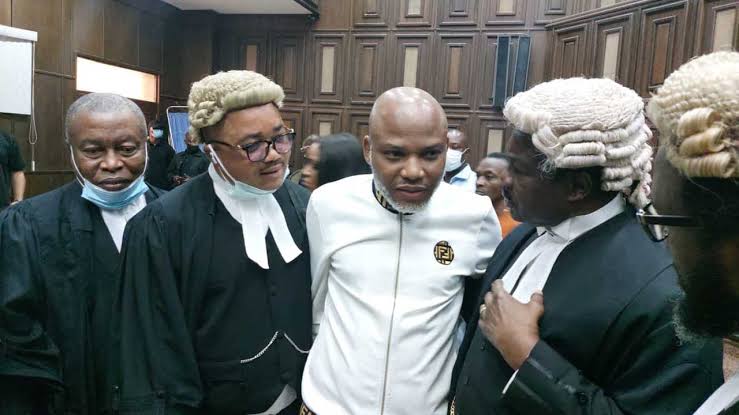
The legal aftermath only deepened the mystery. In Kenya, the High Court condemned the rendition as illegal. In Nigeria, a prosecution witness testified under anonymity that the Department of State Services (DSS) was not involved in the Kenya arrest, insisting its jurisdiction was strictly domestic. Yet this contradicted Malami’s initial claims of Nigerian involvement abroad.
The contradiction revealed a dangerous silence: neither Kenya nor Nigeria was willing to take responsibility. Each denied what was obvious, leaving a vacuum where accountability should have stood.
The Global Context of Rendition
To see Kanu’s case in isolation is to miss its broader significance. Extraordinary rendition is not new. During the Cold War, African capitals became hunting grounds for rebels, spies, and dissidents. More recently, after 9/11, the CIA perfected the art of rendition—snatching suspects from one country, flying them to another, and operating outside the law. Nairobi itself has a history: terror suspects have been abducted from its streets, sometimes with quiet cooperation from Kenyan intelligence.
Kanu’s case fits this global pattern. His abduction mirrors a tactic used against dissidents worldwide—efficiency in silence, denials in public, and complicity hidden in sealed files.
The Political Payoff
For Nigeria, the payoff was immediate. Kanu’s arrest gave the Buhari administration a political trophy. IPOB’s momentum slowed, its leader confined to a courtroom. The government projected strength, claiming it had neutralized a threat.
For Kenya, the payoff was murkier. Some believe Nairobi gained diplomatic favors in return, perhaps concessions in bilateral relations. But the denials suggest fear of backlash, especially from a public wary of being seen as complicit in unlawful acts.
For IPOB, the arrest was devastating. The movement lost its central voice. Leadership fractured. Some members retreated; others radicalized. The mystery of betrayal deepened their paranoia, breeding mistrust even among allies.
The Silence That Lingers
Four years later, the mystery endures. Kenya has been ordered to reveal the names of those who aided the arrest, yet remains silent. Nigeria maintains its triumph, unwilling to explain the details. The UK raises questions but never demands full accountability. And Kanu himself, through his lawyers, insists he was kidnapped, tortured, and illegally rendered.
The silence serves power. By refusing to name the betrayer, governments preserve deniability. By keeping the anonymous tip in the shadows, intelligence agencies protect their methods. But for history, the unanswered question is damning. Who sold him out?
Somewhere in the corridors of Nairobi’s immigration offices, in the quiet corners of intelligence briefings, or in the whispers of a compromised ally, lies the voice that betrayed him. That voice remains nameless, faceless, hidden. Until it is revealed, the story of June 19, 2021, will never be complete.
Reflection: Exile, Betrayal, and History
Exile has always been fragile. From African freedom fighters in the 1960s to modern-day dissidents, every exile learns the same truth: sanctuary is temporary, and betrayal is never far away.
For Nnamdi Kanu, Nairobi was both a haven and a trap. The anonymous tip that betrayed him was not just about geography—it was about power, politics, and the vulnerability of those who dare to challenge the state.

His arrest in Nairobi is more than a legal case. It is a cautionary tale of betrayal, and a reminder that in the global chessboard of politics, even the most careful players can be cornered. The mystery of the anonymous tip is not just about who whispered—it is about why systems thrive on silence.
Until the day the betrayer is named, the story remains suspended between law and shadow, between history and rumor. For Nnamdi Kanu, the 2021 rearrest is not just a personal tragedy—it is a riddle of sovereignty, justice, and the frailty of human trust.
Discussion about this post