


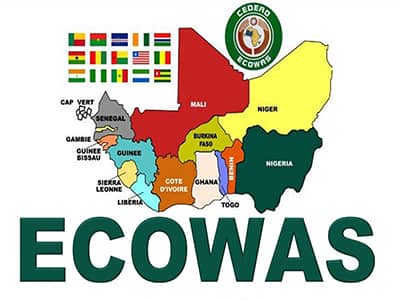

The Economic Community of West African States (ECOWAS) marked its fiftieth anniversary on May 28, with leaders and analysts calling for renewed unity.
The call comes as Mali, Burkina Faso, and Niger have left the bloc and formed a new regional group, the Alliance of Sahel States (AES).
Observers say ECOWAS faces three key challenges: security in the Sahel, the credibility of its democracy enforcement, and the economic and political bonds among the remaining members.
Foreign affairs experts note that the bloc is weaker and more divided than at any time since its founding, but say it may recover if it redefines its goals and approach.
The facts are clear: on January 28, 2024, the three junta-led states announced their intention to leave ECOWAS; in July 2024, they signed a treaty creating the AES; and on January 29, 2025, ECOWAS recognised their exit.
Each step removed not only land and populations but also consensus on ECOWAS’ purpose and scope.
After the AES treaty, ECOWAS warned that its departure could lead to “disintegration,” according to Reuters.
International analysts say the split is both a symptom and an accelerator of wider regional changes.
From Chatham House, Paul Melly argued that the departures reflect how “regional responses to Sahelian coups collided with national political realities,” while Romane Dideberg said that ECOWAS’ sanctions and threats “hardened positions” and limited dialogue.
Idayat Hassan, director of the Centre for Democracy and Development (CDD) in Abuja, recommended moving from punitive measures toward practical cooperation with coastal states and clear paths back to constitutional governance.
Gilles Yabi, CEO of the West Africa Citizen Think Tank (WATHI), described the exit as “a blow to regional integration in West Africa,” warning it threatens trade, mobility, and security arrangements.
Ebenezer Obadare, senior fellow at the Council on Foreign Relations, noted that the crisis may prompt ECOWAS to “clarify its mission and rejuvenate its institutions,” while cautioning that external actors, such as Moscow, influence the AES.
Two flaws contributed to the crisis: inconsistent enforcement of democratic norms and reliance on broad sanctions that often hurt ordinary citizens more than ruling elites.
The Sahel’s security challenges also motivated the AES, as ECOWAS has struggled to support member states against jihadist insurgencies.
Rotimi Olawale, co-founder of YouthHubAfrica, said cooperation on security remains essential because no state can secure borders alone.
The remaining twelve ECOWAS members—from Senegal and Cape Verde to Nigeria and Ghana—still rely on the bloc for visa-free travel, cross-border trade, and collective bargaining in debt, energy, and digital policy.
Even the AES trio depends economically on ECOWAS markets despite plans for new currencies and investment banks.
Analysts suggest that political legitimacy matters as much as economics; ECOWAS must appear relevant to citizens, not only to elites or donors.
They recommend realistic sequencing for constitutional compliance, citizen-visible results, and calibrated incentives for transitional governments.
Structural reforms are also proposed: a tiered compliance system, separate tracks for security and democracy, and investments in everyday integration, such as cheaper roaming, faster customs, and interoperable payments.
The International Crisis Group noted that separating political and security issues can maintain cooperation while giving leverage for negotiation.
Observers emphasise reclaiming the narrative of integration as vital to maintaining support and credibility among citizens.
Acknowledging AES as a political reality, analysts say, is necessary for planning continued technical cooperation on corridors, tariffs, and anti-smuggling measures.
If ECOWAS can implement these measures in 2025, including during its “future summit,” the bloc may gradually restore unity, even if full reintegration takes time.
Otherwise, the AES departure could be remembered as a turning point marking the fragility of West Africa’s integration project.
Discussion about this post