


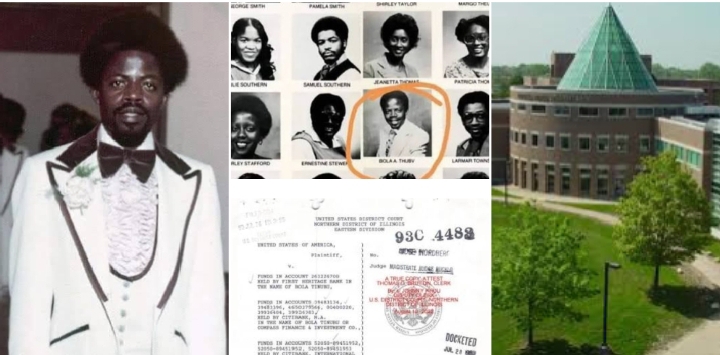

Chicago in the late 1970s was a city of contradictions. Steel mills coughed smoke into the sky even as they laid off workers. Immigrant families crowded into South Side apartments while skyscrapers kept rising downtown. The “Windy City” sold itself as the land of opportunity, but for many who came with nothing, Chicago was a test of patience, identity, and resilience.
Somewhere in that landscape walked a young Nigerian man with more questions surrounding him than answers. He carried a suitcase and a vision of better days. He would later become one of the most consequential political figures in Africa, his name etched in Nigeria’s democratic battles, his reputation carved in both triumph and controversy. But the Chicago years remain a fog—half-told stories, missing records, legal disputes, and lingering doubts.
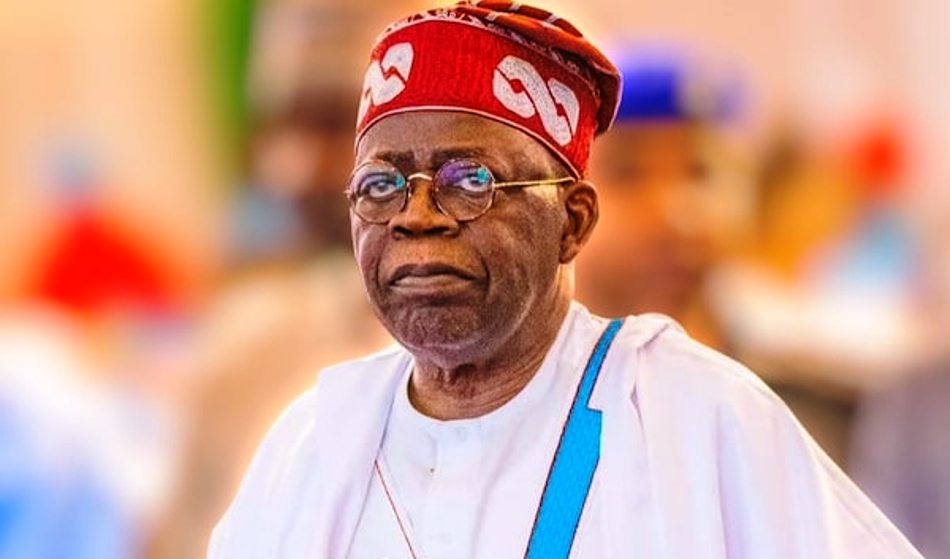
Who exactly was this young man in Chicago? What did he study, where did he live, and why do the archives seem like doors half-open, half-shut? Decades later, as Bola Ahmed Tinubu sits at the helm of Africa’s most populous democracy, Chicago still whispers questions that refuse to die.
Leaving Lagos: The Early Roots
Tinubu was born on March 29, 1952 (though some documents have suggested 1954). His mother, Abibatu Mogaji, rose to prominence as the powerful Iyaloja of Lagos—the leader of market traders, a position that commanded wealth and respect. Lagos in the 1960s was bustling with trade, energy, and an emerging political consciousness. Tinubu grew up in this atmosphere of ambition and survival.
He attended primary schools in Lagos and Ibadan before heading abroad. For a young Nigerian in the 1970s, the U.S. represented more than education; it was a chance at reinvention. The oil boom back home gave some families the means to send their children overseas, but many arrived with barely enough to survive. Tinubu belonged to the latter category, hustling to pay tuition while chasing academic goals.
In 1975, he boarded a plane and landed in Chicago. The city shaped him, tested him, and eventually haunted him.
Chicago: A City of Storms
Chicago was no gentle host. Winters froze bones, winds rattled doors, and neighborhoods were divided sharply along racial lines. For African immigrants, Chicago was both opportunity and ordeal. Nigerian students had been arriving since the 1960s, many sponsored by government programs, others struggling alone.
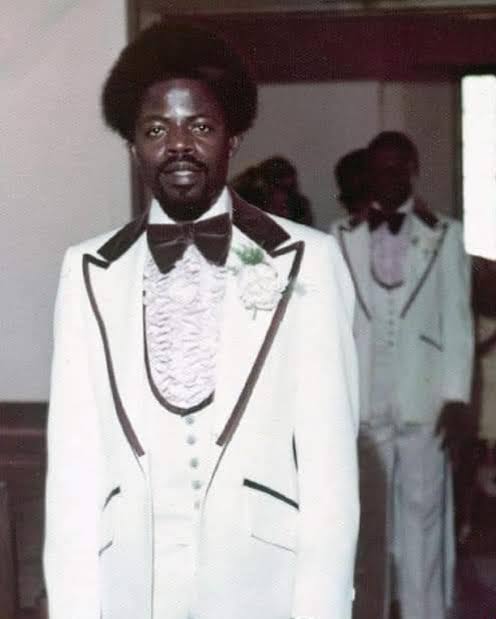
Tinubu enrolled first at Richard J. Daley College, one of the City Colleges of Chicago. Community colleges were the entry point for immigrants who needed to catch up academically or adjust to American systems before transferring to four-year universities. Daley College sat on the Southwest Side, where working-class families and new immigrants mingled.
From there, Tinubu reportedly transferred to Chicago State University (CSU), a historically Black public university on the South Side. CSU had become a haven for African and Caribbean students seeking affordable education and community. Tinubu majored in accounting, a course that promised a solid future.
But studying was only part of his life. Like many immigrants, he reportedly took odd jobs: dishwashing, cab driving, security guard shifts. Chicago demanded sacrifice, and Tinubu as reported gave sweat in exchange for survival.
Records and Recognition
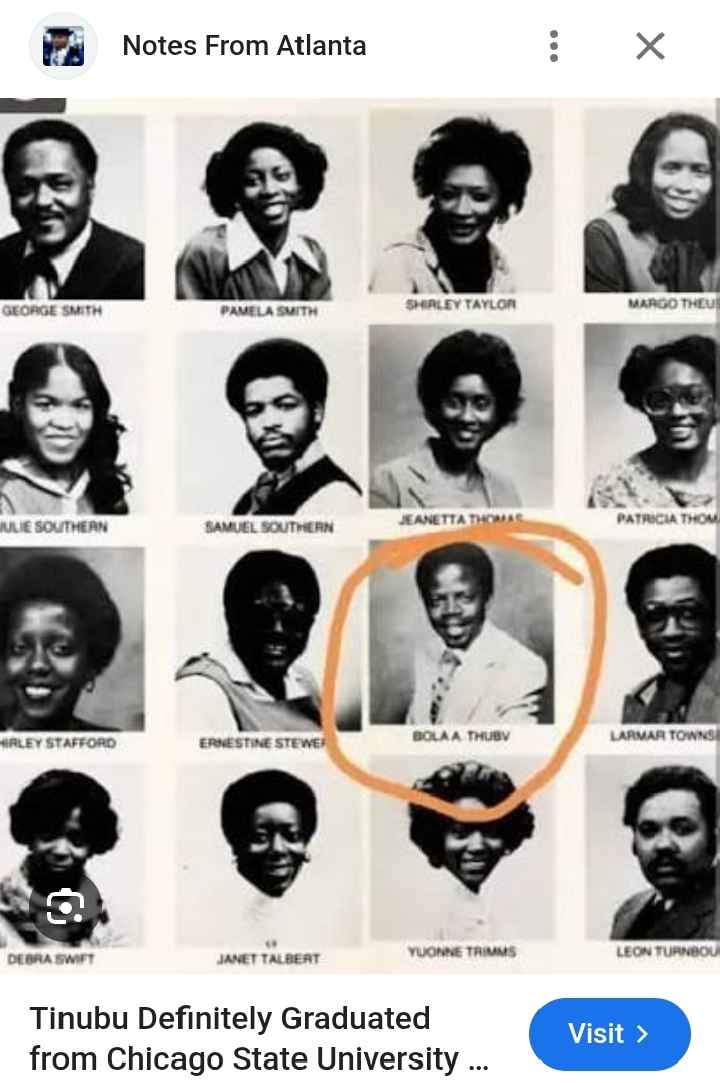
Chicago State University confirmed in 2023, after legal requests, that Tinubu did indeed graduate in 1979 with a Bachelor of Science in Business Administration, majoring in accounting. He was even listed as president of the Accounting Society, and his name appeared in commencement documents.
Yet, around these certainties hover contradictions.
Some earlier documents filed in Nigeria listed the University of Chicago—an entirely different, elite institution—as his alma mater. The University of Chicago has repeatedly denied that Tinubu was ever enrolled there.
At CSU, transcripts showed he once failed a required English course and needed to retake it. Yet, timelines of exams and graduation sometimes appear inconsistent.
Yearbooks and archival materials from CSU in the late 1970s are incomplete, leaving researchers frustrated. Some claim that missing volumes are a convenient gap in the historical record.
In politics, such ambiguities become ammunition. Supporters insist CSU’s confirmation closes the case. Critics argue the contradictions suggest manipulation. And the truth sits somewhere between fragments of paper and fading memories.
The Chicago Drug Case
If Tinubu’s educational story in Chicago was foggy, the shadows grew darker in the early 1990s.
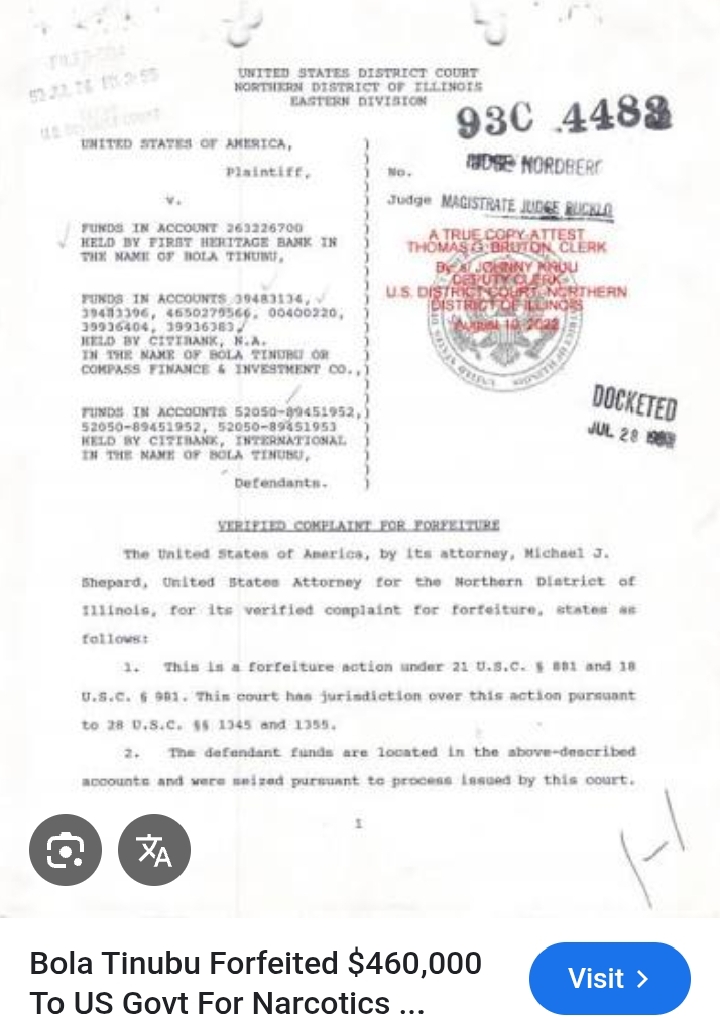
In 1993, a U.S. court case tied Tinubu to a heroin trafficking investigation in Chicago. Federal prosecutors alleged that he had associations with a Nigerian drug ring. While he was never criminally indicted, he agreed to forfeit $460,000 to U.S. authorities. Court documents show that the funds were seized from accounts linked to him.
Tinubu has consistently denied being involved in drug trafficking. He maintains that the forfeiture was a civil matter, not proof of guilt. Still, the U.S. government’s insistence on the forfeiture suggests that investigators found enough suspicious connections to proceed.
This forfeiture case is one of the most enduring controversies of his life. For critics, it proves moral compromise. For defenders, it is evidence of political witch-hunts inflating a murky civil settlement.
The Chicago of that era was rife with drug crackdowns. Federal agencies were aggressive, and many immigrants were swept up—some fairly, others unjustly. Tinubu’s name remains one of the highest-profile Nigerian cases in that landscape.
Questions in the Archives
The details of Tinubu’s Chicago years have been debated for decades, not always because of proven contradictions, but often because of incomplete records and lingering curiosities. These can be grouped into five enduring puzzles:
1. The University of Chicago Reference: How did this institution appear in some early biographies of Tinubu when the university itself has stated he was not enrolled? Could it have been an error in documentation, a mix-up common among Nigerian students in the U.S. at the time, or a simple case of misreporting that spread unchecked?
2. The CSU Transcript Timeline: Archival materials show he graduated from Chicago State University in 1979 with a degree in Accounting, but questions have occasionally been raised about the sequencing of certain courses. Was this an ordinary administrative matter—such as retakes, exemptions, or late postings—or something that needs clearer explanation?
3. The Asset Forfeiture Case: In 1993, U.S. authorities seized funds linked to accounts in Tinubu’s name under civil forfeiture laws. These laws often allowed settlements without criminal charges. The puzzle that lingers is why the funds were surrendered if no conviction was attached. Was it simply a pragmatic resolution in an era when forfeiture cases were widespread?
4. The Missing CSU Records: Researchers have noted that some CSU yearbooks and archival materials from the late 1970s are incomplete. Are these routine gaps in university preservation, or do they contribute to the difficulties in reconstructing a clear timeline of Tinubu’s campus years?
5. Variations in Identity Records: Some public documents list different birth years or slightly varied spellings of his name. Such variations are not uncommon for immigrants navigating multiple bureaucratic systems. Still, they have drawn attention because they touch on the consistency of official records.
Each of these questions has potential explanations, but none completely closes the discussion. To supporters, they illustrate the imperfections of institutions and the way political rivals weaponize ambiguity. To skeptics, they represent patterns worth continued scrutiny. Either way, the archives keep the conversation alive.
Nigerian Politics and the Weight of Biography
When Tinubu returned to Nigeria in the 1980s, his Chicago years became both shield and sword. He worked for Deloitte, Haskins & Sells, then for Mobil Oil Nigeria, where he rose to an executive role. His American degree and international exposure gave him credibility.
In the 1990s, he entered politics, aligning with pro-democracy activists against military dictatorship. His role in the National Democratic Coalition (NADECO) made him a target of the regime. He went into exile, returned, and became Lagos State governor in 1999.
But as his political power grew, so did scrutiny of his past. Opponents dug into his Chicago years, finding inconsistencies. Court cases in Nigeria questioned his certificates. Journalists filed FOIA requests in the U.S. for more records. In 2025, a U.S. District Court ordered the FBI and DEA to release non-exempt documents about alleged investigations into him. The case isn’t just about one man—it’s about how history is written, contested, and weaponized.
Chicago in the 1970s: A Larger Context
To understand Tinubu’s journey, one must also grasp the broader world he inhabited.
The 1970s were turbulent in Chicago. The civil rights movement had left scars and victories. Economic decline was beginning. For African immigrants, Chicago was a city of both community and marginalization. Nigerian students often lived in clusters, sharing cramped apartments, pooling money, helping one another find jobs.
Chicago State University itself was a crucible of Black identity and activism. It offered affordable education but struggled with funding and management. Records were poorly kept; resources stretched thin. In such an environment, missing yearbooks and transcripts were not extraordinary.
For a young immigrant balancing study and survival, it was a time of resilience. Tinubu’s odd jobs were the common path of immigrants: long nights, double shifts, silent tears. That part of his story rings true for many Nigerians who studied abroad.
Migration, Identity, and Reinvention
Tinubu’s Chicago years illustrate a broader immigrant theme: the chance to reinvent oneself. Migration offers anonymity; one can leave behind old names, craft new narratives, build fresh futures. But reinvention comes with risks. If details are inconsistent or documents shaky, suspicion follows.
In politics, reinvention can be lethal. Opponents will dig until they find a crack. Tinubu’s life is a testament to both the power and peril of reinvention. Chicago gave him education, exposure, and resilience. But it also left trails of doubt that decades cannot erase.
Why the Questions Persist
The questions about Tinubu’s Chicago years matter because they intersect with larger themes:
Democratic Legitimacy: In a fragile democracy like Nigeria’s, the personal integrity of leaders is crucial.
Public Trust: Citizens need clarity. A leader whose biography has gaps risks eroding confidence in governance.
Rule of Law: When legal cases are ambiguous, they test institutions—both Nigerian and American.
History as Politics: The battle over Tinubu’s past is also a battle over Nigeria’s future.
Leaving With This: Between Truth and Shadow
Chicago is a city that has always held secrets. Beneath its skyline are stories of ambition, scandal, migration, and survival. Tinubu’s years there are part of that mosaic—half light, half shadow.
Did he thrive as a student and community leader? Yes. Did he also face allegations of forgery, forfeiture, and identity confusion? Yes. Both realities co-exist.
Decades later, as he governs Nigeria, Chicago still lingers like an echo. Its winds still whisper, its archives still tease, its unanswered questions still shape how millions view the man who once walked its streets.
Tinubu’s Chicago years are more than a personal story—they are a mirror for how nations wrestle with truth, memory, and leadership. In the gaps between record and reality, between testimony and silence, lies the enduring suspense of history.
Discussion about this post