



Lagos Island rises each morning like a city holding its breath, its towers piercing the sky as if daring the heavens to challenge their ambition. Glass and steel glitter in the sun, reflecting commerce, power, and aspiration, yet beneath the shine lies a tension that rarely makes itself visible. Every elevator hum, every fluorescent-lit corridor, every pulse of electricity carries a story of fragile equilibrium — between human ambition and the unpredictable forces of city life.
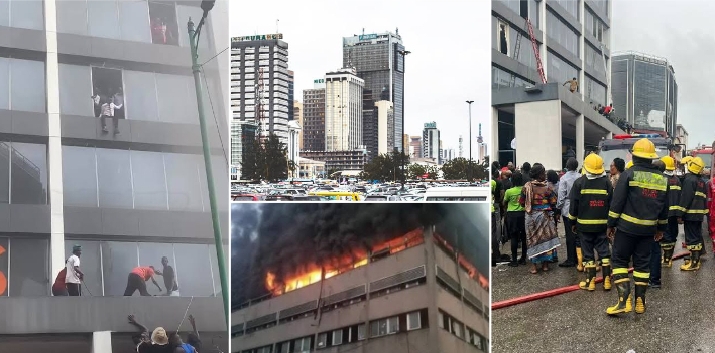
Just recently, that equilibrium fractured. Afriland Towers erupted in smoke and flame, a living alarm that stretched across the Lagos skyline. The fire did not simply destroy walls or offices; it shook confidence, rattled nerves, and whispered truths that ambition alone cannot shield against. Within the tower, stairwells became rivers of panic, corridors echoed with hurried footsteps and gasps, and elevators — those mechanical arteries meant to convey life and efficiency — froze into indifferent stillness.
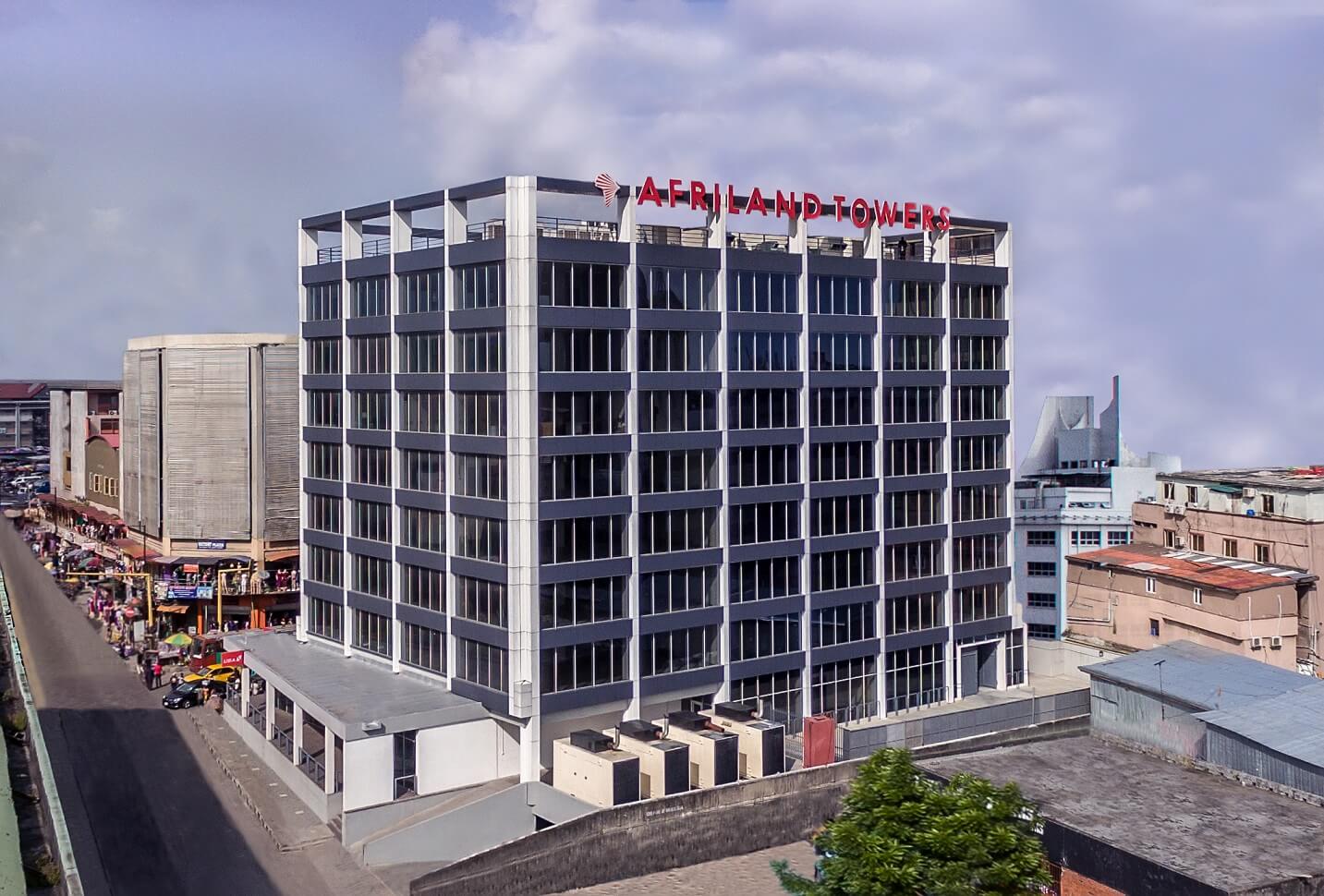
As smoke rose into the sky that September afternoon, Lagos watched, suspended between awe and fear, and asked the question that would haunt bankers, regulators, and citizens alike: how safe are the towers we trust to hold our wealth, our data, and our lives?
Lagos Island: Where Ambition Meets Risk
Lagos Island is the beating heart of Nigeria’s financial activity. Stretching from Broad Street to Marina, it is a dense sprawl of commerce, history, and relentless urban pressure. Bank towers dominate the skyline — from Union Bank’s historic headquarters to modern glass edifices housing multinational institutions. Their presence signals economic vitality, yet in every corridor, stairwell, and lobby, the hidden realities of Lagos’s urban environment press against their walls.
These towers were designed to impress. They boast reinforced concrete, steel frameworks, modern elevators, and sophisticated fire detection systems. But ambition often collides with context. Lagos Island is prone to flooding, heavy rains, power surges, and intense foot traffic. Streets are narrow, fire hydrants sometimes non-functional, and emergency response units face logistical challenges navigating congested avenues. For residents, employees, and visitors, this raises an urgent question: are these towers truly resilient, or are they urban castles built on shifting sands?
Afriland Towers in Flames: When Ambition Meets Its Trial by Fire
I) Smoke and Whispers: The City Holds Its Breath
It began as a wisp, almost unnoticed at first, curling above the towers like a warning sigh. By mid-afternoon on September 16, 2025, the plume thickened, dark and foreboding, spiraling toward the heavens above Lagos Island. The skyline, normally a confident panorama of ambition, now seemed uneasy, as if the glass and steel were holding their breath.
On the streets below, Lagosians stopped mid-step, their eyes tracing the smoke’s ascent. Horns blared in confused rhythm, pedestrians whispered prayers and warnings, and the hum of commerce faltered.
The city itself seemed to lean closer, listening to the tower’s distress, feeling the tremors of fear before the first alarm even rang. In those moments, smoke was more than a hazard — it was a messenger, a dark herald speaking of vulnerability in the heart of economic might.
II) Corridors of Panic: Humans Against the Inferno
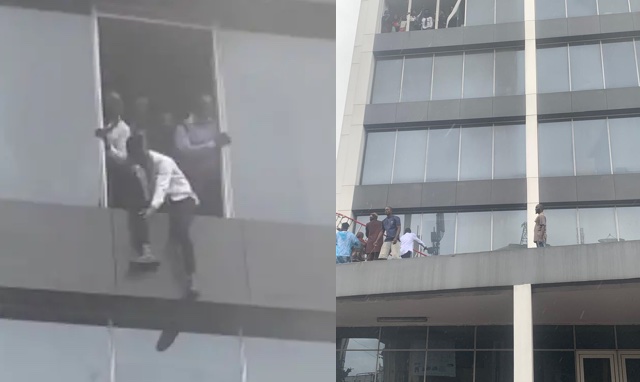
Inside Afriland Towers where corporate offices reside including UBA, the world shifted from order to chaos in seconds. Alarms screamed, but familiarity bred overconfidence: elevators were used against regulations, stairwells clogged with panicked colleagues, fire exits resisted the flow. Employees, trained or not, became unwilling actors in a drama neither rehearsed nor predicted.
Security personnel moved like shepherds in a storm, guiding frightened staff toward smoke-choked stairwells. Some braved the inferno to rescue colleagues; others faltered, suffocated by the acrid air. Each step, some out of office windows, carried the weight of instinct and desperation.
The building itself seemed to pulse with tension. Metal frameworks groaned under stress, walls shimmered with heat, and the very floors beneath the occupants seemed to shiver as if aware of the fire’s transgression. Each human heartbeat became part of the tower’s story — a rhythm echoing against steel and glass, merging courage, fear, and survival into a living narrative.
III) Rumbles of Fate: Structural Groans and Urban Pressure
Afriland Towers had always been a monument to ambition: reinforced concrete, gleaming façades, modern fire suppression systems. Yet the fire revealed latent vulnerabilities. The inverter room, the building’s hidden engine, had birthed the chaos. Electrical currents, meant to sustain productivity, instead became catalysts for catastrophe.
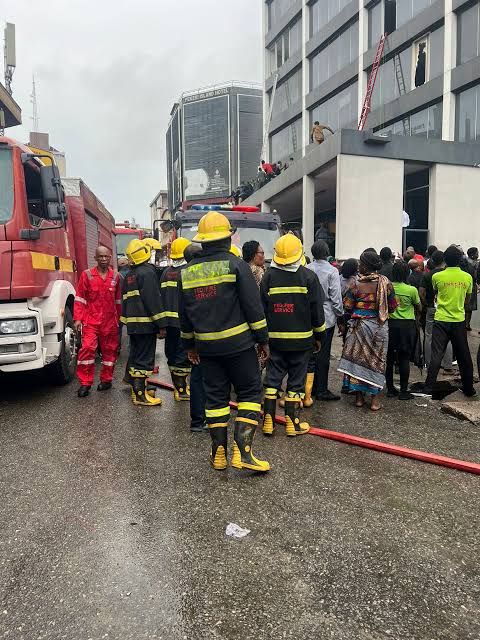
The tower moaned like an awakened giant. Structural engineers would later note the subtle stresses induced by decades of urban vibration, seasonal flooding, and humidity — forces that invisible to the eye, now made tangible by fire. Lagos Island itself pressed against the building: congested streets slowed fire trucks, nearby structures reflected heat back onto glass façades, and hydrants struggled to maintain pressure. Ambition and environment collided in every groan, spark, and plume of smoke.
IV) The Human Cost
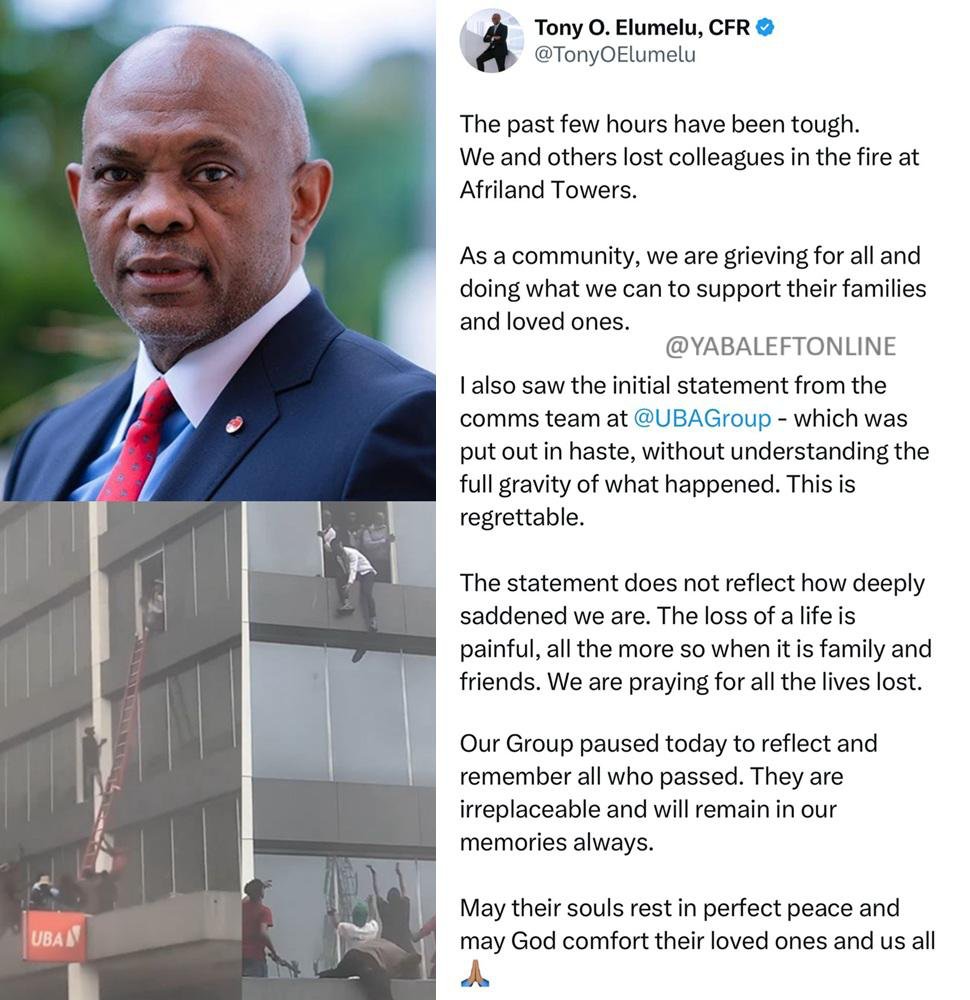
The loss was not just institutional; it was deeply personal. Tony Elumelu, Chairman of Heirs Holdings and United Bank for Africa (UBA), expressed profound grief over the incident. In a statement, he acknowledged the loss of colleagues and emphasized the importance of supporting their families during this difficult time. He also addressed an initial statement issued by UBA Group’s communications team, stating that it was “put out in haste, without understanding the full gravity of what happened.”
The Federal Inland Revenue Service (FIRS) confirmed the identities of the deceased: Mrs. Ekelikhostse George (Assistant Director), Mr. David Sunday-Jatto (Assistant Director), Mrs. Nkem Onyemelukwe (Senior Manager), and Mr. Peter Ifaranmaye (Manager) and others. The agency described the incident as a devastating blow to its workforce and pledged to support the bereaved families.
A History of Towers and Hazards
The first generation of bank buildings on Lagos Island emerged in the 1960s and 1970s, when Nigeria was finding its footing as a newly independent nation. Structures were often designed with aesthetics and status in mind, but codes regulating fire safety, seismic standards, and urban planning were still evolving.
By the 1980s and 1990s, the skyline had transformed. High-rise constructions became symbols of corporate might. However, historical records show that fire incidents were already a concern. One notable case was a fire outbreak in 1986 at a financial building on Marina, which destroyed offices and caused extensive financial loss. Investigations revealed that faulty wiring and poor maintenance contributed to the disaster — a cautionary tale of how neglect can amplify risk.
In 2003, another bank tower on Broad Street suffered a partial electrical fire, prompting temporary evacuations and spotlighting deficiencies in emergency preparedness. Experts later noted that while modern towers have smoke detectors and sprinklers, human behavior — locked fire exits, non-functional alarms, and overcrowding — often compromises safety more than structural design.
Engineering Under Pressure
Bank towers are engineered to withstand significant loads, but Lagos Island presents unique challenges. The combination of high humidity, seasonal flooding, and traffic-induced vibrations tests structural resilience. Structural engineers note that reinforced concrete frames can deteriorate faster in coastal urban environments, especially when maintenance is inconsistent.
A structural engineer familiar with Lagos high-rises explained:
“Many of these towers are built on reclaimed or soft soils. Foundations must be deep, and water infiltration needs constant monitoring. Without strict adherence to maintenance, even minor cracks can evolve into significant structural risks.”
Some towers have had to undergo retrofitting after decades of service. Reinforcing beams, upgrading elevators, and repairing façades are ongoing processes — yet cost constraints sometimes delay essential work. In a city where daily commercial activity never pauses, shutting down floors for maintenance is rarely convenient, making the risk latent but persistent.
Fire Safety: More Than Sprinklers
Fire remains one of the most tangible threats. Lagos Island’s climate, combined with electrical overloading, aging generators, and human negligence, creates a constant hazard. Recent audits of financial towers reveal that while sprinkler systems are installed, their effectiveness is contingent on maintenance, water pressure, and staff training.
A 2021 report by the Lagos State Fire Service highlighted a sobering fact: less than 40% of commercial high-rises were fully compliant with fire safety regulations, and several bank towers fell short of recommended evacuation protocols. In real terms, this means that in the event of a major blaze, occupants could face delays, panics, or blocked exits — all magnifying the risk of injury or loss of life.
Stories from staff members illustrate this reality. One bank employee recalled a false alarm that triggered a chaotic evacuation, during which several fire doors were found locked, and the elevator shaft filled with smoke. Incidents like this underscore the importance of human factor compliance, which often proves as critical as structural design.
Security Threats: Banks as High-Value Targets
Beyond physical hazards, security is an ever-present concern. Lagos Island bank towers store more than money; they house critical records, sensitive data, and valuable assets. Criminal networks have historically targeted these locations. While modern towers employ CCTV surveillance, biometric access, and security personnel, the evolving sophistication of threats — from armed robberies to cyber intrusions — keeps the pressure high.
A former Lagos security consultant explained:
“A building can be structurally sound, fire-proof, and well-maintained, but if security protocols fail, it becomes vulnerable. Banks attract attention because the stakes are high. Security must be proactive, layered, and continuously updated.”
Recent years have seen coordinated attempts on financial institutions, highlighting the importance of integrated security systems that combine human vigilance, technology, and urban intelligence.
Urban Pressures and Environmental Risks
Lagos Island is dynamic, congested, and unpredictable. Heavy rains often overwhelm drainage systems, flooding streets and sometimes entering ground floors. Power surges caused by inconsistent supply strain electrical circuits. Nearby construction can induce vibrations affecting sensitive floors. Even wind loads — amplified by clustered towers — impose subtle stresses on steel frameworks.
Urban planners have long warned that the density of Lagos Island requires strict adherence to building codes and environmental monitoring. Yet in practice, economic pressures often prioritize commercial activity over comprehensive safety audits. The result: towers that look impeccable from the outside may conceal latent environmental risks waiting for the right catalyst.
Human Stories: Witnesses to Risk
The question of safety is never abstract. Employees, security personnel, cleaners, and visitors live it daily. One bank cashier recalled an incident where a minor electrical fire forced an evacuation. The chaos revealed gaps in training, blocked emergency exits, and panic among clients unfamiliar with protocols.
Another long-time security guard described the nightly stress of monitoring alarms, handling trespassers, and responding to minor emergencies. For him, safety is a constant, quiet vigilance. These human perspectives reveal that the towers’ resilience depends as much on people as on concrete or steel.
Regulatory Oversight: A Work in Progress
The Lagos State Physical Planning and Building Control Agency (LASPPB) and Lagos State Fire Service are the primary regulatory bodies overseeing commercial high-rise compliance. Inspections are conducted, permits are issued, and occasional penalties are applied. However, enforcement remains a challenge due to bureaucratic bottlenecks, resource constraints, and political considerations.
Experts advocate for more frequent audits, mandatory fire drills, and stricter adherence to international safety standards, especially for high-value structures like bank towers.
Risk Mitigation: Engineering, Policy, and Practice
Safety in Lagos Island bank towers is multi-dimensional. Effective mitigation combines:
1. Engineering integrity – reinforced frameworks, fire-resistant materials, and regular retrofitting.
2. Emergency preparedness – functional alarms, unlocked exits, and well-trained staff.
3. Urban coordination – clear access for fire trucks, reliable water supply, and traffic management.
4. Security protocols – surveillance, controlled access, and ongoing threat assessment.
When all elements align, risk is minimized. When even one fails, the consequences can be severe.
What It All Means: Towers That Reflect Both Glory and Vulnerability
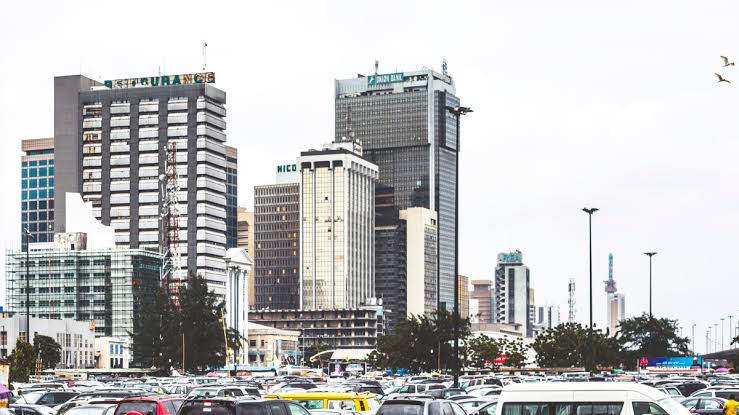
The gleaming skyscrapers of Lagos Island are monuments to ambition and financial might. Yet their safety is not guaranteed. Structural vulnerabilities, environmental pressures, fire hazards, and security challenges combine to make these towers both symbols of confidence and sites of latent danger.
Employees and residents must navigate daily life in spaces that are impressive yet imperfect. Regulatory authorities and banks must constantly balance commercial activity with safety imperatives. And for observers, the question remains urgent: how safe are Lagos Island bank towers, really?
The answer is complex: they are resilient, but only as much as maintenance, vigilance, and human responsibility allow. And in a city like Lagos, where unpredictability is woven into the urban fabric, complacency is never an option.
Discussion about this post