


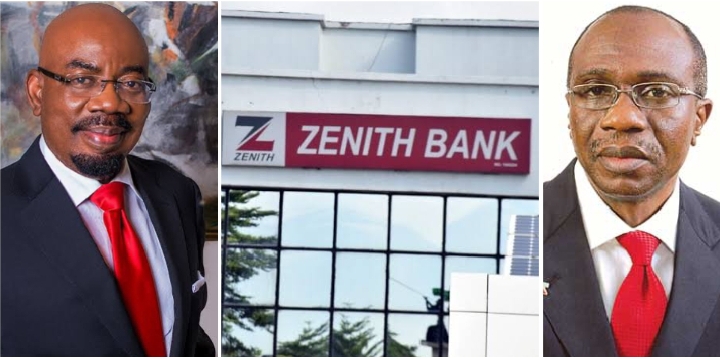

It began as a whisper. A subtle tension in hallways of polished marble, a quiet unease among traders and executives, an almost imperceptible falter in confidence. Zenith Bank, one of Nigeria’s financial titans, the fortress that had long seemed unshakable, was showing the first signs of strain.
No one spoke openly of collapse—yet the possibility hung in the air like a storm cloud over Victoria Island. Transactions that once sailed smoothly now faced delays. Corporate clients, usually unflinching in their trust, began asking harder questions. Behind closed doors, executives pored over numbers with the anxiety of people staring down an invisible abyss.
For decades, Zenith had been synonymous with stability, innovation, and prestige. It had weathered market volatility, economic shocks, and fierce competition. But this time, the threat was different. It was not external alone; it crept from within boardrooms, from the very strategies that had made Zenith a giant.
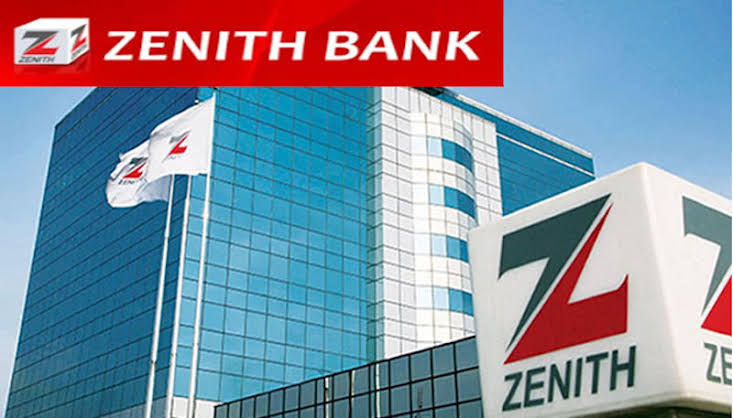
This was a crisis that could have shattered a smaller bank in weeks. For Zenith, it was a test of survival, a trial by fire that would leave scars long after balance sheets were restored. What happened in those months of tension, panic, and quiet maneuvering would redefine the bank—and, in many ways, the Nigerian financial landscape itself.
The Rise of Zenith Bank: From Humble Beginnings to Financial Empire
When Jim Ovia, a young banker with a vision for scale, founded Zenith Bank in 1990, few believed Nigeria’s financial landscape would ever allow for giants. The country was under military rule, its economy fragile, its regulatory environment unpredictable. Banks failed as quickly as they were licensed, and the Nigerian public held their savings with suspicion, more comfortable storing money in real estate or gold than in vaults managed by men in suits.
Zenith entered the market during a time of chaos and opportunity. Deregulation in the late 1980s had opened the door for new banks, and competition was fierce. Most banks chased customers with aggressive marketing and extravagant branches; Zenith distinguished itself differently—through technology. Ovia believed that Nigeria’s banking future lay not in marble counters or glossy advertisements but in computers. While rivals still relied on ledger books, Zenith invested in digital banking infrastructure, pioneering electronic platforms that would later become the backbone of Nigeria’s financial modernization.
By the mid-1990s, Zenith had begun carving its niche. Its clients were not the ordinary market women or civil servants but corporations—oil companies, multinationals, blue-chip firms. Zenith positioned itself as the banker’s bank, the institution of choice for Nigeria’s rising corporate elite. That strategy paid dividends. Corporate accounts meant large deposits, predictable cash flows, and prestige. While smaller banks courted retail customers with promises they couldn’t keep, Zenith built a fortress balance sheet backed by Nigeria’s most powerful companies.
Growth, however, was not linear. The banking wars of the 1990s were brutal. Political interference could sink a bank overnight, and military decrees reshaped financial regulations with little notice. Yet Zenith weathered the storms, thanks partly to Ovia’s ability to cultivate relationships across Nigeria’s political spectrum without becoming beholden to any one regime.

The real breakthrough came in 2004, when Nigeria’s Central Bank, under Charles Soludo, announced a sweeping consolidation reform. Banks were ordered to raise their capital base from ₦2 billion to ₦25 billion, a move that would eliminate dozens of undercapitalized institutions. Many panicked. For Zenith, it was an opportunity. With strong reserves and access to investors, Zenith not only met the requirement but emerged stronger, absorbing competitors and reinforcing its image as one of the country’s financial powerhouses.
By the time Nigeria entered the oil-fueled boom of the late 2000s, Zenith had become more than a bank. It was a symbol of corporate Nigeria, a giant whose headquarters dominated the skyline and whose balance sheet seemed as solid as the granite it was built on.
Yet, beneath this polished exterior, vulnerabilities were already forming—hairline fractures in the empire’s foundation that would widen when the global economy turned against Nigeria.
The First Cracks in the Facade
Every empire built on speed risks growing faster than its foundations can handle. Zenith, admired for its discipline and technology, was no exception. By the mid-2000s, the bank’s hunger for scale pushed it into riskier waters.
The Nigerian banking consolidation of 2004–2006, while strengthening institutions, also fueled a culture of aggressive competition. To attract deposits and grow assets, banks ventured into speculative lending—particularly in the stock market and the oil sector. Zenith prided itself on being conservative compared to some peers, yet its portfolio began to reflect the same vulnerabilities haunting the industry: overexposure to volatile markets, heavy reliance on short-term deposits, and governance structures stretched thin by ambition.
Inside the boardroom, a subtle shift was taking place. The founding aura of Jim Ovia had shielded the bank from destructive rivalries, but as new executives rose, fault lines emerged. Senior managers debated strategy: should Zenith continue its corporate-heavy focus, or should it expand aggressively into retail banking to compete with First Bank and GTBank? The disagreement was not just about customers; it was about identity. Zenith’s culture, built on exclusivity and elite clients, was colliding with the demands of mass banking.
For the first time, whispers of internal friction reached investors. Small, almost invisible, but present—like the quiet ticking of a machine under strain.
The Global Financial Crisis and Its Nigerian Echo
Then came the tremor that exposed those cracks: the 2008 global financial crisis.
While American banks were crumbling under subprime mortgages, Nigeria faced a different contagion. Its stock market, inflated by speculative bank lending, collapsed by almost 70% between 2008 and 2009. Billions of naira in margin loans turned sour overnight. Companies that had borrowed heavily against inflated shares defaulted, leaving banks with paper losses that threatened real liquidity.
Zenith, with its heavy corporate focus, was not as reckless as some rivals. Banks like Intercontinental and Oceanic carried worse exposure. Yet Zenith was far from insulated. Its loan book revealed weaknesses in the oil and gas sector, where plunging crude prices forced firms into defaults. Non-performing loans (NPLs) quietly swelled, even as the bank projected calm to the public.
The Central Bank of Nigeria (CBN), under Governor Sanusi Lamido Sanusi, launched an unprecedented audit of the industry. What the regulators found was alarming: toxic assets, cooked books, and banks that were technically insolvent. Several CEOs were sacked in one dramatic purge.
Zenith escaped that brutal wave, but not without scars. Behind the polished façade, executives scrambled to restructure loans, negotiate with oil clients, and reassure investors. For the first time, the possibility that Zenith could fall was not dismissed outright. It lingered like a shadow in conversations across Marina and Broad Street, where the lifeblood of Nigerian finance flowed.
The Hidden Wars Within the Boardroom
Crisis does not just test balance sheets—it tests human loyalty.
By 2010, Zenith’s leadership was entangled in its most delicate moment of transition. Jim Ovia, the founder and face of the bank, stepped down following CBN’s corporate governance reforms, which limited the tenure of bank CEOs. His departure, though inevitable, left a vacuum. Into that space stepped Godwin Emefiele, a calm but calculating executive who had risen through Zenith’s treasury and corporate banking ranks.

Emefiele inherited a fortress built by Ovia, but one that was already strained. His leadership style—deliberate, less flamboyant than Ovia’s—brought both stability and new tension. Some directors, fiercely loyal to Ovia, questioned his ability to steer the ship through storms. Others welcomed his steady hand, believing Zenith needed quiet consolidation rather than aggressive expansion.
The boardroom became a battlefield of subtle rivalries. Decisions on lending, strategy, and expansion were debated with unusual heat. At stake was not just the bank’s survival but its future identity. Would Zenith remain a conservative corporate titan, or morph into a retail giant chasing mass deposits?
Meanwhile, regulators kept a close watch. Sanusi’s CBN was determined to stamp out weak governance, and even Zenith—seen as one of the strong ones—was not immune to scrutiny. Each audit report carried tension, each press briefing was analyzed for hidden signals about Zenith’s health.
Externally, the bank projected stability. Internally, confidence was thinning. Employees whispered about layoffs, customers began asking more questions, and interbank lending rates reflected an unspoken anxiety: Zenith was strong, yes—but for how long?
The Shadow of Bad Loans
As Nigeria stumbled into the 2010s, the oil and gas sector—the jewel of Zenith’s portfolio—became a source of rot. Crude oil prices swung violently, driven by global market shocks and domestic instability in the Niger Delta. Each downturn translated into defaults on massive loans extended to oil traders, shipping firms, and energy companies.
Bad loans are the silent killers of banks. They don’t announce themselves with alarms; they creep into the books, month by month, eroding capital until the fortress walls grow brittle. Zenith’s exposure was significant. While it prided itself on risk management, the sheer size of its corporate loan book meant that even a small percentage of defaults translated into billions of naira in red ink.
Regulators pressed for transparency, demanding banks disclose their NPL ratios more honestly. Investors grew nervous. Could Zenith’s size protect it, or had the bank become too entangled in Nigeria’s most volatile sector?
By 2014, the whispers were louder. Analysts questioned whether Zenith’s glowing reports masked deeper trouble. Competitors like GTBank, more diversified and tech-savvy, began to chip away at Zenith’s market perception. For the first time in decades, Zenith’s aura of invincibility looked fragile.
The 2016–2017 Currency Storm
Nigeria’s economy thrives and bleeds with oil. When oil prices collapsed in late 2014, sliding from over $100 per barrel to below $40, the country’s foreign reserves shrank at an alarming pace. By 2016, Nigeria was plunged into its first recession in 25 years. For banks, this meant a storm that no balance sheet could ignore.
Zenith Bank’s greatest strength—its corporate-heavy portfolio—now looked like a trap. Oil and gas borrowers, already strained, suddenly faced dollar shortages. Many had borrowed in foreign currency during the boom years, confident that oil receipts would sustain them. When crude prices collapsed and the naira came under pressure, debt servicing became a nightmare.
The Central Bank of Nigeria (CBN), under Governor Godwin Emefiele—ironically, Zenith’s own former helmsman—introduced strict foreign exchange controls to conserve reserves. Dollars dried up. Importers were trapped. Multinationals were unable to repatriate profits. And Nigerian banks, heavily exposed to foreign currency loans, faced a toxic mismatch: clients couldn’t pay, but obligations to international creditors remained.
For Zenith, the crisis was existential. Billions in oil-linked loans teetered on the edge of default. The bank’s liquidity ratios—usually a source of pride—tightened. Foreign investors, spooked by the naira’s instability, began pulling back. Interbank lending rates spiked as confidence faltered.
What made matters worse was perception. In banking, panic is contagious. Even if a bank is fundamentally solvent, the mere belief that it might be in trouble can trigger withdrawals that become self-fulfilling. For weeks in 2016, rumors swirled across Broad Street that Zenith was overexposed, that its oil clients were sinking, that its fortress was cracking.
The bank’s stock price wobbled. Depositors, especially corporates managing billions, quietly shifted funds to “safer” banks. On social media, where truth and rumor often mingle without distinction, whispers of collapse circulated like wildfire. Zenith’s executives found themselves fighting not just numbers on a balance sheet, but psychology—the fear that the giant could fall.
The Crisis Point: When Collapse Looked Possible
The most dangerous moment in a financial crisis is not when losses are real, but when confidence evaporates. For Zenith, that moment came in mid-2016.
Corporate clients—its traditional stronghold—began questioning the bank’s stability. Some multinational partners froze new transactions. Interbank counterparties tightened terms, demanding higher collateral before lending to Zenith. Even rival bankers whispered that Zenith was “bleeding quietly.”
Inside the headquarters, executives held emergency meetings that stretched past midnight. Spreadsheets were pored over, cash-flow projections recalculated, contingency plans drawn. Treasury staff worked feverishly to maintain liquidity, balancing short-term funding needs with long-term loan restructuring.
At branch level, customers noticed subtle changes. Withdrawal requests that once sailed smoothly were now double-checked. Mid-level managers were instructed to reassure clients, sometimes with half-truths: “The bank is solid, no need to panic.” But among staff, unease grew. If Zenith—the mighty Zenith—was in trouble, what hope was there for smaller institutions?
The irony was sharp. Only a decade earlier, Zenith had stood tall while other banks were publicly rescued in Sanusi’s purge. Now, it was Zenith’s turn to feel the tremor of possible collapse.
Regulators at the CBN watched closely. They knew that allowing Zenith to fail would destabilize the entire system. The bank’s size, deposit base, and corporate reach made it “too big to fail.” Yet they also demanded accountability: capital buffers had to be raised, non-performing loans aggressively written down, governance structures tightened.
It was a knife’s edge. One wrong move, one sudden rush of withdrawals, one international creditor pulling out, and Zenith could have spiraled.
The Intervention That Saved Zenith
Salvation came not from one dramatic bailout, but from a sequence of quiet, carefully managed interventions.
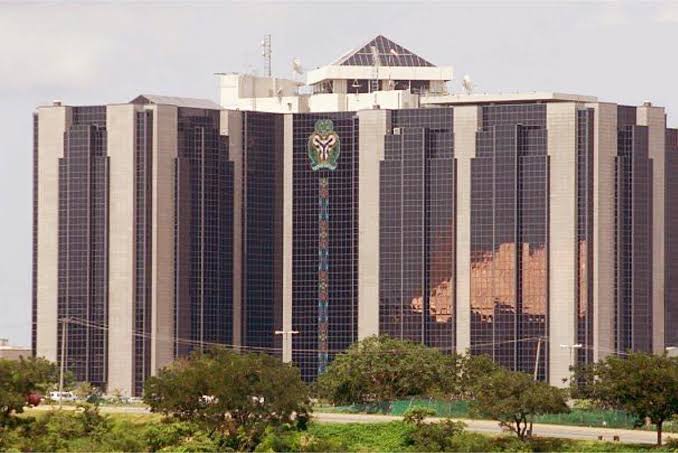
First, the CBN offered liquidity support—discreet but sufficient to calm interbank markets. By ensuring Zenith could always meet short-term obligations, regulators stemmed the bleeding of confidence.
Second, Zenith’s leadership embarked on an aggressive restructuring campaign. Oil and gas loans were renegotiated, some written down, others converted into longer-term facilities. Asset sales provided breathing room, and provisions were increased to clean up the balance sheet. The process was painful but necessary.
Third, communication strategy became critical. The bank’s quarterly reports were crafted with unusual care, emphasizing strength, capital adequacy, and resilience. Meetings with foreign investors were prioritized. Every signal, every statement, was designed to project calm.
Behind closed doors, negotiations with international creditors reassured lenders that Zenith remained a going concern. Confidence, slowly, returned.
By late 2017, as oil prices recovered and Nigeria’s economy stabilized, Zenith emerged battered but alive. Its fortress had taken damage, but it had not fallen. The crisis that might have sunk Nigeria’s largest bank instead became a story of survival.
But survival came with scars—employee layoffs, customer distrust, and the sobering realization that even giants were vulnerable.
Zenith’s Reinvention: Rising from the Ashes
Survival, however, is not the same as recovery.
By 2018, Zenith Bank’s leadership knew the institution could not simply return to business as usual. The scars of the crisis demanded reinvention. The bank embarked on a three-pronged transformation: governance reform, digital innovation, and diversification.
Governance Reform: The CBN’s insistence on transparency forced Zenith to tighten its corporate structures. Audit committees were strengthened, risk management frameworks expanded, and board oversight sharpened. Where once internal rivalries had festered, discipline became the new watchword. The days of opaque lending decisions, influenced by boardroom politics, gave way—at least partly—to stricter procedures.
Digital Innovation: Recognizing the shift in Nigeria’s financial landscape, Zenith accelerated its push into digital banking. Mobile apps, online platforms, and partnerships with fintech startups became central. The bank that once built its empire on corporate exclusivity now embraced the mass market, competing with GTBank and Access Bank for retail dominance. Branches shrank in importance; the digital vault became the new frontier.
Diversification: Zenith began reducing its dependence on oil and gas. It expanded lending into manufacturing, agriculture, and consumer markets—sectors once deemed too fragmented. International operations, particularly in West Africa, were consolidated to spread risk. The strategy was simple: never again should the fate of Zenith hinge so heavily on the volatility of crude oil.
The results were visible within a few years. By the early 2020s, Zenith had reclaimed its spot among Nigeria’s strongest banks, regularly topping industry rankings in profitability and capitalization. The crisis had not destroyed Zenith—it had forced it to evolve.
Lessons for Nigerian Banking and Beyond
Zenith’s near-collapse carries lessons that extend beyond its marble headquarters.
1. Size is not safety. For years, Nigerians assumed that Zenith’s size made it immune to crisis. The events of 2016–2017 shattered that illusion. In banking, confidence can evaporate overnight, and giants can stumble as quickly as minnows.
2. Oil is a double-edged sword. Nigeria’s banking sector has long been chained to the oil economy. Zenith’s crisis underscored the dangers of overexposure. When oil thrives, banks thrive; when oil crashes, banks bleed. Until Nigeria diversifies its economy, banks will remain vulnerable to the same cycle.
3. Governance matters. The silent wars inside Zenith’s boardroom nearly destabilized the bank. Strong governance is not a luxury—it is a survival tool. Transparency, accountability, and discipline are not just buzzwords; they determine whether a bank withstands shocks.
4. Perception is power. Much of Zenith’s crisis was about confidence. Even when numbers suggested the bank could survive, rumors and market psychology nearly pulled it under. In finance, perception often drives reality—a lesson future executives cannot ignore.
5. Reinvention is survival. Zenith’s ability to adapt—shifting from oil-heavy corporate lending to digital retail banking—was its true salvation. Institutions that cling to old models in changing economies risk extinction.
Conclusion – A Bank That Walked on Fire
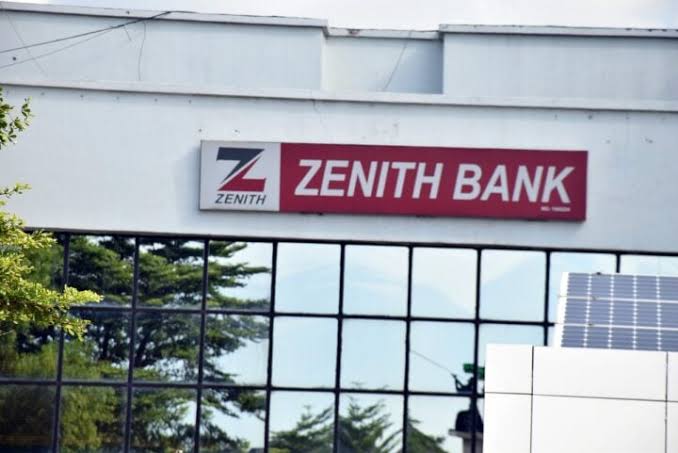
Today, as Zenith Bank’s towers still rise above Victoria Island, their glass surfaces gleaming in the sun, it is easy to forget how close the bank once came to collapse. Customers file in and out, digital platforms buzz with transactions, and investors read glowing quarterly reports. The crisis feels like a ghost story, whispered but never fully acknowledged.
Yet beneath that polished calm lies the memory of fire. A period when confidence wavered, when balance sheets trembled, when employees whispered in hushed tones about whether their jobs—and the bank itself—would survive.
Zenith’s story is not just one of corporate resilience; it is a parable for Nigeria’s financial system. It reminds us that no bank, however mighty, is beyond risk. That in economies tied to volatile resources, survival depends on adaptation. That in boardrooms, as in markets, ego and rivalry can be as dangerous as bad loans.
The crisis that nearly sank Zenith Bank did not destroy it. Instead, it forged a new identity—leaner, more cautious, more diversified. But it also left an indelible warning: that in Nigerian banking, stability is never permanent, and confidence is always fragile.
The glass towers of Zenith may still stand tall, but they carry invisible cracks, etched by history, reminding all who look up that giants, too, can stumble. And when they do, the ground shakes far beyond the walls of their boardrooms.
Discussion about this post