


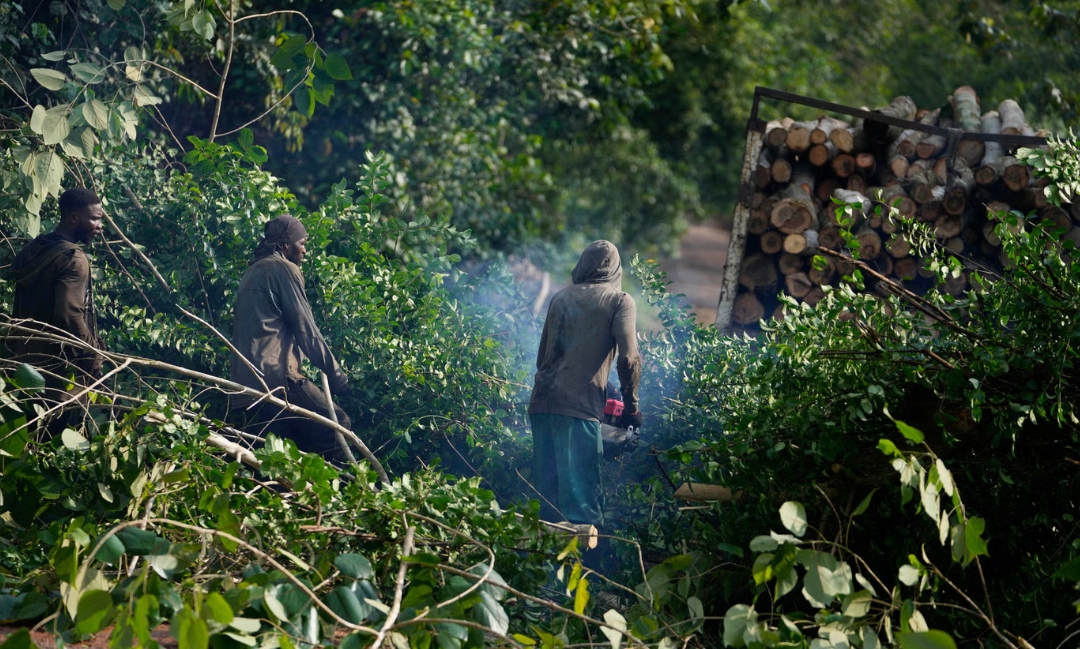

Nigeria’s forests are shrinking at an alarming rate due to extensive logging, threatening biodiversity and local communities.
Forest experts report that both legal and illegal logging activities contribute significantly to the loss of trees across the country.
Timber extraction for construction, furniture, and fuel is a major factor driving deforestation in southern and central Nigeria.
Satellite imagery shows that large areas of forest are disappearing each year, replacing dense green cover with bare land.
Overharvesting weakens ecosystems, making them less able to recover from natural disturbances such as droughts and pests.
Unsustainable logging practices also lead to soil erosion, reducing fertility and affecting nearby farmland.
In addition to timber, the expansion of farmland and urban development intensifies pressure on remaining forest areas.
Rural communities relying on forest resources for food, medicine, and firewood face increasing challenges as tree cover declines.
Protected areas, including national parks and reserves, are under pressure from logging, threatening habitats for endangered species.
Illegal logging operations often bypass regulations, removing valuable hardwoods without plans for replanting or conservation.
Reforestation programmes have been initiated in some regions, promoting tree planting and sustainable forest management.
Agroforestry methods, which integrate trees with crops, are increasingly encouraged to reduce the impact of deforestation on food production.
Experts note that climate change compounds the problem by increasing temperatures and altering rainfall patterns, affecting forest growth.
Community-based forest management initiatives are being introduced to monitor logging activities and encourage responsible practices.
Sustainable logging certification schemes aim to ensure that timber harvested meets environmental standards, though coverage remains limited.
Loss of forest cover contributes to carbon emissions, reducing the country’s ability to mitigate climate change impacts.
Forest degradation also affects water cycles, with rivers and streams experiencing reduced flow and quality in heavily logged areas.
Education and awareness campaigns are being promoted to inform citizens and policymakers about the long-term consequences of deforestation.
Collaboration between government agencies, non-governmental organisations, and local communities is seen as essential for protecting forests.
The challenge of balancing economic needs with environmental protection remains a pressing concern across Nigeria.
Long-term strategies focus on preserving remaining forests, restoring degraded areas, and promoting sustainable use of timber resources.
If logging continues at current rates without proper management, experts warn that large sections of Nigeria’s forests could disappear within decades.
Protecting forest ecosystems is critical for maintaining biodiversity, supporting rural livelihoods, and ensuring ecological stability.
Efforts to address deforestation include policy reforms, sustainable harvesting guidelines, and incentives for reforestation and conservation.
Nigeria’s forests face an urgent test, and coordinated action is necessary to prevent further loss of the nation’s green heritage.
Discussion about this post