


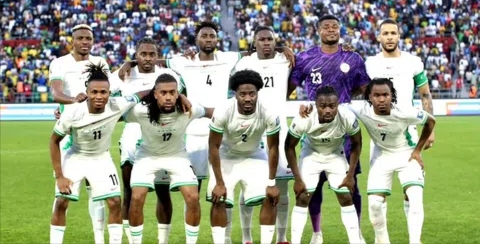

After the first three matches of the 2026 World Cup Qualifiers, the initial effusive optimism and certitude of qualifications quickly faded away, and were swiftly replaced by pessimism, uncertainty, bleakness and a troubling sense of deja vu.
When the fixtures for the 2026 FIFA World Cup Qualifiers were released two years ago, Nigerians were imbued with optimism and confidence that their country would be at the next World Cup that will take place in Canada, Mexico and the United States. Nigeria was in group C along with South Africa, Benin, Zimbabwe, Rwanda and Lesotho. On paper, Nigeria appeared to have one of the easiest groups as the other teams in their group, aside from South Africa, are considered lightweight even by African football standards, hence are deemed incapable of matching the firepower of Nigeria’s talented and star-studded team. As far as many are concerned, football lovers and pundits alike, these matches should be a walk in the park for the Super Eagles and the team should qualify from the group with little or no difficulty.
This underestimation of Nigeria’s opponents in the group was also spurred in part by the absence of the country at the 2022 World Cup in Qatar. For many, missing out on two consecutive World Cups will deal a massive blow to the psyche of the players and have a ripple negative impact on Nigeria’s football ecosystem. On paper, Nigeria has a better and stronger team than others in the group, but football is a team game, not an individual sport, and the ability to harness the talent and potential of these players and turn them into a formidable and indomitable team has remained elusive. This inability to forge a strong team spirit has had a telling effect on the Super Eagles’ matches in the World Cup Qualifiers campaign.
After the first three matches of the 2026 World Cup Qualifiers, the initial effusive optimism and certitude of qualifications quickly faded away, now replaced by pessimism, uncertainty, bleakness and a troubling sense of deja vu. After eight matches, Nigeria languishes in the fourth position on eleven points. It is level on points with third-place Rwanda. It has won three matches, lost three and drawn two, making qualification a Herculean task, some will say an unrealistic dream. South Africa tops the group with seventeen points, and the Benin Republic is in second place with fourteen points.
FIFA throws a drowning Super Eagles a life jacket.
After the September 9th Super Eagles’ match with the Bafana Bafana in South Africa ended in a one-all draw, Nigerians gave up on whatever little hope they had of the Super Eagles qualifying, even if it’s just clinching the second spot. However, events in recent days appeared to have reignited hope and given Nigeria a slim chance of qualifying and making it to the World Cup next year.
Early this year, reports emerged about South Africa being the subject of investigation after it was found to have fielded an ineligible player, Teboho Mokoena, in their World Cup qualification match against Lesotho, played on 21 March 2025. On Monday, September 29th, FIFA penalised South Africa for fielding an ineligible player. The global football governing body confirmed that Bafana Bafana indeed fielded a player who should not have played in the match against Lesotho and therefore breached “article 19 of the FIFA Disciplinary Code (FDC) and article 14 of the FIFA World Cup 2026 Preliminary Competition Regulations”.
Consequently, the committee annuled South Africa victory and awarded their Lesotho three points and a 3-0 win. The ruling saw Bafana Bafana’s 17 points reduced to 14 points, and the team drops to second with the Benin Republic moving to the first spot. Both teams have the same number of points but the Benin Republic has a superior goal difference. The points deduction has thrown the World Cup qualification race open, giving Nigeria a glimmer of hope. The development has put the destiny of Nigeria back in its hands. It is now three points behind the Benin Republic, which is now in first place after FIFA docked South Africa’s points.
However, for Nigeria to qualify they must win their remaining two matches of the qualifying campaign. The Super Eagles will face Lesotho on October 10 at Peter Mokaba Stadium, Polokwane in South Africa. The face leg of the encounter with Lesotho in Nigeria ended in a one-all draw. The second test will prove to be a stern test for the Super Eagles. They have to win to keep the hope of qualification alive. Anything short of victory may effectively end their chances of playing at the next World Cup, even before the last match of the qualification stage against the Cheetahs of the Benin Republic.
While the match with Lesotho is deemed crucial and consequential to Nigeria’s World Cup qualification, the one against Benin three days later in Nigeria is a make or mar encounter. A win-or-bust affair. Nigeria’s chances of being at the Mundial hang precariously on the outcome of that match. If they win both matches, they, depending on the results of the South Africa and Rwanda matches, will either finish top of the group, earning them automatic qualification or finish second which means they will have to go through the playoffs to book their place.
The question on everyone’s lips now is, can the Super Eagles pull it off? Their performances in the matches they’ve played so far have left a lot to be desired. Urgency, passion, discipline and purpose are clearly lacking in their games. Their style of play is cheerless and uninspiring. If they are to make it, they will have to up the ante and every player will have to bring their A-game to the two matches. There is nothing many Nigerians would want than for the Super Eagles to be at the 2026 World Cup. Missing it for the second consecutive time will dent the career of the ageing players and badly bruise the ego of many citizens, for, in Nigeria as it is in many parts of the world, football is not just a sport played by twenty-two men chasing a round leather object, it’s a tool of unity. It’s a source of solace and a fountain of joy.
Discussion about this post