


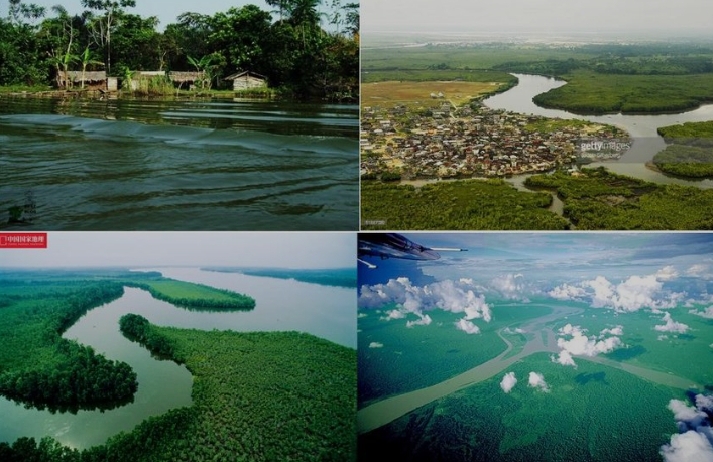

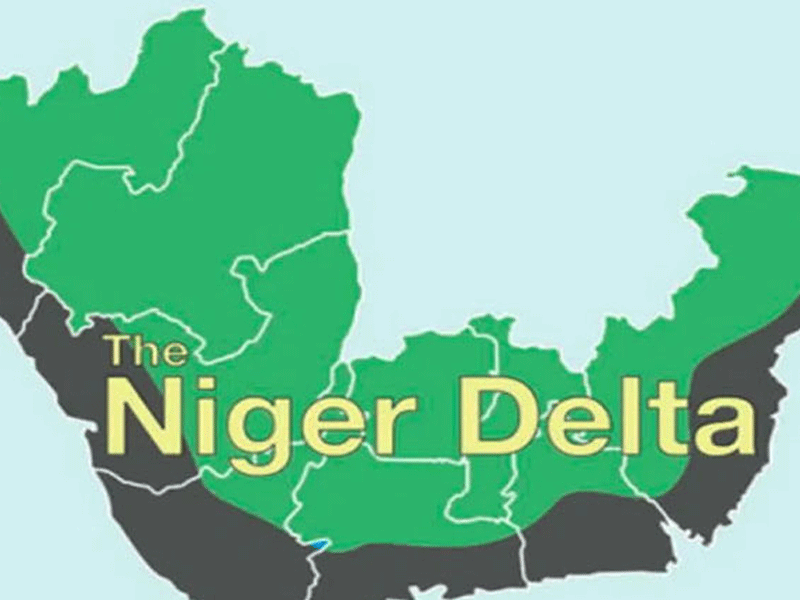
In the Niger Delta, the river moves slowly, but it carries secrets. Its waters, darkened with oil, reflect the sky in fractured light, glimmers that resemble gold but conceal a deeper story. Fishermen push narrow canoes through slicks that stain their nets, while the hum of flaring gas torches pierces the night like distant warning signals. To the outsider, it may seem a land of wealth, of resources waiting to be claimed. But for the people who live here, every ripple tells a different tale—one of abundance that never arrives, of wealth that passes silently, almost invisibly, over their lives.
The mystery is not in the oil itself or the gas that sits untapped beneath the soil. It is in the absence: the schools that remain roofless, the roads that wash away in rain, the electricity that flickers in urban centers while gas burns endlessly in the Delta sky. This is a land where natural bounty coexists with deprivation, a paradox that has shaped generations and continues to haunt the national consciousness. Nigeria’s riches are everywhere, yet nowhere—they flow past, without pause, without reaching the hands that need them most.
Beyond the villages, the stakes expand. Pipelines snake across swamplands, linking local extraction to global markets. Contracts, agreements, and corporate profits chart paths far from home, while local communities are left negotiating the costs: polluted waters, toxic air, and the quiet erosion of livelihoods. The rivers tell their own story, but it is often a language unreadable by those who write the nation’s balance sheets.
And so begins the journey into Nigeria’s dual economic mysteries: the tale of rivers that gleam with potential yet conceal fractures, of resources that promise development yet deliver contradiction.
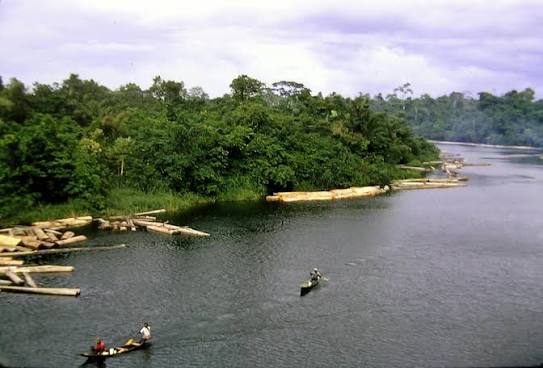
Understanding this story requires patience, attention, and a willingness to trace wealth not only through pipelines and export terminals but through the lives, decisions, and silences it touches along the way.
Gas That Runs Silent
Beyond oil lies Nigeria’s lesser-celebrated twin: natural gas. Vast reserves, estimated at over 200 trillion cubic feet, sit untapped for decades. While Liquefying natural gas (LNG) exports have created revenue streams, domestic utilization remains fragmented. Cities choke under inconsistent electricity supply, yet flares of gas burn endlessly in the Niger Delta night sky, a glaring testament to mismanagement. The paradox of abundance is as silent as the unused gas—powerful, yet invisible to the average citizen.
The reasons are multifaceted. Infrastructure deficits make domestic gas processing expensive. Policy inconsistencies discourage investment. Meanwhile, international corporations profit from LNG exports, sometimes prioritizing global markets over local energy needs. As a result, urban households rely on generators, while remote communities remain disconnected from the energy that should have fueled development. It is a quiet irony: a nation with rivers of gas cannot light its cities consistently.
Environmental impact compounds the mystery. Gas flaring, long condemned by international observers, releases harmful pollutants and contributes to climate stress. Yet the practice persists due to contractual loopholes and weak enforcement. Local communities bear the brunt—respiratory illnesses rise, farmlands degrade, and water systems deteriorate. Here, Nigeria’s economic mystery deepens: a resource that could empower both the economy and the people instead becomes an agent of harm.
Even as policymakers discuss gas-to-power initiatives, the discrepancy between promise and reality remains stark. The country possesses one of the largest untapped gas reserves on the continent, yet energy poverty is widespread. Rivers of gas flow silently into the skies, while citizens navigate darkness and uncertainty below. The nation’s potential is clear, but its pathway to prosperity remains elusive.
The Invisible Hands
Beneath these natural riches lies a labyrinth of governance, foreign interests, and financial opacity. Contracts with multinational oil and gas corporations, often negotiated under secrecy, obscure the flow of wealth. The Nigerian state, intended as custodian of national resources, frequently finds itself entangled in legal battles, policy reversals, and elite capture. For observers, the mystery is not merely environmental or technical—it is human, political, and systemic.
The intertwining of politics and petroleum has created a cycle difficult to break. Elections are often financed through oil rents; legislation reflects entrenched interests rather than public benefit. Meanwhile, grassroots activists and environmental groups struggle to hold corporations and government accountable. Their voices reveal the human cost behind abstract economic figures—lost livelihoods, toxic rivers, and fractured communities—but rarely sway policy in measurable ways.
This web of influence extends globally. International markets, foreign governments, and investment funds all shape Nigeria’s resource strategy. Decisions made in boardrooms in London or New York can determine whether a Delta community gains electricity or continues to flare gas into the atmosphere. Understanding Nigeria’s economic mystery, therefore, requires seeing beyond numbers to the invisible hands that steer them.
At its core, the nation’s story is one of tension: between abundance and scarcity, promise and neglect, global markets and local realities. These invisible forces, often hidden behind legal language or financial reports, dictate whether rivers of gold and gas translate into wealth for citizens or remain symbols of unfulfilled potential. The stakes are high, and the answers are neither simple nor easily discerned.
The Dance of Policy and Profit
Nigeria’s economic story is inseparable from its policy decisions—or the lack thereof. Petroleum laws, fiscal frameworks, and regulatory bodies have been rewritten repeatedly, creating cycles of uncertainty for investors and citizens alike. The Petroleum Industry Act of 2021 was intended to modernize oversight and attract investment, but its implementation reveals the tension between reform and entrenched interests. For every legislative promise, a counterforce of bureaucracy or elite capture undermines impact, keeping rivers of gold and gas from flowing to the people.
Subsidies on fuel illustrate this paradox. Designed to shield Nigerians from price volatility, subsidies often drain federal coffers while benefiting intermediaries more than consumers. Smuggling, import over-invoicing, and corruption mean that subsidy funds rarely reach the intended beneficiaries. As a result, citizens bear the cost of inefficiency while oil profits line foreign bank accounts. The economic logic is complex, yet the human cost is simple: ordinary Nigerians endure hardship despite living atop vast wealth.
Meanwhile, the interplay between domestic politics and global markets amplifies uncertainty. Nigeria’s economy remains heavily dependent on oil exports, tying fiscal health to the volatility of international prices. Price swings ripple through government budgets, social programs, and currency stability. The 2014–2016 oil price crash exposed these vulnerabilities, forcing austerity measures that disproportionately affected vulnerable populations. It revealed how deeply intertwined policy and profit are—and how swiftly the population feels the consequences of distant market forces.
Yet, reform efforts continue. Policy debates now increasingly emphasize gas utilization, local content, and sustainable energy development. Success is uneven but notable: some companies invest in domestic infrastructure, new regulatory frameworks aim to curb flaring, and renewable energy projects gain traction. These moves suggest that the mystery of Nigeria’s dual resources is not static; it is a dynamic tension between governance, global economics, and local opportunity, with human lives always at the center of the equation.
Communities on the Edge
While the country debates policy, Delta communities live the consequences daily. Villages once thriving on fishing and farming are transformed by pipelines and oil spills. Schools lack infrastructure; healthcare is scarce. Children grow up navigating waters polluted with crude, while their parents struggle to maintain livelihoods eroded by environmental degradation. Here, the abstract notion of “economic mismanagement” becomes tangible: rivers of gold do not quench daily needs, and rivers of gas do not light homes.
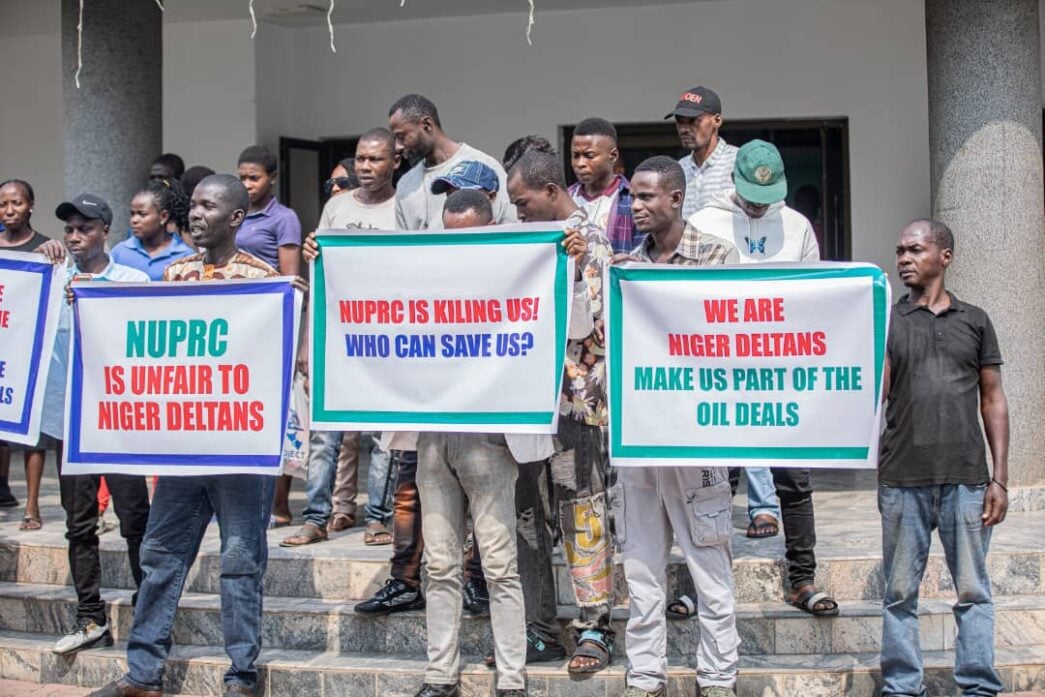
These communities have also become hubs of resistance. Activists, youth groups, and local leaders advocate for environmental justice, proper compensation, and sustainable development. Protests, sometimes violent, reflect deep frustration and a sense of betrayal. Militancy, while widely condemned, is rooted in perceived injustice: communities whose land produces wealth see little in return. The human stories reveal the stakes behind economic data, emphasizing the moral dimensions of Nigeria’s resource paradox.
Corporate social responsibility initiatives often provide temporary relief but rarely alter systemic issues. Schools may be built; roads may be paved. Yet these interventions rarely address structural inequalities or environmental rehabilitation. For many residents, development feels like a promise perpetually postponed, a narrative repeated across generations, leaving communities in a perpetual limbo between hope and disillusionment.
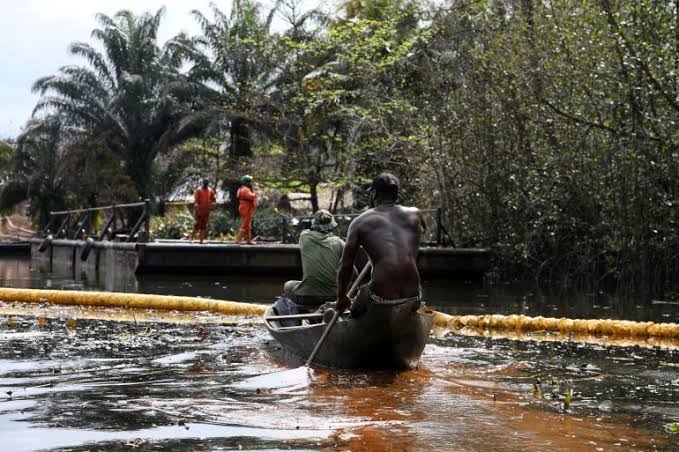
The Delta is a microcosm of Nigeria’s broader challenge: translating natural wealth into inclusive prosperity. It demonstrates the tension between national revenue ambitions and local well-being, revealing how policies, global markets, and corporate decisions intersect with human lives. Understanding these communities is key to unraveling the mystery of why rivers of gold and gas have yet to deliver widespread opportunity.
The Global Lens
Nigeria’s oil and gas are not merely national assets; they are global commodities with international implications. Crude pricing, LNG contracts, and foreign investment are all influenced by geopolitics. The decisions of OPEC, shifts in energy policy by the United States and Europe, and competition with other African producers all ripple through Nigeria’s economy. What happens in Washington or Riyadh can determine the difference between boom and austerity for Nigerian citizens.
Foreign companies bring technology, expertise, and capital, but also extract profit in ways that sometimes bypass national benefit. Contracts are structured to favor international markets, incentivizing exports over domestic consumption. While the inflow of revenue contributes to GDP and foreign reserves, it often bypasses infrastructure development and energy accessibility for Nigerians themselves. This global-local tension lies at the heart of the nation’s dual economic mysteries.
At the same time, Nigeria is negotiating a future amid the global energy transition. Pressure to reduce carbon emissions, shift toward renewable energy, and embrace cleaner gas exploitation adds new layers of complexity. Balancing export obligations, domestic energy needs, and climate commitments presents a precarious calculus, with human lives and economic stability on the line. The dual mystery—oil wealth and gas abundance—now includes a sustainability dimension that cannot be ignored.
For Nigerians, these global forces are both distant and intimate. Price fluctuations affect fuel costs, currency value, and inflation. LNG exports fund federal budgets but rarely translate to improved electricity access. Decisions made on foreign soil reverberate in local homes and rivers, shaping opportunity, hardship, and expectation. In this sense, Nigeria’s rivers of gold and gas flow not only through its soil but through a network of global influence, making the mystery as much international as domestic.
The Scars of Extraction
Beneath Nigeria’s oil and gas wealth lies a landscape marked by environmental wounds. Oil spills, pipeline ruptures, and gas flaring have transformed fertile wetlands into poisoned terrain. Rivers that once teemed with fish now carry crude residue, threatening the livelihoods of communities who have fished these waters for generations. The ecological damage is visible, yet its full economic and social cost often remains unaccounted for in national statistics.
Gas flaring, a routine practice in the Niger Delta, releases greenhouse gases and toxic chemicals into the atmosphere. This not only contributes to climate change but also exacerbates local health problems. Respiratory diseases, skin conditions, and water contamination have risen sharply in regions surrounding flare sites. Residents live with a paradox: the energy that powers other nations literally clouds their skies, while electricity in their homes remains inconsistent or nonexistent.
Oil spills, often triggered by pipeline corrosion or sabotage, devastate agricultural land. Farmlands fail, mangroves die, and biodiversity diminishes. The consequences ripple through generations, as families reliant on farming or fishing face economic displacement. Reparations and clean-up efforts are frequently slow, underfunded, or mismanaged, leaving communities to navigate the long-term consequences of resource extraction largely on their own.
Despite the immense ecological and human cost, environmental management in Nigeria faces systemic hurdles. Enforcement is inconsistent, regulatory frameworks are outdated, and vested interests often dilute accountability. The very wealth that could fund ecological restoration is often siphoned off or misallocated. In this sense, Nigeria’s rivers of gold and gas are double-edged, producing wealth in some contexts while leaving scars that perpetuate poverty and social unrest.
Economic Paradoxes and Everyday Life
The flow of oil revenue has produced stark contrasts between national wealth and individual deprivation. Nigeria ranks among the top global oil producers, yet millions of its citizens live below the poverty line. Urban centers like Lagos showcase modern skyscrapers and burgeoning tech hubs, while Delta communities contend with decaying roads and limited social services. This duality reveals an enduring economic paradox: vast national wealth coexists with persistent local scarcity.
Fuel subsidies illustrate this tension. Designed to ease the burden of high fuel costs, they have inadvertently created opportunities for fraud and inefficiency. Smuggling, black-market trading, and over-invoicing divert public funds into private hands, leaving ordinary Nigerians to contend with inflation and scarcity. The wealth generated by Nigeria’s resources is thus mediated by both policy inefficiency and the human networks that manipulate it, reinforcing the mystery of why abundance has not translated into widespread prosperity.
Electricity access further underscores the paradox. Despite the nation’s gas wealth, power generation remains unreliable. Cities rely on generators; rural communities often remain in darkness. Initiatives to convert gas to electricity face technical, financial, and regulatory hurdles. Residents experience the absurdity firsthand: energy that should illuminate homes fuels flares in the skies, symbolizing the disconnect between resource abundance and practical utility.
Yet these paradoxes fuel resilience and ingenuity. Small-scale entrepreneurs, informal energy networks, and community-led initiatives seek to bridge gaps in energy access and economic opportunity. Nigerians navigate the contradictions of resource wealth with creativity and determination, reflecting a human capacity to adapt within systems that often fail them. Their experiences are the most tangible proof of both the promise and the mystery of Nigeria’s rivers of gold and gas.
The Cost of Silence
One of the most persistent mysteries of Nigeria’s resource economy is the cost borne by those whose voices are least heard. Environmental activists, local leaders, and ordinary residents frequently speak out against mismanagement, pollution, and inequality. Yet these voices are often drowned by corporate interests, political calculations, and global market priorities. Their silence—or marginalization—hides the human dimension of an economic story dominated by figures, contracts, and pipelines.
Communities affected by spills or flares face not only health and economic challenges but also social displacement. Traditional fishing and farming practices collapse; young people migrate to cities in search of opportunity; cultural practices tied to the land risk disappearing. The personal narratives embedded in these shifts rarely make headlines, yet they reveal the profound, ongoing cost of economic decisions made far from local realities.
Even within government, accountability is uneven. Agencies responsible for environmental protection or community compensation are often understaffed or constrained by corruption. Investigations may be slow, prosecutions rare, and enforcement weak. For citizens, the mechanisms designed to safeguard their interests often feel distant, ineffective, or inaccessible, perpetuating a sense of frustration and abandonment.
Ultimately, the cost of silence is both human and structural. It reflects the tension between national wealth and local deprivation, between policy and lived reality. Those rivers of gold and gas that could uplift lives instead leave communities navigating uncertainty, toxicity, and inequity. Understanding Nigeria’s dual economic mysteries requires amplifying these muted voices, revealing the stakes hidden beneath statistics and fiscal reports.
The Generational Gamble
The consequences of Nigeria’s resource mismanagement ripple across generations. Children born in the Delta today inherit a landscape altered by spills, flares, and neglected infrastructure. Their parents, who once relied on fertile rivers and farmlands, often find themselves trapped in cycles of poverty. Education, healthcare, and career opportunities are limited, creating a generational gamble: the wealth beneath their feet promises future prosperity, yet the conditions of their lives threaten to prevent it.
This gamble extends beyond the Delta. Nationally, oil and gas dependency creates economic vulnerabilities that are transferred to younger generations. When global oil prices drop, federal budgets shrink, social services contract, and youth unemployment rises. Millions of Nigerians face an uncertain future, dependent on policies and markets far beyond their control. The promise of natural wealth becomes a lottery, one where outcomes often favor elites over ordinary citizens.
Entrepreneurial youth attempt to navigate these uncertainties, developing small-scale ventures in tech, agriculture, and local energy solutions. Yet access to capital, infrastructure, and fair markets remains limited. The generational gamble is therefore as much about opportunity as it is about survival—how effectively the next generation can turn latent potential into tangible progress, despite systemic challenges.
Meanwhile, traditional ways of life erode. Fishing, farming, and artisanal crafts decline as economic pressures intensify. Communities lose cultural continuity even as they adapt to modern demands. Nigeria’s rivers of gold and gas have generated national wealth, but for many, this wealth feels abstract, a promise deferred from one generation to the next.
Corruption and Capital Flight
One of the central mysteries of Nigeria’s economic paradox lies in corruption and capital flight. Billions of dollars generated from oil and gas have left the country through illicit channels, hidden in offshore accounts, or misallocated through inflated contracts and ghost projects. The scale of this exodus is staggering: it undermines development, fuels inequality, and erodes public trust in governance.
Government audits, investigative reports, and whistleblower accounts reveal complex networks of financial diversion. Multinational corporations, intermediaries, and complicit officials create opaque structures that make tracing revenue difficult. While these mechanisms are legal in appearance, their cumulative effect is to siphon wealth away from citizens. Each dollar that leaves Nigeria unaccounted for is a river of gold diverted from the nation’s future.
The social impact of capital flight is immediate and palpable. Schools lack resources, hospitals struggle to function, and public infrastructure decays. Citizens witness immense national wealth yet face daily deprivation. Inequality intensifies: while elites enjoy global mobility and luxury, the majority navigate instability, unreliable utilities, and limited opportunity. Capital flight transforms abstract economic mismanagement into lived reality.
Efforts to combat these flows exist, from anti-corruption commissions to international collaborations on asset recovery. Progress is slow, often hampered by legal loopholes, political interference, or lack of enforcement. Yet every recovered asset, transparent contract, or successful prosecution represents a small victory in untangling Nigeria’s economic mysteries—a reminder that rivers of gold need not always flow outward.
A Fragile Hope
Amid the paradoxes and failures, glimmers of hope emerge. Investments in gas-to-power projects, renewable energy, and local content initiatives indicate a gradual shift toward using Nigeria’s resources for national benefit. Communities, activists, and entrepreneurs are increasingly asserting influence over resource governance, demanding accountability, and developing localized solutions to energy and economic gaps.
Technology also offers pathways forward. Satellite monitoring of flaring, blockchain-based transparency tools, and digital financial tracking allow citizens, journalists, and regulators to challenge opacity and demand reform. These innovations bridge the gap between resource wealth and public accountability, providing new mechanisms to harness Nigeria’s rivers of gold and gas for the common good.
Policy reform, though uneven, shows potential. The Petroleum Industry Act, local content policies, and anti-flaring legislation create frameworks to channel resources into domestic growth, environmental protection, and social development. Implementation remains the challenge, but the structures exist. Nigeria’s resource mystery may be soluble if governance, civil society, and market incentives align with the interests of ordinary citizens.
Ultimately, fragile hope exists in the resilience and ingenuity of Nigerians themselves. Communities adapt, youth innovate, and leaders occasionally champion reform. Rivers of gold and gas are still flowing—sometimes misdirected, often invisible, yet potent. If human determination can match natural wealth, Nigeria may yet transform its paradox into prosperity, turning resource abundance into shared opportunity rather than perpetuated mystery.
Lessons from the Delta
The Niger Delta serves as both a cautionary tale and a repository of insights. It demonstrates how abundant resources can coexist with deep deprivation, how policy promises can be undermined by mismanagement, and how local voices are often sidelined in global economic decisions. Observers of the Delta learn that economic wealth alone is insufficient; the systems that distribute, regulate, and monitor it determine whether prosperity reaches citizens or remains abstract.
Environmental stewardship emerges as a critical lesson. Persistent oil spills, gas flaring, and ecological degradation show that neglecting ecosystems carries not only moral but economic consequences. Fishermen and farmers displaced by pollution disrupt local economies, triggering migration and social tension. Repairing the land and investing in sustainable practices are not only ethical imperatives—they are essential for long-term economic stability.
Governance and transparency are equally instructive. Weak enforcement, opaque contracts, and political patronage perpetuate cycles of mismanagement. For wealth to benefit the majority, policies must be coupled with effective oversight, citizen engagement, and accountable institutions. Without these mechanisms, even the richest natural endowments can fail to translate into societal progress.
Finally, the Delta teaches resilience. Communities innovate, adapt, and organize to claim a stake in the resources beneath their feet. Activism, entrepreneurship, and local governance efforts reveal that human ingenuity can partially offset systemic shortcomings. While wealth mismanagement continues, these lessons suggest that solutions are possible when knowledge, agency, and accountability converge.
Global Implications
Nigeria’s rivers of gold and gas are not contained within its borders—they influence global markets, energy security, and climate considerations. Fluctuations in crude pricing affect oil-importing countries, while LNG exports link Nigeria to the energy strategies of Europe, Asia, and beyond. Understanding the dual economic mysteries of Nigeria is thus critical not only for domestic policy but for global investors, environmental advocates, and energy planners.
The country’s experience also highlights the challenges facing resource-rich nations worldwide. Resource dependence, governance failures, and environmental neglect recur across the developing world. Nigeria exemplifies how mismanagement in one nation can ripple through regional stability, migration patterns, and international trade, providing cautionary lessons for policymakers and investors alike.
Climate considerations amplify global stakes. Gas flaring and oil spills contribute to carbon emissions and biodiversity loss, while global shifts toward clean energy put pressure on Nigeria to modernize extraction practices. Balancing national economic needs with international environmental commitments becomes a complex calculus, one with human consequences for millions of citizens.
Leaving With This: Rivers That Speak in Silence
Nigeria’s rivers of gold and gas do not speak in words—they speak in absences. They whisper in the hollowed streets of Delta villages, in flickering lights of city neighborhoods, in contracts that vanish into offshore accounts. The wealth beneath the soil moves with precision, yet it is silent where it matters most. The paradox is sharp and inescapable: abundance exists, yet the country constantly reaches for it and finds emptiness.
These rivers expose the country’s true economy—not the one measured in barrels, GDP, or exports, but the one written in invisible flows: influence, secrecy, and misdirection. What is counted and celebrated often travels far from the people who generate it, while what is missing shapes the lived reality of millions. In this sense, the dual mysteries of oil and gas are less about resources and more about control, a network of decisions that determines where life thrives and where it falters.
In the end, Nigeria’s true challenge is to listen to what its rivers do not say. To read the silences, map the hidden flows, and confront the structures that redirect wealth while leaving the land, the air, and its citizens barren. The lasting truth is stark: abundance alone does not make a nation rich. Understanding—and reclaiming—where it flows might.
These rivers are not just natural phenomena; they are riddles, warnings, and invitations. Those who learn to listen may finally discover not only the wealth beneath their feet, but the clarity to act upon it.
The river flows—but only those who look closely can see where it truly goes.
Discussion about this post