


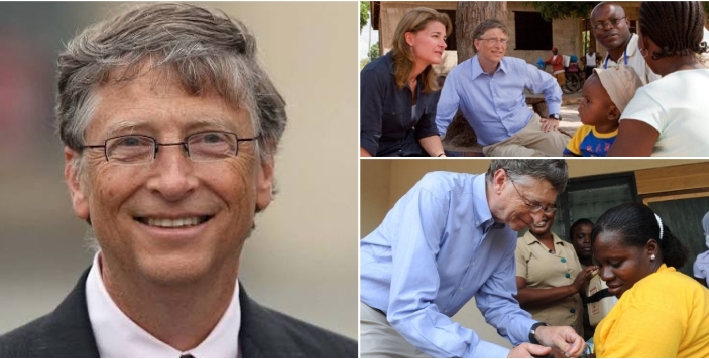

Long before the world began to speak of data as destiny, a man built his empire on the certainty that information could heal chaos. But destiny has a way of testing the builders of order.
When the jet descended over northern Nigeria in 2016, the terrain below looked like a vast equation — a land where courage and loss shared the same denominator. From above, the fields stretched in fragments, dotted with what once were homes, schools, and markets. Yet, somewhere in that broken arithmetic, a story of renewal was unfolding — one that had drawn the attention of the world’s most analytical mind.
Bill Gates had come to see more than progress reports. For years, his Foundation had written cheques that crossed continents, funding the fight against diseases that science promised to conquer. But this journey wasn’t another philanthropic tour. It was something more personal, something unplanned — a quiet test of what happens when conviction is forced to kneel before human courage.
No entourage of headlines followed him that morning. Only the rhythm of armored tires, the rust-colored horizon, and a single thought that would linger long after he left: what if the true measure of power lies not in wealth, but in the courage that humbles it?.
This is a story not of money, but of meaning — not of the man who gave, but of the moment he bowed before courage itself.
The Algorithm and the Boy Who Looked Through Glass
Before he was the man whose name became synonymous with wealth, Bill Gates was just a boy who stared too long at a screen of blinking lights, trying to understand how the invisible could command the visible. Born on October 28, 1955, in Seattle, Washington, he grew up in a world where curiosity was his first inheritance. His mother, Mary Maxwell Gates, was the moral compass of a family that believed success was not measured by ownership but by contribution. His father, William H. Gates Sr., a towering lawyer with a soft core, taught him that ambition must be tethered to empathy.
At 13, when others saw computers as cold, expensive machines, Gates saw conversation — the intimate dialogue between mind and machine. The halls of Lakeside School became his early laboratory. There, he met Paul Allen, a boy whose imagination flickered in the same digital rhythm. Together, they dreamed not of power, but of possibility.
When they founded Microsoft in 1975, it wasn’t yet a kingdom — just two young men trying to write the future in binary. But soon, Gates would teach the world a new language, one spoken by software and translated into billions. Windows opened, not just on screens, but into lives. The computer became a mirror — and Gates, its quiet architect, built empires out of logic.
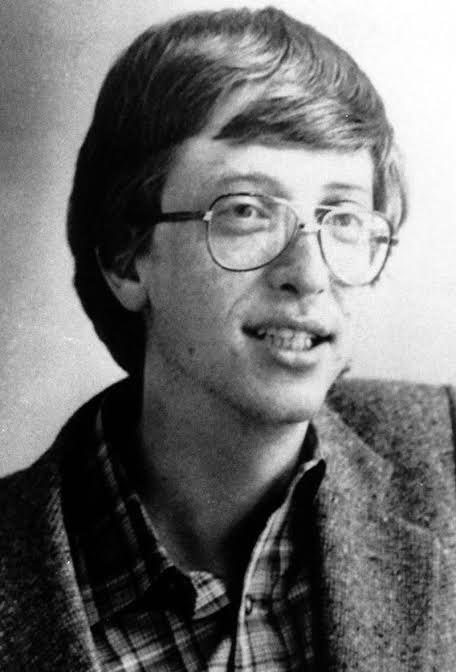
Yet, beneath the layers of code, there was always a restlessness — a question that algorithms couldn’t answer. What is progress if it leaves humanity behind? Even as Microsoft ruled the 1990s, Gates’ gaze began shifting — from hardware to heartware, from systems to souls.
By the time he stepped down as CEO in 2000, he had already written another kind of program — not for machines, but for mercy.
The Foundation: Where Wealth Tried to Learn Compassion
When the Bill & Melinda Gates Foundation was officially launched in 2000, it was more than philanthropy — it was an experiment in moral recalibration. Gates, now one of the world’s richest men, wanted to measure impact not in dollars, but in difference.
He once described his approach as “the impatient optimism of a technologist meeting the slow pulse of human suffering.” The Foundation, headquartered in Seattle, became his second act — a digital mind learning to feel.
Its goals were audacious: eradicate polio, combat HIV/AIDS, expand education, and reform agriculture across developing nations. Gates wasn’t merely giving away wealth — he was reprogramming its purpose.
By 2002, the Foundation had already begun investing heavily in Africa’s health systems, focusing on malaria prevention, vaccine distribution, and maternal care. Nigeria quickly rose on that map — not as a beneficiary, but as a battlefield where every child’s heartbeat counted.
In Nigeria, Gates didn’t see just a continent in need — he saw innovation waiting for courage. His Foundation began working hand-in-hand with local partners, building cold-chain systems to store vaccines, financing health-worker training, and digitizing data long before digital governance became a political slogan.
It wasn’t perfect — some accused him of overreach, others of technocratic arrogance — but no one could deny the scale. The Foundation soon became the world’s largest private philanthropic institution, with an endowment surpassing $50 billion.
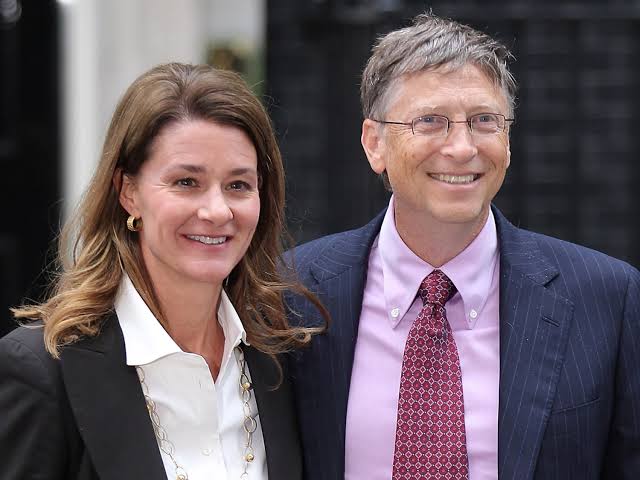
From Seattle to Sokoto, Gates’ money began tracing the same moral circuitry that had once run through his code: precision, consistency, and an obsession with measurable outcomes.
But then came Nigeria’s northeast — a region where logic broke down, where data had to walk barefoot. In Borno, the metrics of progress collided with the metaphysics of survival.
That was where the man who built Windows found himself standing before walls with bullet holes. That was where spreadsheets turned into stories.
Early Seeds: The Algorithm Meets the Arid Land (2002–2009)
The story began years earlier. In 2002, the Bill & Melinda Gates Foundation extended its global health focus toward Africa’s most stubborn viruses. Nigeria, then home to over half of the world’s wild polio cases, became a testing ground for both faith and science.
When Gates first visited the country in 2006, it wasn’t the glitz of Lagos that moved him, but the raw urgency of the North. Polio paralyzed hundreds of children annually — children whose parents had been misled by fear and rumors that vaccines were foreign ploys. The billionaire’s gaze met mothers whose prayers carried the weight of both grief and defiance.
By 2009, the Gates Foundation had partnered with the Global Polio Eradication Initiative (GPEI) and Rotary International, pledging millions of dollars. The focus was on Kano, Sokoto, Yobe, and Borno — states where health workers risked their lives to deliver vaccines. In some areas, vaccinators were ambushed. In others, they walked 20 kilometers daily under the sun, through zones no drone could map.
Each funding commitment became more than charity — it was an investment in human endurance. Gates often said data moved him; yet in Nigeria, it was courage that recalibrated his compass.
When the North Became a Battlefield (2010–2014)
By 2010, Nigeria’s war against polio collided with another war — the rise of Boko Haram. The insurgency spread from Maiduguri across Borno, Yobe, and Adamawa, crippling public health systems. Vaccination teams became targets. Some were executed in broad daylight in Kano (2013). Yet, amidst this terror, local heroes emerged — midwives, imams, youth volunteers — armed not with guns but with coolers of vaccine vials.
The Gates Foundation refused to retreat. Between 2011 and 2014, Gates intensified funding through the Nigeria State-Led Polio Eradication Project, a model that empowered governors to take local ownership. He personally engaged northern traditional rulers, including the Sultan of Sokoto, Alhaji Sa’ad Abubakar III, whose influence turned skepticism into acceptance.
In Borno, vaccination teams began operating from military convoys, shielded by soldiers but driven by faith. Gates called these frontline workers “the bravest people I have ever met.” The data he once trusted now carried the blood of real people.
By 2014, Nigeria had cut its polio cases to just six — a near-miracle. But the insurgency’s chokehold on Borno left one haunting gap in the record: inaccessible children.
The 2016 Visit: When a Billionaire Stood in the Dust
In August 2016, Bill Gates returned to Nigeria. This time, he walked through internally displaced persons (IDP) camps in Borno State, under armed escort and blistering heat. Children surrounded him — curious, frail, alive. The polio campaign had become a humanitarian crusade, blending science with survival.
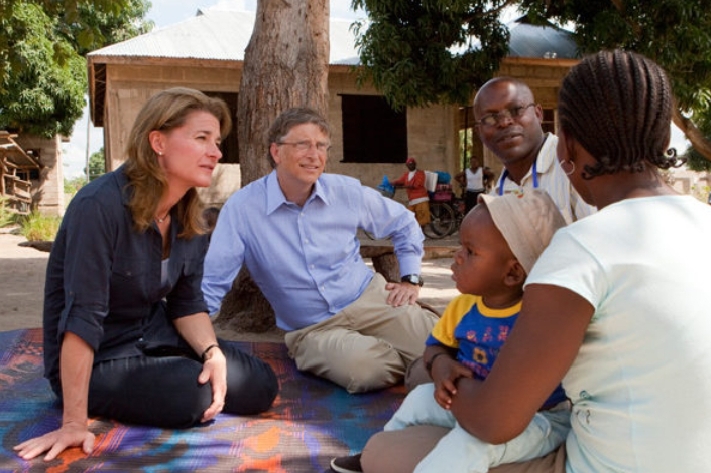
The visit wasn’t publicized as a spectacle. It was quieter — a pilgrimage. Behind the scenes, he met Governor Kashim Shettima, whose administration was rebuilding schools and clinics destroyed by war. Gates listened more than he spoke. He asked about the logistics of cold-chain storage, about the terrain routes, about children still missing from vaccination lists.
In those moments, the billionaire’s usual data-driven demeanor softened. His polished sentences carried a tremor of humility. He saw, firsthand, that courage wasn’t coded in spreadsheets. It was written in the dust by people who never made headlines.
That day, as he left Maiduguri, the convoy slowed near the ruins of a hospital bombed months earlier. The walls still carried the marks of both bullets and hope — chalk-written names of children once treated there.
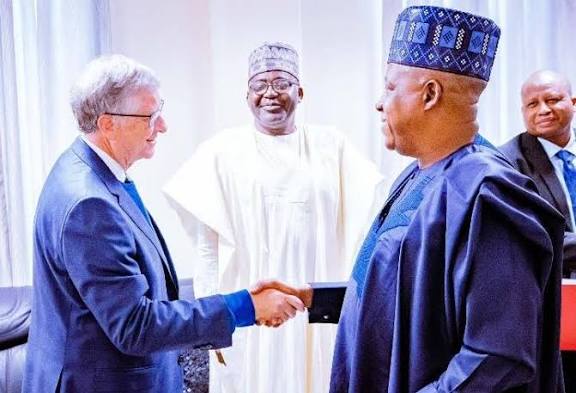
Gates reportedly looked out the window for a long time. For a man who had helped build digital worlds, that silence was a kind of prayer.
The 2018 Abuja Lecture: When Data Spoke the Language of the Heart
Two years later, on March 22, 2018, Bill Gates addressed Nigeria’s National Economic Council in Abuja. It was not an ordinary speech. Before Vice President Yemi Osinbajo, several state governors, and business leaders, Gates delivered what would become one of the most critical development addresses in modern Nigeria — titled “Nigeria’s Choice.”
He began not with graphs, but with gratitude — for the women in Borno who carried vaccines through fields of fear, for traditional rulers who stood firm against misinformation, for doctors who turned hunger into resolve. Then his tone sharpened.
Gates urged Nigerian leaders to prioritize human capital investment over oil dependency. He cited hard numbers — maternal mortality, child malnutrition, and education gaps — yet wove them into a moral plea: “Nigeria’s greatest resource is not oil. It is its people.”
The room, filled with political power, grew still. For a few seconds, you could sense that Abuja’s air had changed — not from applause, but from the weight of truth.
That night, Gates didn’t attend any high-profile banquet. He retired early. To him, the figures he cited weren’t abstractions — they were faces from Borno.
2020: The Day the Virus Fell
On August 25, 2020, the World Health Organization (WHO) declared Nigeria polio-free. It was a moment two decades in the making.
Bill Gates’ video message that day was subdued but emotional. He praised the “extraordinary courage of Nigeria’s frontline health workers” and particularly commended Borno, Yobe, and Sokoto — the last frontlines of the virus. Behind the formal tone was a man recalling a desert that had once stared back at him.
The world hailed it as an African victory, but within Borno, the celebration was humble. Many vaccinators who had started the campaign never lived to see its end. To Gates, their legacy became a spiritual ledger — one that measured wealth not in billions, but in lives restored.
After the Virus: Healing Beyond Eradication (2021–2024)
Even after polio’s fall, Gates’ work in Borno continued. Through the Aliko Dangote Foundation–Gates Foundation partnership, focus shifted to nutrition, maternal health, and primary care. In 2021, Gates funded digital health record projects and remote training programs for nurses in northeastern Nigeria.
By 2023, the Foundation had invested over $1.5 billion in Nigeria, making it one of its largest African recipients. Yet, Borno remained special — the testing ground of courage, the metaphorical altar of human resilience.
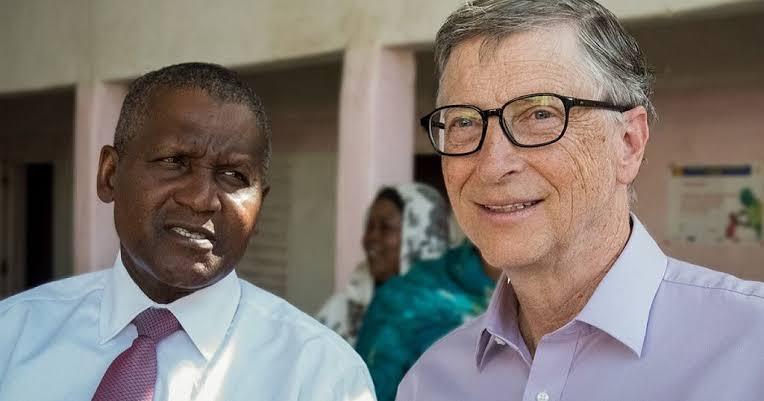
When Gates returned in mid-2023, he met with Governor Babagana Zulum, whose pragmatic leadership impressed him deeply. Zulum spoke of rebuilding not just hospitals, but hope. Gates listened — again.
Closing Thoughts: When a Billionaire’s Heart Knelt Before Courage
History often remembers wealth, but rarely the moments when wealth bows before courage. For Bill Gates, Borno wasn’t an aid mission — it was a revelation. It taught him that courage isn’t coded in zeros; it lives in the heartbeat of a mother walking through gunfire with a vaccine box.
He had come to measure progress — but left measured by humanity. The world’s richest man had once built an empire of systems; in Borno, he discovered an empire of souls.
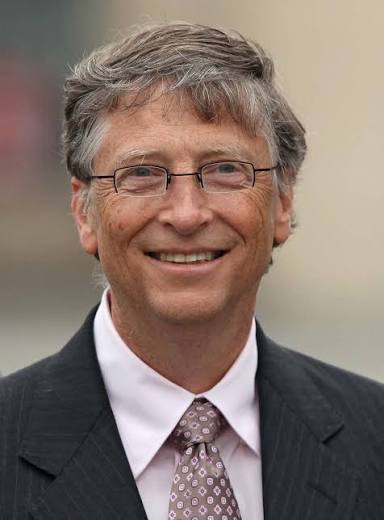
In the language of power, this was not an investment. It was a conversion — the day a billionaire’s heart, in the dust of the Sahel, learned what it means to kneel.
Discussion about this post