



Many began to rethink their support for the policies as it became obvious that the hardship and discomfort that many are enduring are not for the sake of future comfort and prosperity, which they envisaged with glee, but for the continued subsidisation of the obscenely flamboyant and disturbingly opulent lifestyle of the people in power.
For years, the subsidy on petrol has been considered a drain and strain on Nigeria’s lean resources, leading to strident calls for its complete removal. The removal, some experts argue, will free up funds to be spent on other critical areas of the economy and, in turn, herald a new era of economic prosperity. So, when, on May 29, 2023, President Bola Tinubu, during his swearing-in, announced the removal of the subsidy on petrol, the reactions ranged from muted anger to indifference to support for the decision.
These reactions were vastly different to how people responded to the decision of former president Goodluck Jonathan to remove the same subsidy on petrol in 2012: the move at the time was greeted with widespread opposition, outrage and public demonstrations that nearly crippled the nation’s economic and commercial activities. Never mind that the characters in power today were viciously vocal in their opposition to subsidy removal at the time.
While many were willing to give the Tinubu government the benefit of the doubt and support the removal of subsidy on petrol, which has been touted as a bold and courageous move in some quarters, there were still widespread misgivings and doubts about the current government’s ability to deploy the gains and proceeds of this reform into areas that improve the lives of ordinary Nigerians. From the onset, Tinubu’s government has displayed a troubling lack of fiscal discipline, indifference towards corruption and inability to use the nation’s limited and scarce financial resources judiciously and prudently.
As the removal of subsidies on fuel and devaluation of the naira engendered galloping inflation and an unprecedented cost-of-living crisis, the government’s next move is to splurge on frivolities and other inconsequential expenditures that have no positive impact on the lives of Nigerians who have since been impoverished by these policies. From the bloated size of government to the purchase of imported Toyota SUVs for lawmakers and new presidential jet for the president, many began to rethink their support for the policies as it became obvious that the hardship and discomfort that many are enduring are not for the sake of future comfort and prosperity which they envisaged with glee but for the continued subsidisation of the obscenely flamboyant and disturbingly opulent lifestyle of the people in power.
Even more worrisome is the astronomical level of borrowing since the removal of the subsidy. The current government, despite removing subsidies on fuel, is borrowing at a rate far higher than its predecessors who kept subsidies in place. Nigeria’s debt under President Tinubu ballooned to N56.6 trillion in just 23 months. Tinubu’s debt in 23 months is N18.7 trillion or 75.2 per cent less than the N75.26 trillion loans taken by former President Muhammadu Buhari in the whole of 8 years. Under President Tinubu, Nigeria’s public debt has jumped from N87.379 trillion as at June 2023 (one month after Mr Buhari’s exit from power) to N142.319 trillion as at September 2024. The debt reached N144.67 trillion ($94.23 billion) in December 2024 and will further soar in 2025 once he secures the fresh loan request approved by the national assembly.
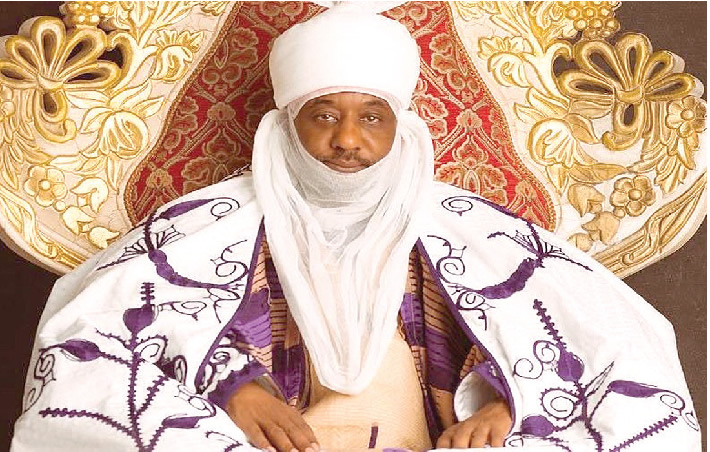
These borrowings have sparked serious concern. Among those who have raised alarm over the unsettling rise in the nation’s public debt under Tinubu, despite the removal of subsidy, is the 16th Emir of Kano and former governor of the Central Bank of Nigeria (CBN), Muhammadu Sanusi II. Emir Sanusi, while speaking in Abuja yesterday at the Oxford Global Think Tank Leadership Conference and Book Launch, queried the rationale behind borrowings after the removal of petrol subsidy by the Tinubu administration. Sanusi, who commended Tinubu’s administration for removing fuel subsidy and unifying exchange rates, describing both as “painful but necessary steps”, warned that the reforms would amount to nothing and the desired result would not be achieved if the government does not show fiscal discipline and transparent spending.
“If you stop paying subsidies but continue borrowing more, it means you’ve filled one hole only to dig another. The real challenge now is the quality of government spending and the management of the revenues saved,” Questioning the government expenditure, he asked: “Why do we need 48 ministers? Why do we need convoys of vehicles? Why are we still borrowing even after removing subsidies? If you fill one hole, why dig another? This government needs to look at institutions, transparency and how money is being used at all levels. Because if you keep earning more and spending badly, you’ll undo every gain made.”
Emir Sanusi has not said anything new but merely echoes the sentiment of many Nigerians who are deeply concerned about how the nation’s resources are being managed following the removal of the subsidy. His sterling record, impeccable antecedent and wealth of experience as a banker and former governor of the CBN have made him a voice of reason and earned him the right to speak on not just the nation’s economy but matters of how the nation’s resources are being utilised. His perspective on the issue lends credence to the position of those who shared their worries about the state of the nation but who do not have the clout and influence to make their stance mainstream like him.
How Nigeria is now borrowing one trillion naira a month after scrapping petrol subsidy is a head-scratching phenomenon that is tough to comprehend or explain. While subsidy removal was supposed to be a revenue event to be deployed to grow productivity, the opposite has been the case. What accrues to government at all levels from the proceeds of subsidy removal is not channelled towards productivity-enhancing projects and frivolities that further compound the fiscal and macroeconomic woes of the nation.
The excess revenues generated from petrol subsidy removal should have been ringfenced and then shared according to FAAC rules, no delay or change in formula, but the tagging allows the taxpayer to monitor the excess revenues that accrue from subsidy removal. To remove the subsidy and then increase salaries or buy an SUV is not the best way to invest in a windfall. The subsidy fund should have gone to health, education and productivity boosting infrastructure.
What this also shows is that it is not enough to formulate quality policies. The quality of the characters formulating policies is equally important as the quality of the policies they are formulating. Even though the removal of petrol subsidy was widely regarded as imperative, the quality of character of those behind it leaves so much to be desired. No matter how thoughtful, compelling, crucial and widely supported a policy is if those behind it are of unscrupulous characters with questionable motives and have repeatedly displayed a lack the sincerity of purpose, altruism and selflessness needed to ensure the policy is implemented in manner that prioritises the overall interest of the people and goodness of the people, then such a policy will not achieve the intended results and this is the case with petrol subsidy removal.
Discussion about this post