


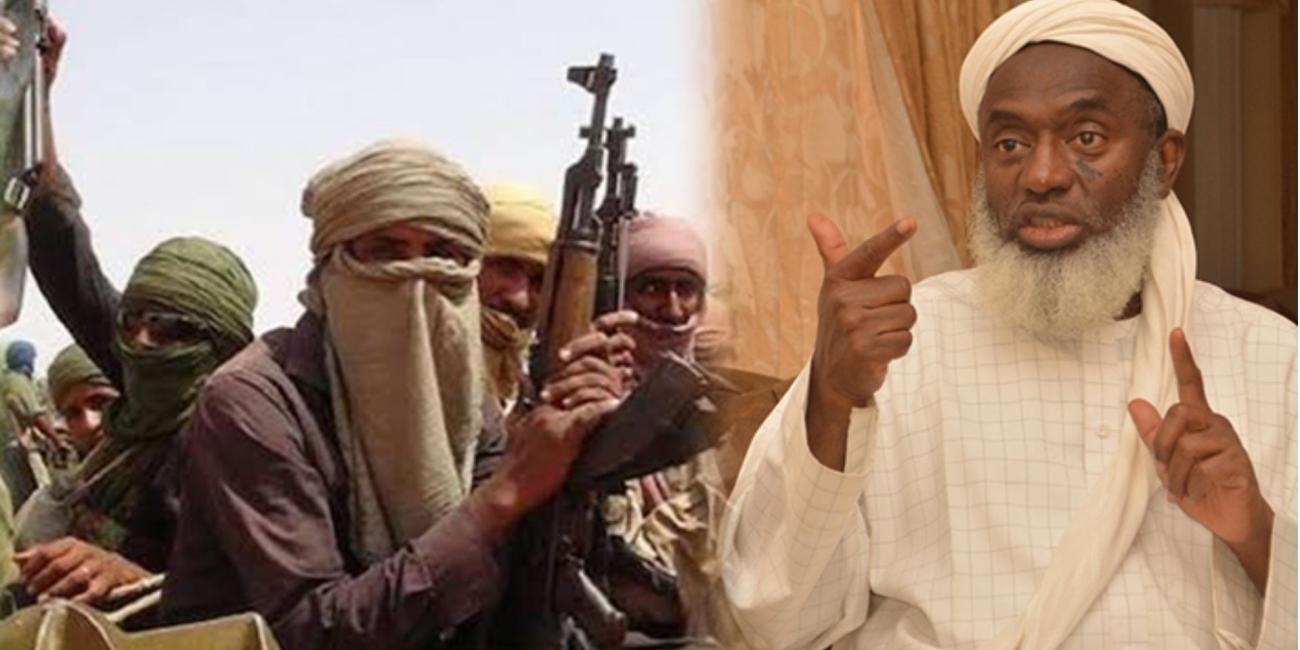

If a divisive and radical figure like Gumi is treated with contempt and disdain by Saudi Arabia, a muslim country, and banned from entering the nation, owing to his dangerous beliefs and reckless public remarks, it then becomes a matter concern if the Nigerian government decides to mollycoddle him and treat him with the respect and honour reserved for those who have contributed positively to the nation, distinguished themselves in various fields and place the country on the global map
In 2010, a middle-aged Nigerian was arrested and detained in Saudi Arabia by authorities in the Middle East country. His arrest was at the behest of the United States. He was linked to terrorist activities. A US intelligence report at the disposal of the Saudi authorities revealed that the man had been in constant communication via email with Umar Farouk Abdulmutallab, the underwear Christmas bomber. He was in contact with the young radical before the failed suicide bombing in December 2009. The man is Sheikh Ahmad Gumi.
Abdulmutallab’s plan to blow up a plane filled with passengers travelling for the yuletide holiday failed because, according to reports, he had been wearing the underwear, which the explosives were strapped to and were supposed to detonate once he was on board the plane, for more than two weeks. The grime and putrid odour of the underwear were said to have neutralised the potency of the bomb and stopped it from detonating.
Gumi was under house arrest for over six months in Mecca. He was later released by the Saudi authorities after they decided to let him go but they kept him on a watchlist. The speculation then was that the Nigerian government had pulled all stops and used every sinew of its diplomatic strength to get Saudi Arabia to let Gumi return to Nigeria instead of the United States where he would have been prosecuted for his involvement in the botched Christmas suicide bombing.
Upon his return to Nigeria, one would have thought that his experience in Saudi Arabia and his close shave with the wrath of the mighty US would have forced him to introspect and eschew religious extremism and fundamentalism that breed behaviour that makes recruitment into terrorist organisations while embracing and espousing liberalism and moderation in the practice of one’s religion. But that is not the case. Gumi did not only become an ultra conservative — whose interpretation of Islamic precepts, doctrines and his practice of the religion have no place in the modern world, no less so in a secular country like Nigeria— but he also began to vocally defend the abhorrent and heinous activities of religious extremists in Nigeria and around the world.
Before long, Gumi became a vocal advocate of negotiating with Islamic terrorists and he began to negotiate with terrorists on behalf of the victims of the terrorists’ unspeakable atrocities. He also became somewhat of a fixer and a middleman between the terrorists and the Nigerian government. While Nigerians see dangerous, radical and violent groups who hide under the veneer of religion to commit horrific and deadly crimes, Gumi sees “warriors” fighting marginalisation.
Gumi has come to see his unconscionable behaviour and actions as normal and something that should be accepted in 21st-century Nigeria, largely because the government has at best ignored them and at worst condoned and encouraged them. Gumi’s disposition and antics are a reflection of a country that has since sacrificed serious governance for destructive politics and politicking. In the wake of United States President Donald Trump’s reaction to alleged Christian genocide in Nigeria, Gumi has surfaced again to rehash and regurgitate his disturbing and misleading defence and rationalisation of the nefarious crimes of these terrorists.
Last week, Trump weighed in on the contentious discourse of purported Christian genocide in Nigeria. Trump, though did not describe the killing of Christians in Nigeria’s Middle Belt and Northern regions as genocide, voiced his concern over the targeted persecution and targeted killings of Christians in the country. He would later go on to designate Nigeria as a country of primary concern.
Trump’s last Friday post on the genocide claim in Nigeria was quickly followed by another post on his Truth Social on Saturday. This time his tone was aggressive, menacing, threatening and unsettling. He described Nigeria as “a now disgraced country” and threatened an invasion of the country if the alleged persecution and killings of Christians in the country did not cease. His outburst has sent the normally ambivalent and insouciant Tinubu’s government into frenzy and overdrive, with government officials, appointees, and supporters working assiduously to either downplay the threat of military invasion of Nigeria by the United States as an empty bluff or outrightly dismiss the claim of genocide.
However, Gumi’s public utterances justifying the actions of these terrorists have done nothing to help the case of the Nigerian government but only lent credence to the position of the United States government on the security situation in the country. On Friday, during an interview on Trust TV, Gumi again defended bandits terrorising northern Nigeria, claiming they are on “revenge missions” rather than waging unprovoked violence. The statement, like the ones he made in the past defending the actions of armed non-state actors, has sparked outrage. This time around, it is not just the statement that irked many but the timing of it.
We can chastise, castigate and vilify Gumi all we want, but nothing will change if we don’t dismantle the system that allows him to act in ways that undermine the state and threaten its peace and stability. Gumi has become a metaphor for the Nigerian government’s own impunity and lawlessness. He is the product of a country governed by people who lack the resolve and political will to do what is right. Many people have wondered why the government has not apprehended Gumi over his outward and explicit support for terrorists and other criminal elements who have turned large swathes of the country into a killing field. Gumi cannot be arrested by the government because we are led by people who place personal agendas and considerations over national interest. Gumi became an unapologetic terrorist sympathiser because the government wanted him to.
In addition, in a sane country, where the government prioritises the unity, stability and peaceful coexistence of its people, characters like Gumi are treated like the terrorists that he unabashedly defends and explains away their atrocities. But in Nigeria, the government tends to look away and, in a worst-case scenario, put up some embarrassing performance, a perfunctory interrogation here and a lame investigation there, just to create an impression that they are not tolerating his excesses and destructive narratives.
Furthermore, If a divisive and radical figure like Gumi is treated with contempt and disdain by Saudi Arabia, a muslim country, and banned from entering the nation, owing to his dangerous beliefs and reckless public remarks, it then becomes a matter concern if the Nigerian government decides to mollycoddle him and treat him with the respect and honour reserved for those who have contributed positively to the nation, distinguished themselves in various fields and place the country on the global map. The Nigerian government’s attitude towards Gumi only feeds into the notion that the government is complicit in the perennial insecurity that the nation has been grappling with for years on end.
None of these portrays the government in a good light. The image that is projected to the outside world when people look at Nigeria is that of a country led by people who refuse to act sanely and progressively, a country bogged down by its destructive idiosyncrasies. One that has burned the bridges it has built and the bridges we built for it.
Discussion about this post