


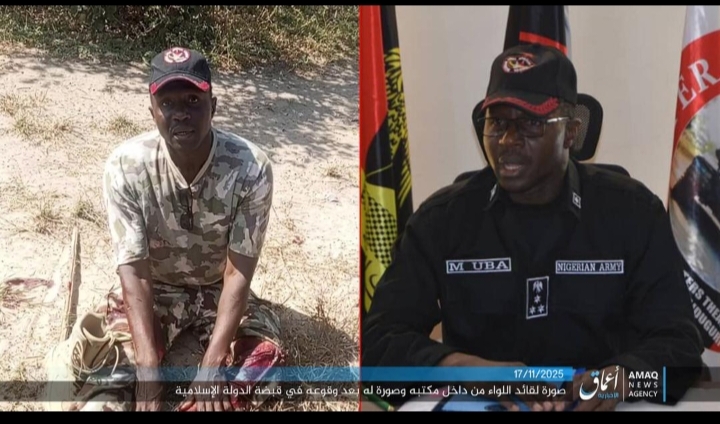

However, the most shocking, invidious and obnoxious of this latest wave of unconscionable bloodletting is the killing of Brigadier General M. Uba. Uba was kidnapped and killed after he and his men were ambushed by fighters of the Islamic State West Africa Province (ISWAP).
In the last 72 hours, media reports and public discourse have been dominated by a series of disconcerting information that further underscores the severity of Nigeria’s security challenges. Even for a people who have largely become somewhat desensitised to the abhorrent and grotesque incidents that characterise the deepening security crisis the country has been grappling with for years on end—which in itself is occasioned by the violent attacks and wanton killings of rampaging armed non-state actors— the incidents of the last three days have left many deflated and deeply troubled.
In a daring and vicious attack that is eerily reminiscent of the infamous Chibok girl abduction of 2014 in Borno State, a clutch of terrorists attacked Government Girls Comprehensive Senior Secondary School, GGCSS, Maga in Danko/Wasagu Local Government Area of Kebbi State, killing the Vice Principal and abducting several students. The vice principal, Malam Hassan Yakubu Makuku, was reportedly gunned down after he attempted to shield students from the attackers. Terrorists also reportedly attacked communities in Patigi, Kwara State, killing a police officer and a vigilante, and abducted two chiefs taken hostage.
On Sunday morning, a chieftain of the All Progressives Congress (APC) in Zamfara State, Umar Moriki, was reportedly murdered by suspected terrorists. He was said to have been attacked and shot dead on Saturday morning along the Gusau–Tsafe highway, near Fegi village in the Tsafe Local Government Area, while travelling from Gusau to Kaduna. It is gathered that the late APC stalwart had just participated in the party’s stakeholders’ meeting hosted by the Minister of State for Defence, Bello Matawalle.
However, the most shocking, invidious and obnoxious of this latest wave of unconscionable bloodletting is the killing of Brigadier General M. Uba. Uba was kidnapped and killed after he and his men were ambushed by fighters of the Islamic State West Africa Province (ISWAP). He became separated and isolated after the ambush that initially claimed the lives of some of his. He was later found by the terrorists after the SOS message he sent to another military unit for rescue was intercepted and by the terrorists and was able to use it to track his location along the Damboa–Biu axis in Borno State, where he was murdered. The terror group announced the killing themselves and even released photos to prove their crime.
This latest litany of violence and killings, especially the brutal murder of General Uba, has been greeted by a mix of unsettling emotions. Anger, frustration, concern, trepidation, worry and humiliation. The killing of Uba has further cleared the fog that has shielded many Nigerians from coming to terms with the magnitude and enormity of the nation’s security predicaments. If a General who has gone through the rigours of tough, brutal and onerous military training and attained such a lofty and coveted position in the army can be killed with such ease and casualness, what then is the fate of ordinary Nigerians whose security and safety men like Uba are responsible for?
Aside from the dastardly nature of these killings and atrocities, the circumstances surrounding them made the whole situation even more worrisome and jarring. In the case of Uba, one can not help but wondered why the general had to use a messaging app, WhatsApp, that can be easily hacked into and the information therein intercepted by enemies and subversive elements to reach out for help, one would have thought that with budget running into billions of dollars over the years and after years fight against insurgency, the military will by now have its own secure and encrypted means of communication that are imprenable by perverse elements? But this is not the case. Uba’s killings also raise serious questions about the efficiency and potency of the Nigerian intelligence unit.
In the case of the Kebbi school attack that resulted in the abduction of schoolgirls and the killing of a vice principal, emerging details from the incident indicate that the Department of State Security got wind of the attack before it happened and informed the state government of the imminent onslaught. The Governor convened an emergency security meeting, and heavily armed security personnel were deployed to the school to forestall the attack. The security personnel were said to have practised emergency drills with students and taken pictures with the students for social media. However, the security operatives reportedly left the school just before dawn and the terrorists struck 30 minutes after they left. Kebbi State Governor, Mohammed Nasir Idris has described the decision of the security personnel to leave the school as clear sabotage. If the events surrounding the build-up attack and abduction are anything to go by, it is safe to conclude that it was an inside job. This is not the first time This further lends credence to the assertion that the military has been infiltrated by terrorists’ apologists who profit from the never-ending cycle of violence, wanton killings and destruction.
This senseless, atrocious, and barbaric behaviour needs to end, and for it to end, the government will have to act with a lot more ruthlessness. To start with, all the security personnel who were deployed to the Kebbi school to prevent the terrorists from attacking it, but conveniently left the school thirty minutes before it was attacked, must be arrested and interrogated. Why did they leave? Who gave the order? These are what you would expect in an ideal situation? But in Nigeria doing what is ideal and normal has become an aberration. The lack of consequences for bad, dangerous and perverse behaviour and the lack of political will to do what is right are why we are in this abominable situation as a country.
Discussion about this post